Flora Incognita
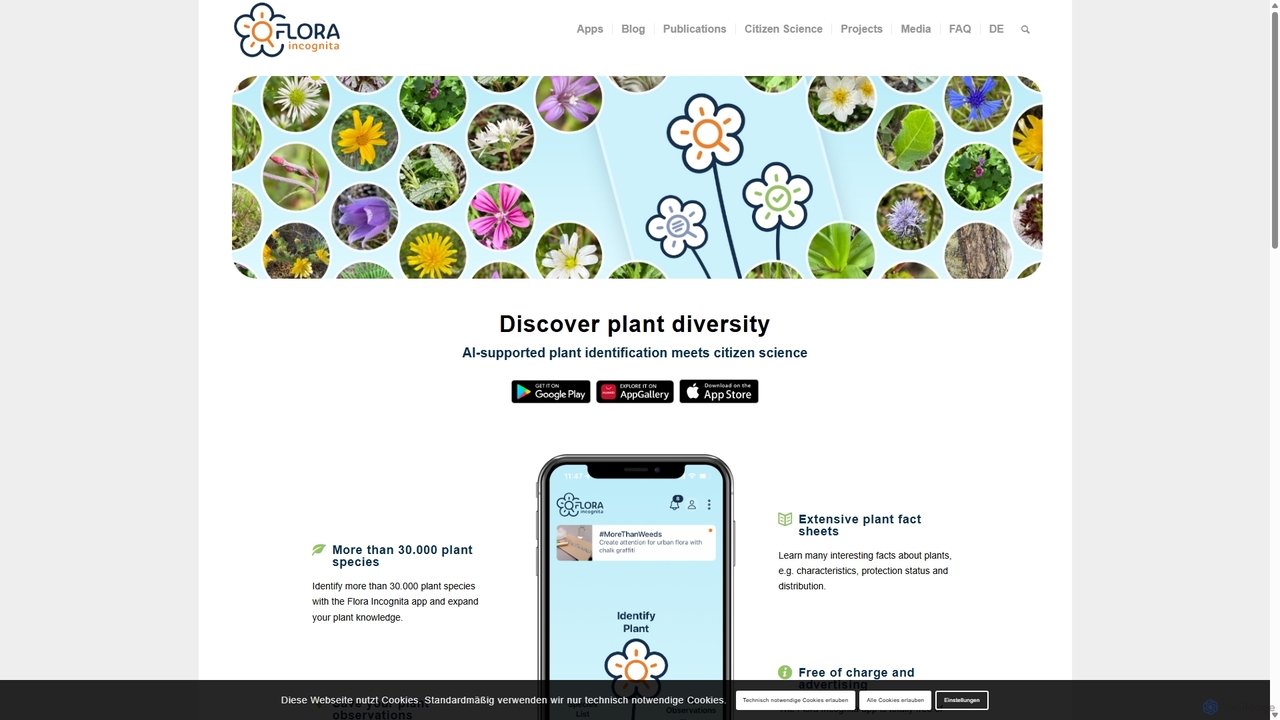
Flora Incognita is a free, AI-powered mobile app that enables users to identify over 30,000 plant species with …
Flora Incognita is a free, AI-powered mobile app that enables users to identify over 30,000 plant species with high accuracy. It functions as a citizen science project, allowing users to contribute valuable data for biodiversity and climate change research. The app is ad-free and works offline.
Flora Incognita
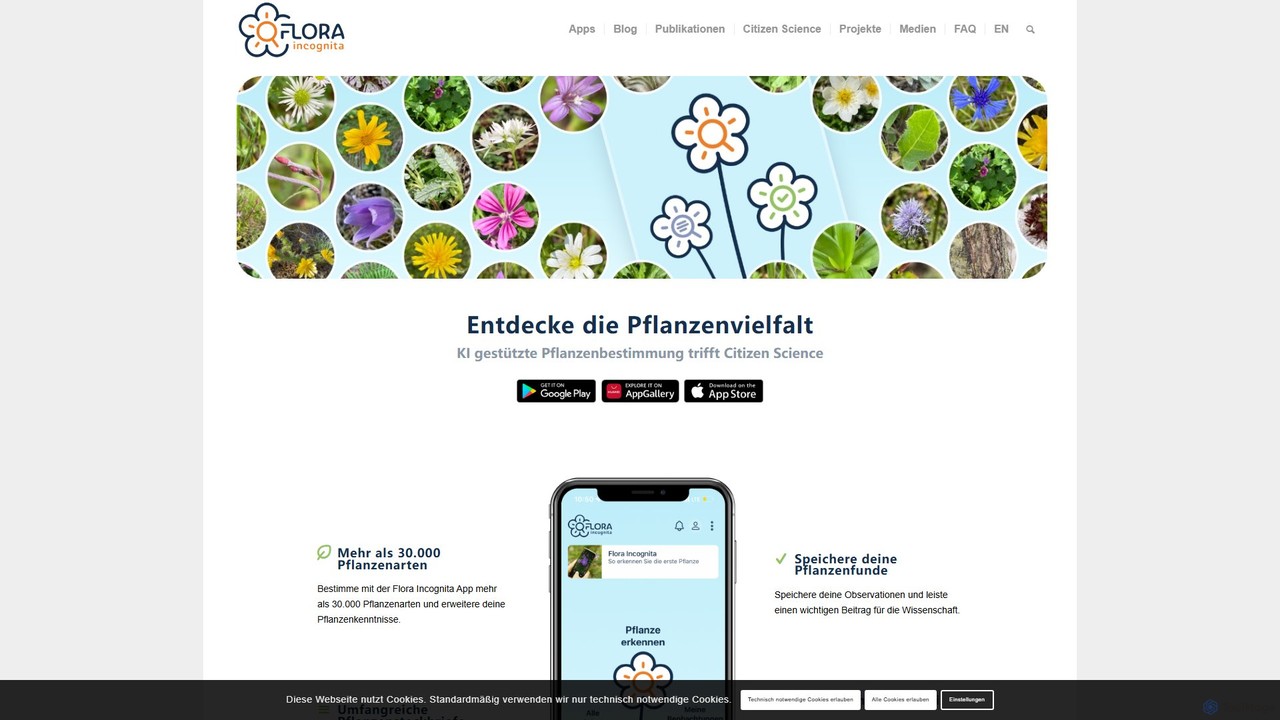
An AI-powered mobile app for highly accurate plant identification. Developed by German research institutions, it identifies over 30,000 …
An AI-powered mobile app for highly accurate plant identification. Developed by German research institutions, it identifies over 30,000 species, provides detailed plant profiles, and functions as a citizen science platform. It's completely free, ad-free, and includes an offline mode, making it ideal for students, nature enthusiasts, and researchers.
About Biology
Biology AI tools are specialized artificial intelligence applications designed to analyze, interpret, and model complex biological data. Leveraging machine learning, deep learning, and computational biology, these tools accelerate scientific discovery, enhance research efficiency, and provide novel insights across various life science domains. They transform raw biological information into actionable knowledge, from molecular interactions to ecosystem dynamics, significantly advancing fields like medicine, agriculture, and environmental science.
Core Features
- Genomic Data Analysis: Automates the processing and interpretation of DNA/RNA sequencing data, including variant calling, gene expression analysis, and functional annotation.
- Protein Structure Prediction: Utilizes AI models to accurately predict the three-dimensional structures of proteins from their amino acid sequences, critical for understanding function and drug design.
- Drug Discovery & Design: Facilitates virtual screening of compounds, predicts drug-target interactions, and optimizes lead molecules for therapeutic development.
- Medical Image Interpretation: Applies computer vision to analyze biological and medical images, assisting in disease diagnosis, pathology, and cellular phenotyping.
- Bioinformatics Workflow Automation: Streamlines complex bioinformatics pipelines, from data preprocessing to statistical analysis and visualization, reducing manual effort and errors.
Applicable Scenarios
These tools are indispensable in pharmaceutical research and development for identifying drug targets and optimizing compounds. Academic research labs utilize them for advanced genomic and proteomic studies, accelerating hypothesis generation and validation. Clinical diagnostics benefits from AI-powered image analysis for more accurate and earlier disease detection, while agricultural science employs them for crop optimization and disease resistance.
How to Choose
When selecting Biology AI tools, consider their compatibility with your specific biological data types (e.g., genomic, proteomic, imaging). Evaluate the model's accuracy, interpretability, and validation against established biological benchmarks. Assess the tool's scalability for handling large datasets and its integration capabilities with existing bioinformatics platforms. Finally, consider regulatory compliance, especially for tools used in clinical or drug development contexts, and the level of technical support provided.
BiologyUse Cases
Accelerating Drug Target Identification
Pharmaceutical researchers utilize AI to sift through vast genomic, proteomic, and clinical datasets. By identifying patterns and correlations, AI tools pinpoint potential disease-causing genes or proteins, significantly reducing the time and cost associated with traditional drug target discovery and validation processes.
Predicting Protein Structures for Drug Design
Structural biologists and biochemists employ AI models to accurately predict the complex three-dimensional structures of proteins from their amino acid sequences. This capability is crucial for understanding protein function, designing novel therapeutic molecules, and optimizing drug binding affinities, accelerating the rational drug design pipeline.
Automating Genomic Variant Analysis
Geneticists and clinical researchers leverage AI to rapidly analyze high-throughput sequencing data, identifying and classifying genetic variants (e.g., SNPs, indels). This automation aids in diagnosing genetic diseases, understanding disease susceptibility, and guiding personalized medicine strategies by quickly filtering relevant mutations from noise.
Enhancing Medical Image Diagnostics
Pathologists and radiologists use AI-powered computer vision to analyze intricate medical images, such as histology slides, MRI scans, and X-rays. AI can detect subtle anomalies, quantify disease progression, and assist in early diagnosis of conditions like cancer or neurodegenerative diseases, improving diagnostic accuracy and efficiency.
Optimizing Agricultural Crop Breeding
Agronomists and plant geneticists apply AI to analyze large datasets of plant genomics, phenomics, and environmental factors. AI models predict crop yield under various conditions, identify genes associated with desirable traits (e.g., disease resistance, drought tolerance), and optimize breeding programs to develop more resilient and productive crops.
Simulating Complex Biological Systems
Computational biologists and systems biologists use AI to build and run simulations of complex biological processes, from molecular dynamics to cellular signaling pathways and ecosystem interactions. These simulations provide deeper mechanistic insights, test hypotheses virtually, and predict system behavior under different perturbations, reducing the need for extensive wet-lab experiments.