ToolMage
Sign in

Best 4 Search AI tools for Utilities

Popular Search AI tools in Utilities include recentlyfollowed, Google Chrome, Emojiu, and Keep It Shot, helping you work more efficiently.

Emojiu
Free

Emojiu

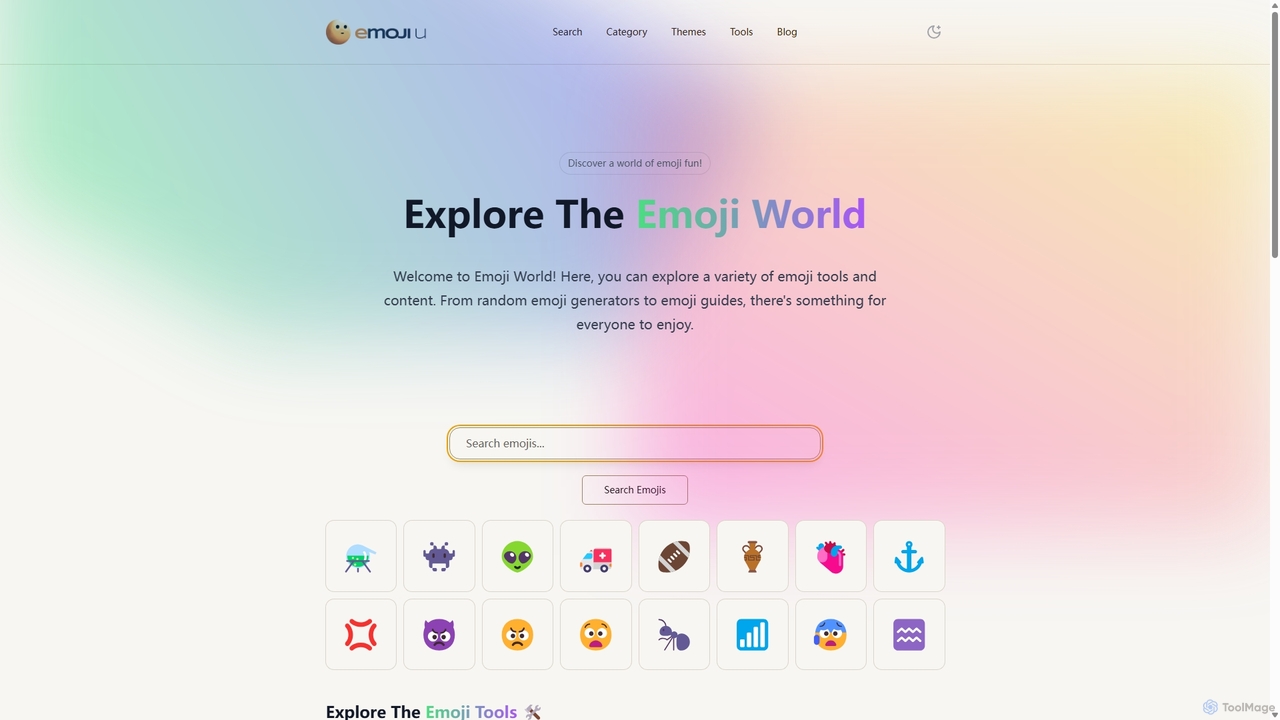
Emojiu is a comprehensive emoji resource hub offering a powerful search engine, categorized browsing, and unique tools like an emoji remover and random generator. It allows users to quickly find, copy, and paste emojis for any digital communication need, supporting various platform styles like Apple, Google, and Twitter.

Writing
Visits 5.8KFavorites 125Likes 123
Keep It Shot
Freemium

Keep It Shot

Keep It Shot is a macOS application that uses AI to intelligently rename your screenshots and other files. It automatically creates descriptive names and builds a private, offline, and fast search index, transforming your messy file collection into an organized and searchable second brain.

Automation
Visits 4.7KFavorites 113Likes 115
Google Chrome
Free

Google Chrome

Google Chrome is a fast, secure, and customizable web browser developed by Google. It features seamless cross-device syncing, a vast library of extensions, and robust security tools like a built-in password manager and safety checks. With integrated Google services and new AI-powered features, Chrome offers a personalized, intelligent, and efficient browsing experience on all major platforms.

Web Development
Visits 56.5KFavorites 128Likes 114
recentlyfollowed
Freemium

recentlyfollowed

An online tool to anonymously view the most recent followers and followings of any public Instagram account. It requires no login, providing instant results to help users track connections, reduce anxiety, and gain insights into social media activity without the target user ever knowing.

Monitoring
Visits 188.2KFavorites 111Likes 109

About Search

AI Search tools are advanced platforms that leverage artificial intelligence to revolutionize information retrieval. Unlike traditional keyword-based systems, these tools employ natural language processing (NLP) and machine learning to understand context, intent, and semantic relationships within data. They enable users to find highly relevant information quickly across vast datasets, improving decision-making and productivity in various professional and personal contexts.

Core Features

  • Semantic Understanding: Interprets the meaning and intent behind queries, not just keywords, to deliver more accurate and contextually relevant results.
  • Contextual Filtering: Filters and ranks results based on user history, preferences, and the broader context of the search environment for personalized experiences.
  • Multi-modal Search: Capable of searching across various data types, including text, images, audio, and video, within a unified interface.
  • Personalized Results: Adapts over time to individual user behavior, providing increasingly tailored and relevant information based on past interactions.
  • Knowledge Graph Integration: Connects disparate pieces of information to build a comprehensive understanding and present interconnected facts and relationships.

Applicable Scenarios

AI search tools are invaluable for researchers sifting through vast academic papers, businesses analyzing internal documents and customer feedback, or individuals seeking precise answers from complex web content. They are particularly useful in fields requiring deep data analysis, such as legal research, scientific discovery, and competitive intelligence.

How to Choose

When selecting an AI search tool, consider its data source compatibility (e.g., internal databases, web, cloud storage), semantic accuracy in understanding complex queries, and scalability for growing data volumes. Evaluate its integration capabilities with existing systems, the level of customization options for specific industry jargon, and the user interface intuitiveness for your team's adoption.

Featured tool rankings

Search use cases

1

Enhancing Internal Knowledge Base Search

For large enterprises, employees often struggle to find specific information across vast internal documents, wikis, and communication platforms. AI search tools allow employees to query using natural language, instantly retrieving relevant policies, project details, or expert contacts, significantly reducing time spent on information foraging and improving operational efficiency.

2

Advanced Customer Support Query Resolution

Customer service teams can leverage AI search to quickly find answers to complex customer queries from extensive knowledge bases, product manuals, and past support tickets. By understanding the intent behind customer questions, the AI tool provides agents with precise, context-aware information, leading to faster resolution times and improved customer satisfaction without extensive manual searching.

3

Accelerating Academic and Scientific Research

Researchers in academia or R&D departments face the challenge of sifting through millions of scientific papers, patents, and datasets. AI search tools can perform semantic searches across these vast repositories, identifying novel connections, relevant methodologies, and emerging trends that might be missed by keyword-based searches, thereby accelerating discovery and innovation.

4

Competitive Intelligence and Market Analysis

Business strategists and market analysts need to monitor competitor activities, industry trends, and consumer sentiment across various online sources. AI search tools can continuously crawl and analyze web content, news articles, social media, and financial reports, providing real-time, synthesized insights into market dynamics and competitive landscapes, informing strategic decisions.

5

Legal Document Discovery and Review

Legal professionals spend considerable time reviewing vast quantities of documents for litigation, compliance, or due diligence. AI search tools can rapidly process and analyze legal texts, contracts, and case precedents, identifying relevant clauses, patterns, and anomalies with high accuracy, drastically reducing manual review time and mitigating risks in legal processes.

6

Personalized Content Discovery for Media Platforms

Media companies and content platforms can use AI search to offer highly personalized content recommendations and discovery experiences to their users. By analyzing user behavior, preferences, and semantic relationships within content, these tools help users find relevant articles, videos, or products, increasing engagement and retention on the platform.

Search FAQ

What are AI Search tools?

AI Search tools are software applications that utilize artificial intelligence, primarily natural language processing (NLP) and machine learning, to understand and respond to user queries more intelligently than traditional search engines. They go beyond keyword matching to interpret the intent and context of a search, delivering highly relevant and personalized results from vast datasets. These tools are designed to improve information discovery, efficiency, and decision-making across various domains.

How do AI Search tools differ from traditional search engines?

The primary difference lies in their approach to understanding queries. Traditional search engines rely heavily on keyword matching and indexing, while AI Search tools employ semantic understanding to interpret the meaning and intent behind your words. This allows AI search to provide more contextually relevant results, even for complex or ambiguously phrased questions, and to learn from user interactions to personalize future searches. They prioritize understanding over mere matching.

What are the key benefits of using AI Search tools?

AI Search tools offer several significant benefits. Firstly, they provide enhanced relevance, delivering more accurate results by understanding query intent. Secondly, they enable faster information retrieval, drastically reducing the time spent sifting through irrelevant data. Thirdly, they offer personalized experiences, adapting to individual user preferences over time. Lastly, they support multi-modal search, allowing users to find information across various data types like text, images, and videos, leading to comprehensive insights.

Who can benefit most from AI Search tools?

A wide range of users and organizations can benefit significantly from AI Search tools. This includes researchers needing to analyze vast academic or scientific literature, enterprises seeking to improve internal knowledge management and employee productivity, customer support teams aiming for faster query resolution, and content platforms looking to enhance user discovery and engagement. Essentially, anyone dealing with large, complex datasets and requiring precise, context-aware information retrieval will find these tools invaluable.

Can AI Search tools integrate with existing systems?

Yes, most modern AI Search tools are designed with robust integration capabilities. They often provide APIs (Application Programming Interfaces) and connectors that allow seamless integration with various existing systems such as enterprise resource planning (ERP), customer relationship management (CRM), content management systems (CMS), and cloud storage platforms. This ensures that the AI search functionality can be extended across an organization's entire digital ecosystem, providing a unified search experience without disrupting current workflows.