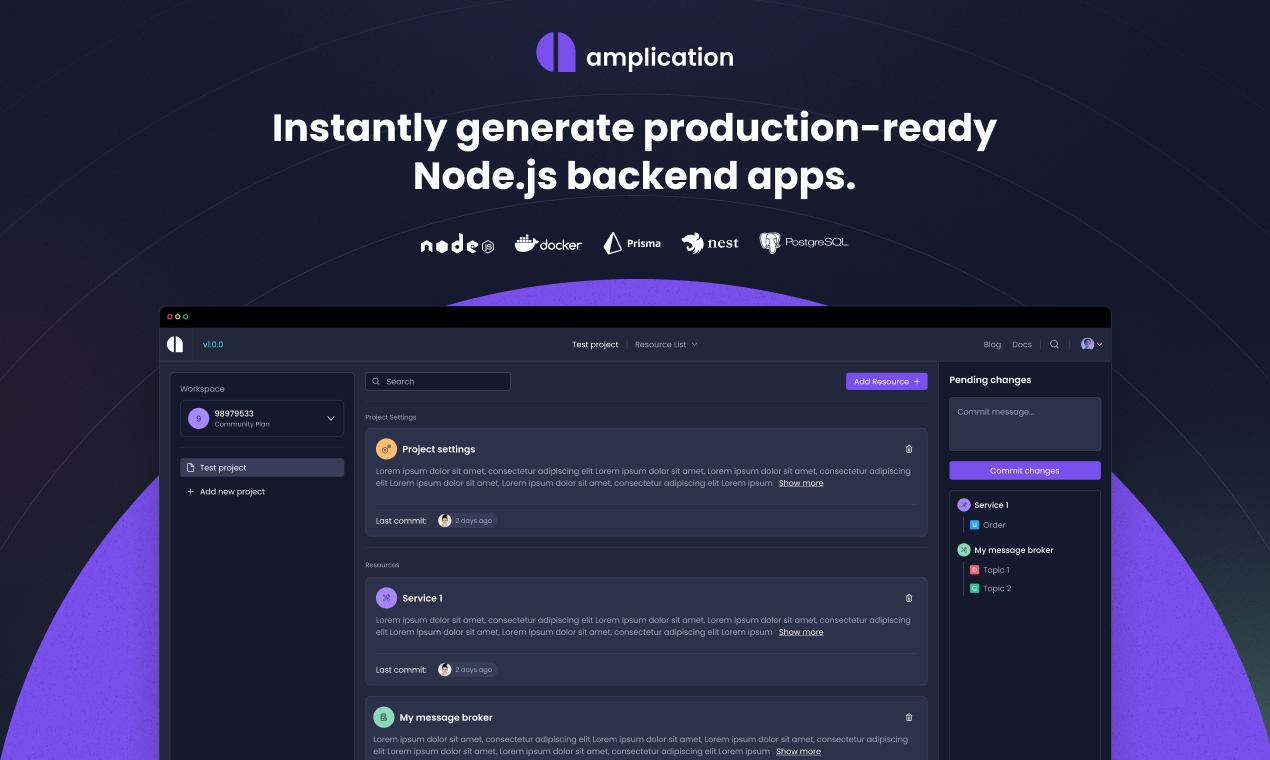
Amplication is an AI-powered backend development platform that standardizes and automates the creation of backend services. It empowers platform engineering teams to define 'Golden Paths' with live templates, enabling developers to rapidly build, maintain, and scale secure, compliant, and consistent microservices and applications.
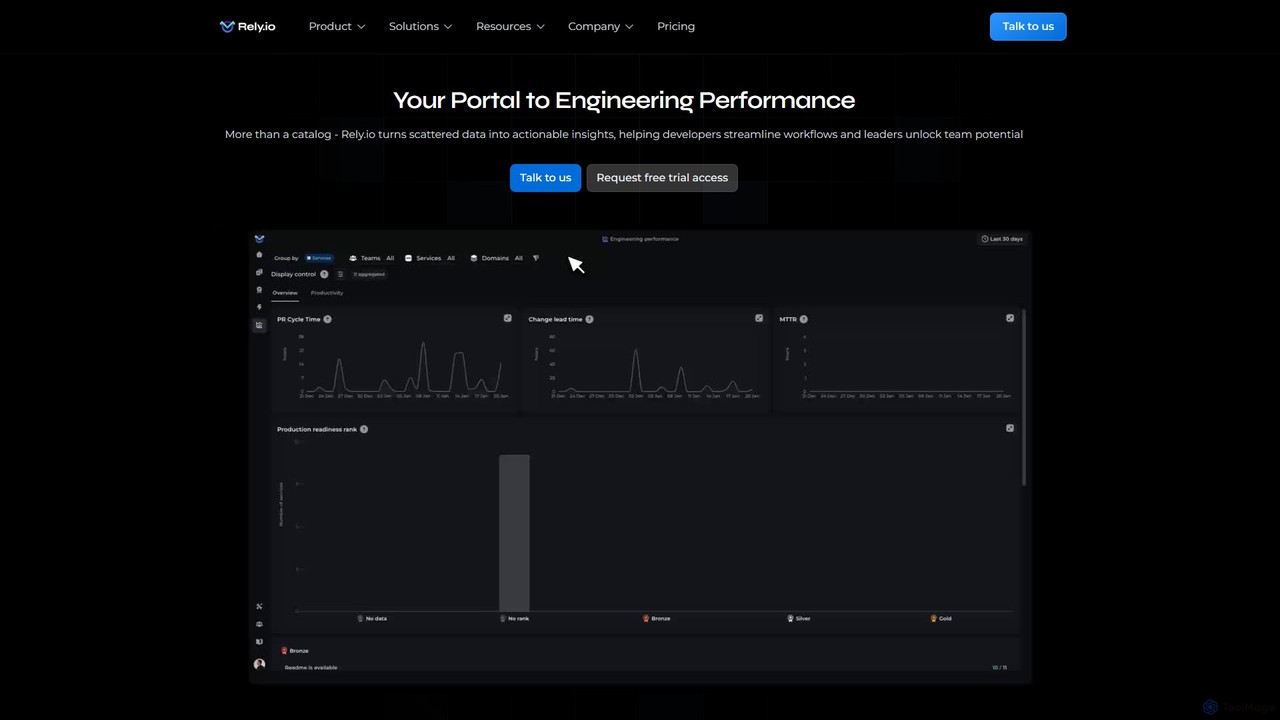
Rely.io is an Internal Developer Portal (IDP) for modern engineering organizations. It provides a unified software catalog, engineering intelligence, and customizable scorecards to enhance developer experience, enforce standards, and boost team performance. By integrating with your existing toolchain, Rely.io offers automated service discovery and actionable insights, fostering a culture of ownership and excellence.
Product overview
Amplication Product overview
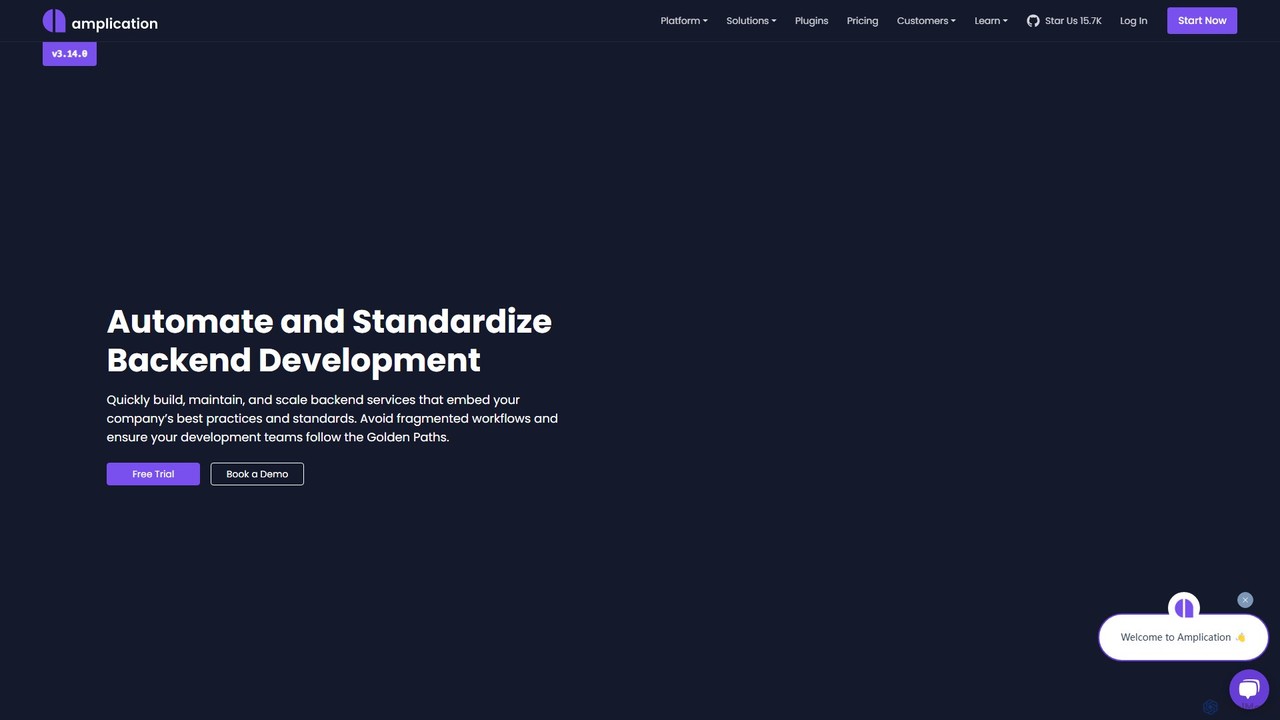
Amplication is an AI-powered backend development platform that standardizes and automates the creation of backend services. It empowers platform engineering teams to define 'Golden Paths' with live templates, enabling developers to rapidly build, maintain, and scale secure, compliant, and consistent microservices and applications.
Rely.io Product overview
Rely.io is an Internal Developer Portal (IDP) for modern engineering organizations. It provides a unified software catalog, engineering intelligence, and customizable scorecards to enhance developer experience, enforce standards, and boost team performance. By integrating with your existing toolchain, Rely.io offers automated service discovery and actionable insights, fostering a culture of ownership and excellence.
Detailed feature comparison
| Feature | Amplication | Rely.io |
|---|---|---|
| Primary category | Backend | Platform Engineering |
| Added | 2025-08-08 | 2025-08-08 |
| Pricing | Freemium | Freemium |
| Official website | amplication.com | www.rely.io |
| Product type | Website | Website |
| Performance data | ||
| User rating | Not verified | Not verified |
| Comments | 0 | 0 |
| Monthly visits | 5.2K | 1.4K |
| Monthly growth | 73.2% | 17.3% |
| Favorites | 128 | 107 |
| Details | View details | View details |
Amplication vs Rely.io monthly traffic
Compare Amplication and Rely.io by monthly reach, traffic trend, visit depth, top regions, and acquisition sources.
How to interpret the traffic data
In the Amplication vs Rely.io monthly traffic comparison, Amplication currently shows 5.2K visits and Rely.io shows 1.4K; Amplication has about 3.8 times the visible traffic of Rely.io, an absolute difference of about 3.8K visits. This reflects visible reach, not feature quality or paid users.
Both tools provide verified traffic details, so monthly trends, visit depth, regions, and acquisition sources can be compared on the same basis.
Amplication monthly traffic:
Latest traffic
Monthly traffic trend
- 2025/9: 26K Monthly visits
- 2026/1: 18K Monthly visits
- 2026/2: 10.2K Monthly visits
- 2026/3: 6K Monthly visits
- 2026/4: 3K Monthly visits
- 2026/5: 5.2K Monthly visits
Top regions
Top 5 countries/regions
| Country/region | Percentage | Traffic |
|---|---|---|
| 🇻🇳Vietnam | 33.27% | 1.7K |
| 🇩🇪Germany | 27.29% | 1.4K |
| 🇮🇳India | 20.49% | 1.1K |
| 🇺🇸United States | 12.54% | 654 |
| 🇬🇧United Kingdom | 6.41% | 334 |
Search keywords
Rely.io monthly traffic:
Latest traffic
Monthly traffic trend
- 2025/9: 1.6K Monthly visits
- 2026/1: 20 Monthly visits
- 2026/2: 1.4K Monthly visits
- 2026/3: 2.3K Monthly visits
- 2026/4: 1.2K Monthly visits
- 2026/5: 1.4K Monthly visits
Top regions
Top 5 countries/regions
| Country/region | Percentage | Traffic |
|---|---|---|
| 🇦🇿Azerbaijan | 100% | 1.4K |
Search keywords
Usage comparison
Compare the core capabilities of Amplication and Rely.io
Amplication Core features
Rely.io Core features
Use cases
Amplication Use cases
Rely.io Use cases
Amplication vs Rely.io:In-depth comparison and selection guidance
First decide whether the products solve the same kind of need
This in-depth Amplication vs Rely.io comparison uses only the product records, taxonomy, audience, traffic, and community signals available on this page. Amplication is primarily listed under “Backend”, while Rely.io is primarily listed under “Platform Engineering”, so the first decision is whether your actual task matches their recorded scope.
The structured fields currently show these decision-relevant differences: Primary category (Amplication: Backend; Rely.io: Platform Engineering); Monthly visits (Amplication: 5.2K; Rely.io: 1.4K); Monthly growth (Amplication: 73.2%; Rely.io: 17.3%); Favorites (Amplication: 128; Rely.io: 107); Website (Amplication: amplication.com; Rely.io: www.rely.io). These facts are more useful for selection than brand visibility alone.
What market visibility and monthly traffic mean
In the Amplication vs Rely.io monthly traffic comparison, Amplication currently shows 5.2K visits and Rely.io shows 1.4K; Amplication has about 3.8 times the visible traffic of Rely.io, an absolute difference of about 3.8K visits. This reflects visible reach, not feature quality or paid users.
Both tools provide verified traffic details, so monthly trends, visit depth, regions, and acquisition sources can be compared on the same basis.
If public market visibility is an important first-pass criterion, investigate Amplication first. The final choice should still follow taxonomy, use case, and a real trial because higher traffic does not prove broader capabilities or better workflow fit.
Product positioning, use cases, and roles
Amplication and Rely.io currently overlap in shared tags: devops, IDP, microservices, and platform engineering. This can place both on the same shortlist, but it does not prove equal implementation, depth, or cost.
Amplication's unique categories/tags are Backend, Low Code No Code, Platform Engineering, Automation, API, automation, backend development, and code generation; Rely.io's are Platform Engineering, Workflow Management, backstage alternative, code quality, developer portal, engineering intelligence, service catalog, and software development. These unique fields are the strongest differentiators: validate the product whose recorded scope matches the task instead of following traffic alone.
What ratings, comments, and favorites can tell you
Amplication has no verified rating, 0 comments, 128 favorites, and 121 likes;Rely.io has no verified rating, 0 comments, 107 favorites, and 103 likes。
Neither product has enough rating or comment samples for a credible reputation ranking.
Selection guidance by actual need
When to evaluate Amplication first
Put Amplication on the priority trial list when the task aligns with “Backend” and especially Backend, Low Code No Code, Platform Engineering, Automation, API, and automation. This follows recorded positioning and does not imply unlisted capabilities are absent.
Amplication also currently records: pricing is freemium, product type is website, 5.2K verified monthly visits, no verified user rating. Verify any hard requirement around price, platform, or reach before trial, and do not let sparse review data substitute for testing.
When to evaluate Rely.io first
Put Rely.io on the priority trial list when the task aligns with “Platform Engineering” and especially Platform Engineering, Workflow Management, backstage alternative, code quality, developer portal, and engineering intelligence. This follows recorded positioning and does not imply unlisted capabilities are absent.
Rely.io also currently records: pricing is freemium, product type is website, 1.4K verified monthly visits, no verified user rating. Verify any hard requirement around price, platform, or reach before trial, and do not let sparse review data substitute for testing.
How to validate the recommendation before deciding
The available data describes positioning, public visibility, and community signals, but it cannot prove output quality, speed, integration effort, privacy, or long-term cost in your workflow. Before deciding, run the same representative tasks in Amplication and Rely.io, then record completion time, accuracy, manual corrections, and the real paid threshold. A like-for-like trial turns this comparison into a defensible adoption decision.
Comparison FAQ
How should I choose between Amplication and Rely.io?
Where does this comparison data come from?
What do unknown fields mean?
Related AI tools

Devtron
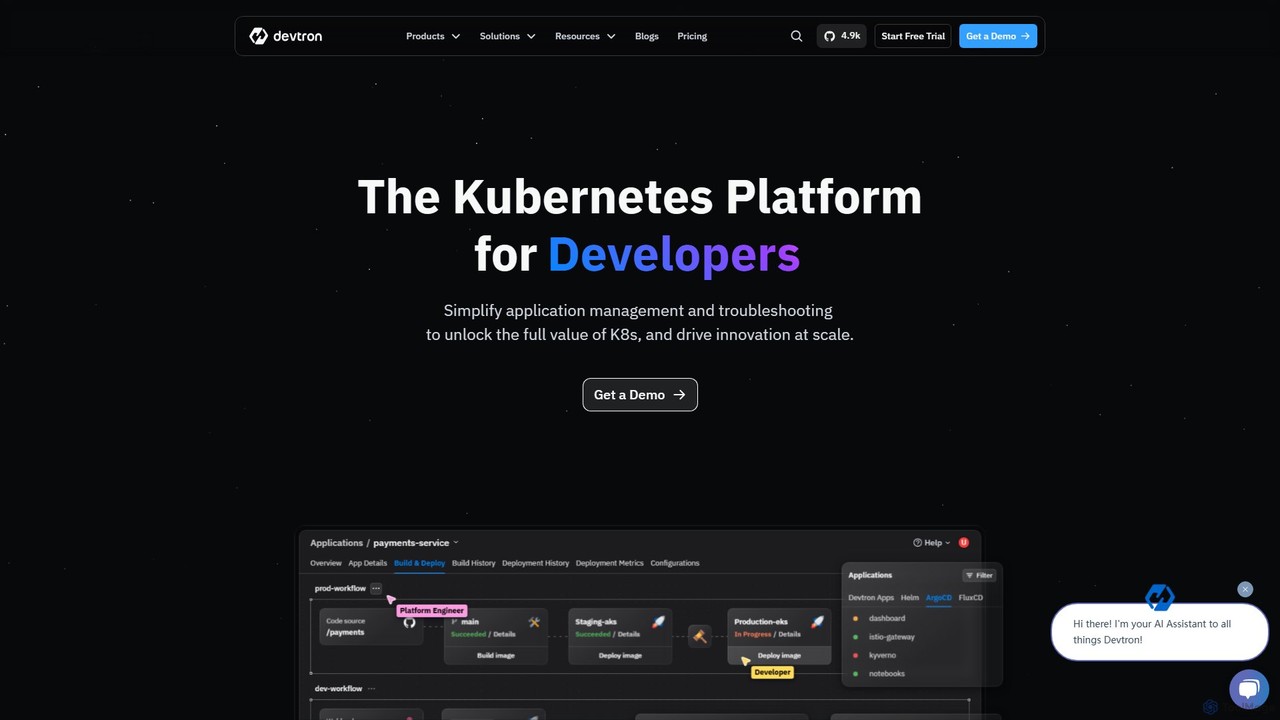
Devtron is an open-source, Kubernetes-native software delivery platform that simplifies application management. It integrates CI/CD, GitOps, security, and observability into a unified dashboard, empowering developers and DevOps teams to manage complex Kubernetes environments with ease, accelerate release cycles, and improve productivity without a steep learning curve.
Cloud Computing
Prodvana
Prodvana is an intelligent, intent-based deployment platform designed for modern software delivery. It helps engineering teams accelerate deployment frequency, enhance reliability, and reduce operational overhead by automating release paths, providing pre-deployment insights, and seamlessly integrating with existing infrastructure like Kubernetes, Terraform, and serverless providers.
Infrastructure Management
Factory
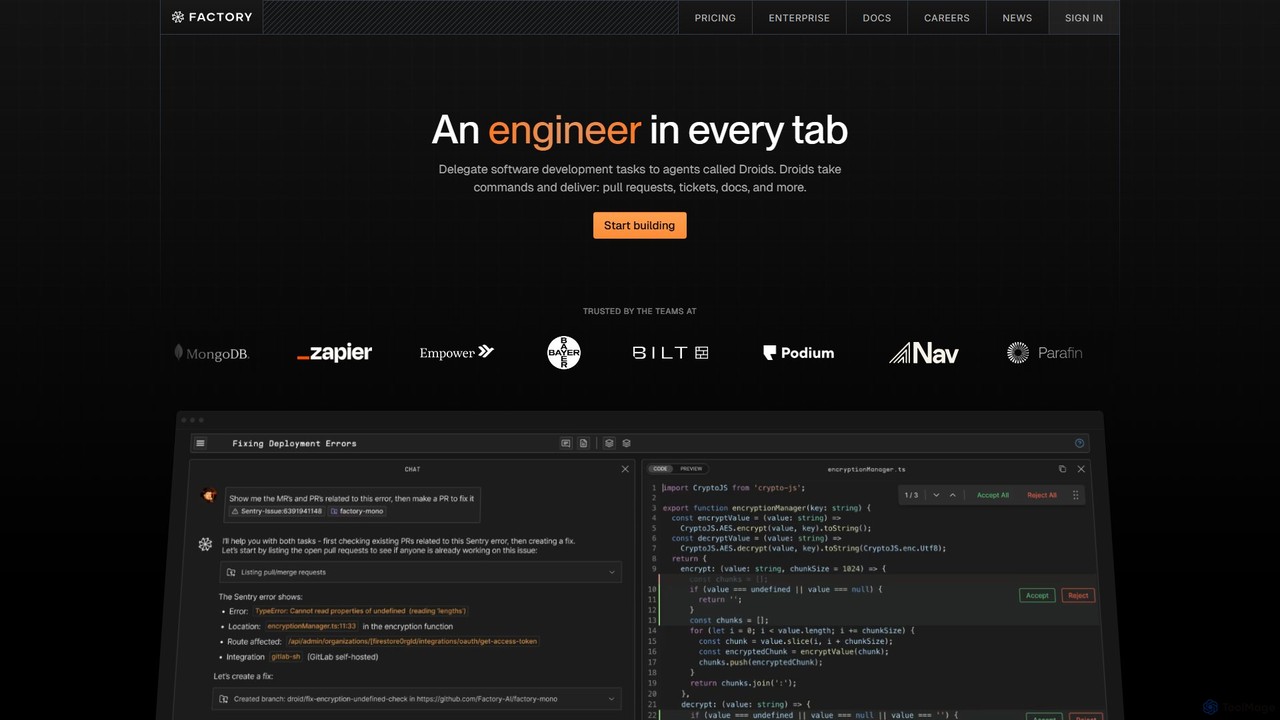
Factory is an AI-powered software development platform that uses autonomous agents called 'Droids' to automate the entire Software Development Lifecycle (SDLC). From planning and coding to incident response and documentation, Droids handle complex tasks, delivering merge-ready pull requests, detailed reports, and rapid fixes. It's designed to work alongside engineering teams, boosting productivity, accelerating development cycles, and clearing backlogs within a secure, enterprise-grade environment.
Code Assistant
Aviator
Aviator is a developer collaboration suite that automates the CI/CD pipeline, focusing on pull request management. It uses an automated merge queue to test, rebase, and merge code, ensuring the main branch remains stable and deployable, thereby boosting developer productivity and code quality.
Code Collaboration
Shuttle
Shuttle is an open-source cloud platform designed to accelerate backend development in Rust. It eliminates infrastructure management by allowing developers to provision resources like databases and secrets directly within their code using simple annotations. Focus on building your application, and let Shuttle handle the deployment and scaling.
Backend Development
Devassistant.ai
Devassistant.ai is an advanced AI co-programmer that automates DevOps, analyzes entire codebases, and intelligently adds or updates code. It streamlines development workflows by provisioning environments, answering complex questions about your code, and making changes within a cloud-based VS Code interface, boosting productivity and code quality.
Code Assistant
Rebolt
Rebolt is an AI-powered platform designed to automate the entire software development lifecycle. It helps developer and DevOps teams build, test, and deploy applications faster and more reliably by leveraging AI for CI/CD pipeline optimization, code generation, and intelligent monitoring.
Code Assistant
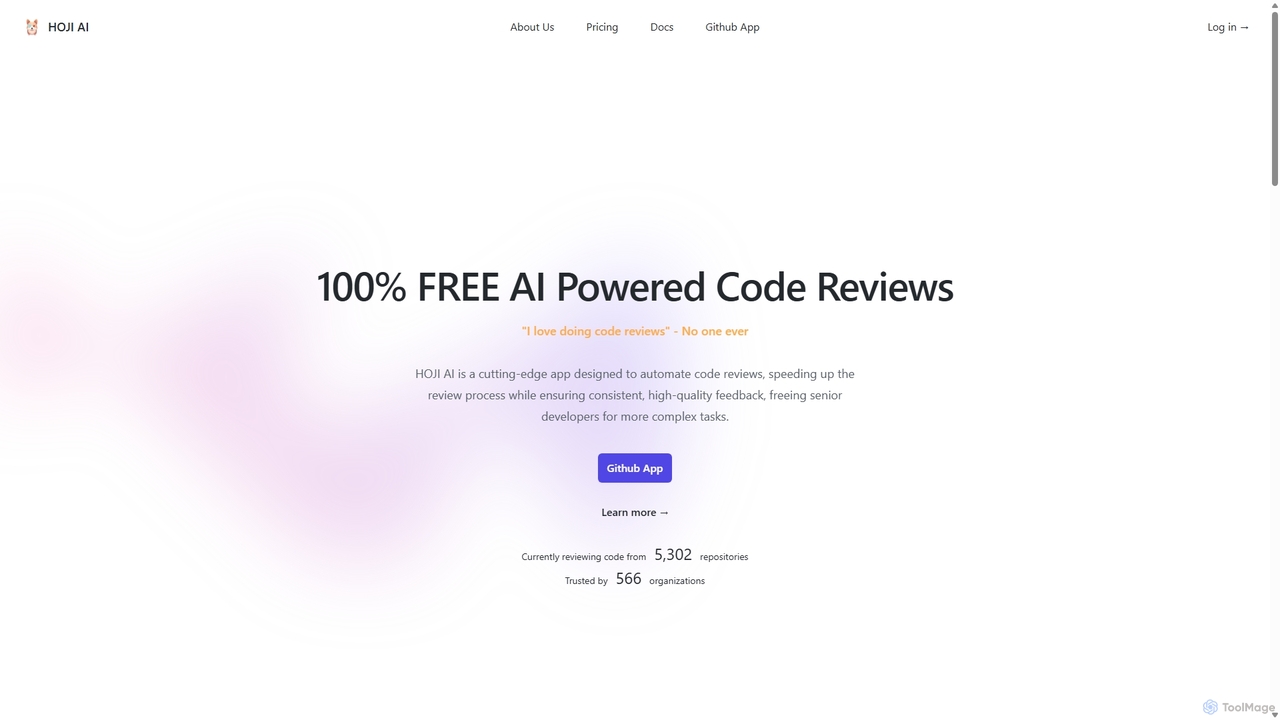
HOJI AI
HOJI AI is a free, AI-powered tool that automates code reviews directly within GitHub. It provides instant, consistent, and high-quality feedback on pull requests, helping development teams increase productivity, improve code quality, and accelerate their development cycles by freeing up senior engineers.
Code Assistant
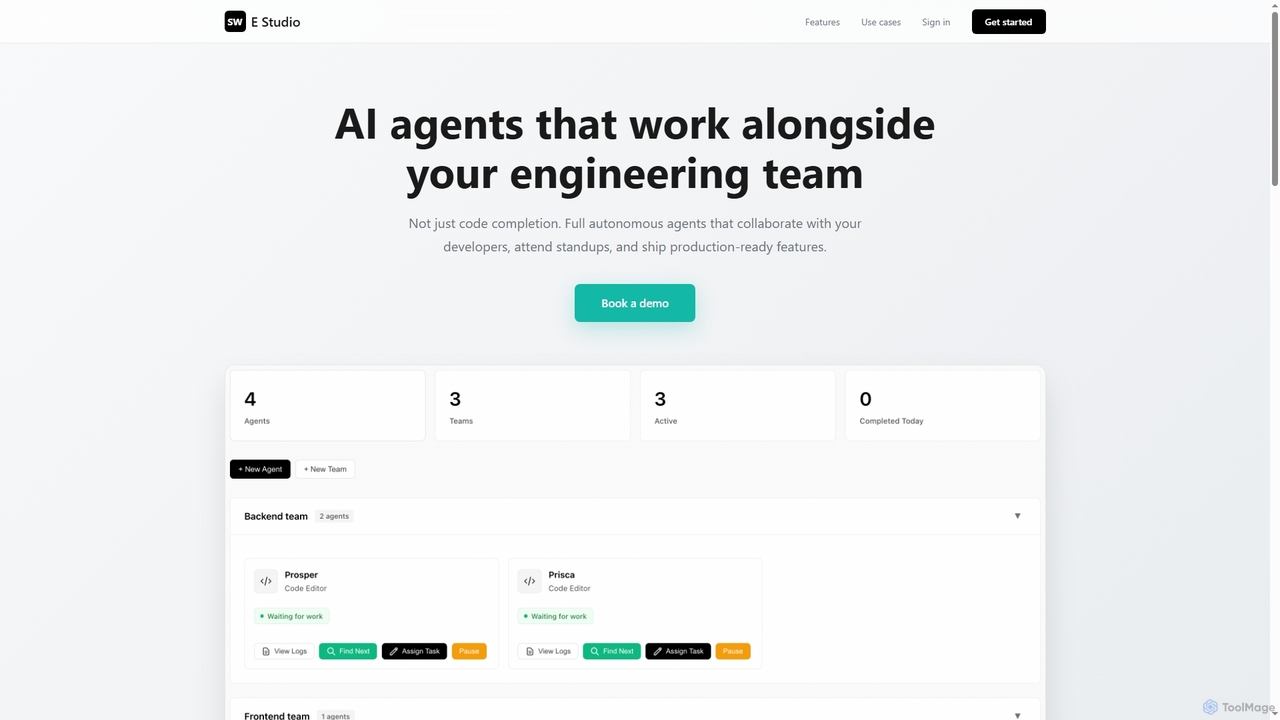
Swe Studio
Swe Studio provides autonomous AI agents that function as full members of your engineering team. They independently handle development tasks from Jira tickets to pull requests, collaborating via Slack and GitHub to ship production-ready features.
Code Assistant
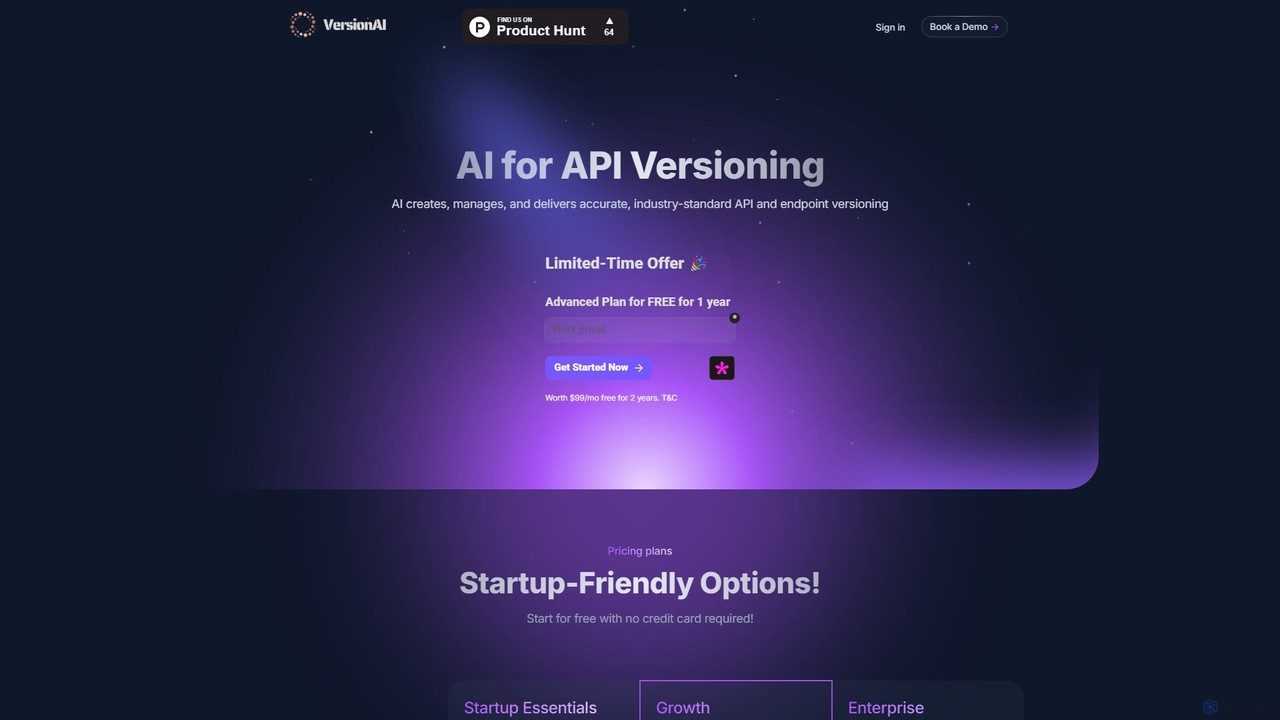
apiversion.dev
apiversion.dev is an AI-powered platform that automates API and endpoint versioning. It helps development teams create, manage, and deliver accurate, industry-standard versions using Semantic or Calendar Versioning. By integrating with CI/CD pipelines, it reduces manual errors, improves communication, and accelerates development cycles, ensuring seamless updates for both internal teams and external customers.
Api Management
hoji
hoji is a free, AI-powered code review assistant that integrates directly with GitHub. It automates the code review process, providing instant, consistent, and unbiased feedback on pull requests. This helps development teams increase productivity, improve code quality, and reduce friction, freeing up senior developers for more complex tasks.
Code Assistant
cubic
cubic is an AI-powered code review platform that helps software teams ship higher-quality code up to 3x faster. It automatically reviews pull requests in GitHub, catches bugs, enforces custom style guides, and provides one-click fixes, significantly reducing review bottlenecks and improving developer productivity.
Code Assistant
Superagent
Superagent is an open-source infrastructure for building, managing, and deploying autonomous AI coding agents. Designed for developers, it provides the essential primitives like agent orchestration, secure sandbox integration (VibeKit), and developer-friendly interfaces. This framework empowers teams to automate complex software development tasks, from feature generation and bug fixing to CI/CD management, shifting software creation into a new, AI-driven era with a strong emphasis on safety and control.
Orchestration
PlayerZero
PlayerZero is an AI-powered platform for predictive software quality. It helps engineering teams ship flawless software faster by using AI agents to simulate code, debug issues, and review pull requests, proactively identifying and preventing bugs before they impact users.
Code Assistant
CTO.ai
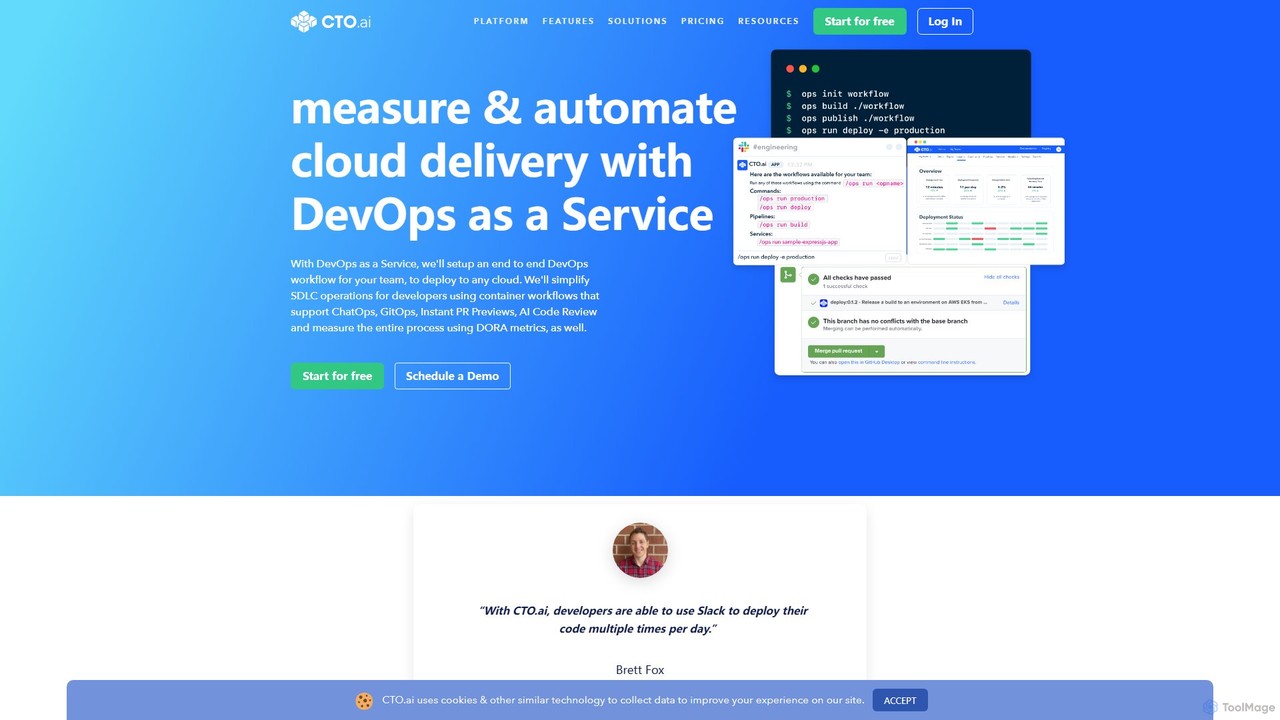
CTO.ai is a DevOps as a Service platform that helps engineering teams build an Internal Developer Platform (IDP). It uses DORA metrics, event-driven automation, and AI-powered features like code review to accelerate cloud delivery, improve developer experience, and provide data-driven insights into the software development lifecycle.
Platform As A Service