Asimov provides a foundational AI search API for developers to build intelligent agents and applications. It features built-in semantic search and re-ranking for high accuracy, simple content ingestion, and robust source management. The platform is designed with enterprise-grade security and offers detailed usage tracking, making it a comprehensive solution for creating custom search experiences.
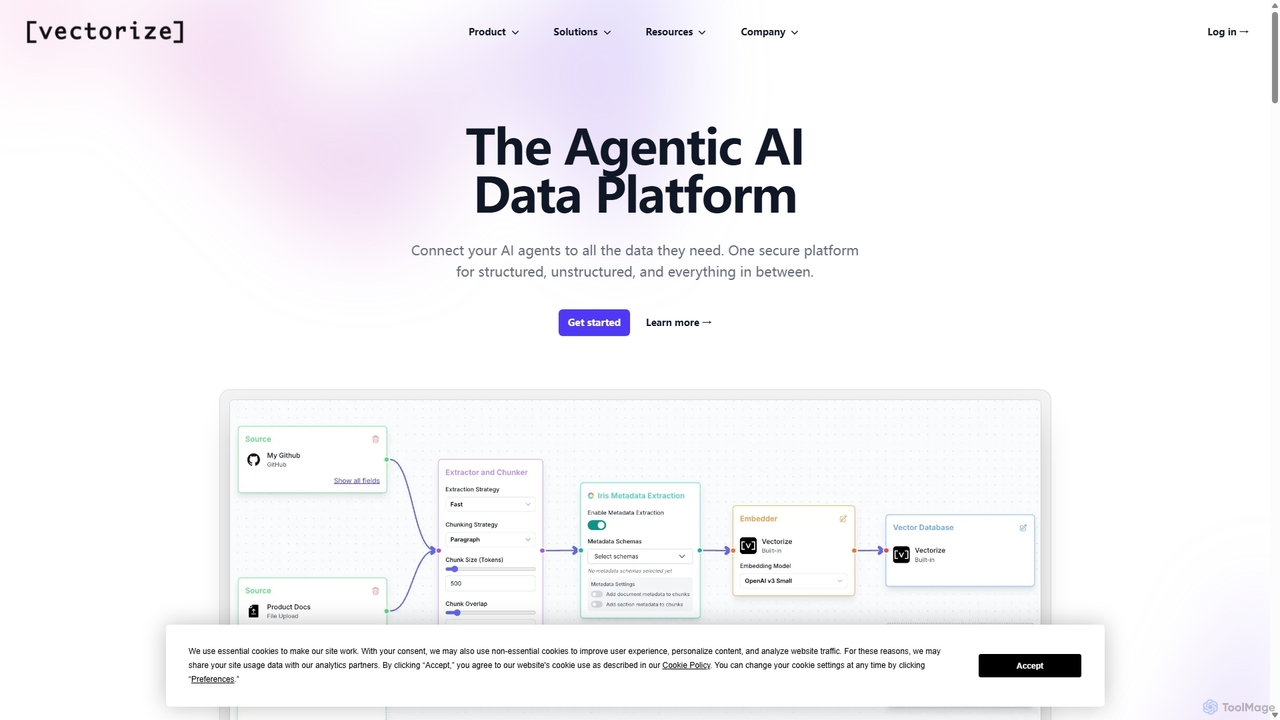
Vectorize is a RAG-as-a-Service platform that simplifies building AI applications on unstructured data. It offers managed RAG pipelines, extensive data source connectors, and the flexibility to use its managed vector database or connect your own, enabling developers to deploy production-ready AI solutions quickly.
Product overview
Asimov Product overview
Asimov provides a foundational AI search API for developers to build intelligent agents and applications. It features built-in semantic search and re-ranking for high accuracy, simple content ingestion, and robust source management. The platform is designed with enterprise-grade security and offers detailed usage tracking, making it a comprehensive solution for creating custom search experiences.
Vectorize Product overview
Vectorize is a RAG-as-a-Service platform that simplifies building AI applications on unstructured data. It offers managed RAG pipelines, extensive data source connectors, and the flexibility to use its managed vector database or connect your own, enabling developers to deploy production-ready AI solutions quickly.
Detailed feature comparison
| Feature | Asimov | Vectorize |
|---|---|---|
| Primary category | Data Management | Rag |
| Added | 2025-11-06 | 2025-09-14 |
| Pricing | Freemium | Freemium |
| Official website | www.asimov.mov | vectorize.io |
| Product type | Website | Website |
| Performance data | ||
| User rating | Not verified | Not verified |
| Comments | 0 | 0 |
| Monthly visits | 3.5K | 216.6K |
| Monthly growth | Not verified | 48% |
| Favorites | 122 | 101 |
| Details | View details | View details |
Asimov vs Vectorize monthly traffic
Compare Asimov and Vectorize by monthly reach, traffic trend, visit depth, top regions, and acquisition sources.
How to interpret the traffic data
In the Asimov vs Vectorize monthly traffic comparison, Asimov currently shows 3.5K visits and Vectorize shows 216.6K; Vectorize has about 62.1 times the visible traffic of Asimov, an absolute difference of about 213.1K visits. This reflects visible reach, not feature quality or paid users.
Only Vectorize has complete third-party traffic details; Asimov uses visits recorded inside ToolMage. These scopes cannot estimate market share directly, and on-site views should not be treated as the product’s total website traffic.
Asimov monthly traffic:
Latest traffic
Vectorize monthly traffic:
Latest traffic
Monthly traffic trend
- 2025/9: 68.8K Monthly visits
- 2026/1: 67.1K Monthly visits
- 2026/2: 52.4K Monthly visits
- 2026/3: 80.5K Monthly visits
- 2026/4: 146.4K Monthly visits
- 2026/5: 216.6K Monthly visits
Top regions
Top 5 countries/regions
| Country/region | Percentage | Traffic |
|---|---|---|
| 🇨🇳China | 53.96% | 116.9K |
| 🇺🇸United States | 31.74% | 68.7K |
| 🇸🇬Singapore | 4.88% | 10.6K |
| 🇭🇰Hong Kong | 4.82% | 10.4K |
| 🇮🇳India | 4.6% | 10K |
Traffic sources
| Source type | Percentage | Traffic |
|---|---|---|
| Direct | 74.48% | 161.3K |
| Referral | 24.94% | 54K |
| 0.58% | 1.3K |
Search keywords
Usage comparison
Compare the core capabilities of Asimov and Vectorize
Asimov Core features
Vectorize Core features
Use cases
Asimov Use cases
Vectorize Use cases
Best suited roles
Asimov Best suited roles
Vectorize Best suited roles
Asimov vs Vectorize:In-depth comparison and selection guidance
First decide whether the products solve the same kind of need
This in-depth Asimov vs Vectorize comparison uses only the product records, taxonomy, audience, traffic, and community signals available on this page. Asimov is primarily listed under “Data Management”, while Vectorize is primarily listed under “Rag”, so the first decision is whether your actual task matches their recorded scope.
The structured fields currently show these decision-relevant differences: Primary category (Asimov: Data Management; Vectorize: Rag); Monthly visits (Asimov: 3.5K; Vectorize: 216.6K); Favorites (Asimov: 122; Vectorize: 101); Website (Asimov: www.asimov.mov; Vectorize: vectorize.io); Added (Asimov: 2025-11-06; Vectorize: 2025-09-14). These facts are more useful for selection than brand visibility alone.
What market visibility and monthly traffic mean
In the Asimov vs Vectorize monthly traffic comparison, Asimov currently shows 3.5K visits and Vectorize shows 216.6K; Vectorize has about 62.1 times the visible traffic of Asimov, an absolute difference of about 213.1K visits. This reflects visible reach, not feature quality or paid users.
Only Vectorize has complete third-party traffic details; Asimov uses visits recorded inside ToolMage. These scopes cannot estimate market share directly, and on-site views should not be treated as the product’s total website traffic.
The current traffic scope is not sufficient for a reliable product ranking. Treat monthly visits as a market-interest signal, then decide using taxonomy, use cases, pricing, and a like-for-like trial rather than reading exposure as product capability.
Product positioning, use cases, and roles
Asimov and Vectorize currently overlap in shared tags: API, developer tool, and RAG; shared roles: AI Engineer, CTO, Data Scientist, Product Manager, and Software Developer. This can place both on the same shortlist, but it does not prove equal implementation, depth, or cost.
Asimov's unique categories/tags are Data Management, Search Api, Knowledge Management, AI agent, AI search, content search, data ingestion, and knowledge base; Vectorize's are Rag, Unstructured Data, Database, AI infrastructure, data pipeline, enterprise AI, large language models, and llm. These unique fields are the strongest differentiators: validate the product whose recorded scope matches the task instead of following traffic alone.
What ratings, comments, and favorites can tell you
Asimov has no verified rating, 0 comments, 122 favorites, and 124 likes;Vectorize has no verified rating, 0 comments, 101 favorites, and 103 likes。
Neither product has enough rating or comment samples for a credible reputation ranking.
Selection guidance by actual need
When to evaluate Asimov first
Put Asimov on the priority trial list when the task aligns with “Data Management” and especially Data Management, Search Api, Knowledge Management, AI agent, AI search, and content search, or the users include Application Developer. This follows recorded positioning and does not imply unlisted capabilities are absent.
Asimov also currently records: pricing is freemium, product type is website, 3.5K on-site monthly views, no verified user rating. Verify any hard requirement around price, platform, or reach before trial, and do not let sparse review data substitute for testing.
When to evaluate Vectorize first
Put Vectorize on the priority trial list when the task aligns with “Rag” and especially Rag, Unstructured Data, Database, AI infrastructure, data pipeline, and enterprise AI, or the users include IT Manager and Startup Founder. This follows recorded positioning and does not imply unlisted capabilities are absent.
Vectorize also currently records: pricing is freemium, product type is website, 216.6K verified monthly visits, no verified user rating. Verify any hard requirement around price, platform, or reach before trial, and do not let sparse review data substitute for testing.
How to validate the recommendation before deciding
The available data describes positioning, public visibility, and community signals, but it cannot prove output quality, speed, integration effort, privacy, or long-term cost in your workflow. Before deciding, run the same representative tasks in Asimov and Vectorize, then record completion time, accuracy, manual corrections, and the real paid threshold. A like-for-like trial turns this comparison into a defensible adoption decision.
Comparison FAQ
How should I choose between Asimov and Vectorize?
Where does this comparison data come from?
What do unknown fields mean?
Related AI tools

OnDemand AI Agents
OnDemand AI Agents is a decentralized, RAG-powered Platform-as-a-Service (PaaS) designed to revolutionize business operations. It provides a comprehensive suite of tools for building, automating, and scaling AI-powered applications. Users can leverage pre-built agents, create custom ones, visually orchestrate complex workflows, and integrate their own models (BYOM/BYOI) in a flexible, secure, and scalable environment without needing an extensive development team.
Workflow Automation
LangSearch
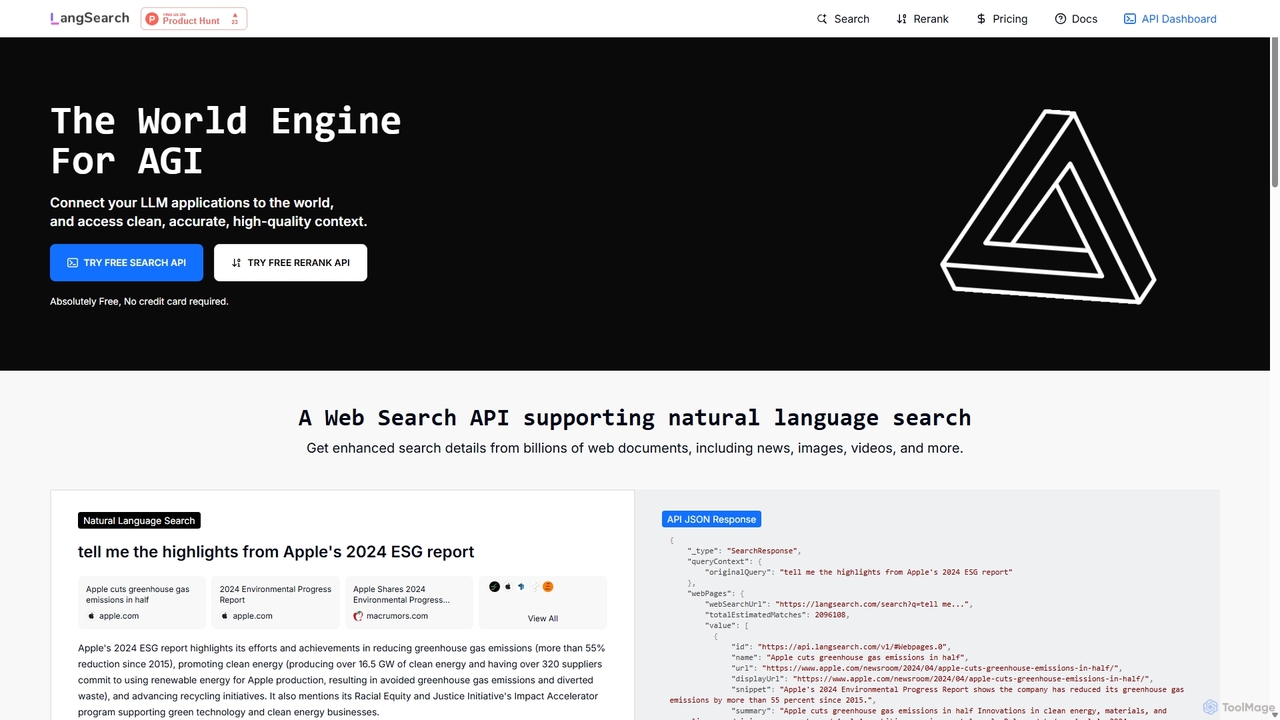
LangSearch provides free Web Search and Semantic Rerank APIs designed to connect LLM applications with clean, accurate, real-world context. It supports natural language queries, hybrid search, and offers a highly efficient reranker to improve result accuracy for AI agents, chatbots, and RAG systems.
Llm
Skald
Skald is an open-source RAG API designed for developers to quickly build AI agents without the complexity of managing RAG infrastructure. It simplifies knowledge storage, context management, and semantic search, offering a powerful solution for integrating long-term memory into AI applications.
Rag
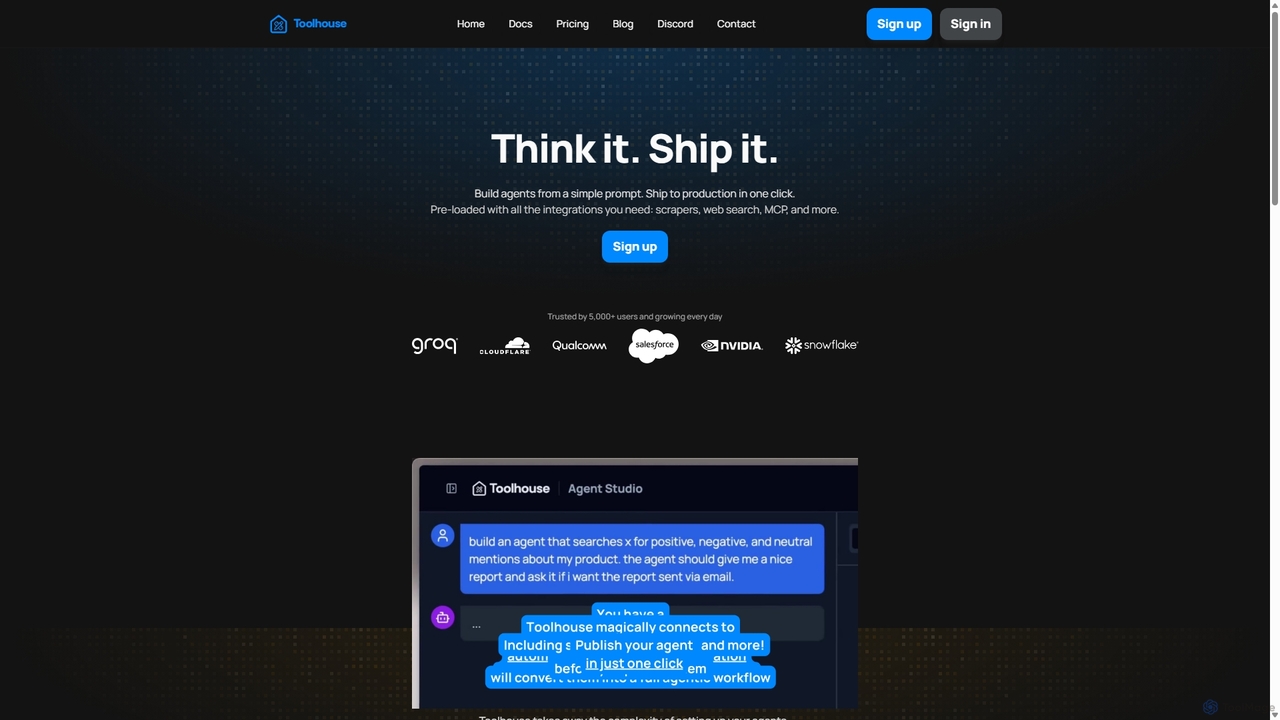
Toolhouse
Toolhouse is a no-code/low-code platform that democratizes AI agent creation. It allows developers to build, deploy, and manage production-grade AI agents from simple prompts. With pre-built integrations for web scraping, search, RAG, and databases, Toolhouse abstracts away the complexity of infrastructure, enabling one-click deployment of agents as scalable APIs. It's designed to empower developers of all skill levels to ship AI-powered applications quickly.
Agent Development
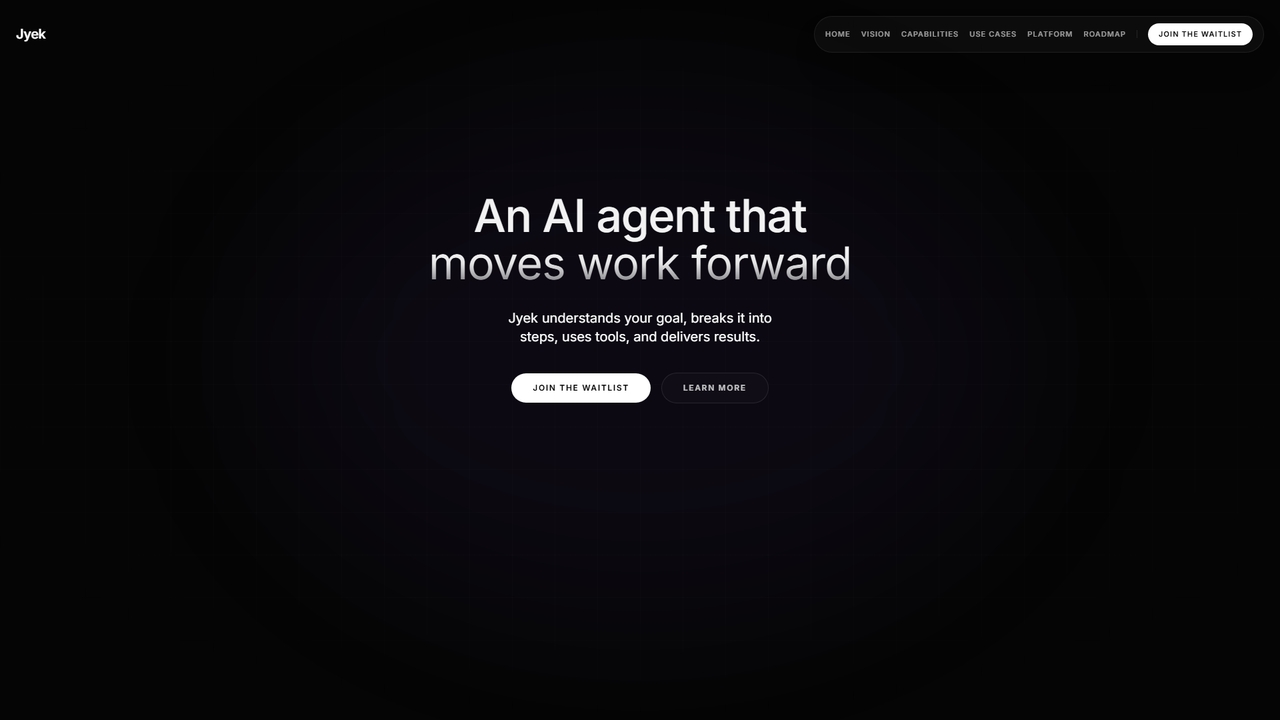
Jyek
Jyek is an AI agent platform that understands objectives, creates execution plans, uses tools, and delivers verifiable results for complex, multi-step tasks.
Automation
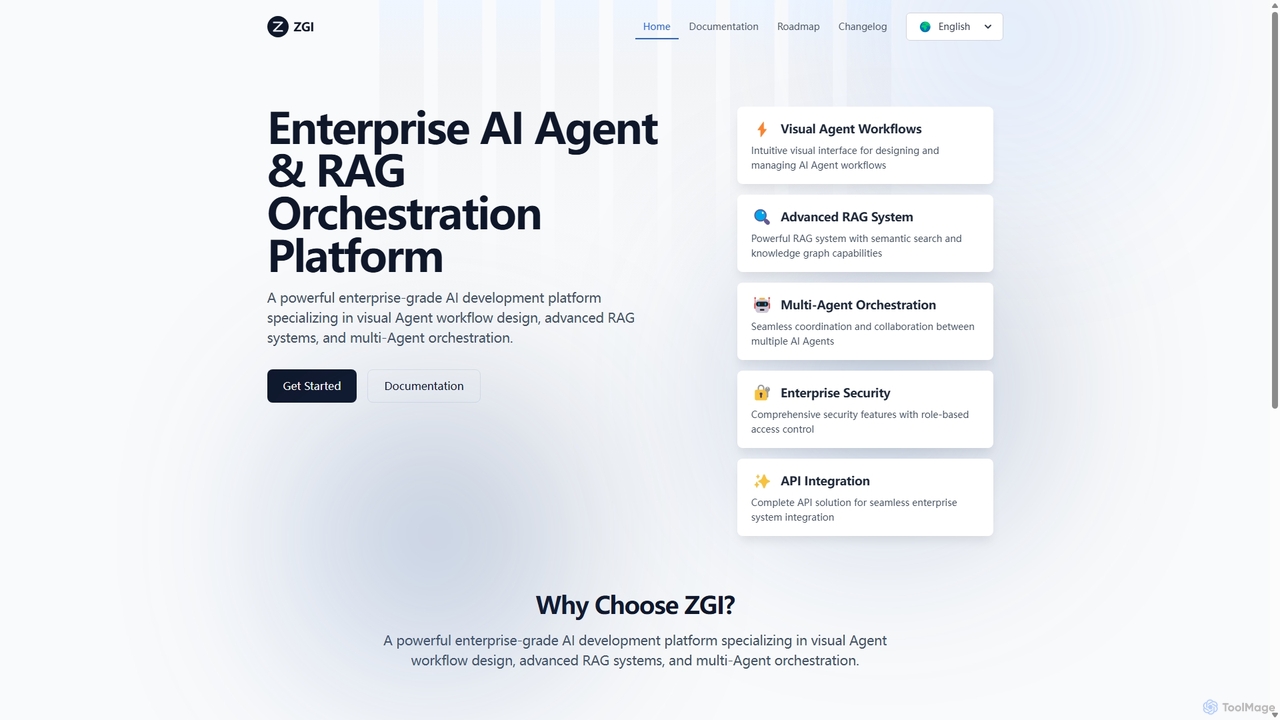
ZGI
ZGI is a powerful, enterprise-grade AI development platform specializing in visual AI Agent workflow design, advanced Retrieval-Augmented Generation (RAG) systems, and multi-agent orchestration. It combines a no-code/low-code visual builder with robust security and API integration, enabling businesses to rapidly deploy complex AI solutions. ZGI also offers a comprehensive learning ecosystem, including courses and mentorship, to empower developers and teams to master AI agent development and build their own innovative products.
Agent Builder
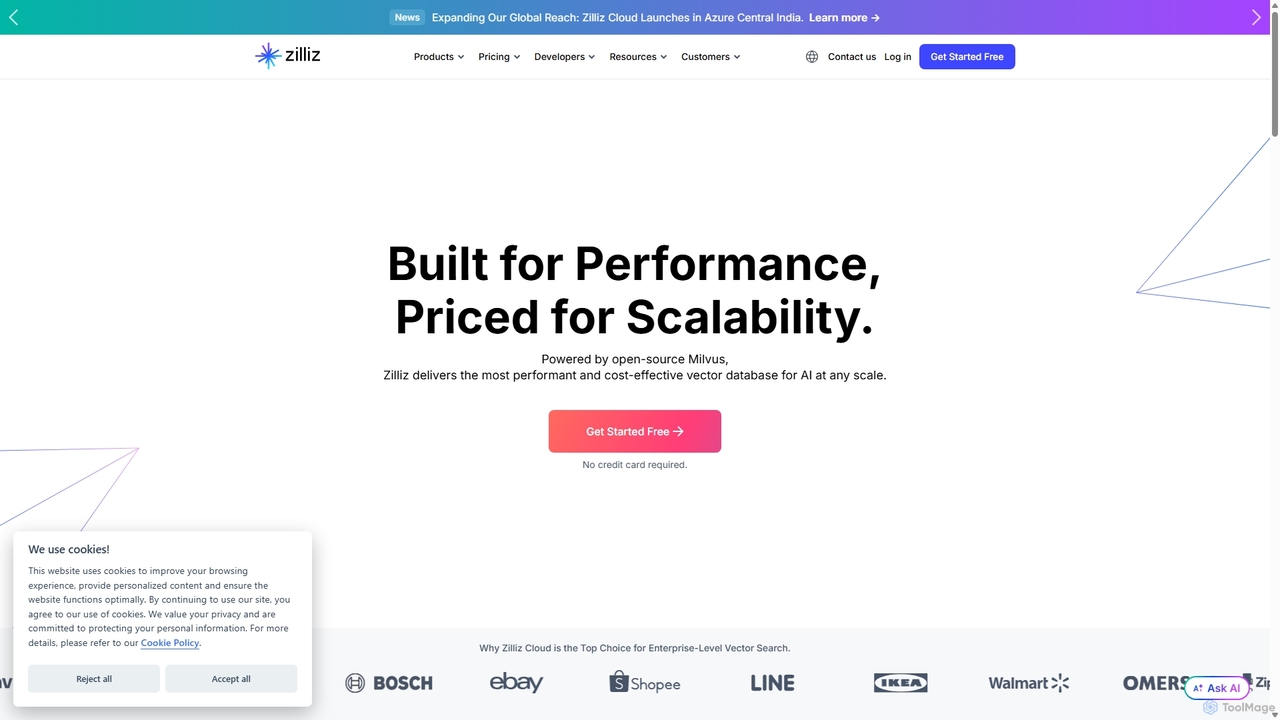
Zilliz
Zilliz is an enterprise-grade vector database built for scalable AI applications. Powered by the popular open-source project Milvus, it provides a high-performance, cost-effective, and fully-managed service (Zilliz Cloud) for storing, indexing, and searching billions of vector embeddings. It's designed to power applications like RAG, recommendation systems, and multimodal search, with seamless integrations into major AI frameworks and cloud platforms.
Machine Learning
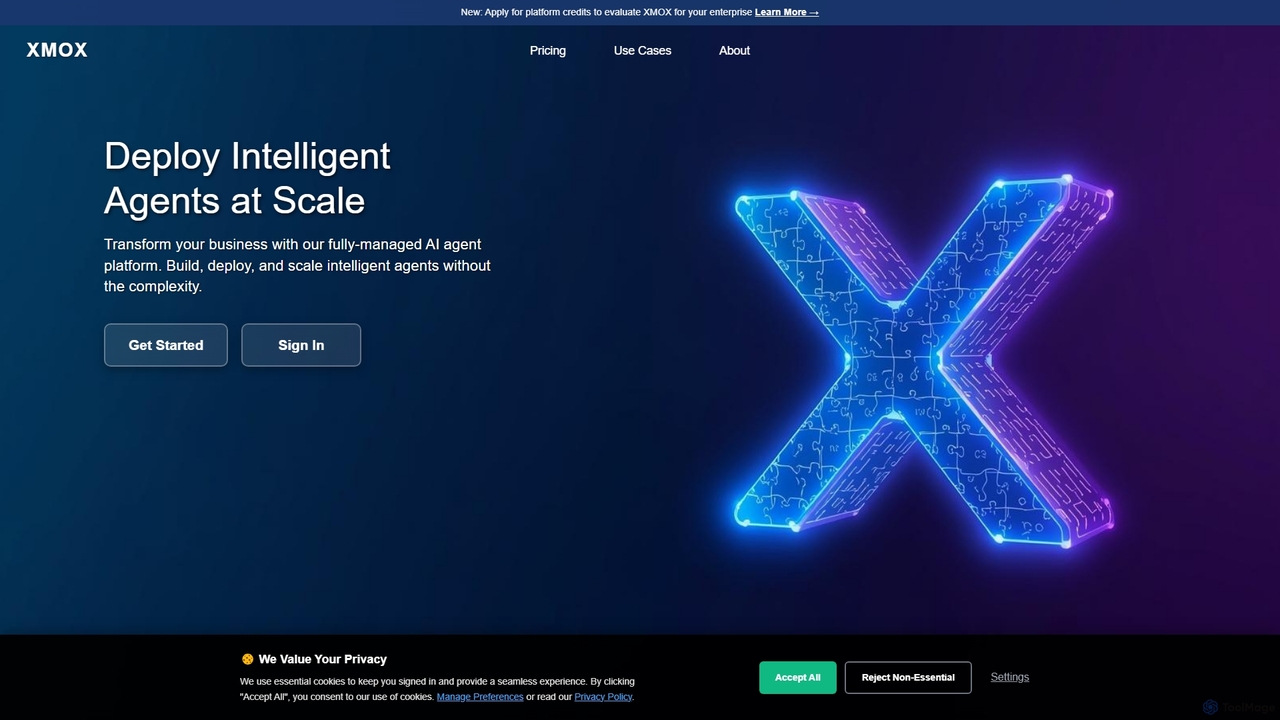
XMOX
XMOX is a leading managed AI agents platform that provides enterprise-grade infrastructure and services for deploying, scaling, and managing intelligent agents. It eliminates operational complexity, allowing businesses to harness the power of multi-modal AI agents—including language, code, and voice—with advanced RAG integration, zero-touch operations, and intelligent auto-scaling.
Platform As A Service
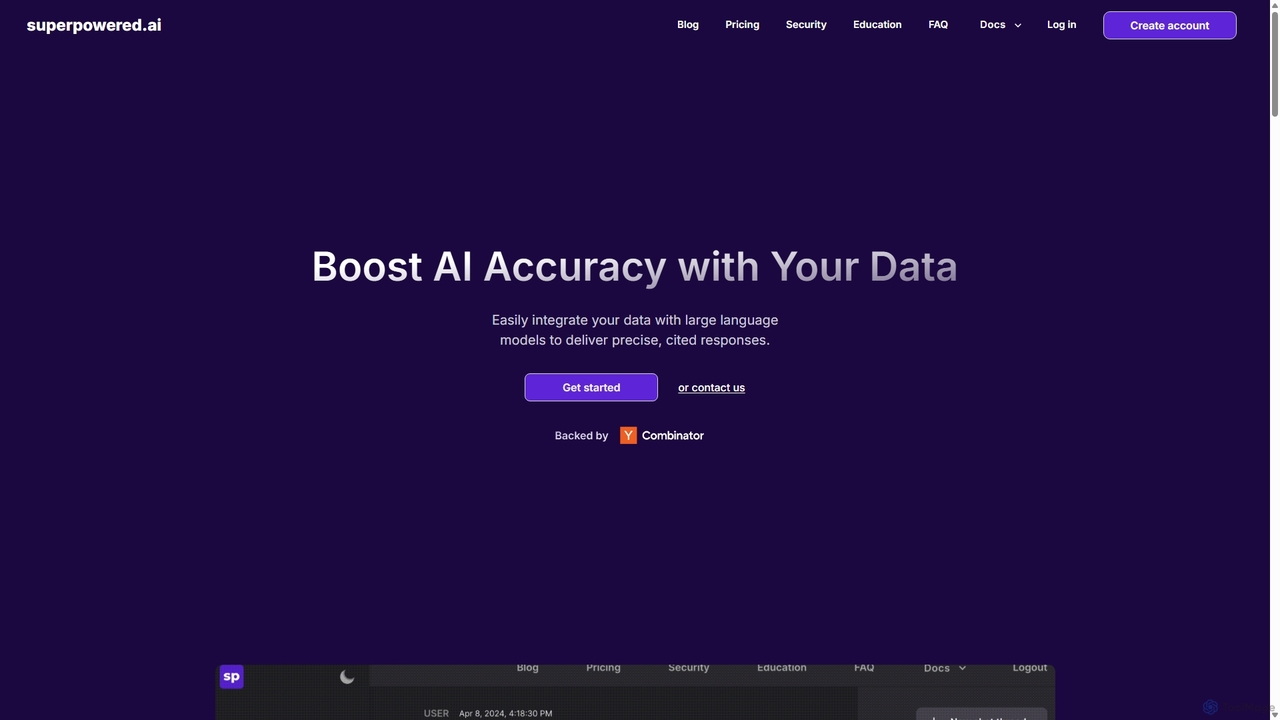
Superpowered AI
Superpowered AI is a platform that enhances Large Language Models (LLMs) by securely connecting them to your private data. It enables developers and businesses to build highly accurate, cited AI applications like chatbots, search tools, and content generators through a flexible API and an intuitive no-code interface.
Chatbots
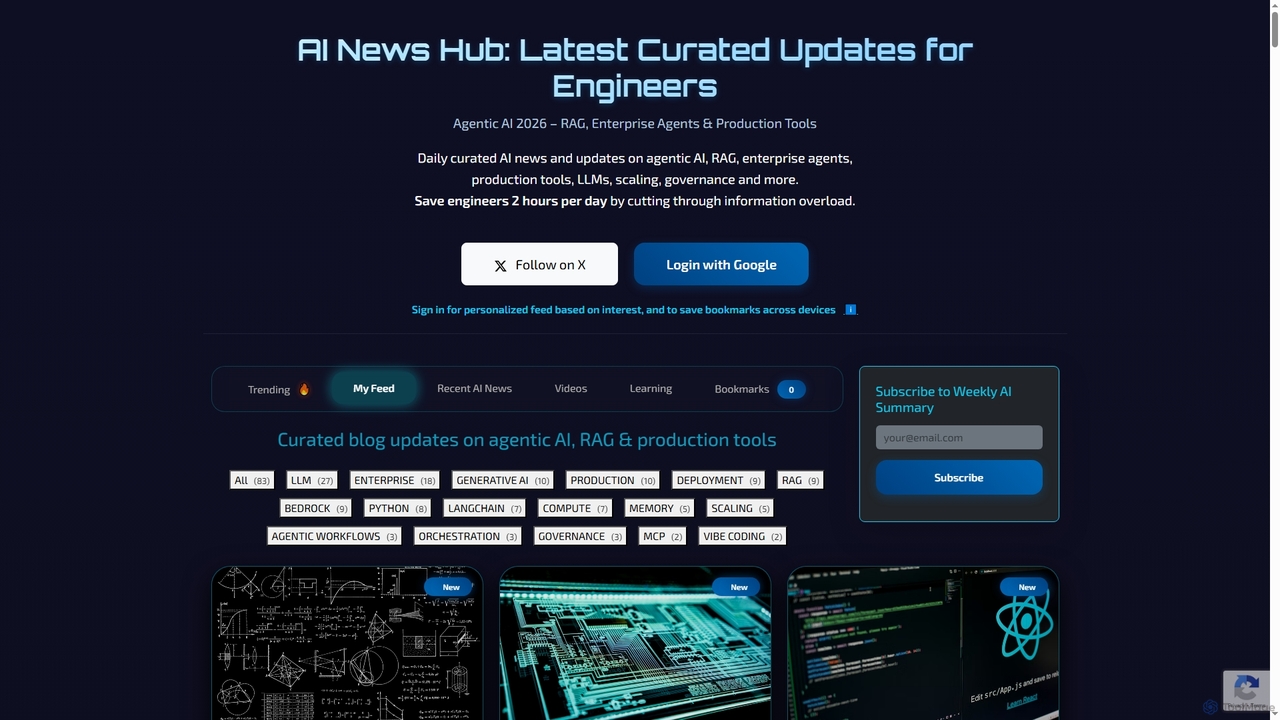
AI News Hub
AI News Hub is a comprehensive platform providing real-time AI announcements, curated blog updates on agentic AI, RAG, and production tools. It offers a personalized feed, bookmarking capabilities, and a rich collection of learning resources, including roadmaps, courses, and videos, to keep developers and enthusiasts informed and skilled in the rapidly evolving AI landscape.
Aggregation
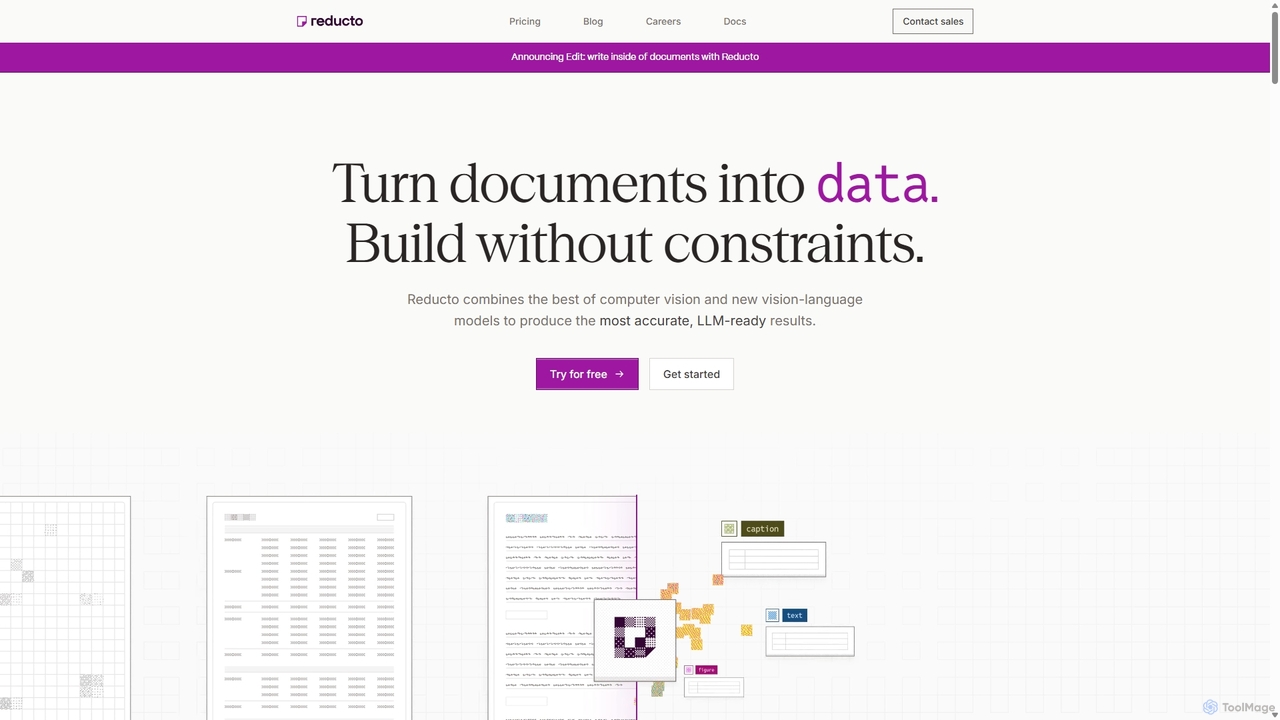
Reducto
Reducto is an advanced Document Ingestion API for developers and enterprises. It uses Agentic OCR and Vision-Language Models to accurately parse, split, extract, and even edit documents. It transforms unstructured data from various file formats into structured, LLM-ready inputs, automating complex document processing workflows with high precision and enterprise-grade security.
Document Processing
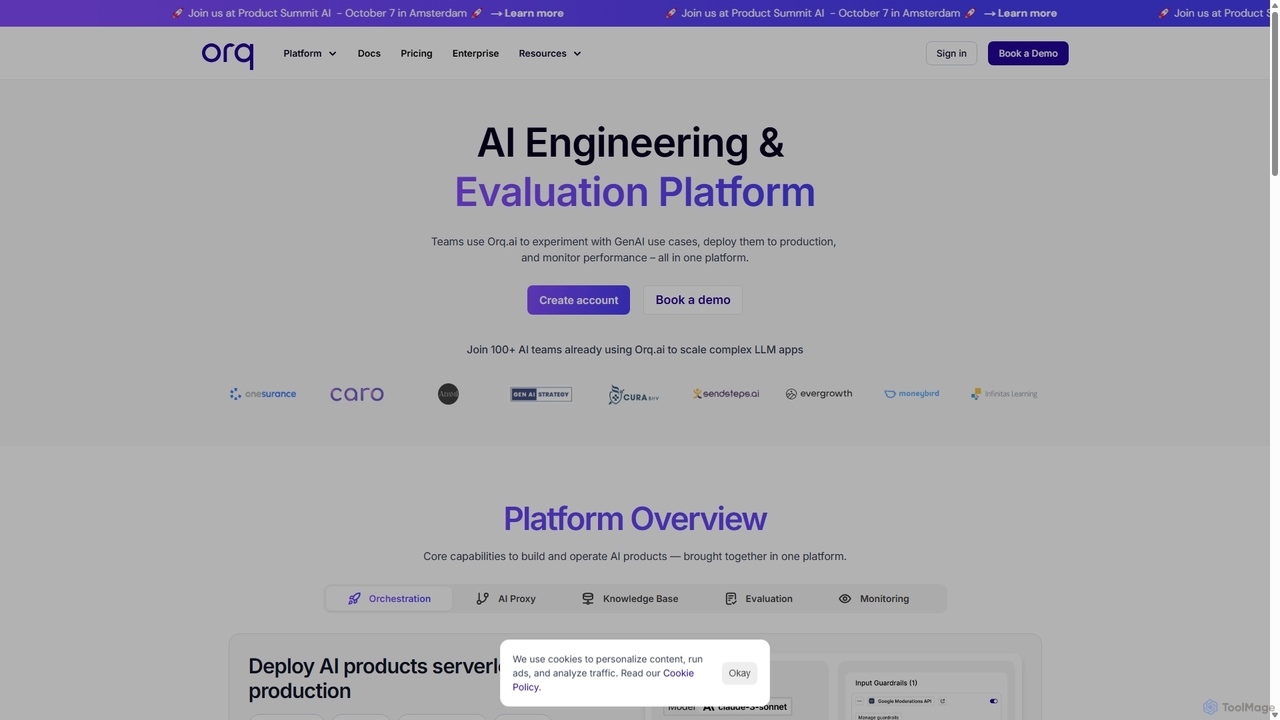
Orq.ai
Orq.ai is an end-to-end Generative AI Collaboration Platform for engineering and product teams. It enables users to experiment with GenAI use cases, deploy them to production, and monitor performance, all within a single, unified environment that supports the entire LLM application lifecycle.
Model Deployment
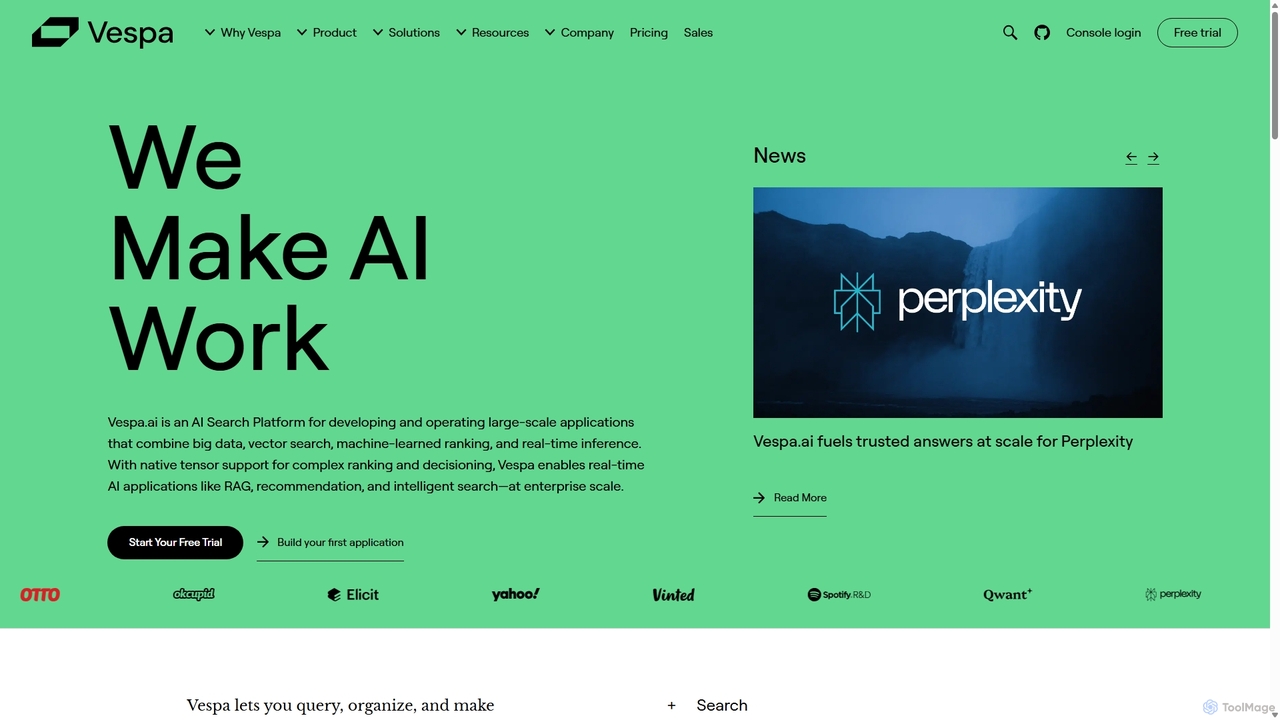
Vespa.ai
Vespa.ai is a high-performance AI search platform for building large-scale applications. It unifies vector search, text search, and machine-learned ranking to power advanced use cases like Retrieval-Augmented Generation (RAG), recommendation engines, and intelligent search. Designed for real-time inference and scalability, it's trusted by leading companies like Spotify and Perplexity to handle massive datasets with low latency.
Search
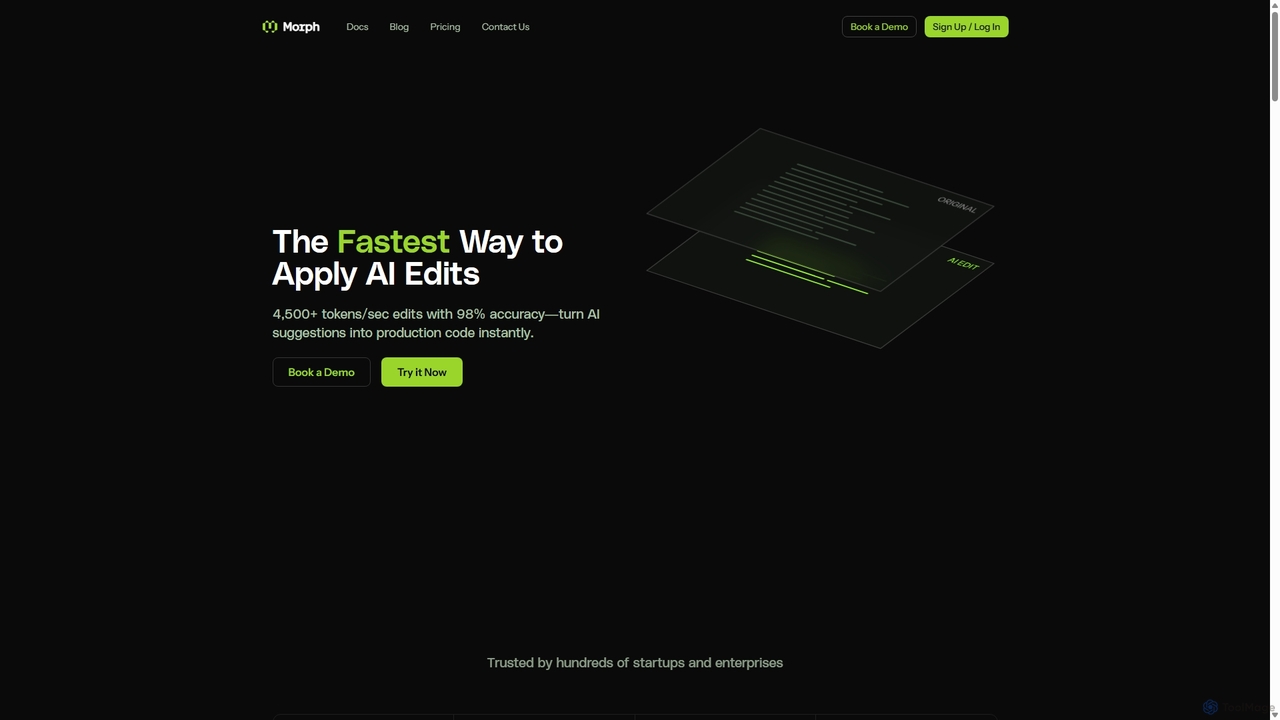
Morph
Morph is an API-first platform for developers, providing the fastest and most accurate way to apply AI-generated edits to code and files. With speeds of 4,500+ tokens/sec and 98% accuracy, it empowers AI agents to perform reliable, semantic modifications, bridging the gap between AI suggestions and production-ready implementation.
Infrastructure
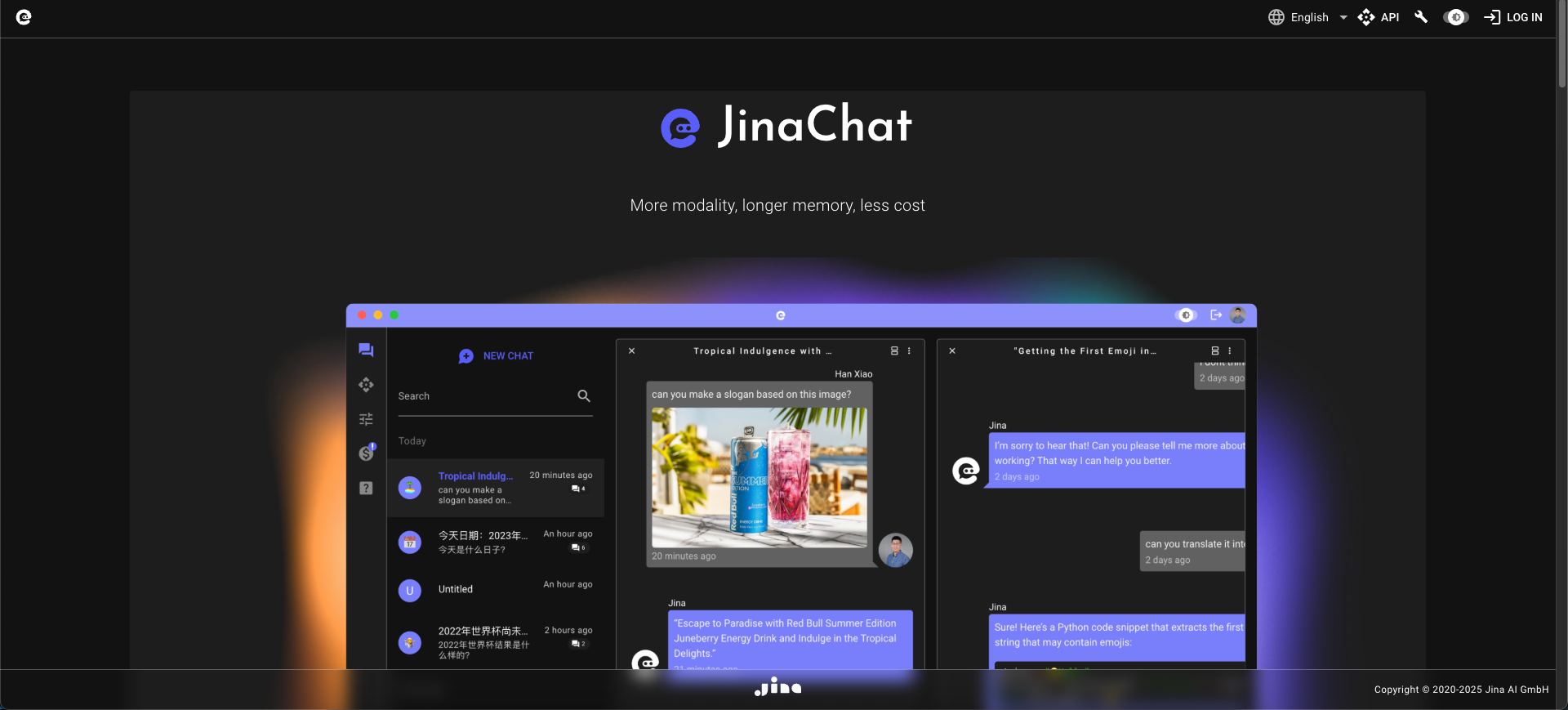
JinaChat
JinaChat is an advanced, cost-effective conversational AI platform specializing in multimodal understanding and long-context memory. It allows users and developers to build sophisticated applications that can process and interpret text, images, and more, making it a powerful alternative to other leading AI models.
Generative Ai