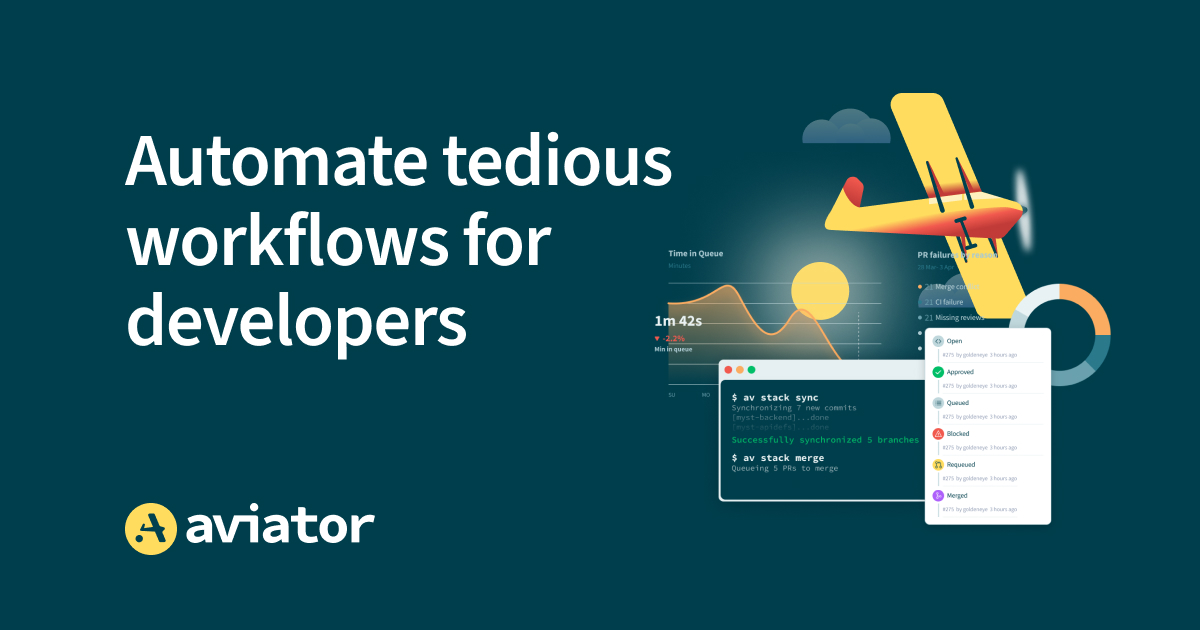
Aviator is a developer collaboration suite that automates the CI/CD pipeline, focusing on pull request management. It uses an automated merge queue to test, rebase, and merge code, ensuring the main branch remains stable and deployable, thereby boosting developer productivity and code quality.

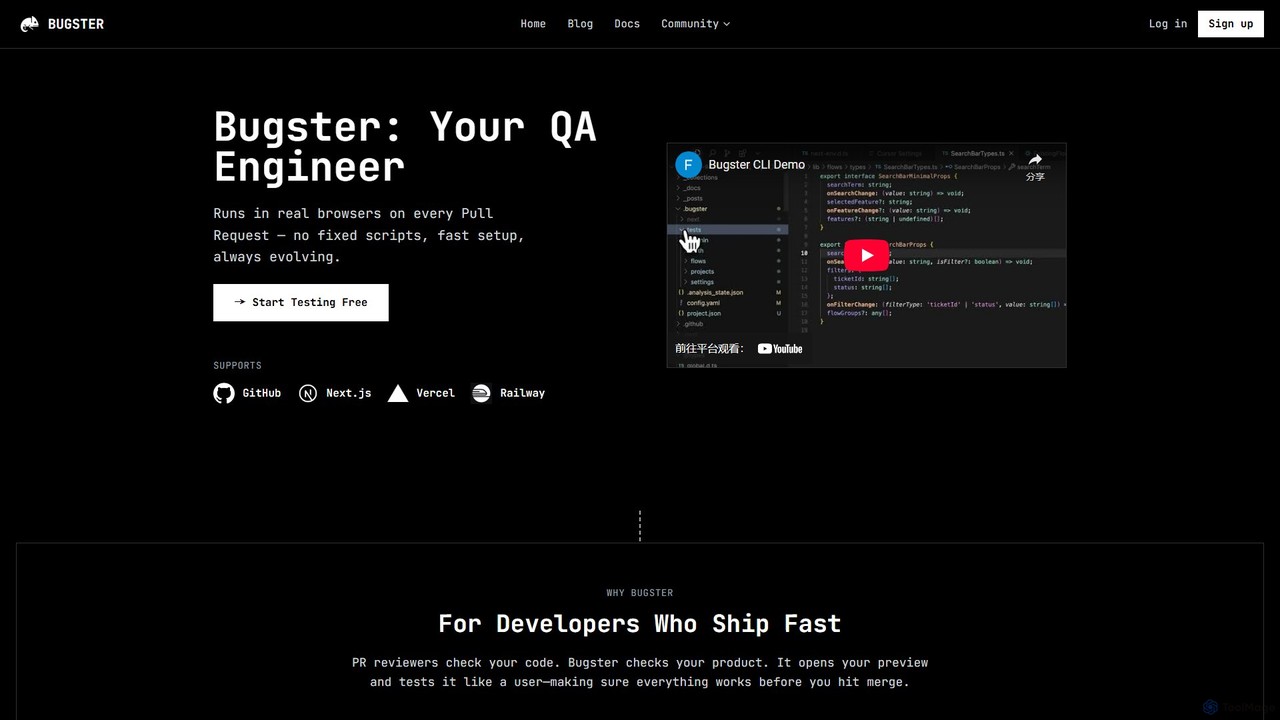
Bugster is an AI-powered QA engineer for developers that automates end-to-end testing. It runs on every pull request, simulating user interactions in real browsers to find bugs before they hit production. It offers automatic test generation, zero-effort maintenance, and seamless integration with GitHub and Vercel.
Product overview
Aviator Product overview
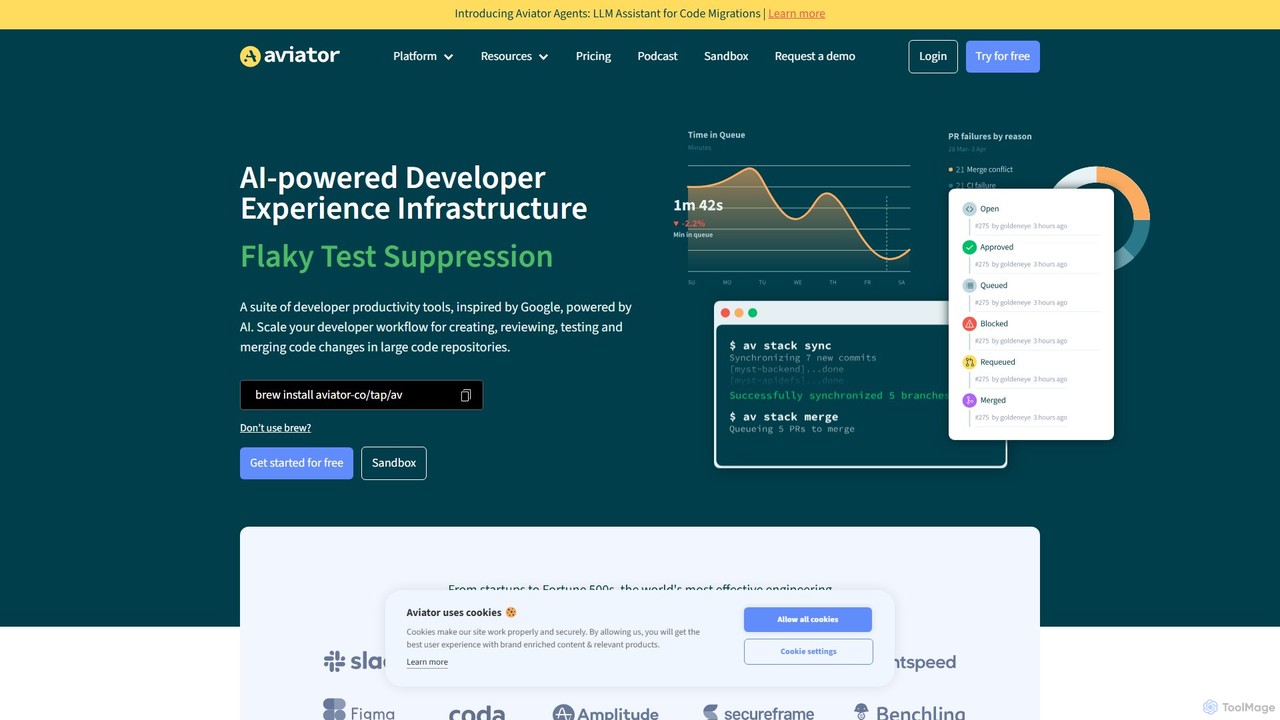
Aviator is a developer collaboration suite that automates the CI/CD pipeline, focusing on pull request management. It uses an automated merge queue to test, rebase, and merge code, ensuring the main branch remains stable and deployable, thereby boosting developer productivity and code quality.
Bugster Product overview
Bugster is an AI-powered QA engineer for developers that automates end-to-end testing. It runs on every pull request, simulating user interactions in real browsers to find bugs before they hit production. It offers automatic test generation, zero-effort maintenance, and seamless integration with GitHub and Vercel.
Detailed feature comparison
| Feature | Aviator | Bugster |
|---|---|---|
| Primary category | Code Collaboration | Code Quality |
| Added | 2025-08-10 | 2025-08-11 |
| Pricing | Freemium | Freemium |
| Official website | www.aviator.co | www.bugster.dev |
| Product type | Website | Website |
| Performance data | ||
| User rating | Not verified | Not verified |
| Comments | 0 | 0 |
| Monthly visits | 72.6K | 3K |
| Monthly growth | -5.3% | -93.2% |
| Favorites | 111 | 76 |
| Details | View details | View details |
Aviator vs Bugster monthly traffic
Compare Aviator and Bugster by monthly reach, traffic trend, visit depth, top regions, and acquisition sources.
How to interpret the traffic data
In the Aviator vs Bugster monthly traffic comparison, Aviator currently shows 72.6K visits and Bugster shows 3K; Aviator has about 24.5 times the visible traffic of Bugster, an absolute difference of about 69.6K visits. This reflects visible reach, not feature quality or paid users.
Both tools provide verified traffic details, so monthly trends, visit depth, regions, and acquisition sources can be compared on the same basis.
Aviator monthly traffic:
Latest traffic
Monthly traffic trend
- 2025/9: 83.3K Monthly visits
- 2026/1: 98K Monthly visits
- 2026/2: 62.7K Monthly visits
- 2026/3: 84.9K Monthly visits
- 2026/4: 76.7K Monthly visits
- 2026/5: 72.6K Monthly visits
Top regions
Top 5 countries/regions
| Country/region | Percentage | Traffic |
|---|---|---|
| 🇺🇸United States | 60.4% | 43.9K |
| 🇳🇬Nigeria | 12.2% | 8.9K |
| 🇮🇳India | 10.51% | 7.6K |
| 🇩🇪Germany | 9.34% | 6.8K |
| 🇻🇳Vietnam | 7.55% | 5.5K |
Traffic sources
| Source type | Percentage | Traffic |
|---|---|---|
| Direct | 82.75% | 60.1K |
| Referral | 15.07% | 10.9K |
| 2.18% | 1.6K |
Search keywords
Bugster monthly traffic:
Latest traffic
Monthly traffic trend
- 2025/9: 7K Monthly visits
- 2026/1: 18K Monthly visits
- 2026/2: 38.4K Monthly visits
- 2026/3: 64.2K Monthly visits
- 2026/4: 43.3K Monthly visits
- 2026/5: 3K Monthly visits
Top regions
Top 5 countries/regions
| Country/region | Percentage | Traffic |
|---|---|---|
| 🇺🇸United States | 43.02% | 1.3K |
| 🇨🇱Chile | 22.04% | 652 |
| 🇵🇭Philippines | 15% | 444 |
| 🇻🇳Vietnam | 12.98% | 384 |
| 🇯🇵Japan | 6.96% | 206 |
Search keywords
Usage comparison
Compare the core capabilities of Aviator and Bugster
Aviator Core features
Bugster Core features
Use cases
Aviator Use cases
Bugster Use cases
Aviator vs Bugster:In-depth comparison and selection guidance
First decide whether the products solve the same kind of need
This in-depth Aviator vs Bugster comparison uses only the product records, taxonomy, audience, traffic, and community signals available on this page. Aviator is primarily listed under “Code Collaboration”, while Bugster is primarily listed under “Code Quality”, so the first decision is whether your actual task matches their recorded scope.
The structured fields currently show these decision-relevant differences: Primary category (Aviator: Code Collaboration; Bugster: Code Quality); Monthly visits (Aviator: 72.6K; Bugster: 3K); Monthly growth (Aviator: -5.3%; Bugster: -93.2%); Favorites (Aviator: 111; Bugster: 76); Website (Aviator: www.aviator.co; Bugster: www.bugster.dev). These facts are more useful for selection than brand visibility alone.
What market visibility and monthly traffic mean
In the Aviator vs Bugster monthly traffic comparison, Aviator currently shows 72.6K visits and Bugster shows 3K; Aviator has about 24.5 times the visible traffic of Bugster, an absolute difference of about 69.6K visits. This reflects visible reach, not feature quality or paid users.
Both tools provide verified traffic details, so monthly trends, visit depth, regions, and acquisition sources can be compared on the same basis.
If public market visibility is an important first-pass criterion, investigate Aviator first. The final choice should still follow taxonomy, use case, and a real trial because higher traffic does not prove broader capabilities or better workflow fit.
Product positioning, use cases, and roles
Aviator and Bugster currently overlap in shared categories: Automation; shared tags: automation, CI/CD, developer tools, github, and software development. This can place both on the same shortlist, but it does not prove equal implementation, depth, or cost.
Aviator's unique categories/tags are Code Collaboration, Continuous Integration, code quality, continuous integration, devops, merge queue, and pull request; Bugster's are Code Quality, Testing, bug detection, e2e, end-to-end testing, NextJS, Q&A, and testing. These unique fields are the strongest differentiators: validate the product whose recorded scope matches the task instead of following traffic alone.
What ratings, comments, and favorites can tell you
Aviator has no verified rating, 0 comments, 111 favorites, and 111 likes;Bugster has no verified rating, 0 comments, 76 favorites, and 73 likes。
Neither product has enough rating or comment samples for a credible reputation ranking.
Selection guidance by actual need
When to evaluate Aviator first
Put Aviator on the priority trial list when the task aligns with “Code Collaboration” and especially Code Collaboration, Continuous Integration, code quality, continuous integration, devops, and merge queue. This follows recorded positioning and does not imply unlisted capabilities are absent.
Aviator also currently records: pricing is freemium, product type is website, 72.6K verified monthly visits, no verified user rating. Verify any hard requirement around price, platform, or reach before trial, and do not let sparse review data substitute for testing.
When to evaluate Bugster first
Put Bugster on the priority trial list when the task aligns with “Code Quality” and especially Code Quality, Testing, bug detection, e2e, end-to-end testing, and NextJS. This follows recorded positioning and does not imply unlisted capabilities are absent.
Bugster also currently records: pricing is freemium, product type is website, 3K verified monthly visits, no verified user rating. Verify any hard requirement around price, platform, or reach before trial, and do not let sparse review data substitute for testing.
How to validate the recommendation before deciding
The available data describes positioning, public visibility, and community signals, but it cannot prove output quality, speed, integration effort, privacy, or long-term cost in your workflow. Before deciding, run the same representative tasks in Aviator and Bugster, then record completion time, accuracy, manual corrections, and the real paid threshold. A like-for-like trial turns this comparison into a defensible adoption decision.
Comparison FAQ
How should I choose between Aviator and Bugster?
Where does this comparison data come from?
What do unknown fields mean?
Related AI tools

Rebolt
Rebolt is an AI-powered platform designed to automate the entire software development lifecycle. It helps developer and DevOps teams build, test, and deploy applications faster and more reliably by leveraging AI for CI/CD pipeline optimization, code generation, and intelligent monitoring.
Code Assistant
HOJI AI
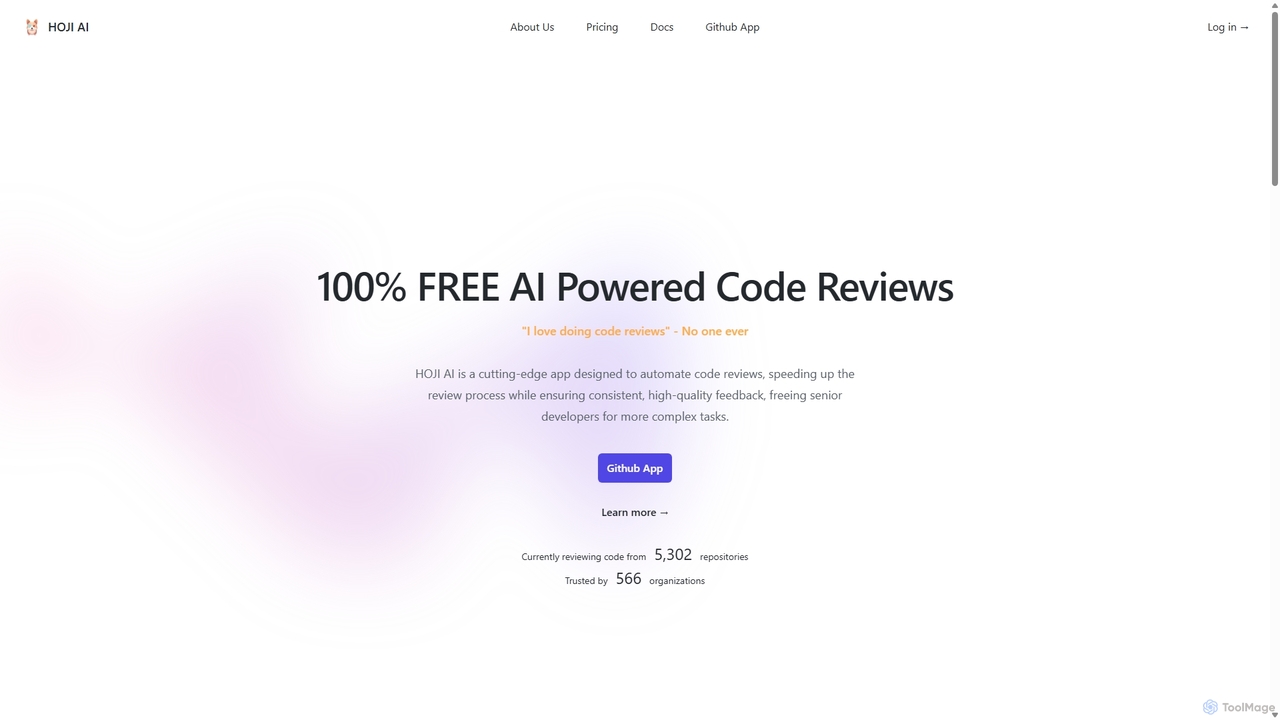
HOJI AI is a free, AI-powered tool that automates code reviews directly within GitHub. It provides instant, consistent, and high-quality feedback on pull requests, helping development teams increase productivity, improve code quality, and accelerate their development cycles by freeing up senior engineers.
Code Assistant
hoji
hoji is a free, AI-powered code review assistant that integrates directly with GitHub. It automates the code review process, providing instant, consistent, and unbiased feedback on pull requests. This helps development teams increase productivity, improve code quality, and reduce friction, freeing up senior developers for more complex tasks.
Code Assistant
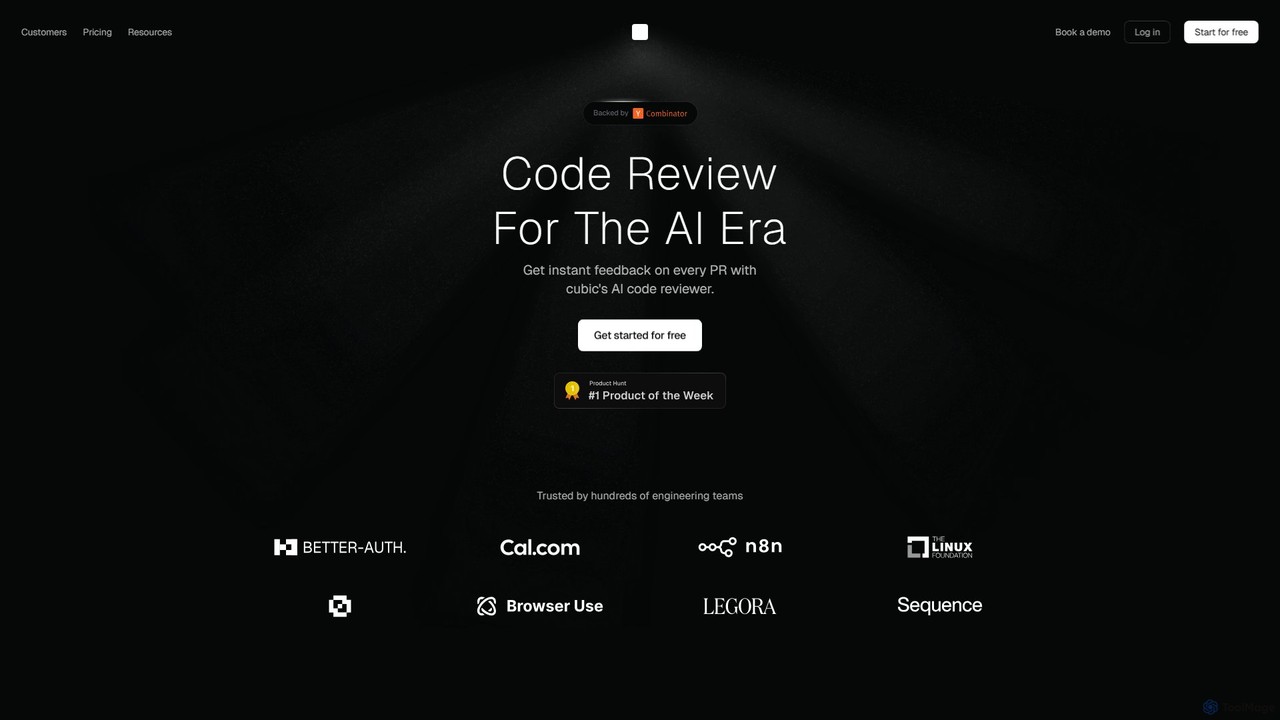
cubic
cubic is an AI-powered code review platform that helps software teams ship higher-quality code up to 3x faster. It automatically reviews pull requests in GitHub, catches bugs, enforces custom style guides, and provides one-click fixes, significantly reducing review bottlenecks and improving developer productivity.
Code Assistant
Shortest
Shortest is an AI-powered testing framework that allows developers and QA engineers to write end-to-end tests in plain English. Built on Playwright, it translates natural language commands into executable test scripts, simplifying and accelerating the QA process with seamless GitHub integration.
Code Assistant
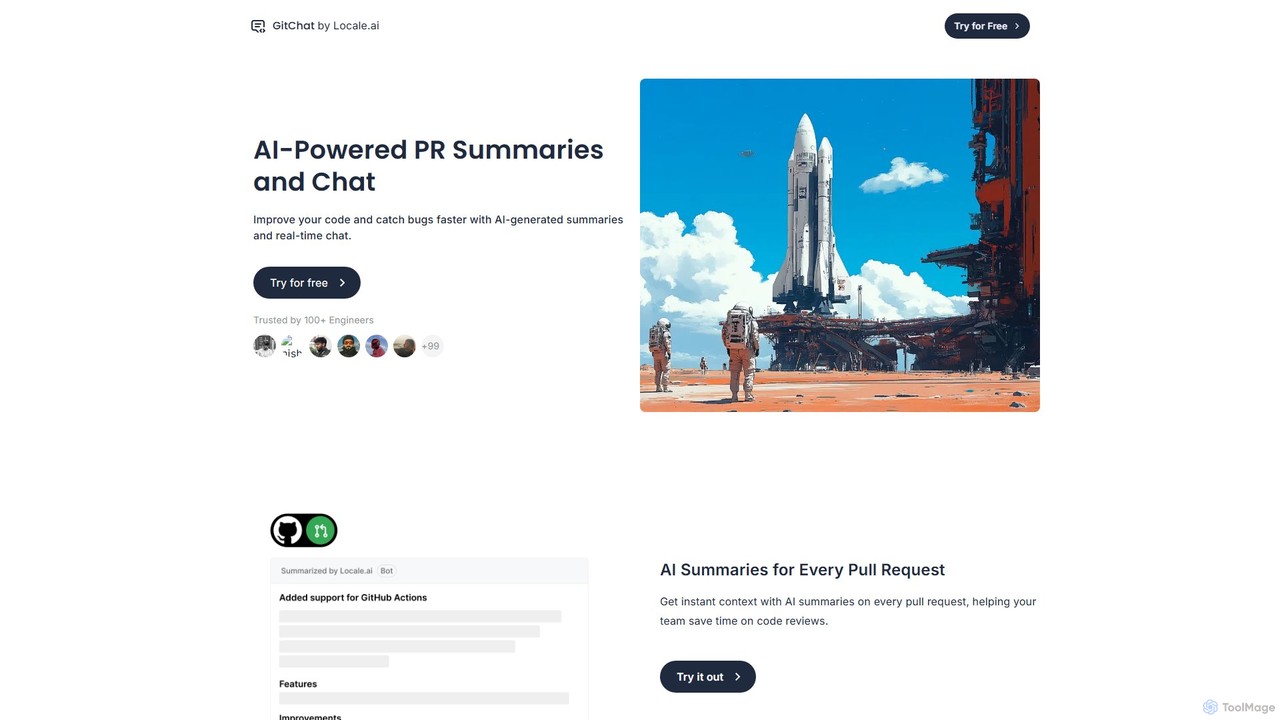
GitChat
GitChat is an AI-powered assistant for GitHub that supercharges code reviews. It automatically generates summaries for Pull Requests, provides instant feedback on code, and allows developers to chat with an AI directly within PR comments to improve code quality and accelerate development.
Code Assistant
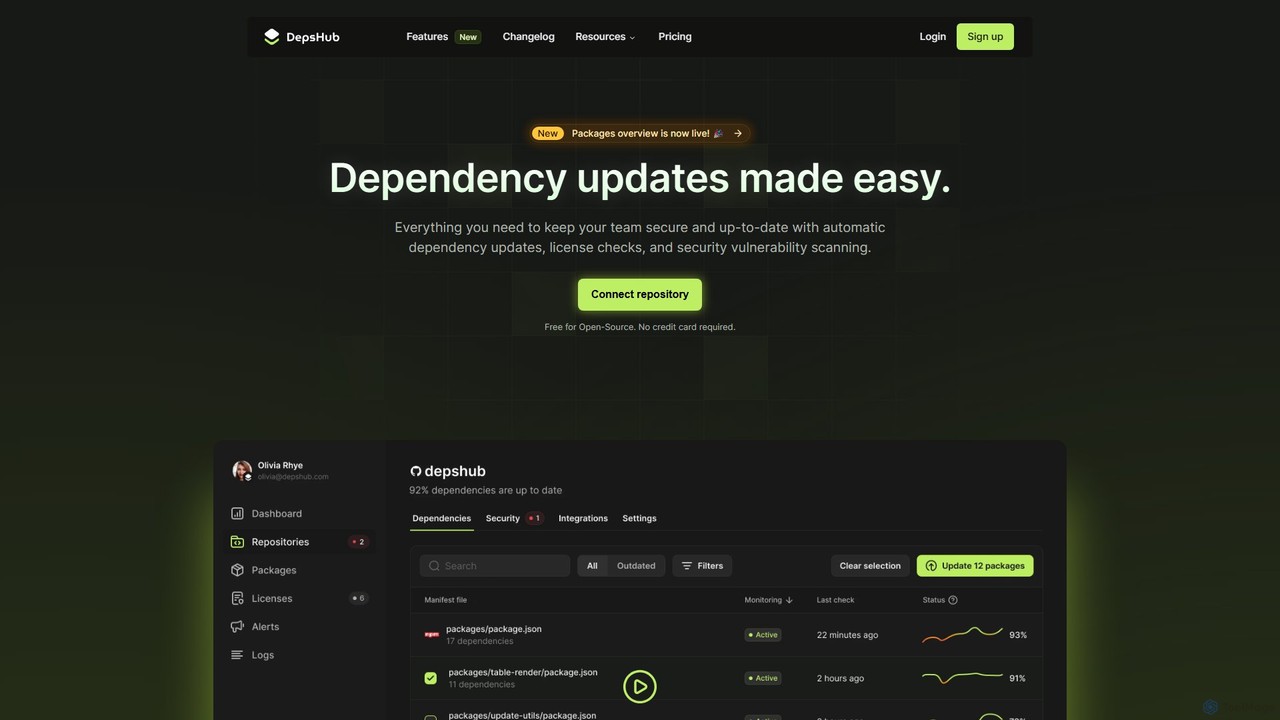
DepsHub
DepsHub is an AI-powered platform that automates dependency management for development teams. It simplifies updates, performs security vulnerability scanning, and ensures license compliance, allowing developers to focus on coding while maintaining a secure and up-to-date codebase.
Code Management
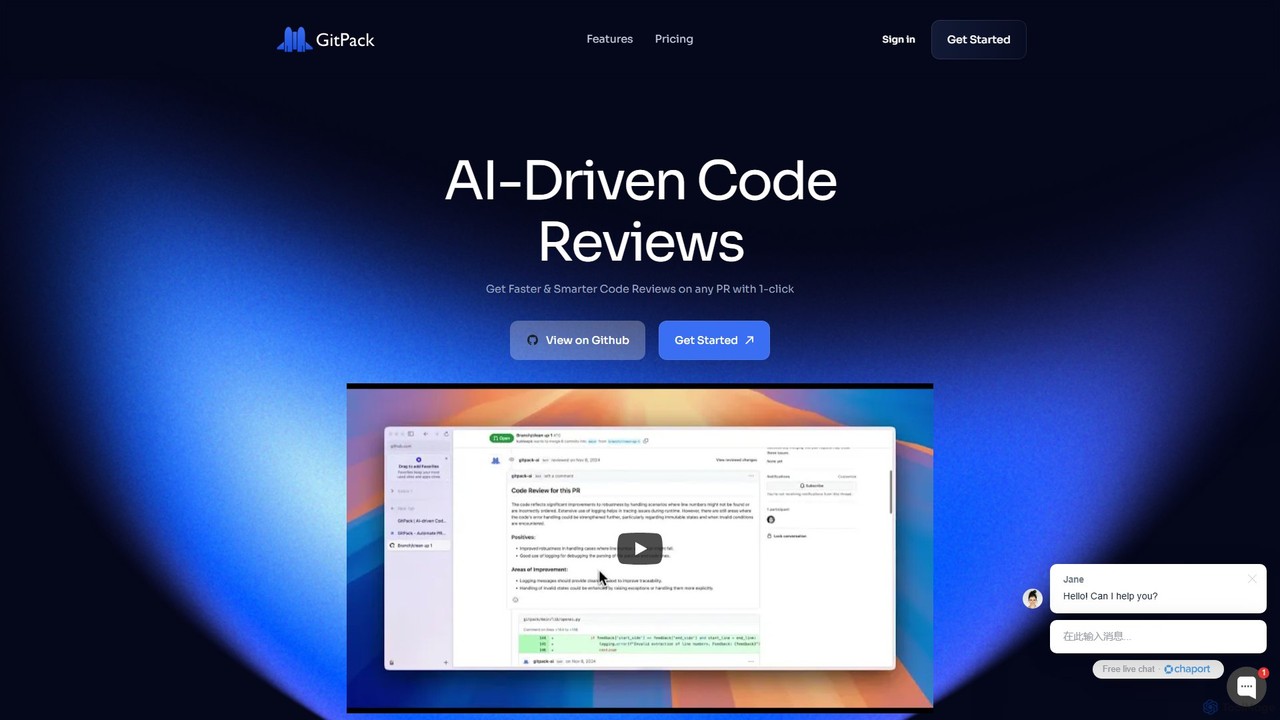
GitPack
GitPack is an AI-driven tool that automates code reviews on GitHub. It analyzes pull requests, provides context-aware feedback, and helps improve code quality, allowing developers to save time and streamline their workflow.
Code Assistant
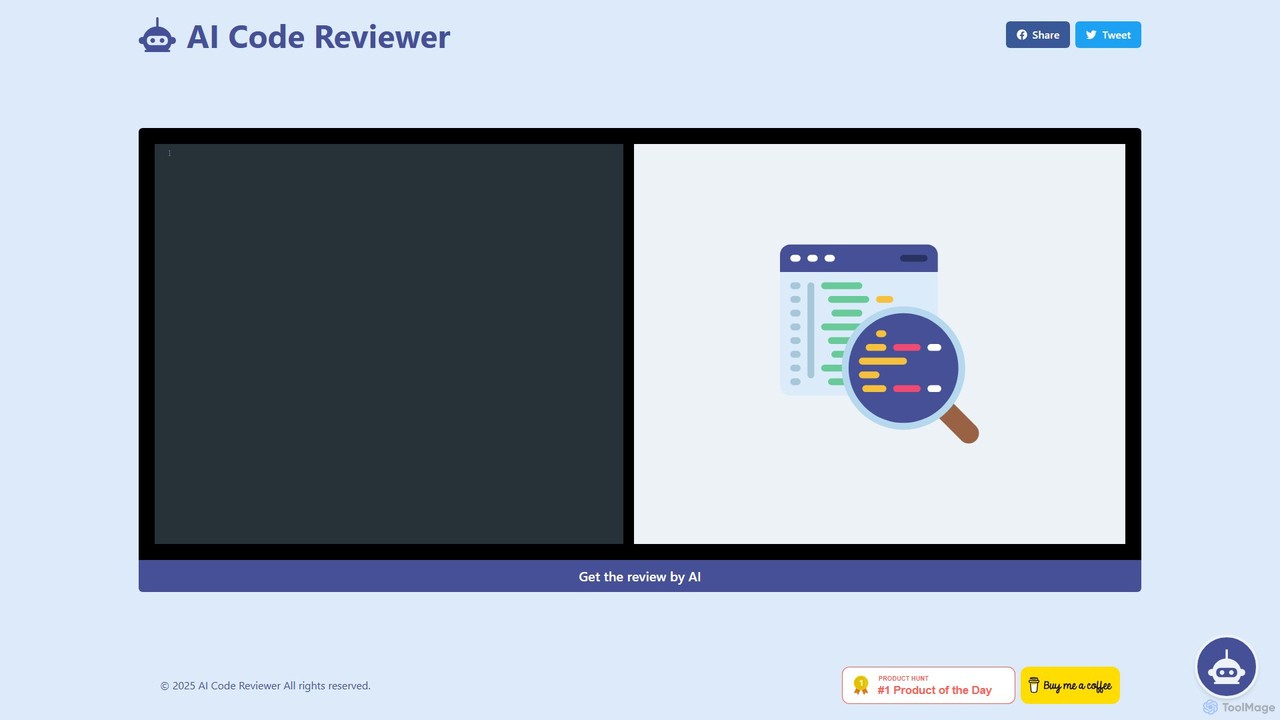
AI Code Reviewer
AI Code Reviewer is an automated tool that uses artificial intelligence to analyze your code. It integrates with your development workflow, like GitHub, to automatically review pull requests. The tool identifies bugs, security vulnerabilities, and style issues, providing instant, actionable feedback to help developers improve code quality and accelerate the development cycle.
Code Review
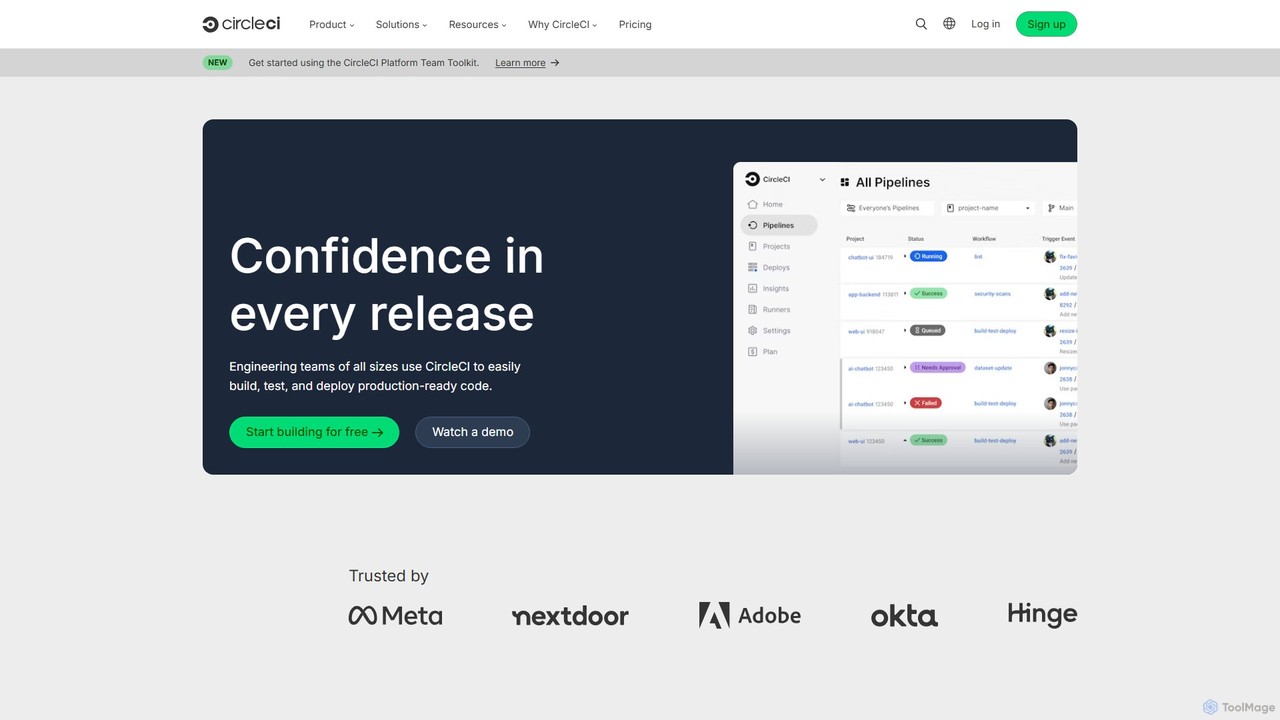
CircleCI
CircleCI is a leading continuous integration and continuous delivery (CI/CD) platform that automates the software development process. It enables engineering teams to build, test, and deploy code quickly, reliably, and at scale, increasing productivity and confidence in every release.
Infrastructure Management
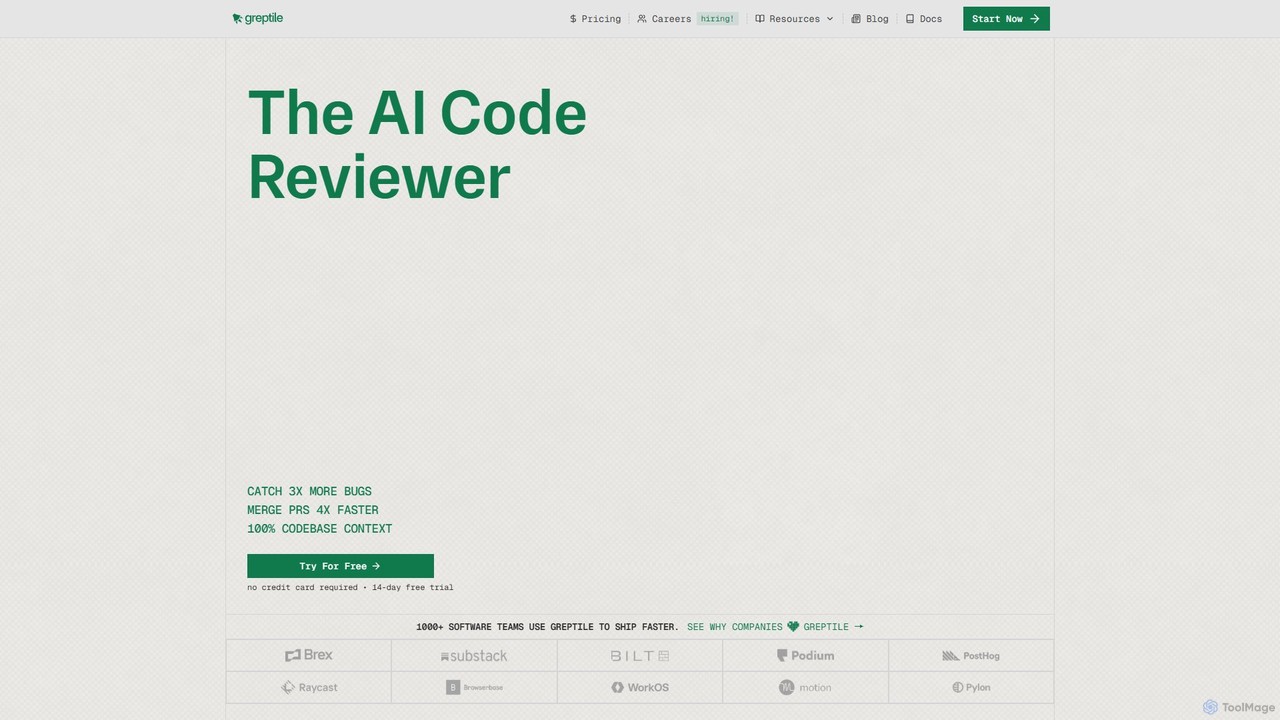
Greptile
Greptile is an AI-powered code review tool that integrates with GitHub and GitLab to help development teams merge pull requests 4x faster and catch 3x more bugs. By understanding the full context of your codebase, it provides in-line comments, actionable suggestions, and natural-language summaries for every PR. It supports over 30 programming languages and can be customized with specific rules and style guides to enhance code quality and consistency.
Code Review
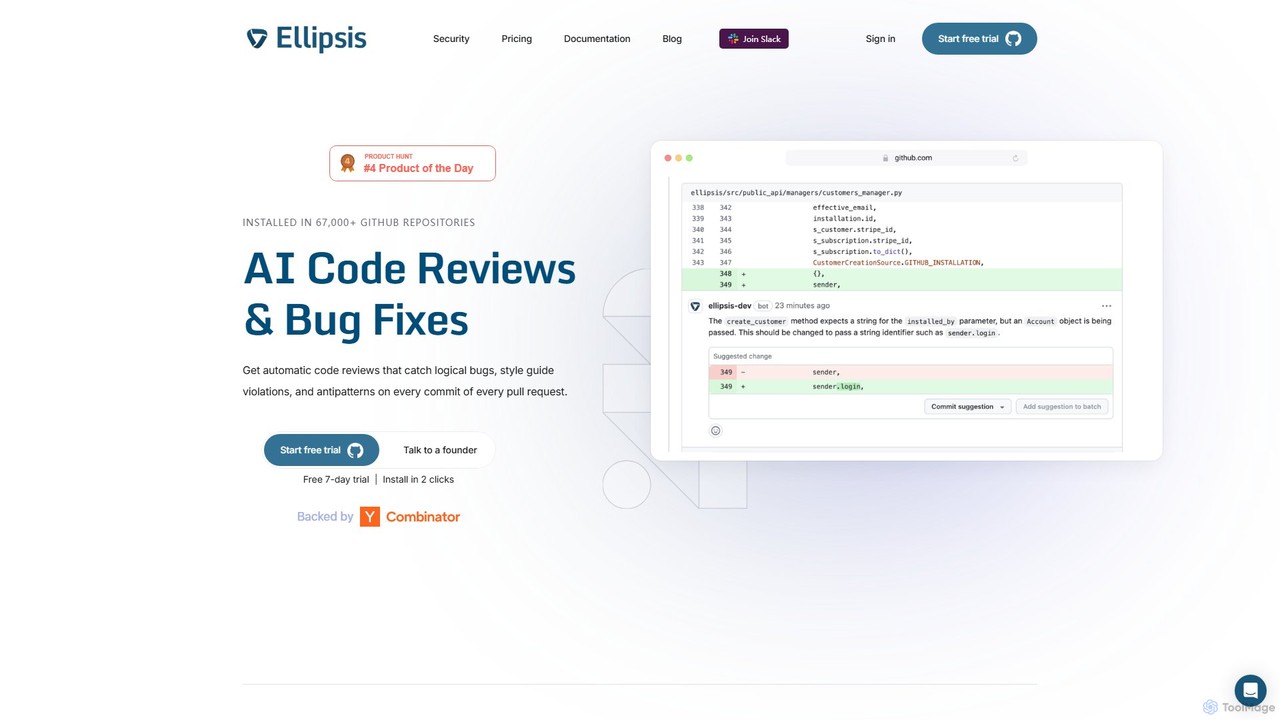
Ellipsis
Ellipsis is an AI-powered engineering teammate that automates code reviews on GitHub. It intelligently catches logical bugs, style violations, and anti-patterns in every pull request, helping teams ship code faster while maintaining high quality and security standards.
Code Review
apiversion.dev
apiversion.dev is an AI-powered platform that automates API and endpoint versioning. It helps development teams create, manage, and deliver accurate, industry-standard versions using Semantic or Calendar Versioning. By integrating with CI/CD pipelines, it reduces manual errors, improves communication, and accelerates development cycles, ensuring seamless updates for both internal teams and external customers.
Api Management
Codeball
Codeball is an AI-powered code review assistant that integrates with GitHub to automatically analyze pull requests. It helps development teams ship better code faster by identifying bugs, suggesting improvements, and ensuring code quality without manual intervention.
Code Review
Text to Action
Text to Action is an AI-powered tool that translates natural language descriptions into functional GitHub Actions code. Simply describe your desired workflow in plain English, and the tool will generate the corresponding YAML configuration file, streamlining the CI/CD and automation process for developers.
Ci Cd