ToolMage
Sign in
Backengine
Api · 3.6K monthly visits

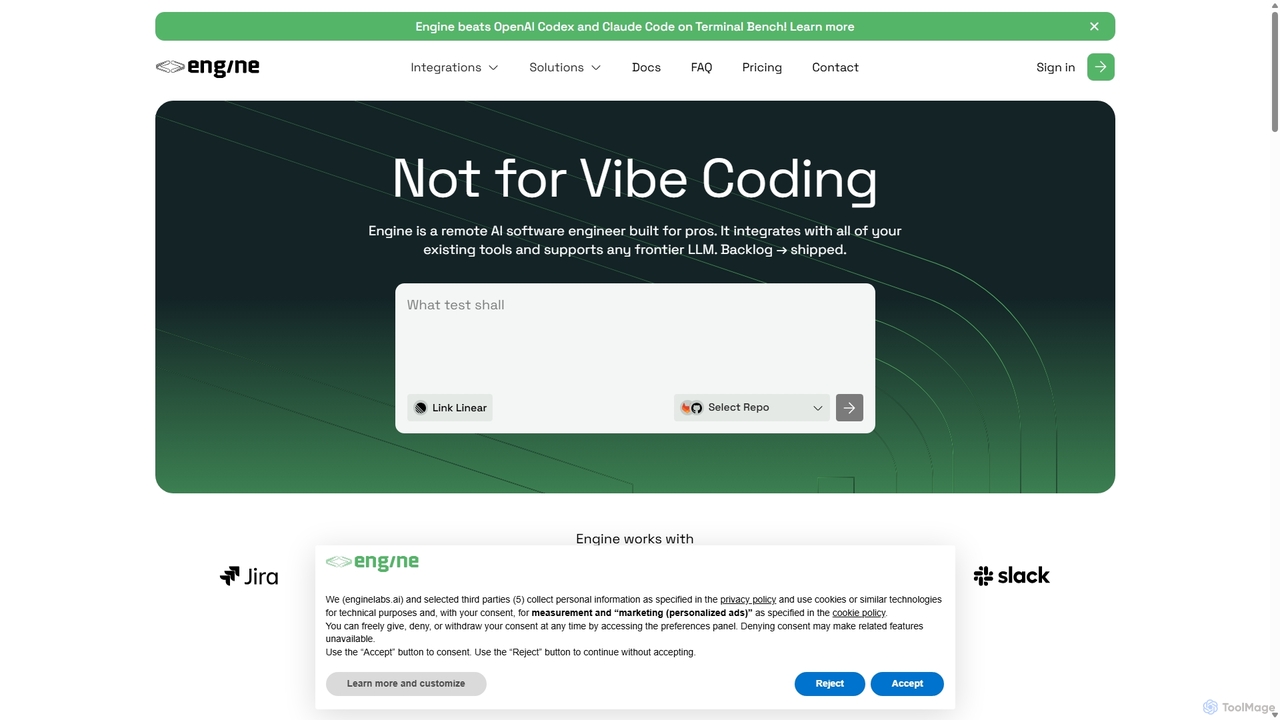
Backengine is a platform that enables developers to build and deploy scalable, LLM-powered backend APIs in minutes. Define your API logic using natural language prompts and let Backengine handle the entire serverless infrastructure, from deployment to auto-scaling.
VS
Unbody
Vector Database · 3.8K monthly visits

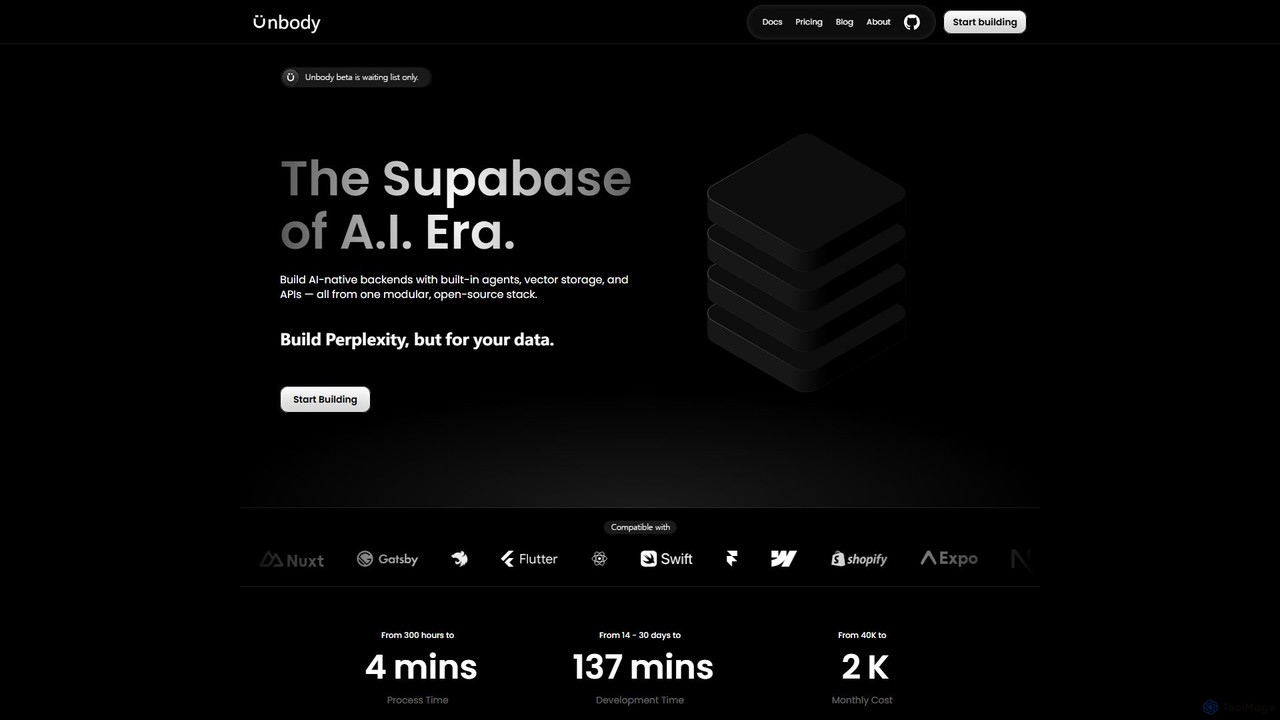
Unbody is an AI-native development stack, described as the "Supabase of the AI Era." It provides developers with a modular, open-source backend featuring built-in agents, vector storage, and a unified API. This allows for the rapid and cost-effective creation of intelligent, adaptive applications by transforming any data into a queryable knowledge base, eliminating the need for fragmented systems and complex AI pipelines.

Backengine vs Unbody: pricing, features, traffic, and use cases

Compare Backengine and Unbody across positioning, pricing, traffic, and user feedback using structured factual data.

Updated Aug 13, 2026

Product overview

Backengine Product overview

Backengine is a platform that enables developers to build and deploy scalable, LLM-powered backend APIs in minutes. Define your API logic using natural language prompts and let Backengine handle the entire serverless infrastructure, from deployment to auto-scaling.
Preview

Unbody Product overview

Unbody is an AI-native development stack, described as the "Supabase of the AI Era." It provides developers with a modular, open-source backend featuring built-in agents, vector storage, and a unified API. This allows for the rapid and cost-effective creation of intelligent, adaptive applications by transforming any data into a queryable knowledge base, eliminating the need for fragmented systems and complex AI pipelines.

Preview

Detailed feature comparison

FeatureBackengineUnbody
Primary categoryApiVector Database
Added2025-09-122025-08-16
PricingFreemiumFreemium
Official websitebackengine.devunbody.io
Product typeWebsiteWebsite
Performance data
User ratingNot verifiedNot verified
Comments00
Monthly visits3.6K3.8K
Monthly growthNot verifiedNot verified
Favorites112146
DetailsView detailsView details

Backengine vs Unbody monthly traffic

Compare Backengine and Unbody by monthly reach, traffic trend, visit depth, top regions, and acquisition sources.

How to interpret the traffic data

In the Backengine vs Unbody monthly traffic comparison, Backengine currently shows 3.6K visits and Unbody shows 3.8K; the two products have similar visible traffic, an absolute difference of about 198 visits. This reflects visible reach, not feature quality or paid users.

Both values come from visits recorded inside ToolMage. They can indicate relative interest on this site, but not total website traffic or global market share.

Backengine monthly traffic:

Latest traffic

Monthly visits
3.6K

Unbody monthly traffic:

Latest traffic

Monthly visits
3.8K
Traffic-based selection guidance: The current traffic scope is not sufficient for a reliable product ranking. Treat monthly visits as a market-interest signal, then decide using taxonomy, use cases, pricing, and a like-for-like trial rather than reading exposure as product capability.

Usage comparison

Compare the core capabilities of Backengine and Unbody

Backengine Core features

Backend
No Code & Low Code
Api

Unbody Core features

Backend
No Code & Low Code
Vector Database

Use cases

Backengine Use cases

API
backend
generative AI
AI developer
API development
deployment
llm
low-code
no-code
serverless

Unbody Use cases

API
backend
generative AI
AI-native
application development
BaaS
developer tools
headless
open source
RAG
SDK
vector database

Best suited roles

Backengine Best suited roles

AI Engineer
Backend Developer
Full-Stack Developer
Product Manager
Software Developer
Startup Founder

Unbody Best suited roles

No verified data available

Backengine vs Unbody:In-depth comparison and selection guidance

First decide whether the products solve the same kind of need

This in-depth Backengine vs Unbody comparison uses only the product records, taxonomy, audience, traffic, and community signals available on this page. Backengine is primarily listed under “Api”, while Unbody is primarily listed under “Vector Database”, so the first decision is whether your actual task matches their recorded scope.

The structured fields currently show these decision-relevant differences: Primary category (Backengine: Api; Unbody: Vector Database); Monthly visits (Backengine: 3.6K; Unbody: 3.8K); Favorites (Backengine: 112; Unbody: 146); Website (Backengine: backengine.dev; Unbody: unbody.io); Added (Backengine: 2025-09-12; Unbody: 2025-08-16). These facts are more useful for selection than brand visibility alone.

What market visibility and monthly traffic mean

In the Backengine vs Unbody monthly traffic comparison, Backengine currently shows 3.6K visits and Unbody shows 3.8K; the two products have similar visible traffic, an absolute difference of about 198 visits. This reflects visible reach, not feature quality or paid users.

Both values come from visits recorded inside ToolMage. They can indicate relative interest on this site, but not total website traffic or global market share.

The current traffic scope is not sufficient for a reliable product ranking. Treat monthly visits as a market-interest signal, then decide using taxonomy, use cases, pricing, and a like-for-like trial rather than reading exposure as product capability.

Product positioning, use cases, and roles

Backengine and Unbody currently overlap in shared categories: Backend and No Code & Low Code; shared tags: API, backend, and generative AI. This can place both on the same shortlist, but it does not prove equal implementation, depth, or cost.

Backengine's unique categories/tags are Api, AI developer, API development, deployment, llm, low-code, no-code, and serverless; Unbody's are Vector Database, AI-native, application development, BaaS, developer tools, headless, open source, and RAG. These unique fields are the strongest differentiators: validate the product whose recorded scope matches the task instead of following traffic alone.

What ratings, comments, and favorites can tell you

Backengine has no verified rating, 0 comments, 112 favorites, and 103 likes;Unbody has no verified rating, 0 comments, 146 favorites, and 142 likes。

Neither product has enough rating or comment samples for a credible reputation ranking.

Selection guidance by actual need

When to evaluate Backengine first

Put Backengine on the priority trial list when the task aligns with “Api” and especially Api, AI developer, API development, deployment, llm, and low-code, or the users include AI Engineer, Backend Developer, Full-Stack Developer, and Product Manager. This follows recorded positioning and does not imply unlisted capabilities are absent.

Backengine also currently records: pricing is freemium, product type is website, 3.6K on-site monthly views, no verified user rating. Verify any hard requirement around price, platform, or reach before trial, and do not let sparse review data substitute for testing.

When to evaluate Unbody first

Put Unbody on the priority trial list when the task aligns with “Vector Database” and especially Vector Database, AI-native, application development, BaaS, developer tools, and headless. This follows recorded positioning and does not imply unlisted capabilities are absent.

Unbody also currently records: pricing is freemium, product type is website, 3.8K on-site monthly views, no verified user rating. Verify any hard requirement around price, platform, or reach before trial, and do not let sparse review data substitute for testing.

How to validate the recommendation before deciding

The available data describes positioning, public visibility, and community signals, but it cannot prove output quality, speed, integration effort, privacy, or long-term cost in your workflow. Before deciding, run the same representative tasks in Backengine and Unbody, then record completion time, accuracy, manual corrections, and the real paid threshold. A like-for-like trial turns this comparison into a defensible adoption decision.

Comparison FAQ

How should I choose between Backengine and Unbody?
Compare positioning, pricing, taxonomy, and traffic maturity, then verify the latest details on each official website.
Where does this comparison data come from?
The factual baseline is derived from product, taxonomy, traffic, and community data. Reviewed editorial conclusions show their source and verification date.
What do unknown fields mean?
Unknown means there is not enough reliable evidence; the page does not fill gaps with assumptions.

Related AI tools

Xano
Freemium

Xano

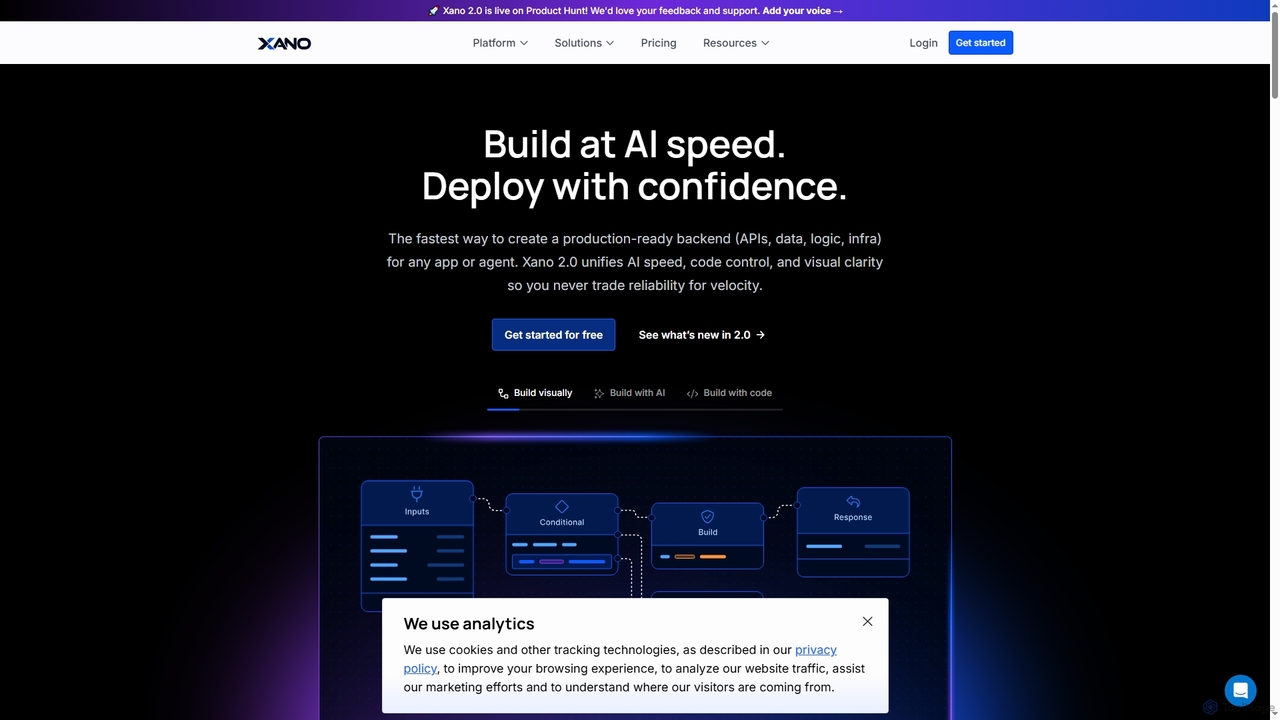
Xano is a scalable no-code backend platform that empowers developers and teams to build production-ready applications and AI agents at speed. It provides a unified solution for APIs, a managed Postgres database, visual logic, and auto-scaling infrastructure, eliminating the need for complex DevOps.

Agent Building
Visits 175.7KFavorites 138Likes 145
Back4app
Freemium

Back4app

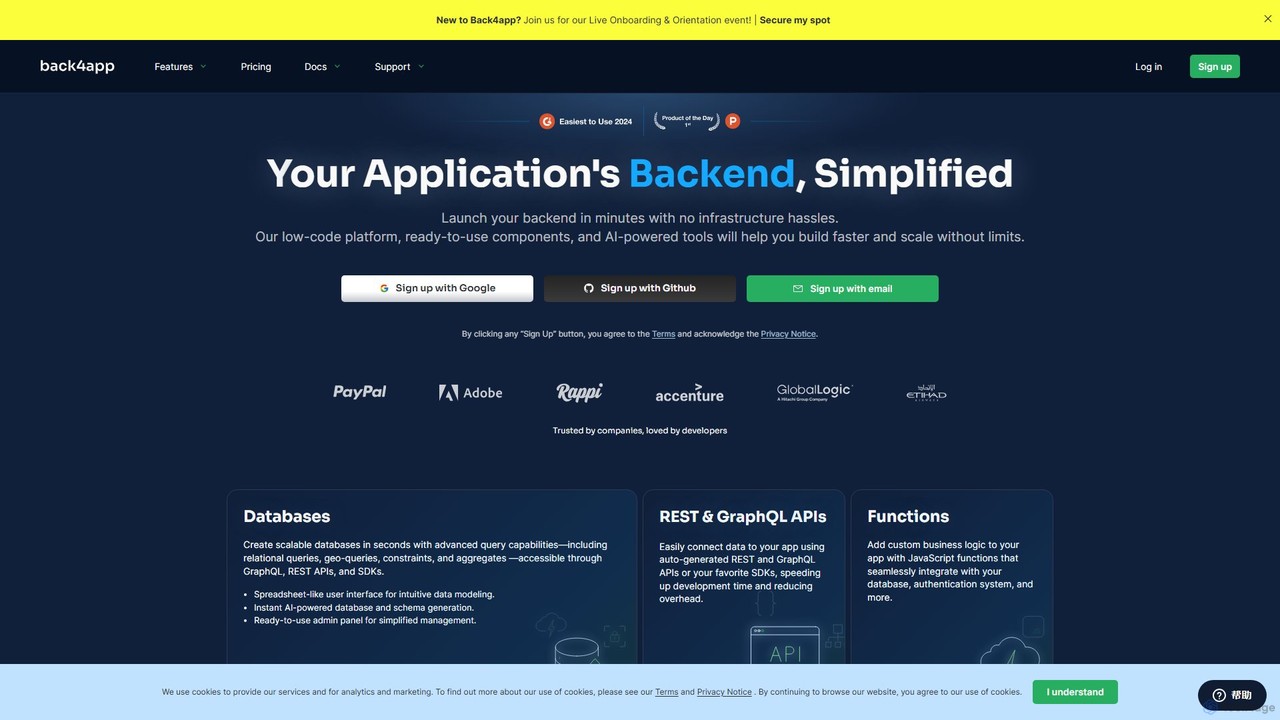
Back4app is an AI-powered, low-code Backend-as-a-Service (BaaS) platform that simplifies application development. It enables developers to launch scalable backends in minutes, handling infrastructure complexities like databases, APIs, authentication, and storage. With its AI Agent, ready-to-use components, and extensive SDK support, Back4app accelerates the development process, allowing teams to build faster and scale without limits for both web and mobile applications.

Backend As A Service (Baas)
Visits 315.3KFavorites 113Likes 112
Vertesia
Paid

Vertesia

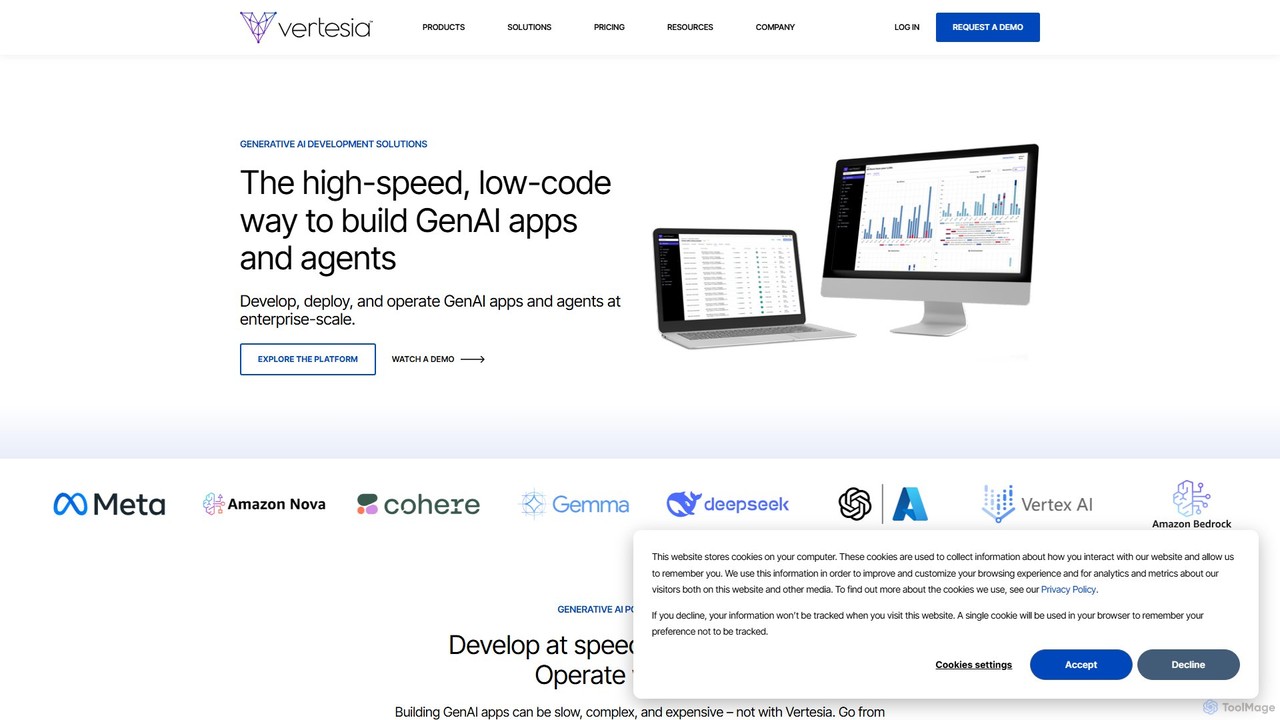
Vertesia is a high-speed, low-code generative AI development platform for enterprises. It enables businesses to rapidly build, deploy, and operate custom GenAI applications and agents at scale, transforming complex business processes and accelerating time-to-value without heavy infrastructure or spiraling costs.

Ai Agent Builder
Visits 7.8KFavorites 157Likes 134
Myple
Freemium

Myple

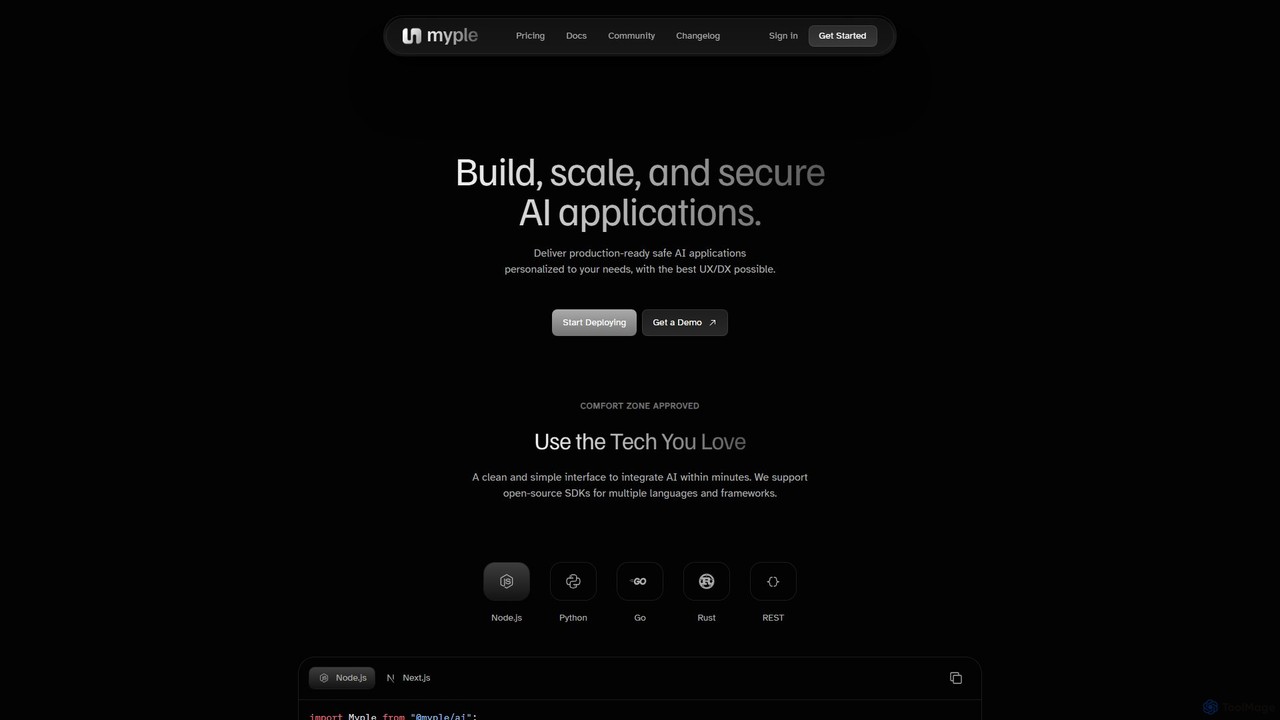
Myple is a comprehensive platform for developers to build, scale, and secure production-ready AI applications. It offers a suite of tools including open-source SDKs, a powerful CLI, customizable templates, and integrations with popular services. With features like vector storage, agent tool management, and robust security, Myple streamlines the entire AI development lifecycle, from initial build to deployment and monitoring, enabling teams to deliver personalized AI experiences with an excellent developer experience (DX).

Deployment
Visits 3.7KFavorites 118Likes 110
Vectorize
Freemium

Vectorize

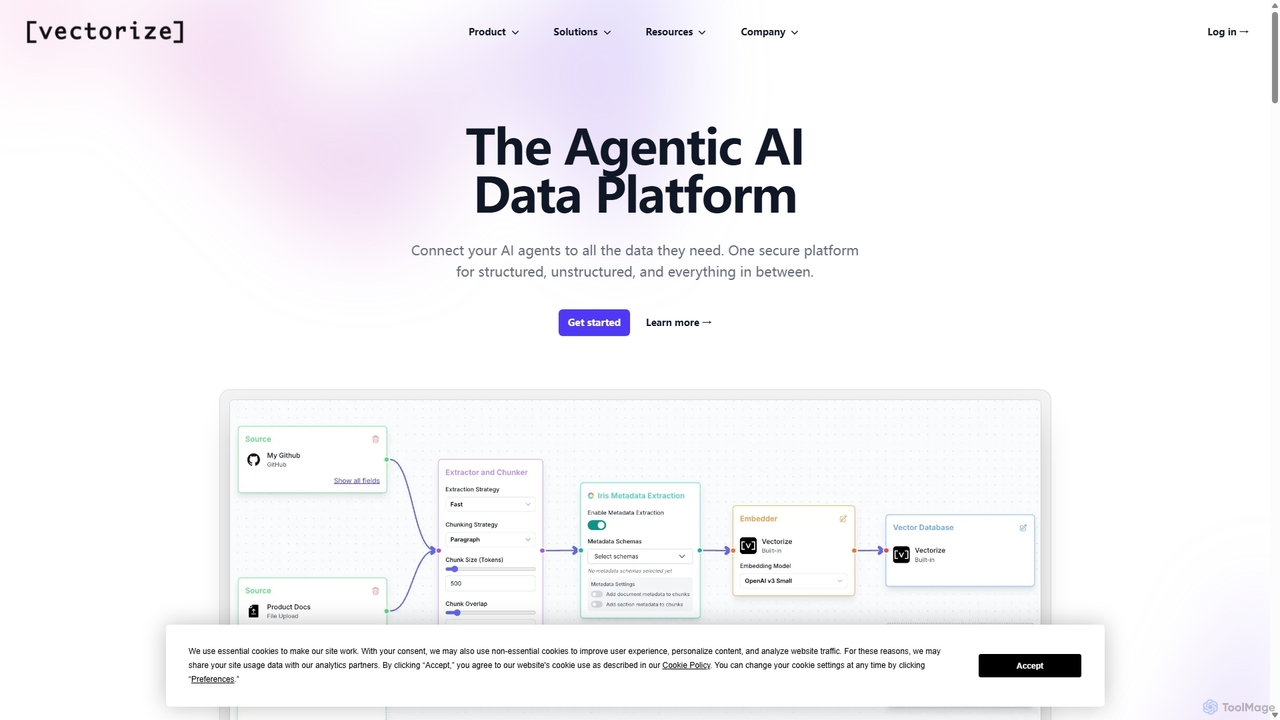
Vectorize is a RAG-as-a-Service platform that simplifies building AI applications on unstructured data. It offers managed RAG pipelines, extensive data source connectors, and the flexibility to use its managed vector database or connect your own, enabling developers to deploy production-ready AI solutions quickly.

Rag
Visits 220.4KFavorites 105Likes 107
Toolhouse
Freemium

Toolhouse

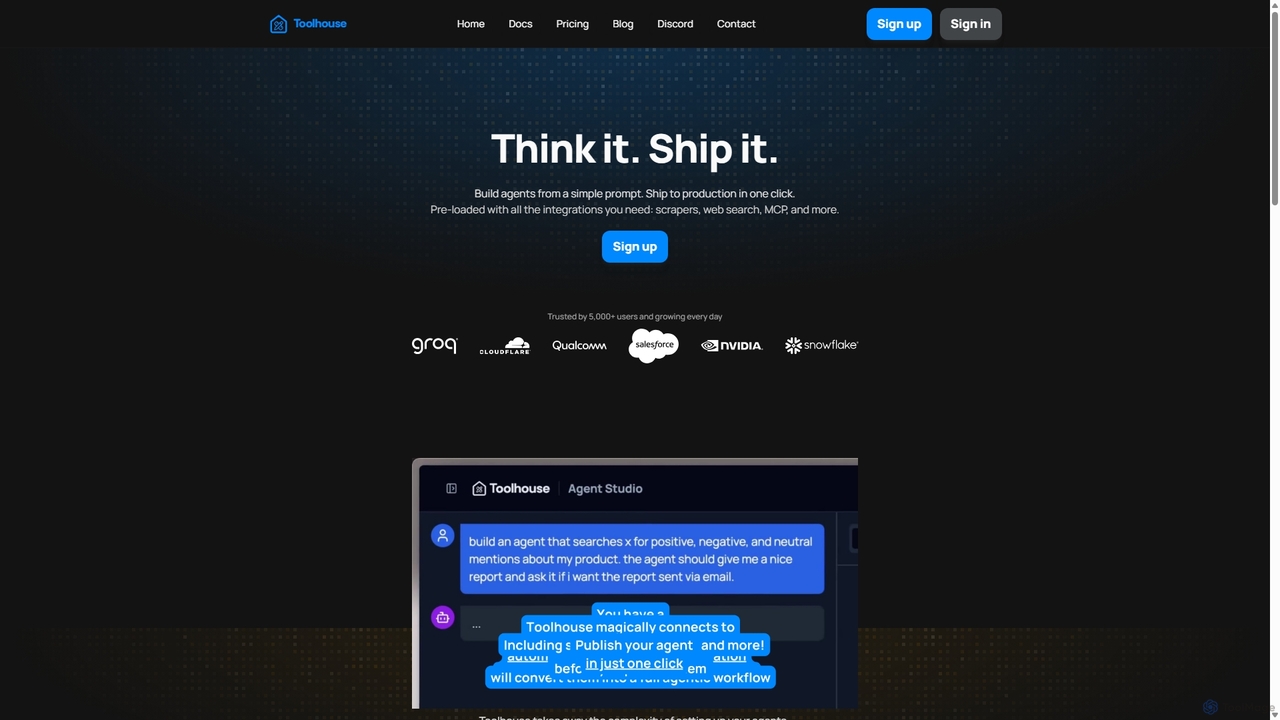
Toolhouse is a no-code/low-code platform that democratizes AI agent creation. It allows developers to build, deploy, and manage production-grade AI agents from simple prompts. With pre-built integrations for web scraping, search, RAG, and databases, Toolhouse abstracts away the complexity of infrastructure, enabling one-click deployment of agents as scalable APIs. It's designed to empower developers of all skill levels to ship AI-powered applications quickly.

Agent Development
Visits 8.7KFavorites 114Likes 122
Metorial
Freemium

Metorial

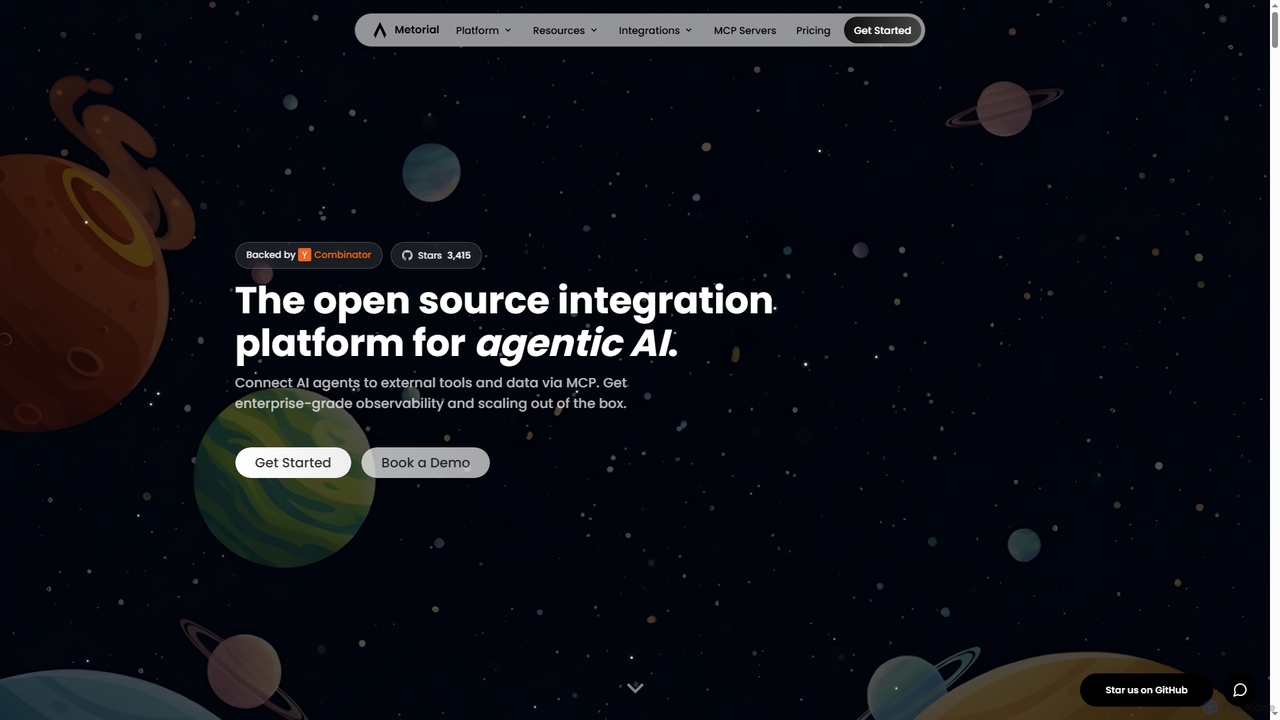
Metorial is an integration platform for AI agents, enabling developers to quickly build, deploy, and monitor powerful agentic AI applications. It provides seamless connections to hundreds of tools, data sources, and APIs via its serverless Model Context Protocol (MCP) platform, offering robust SDKs, observability, and enterprise-grade security for scalable AI solutions.

Agentic Ai
Visits 11.5KFavorites 119Likes 118
Skald
Freemium

Skald

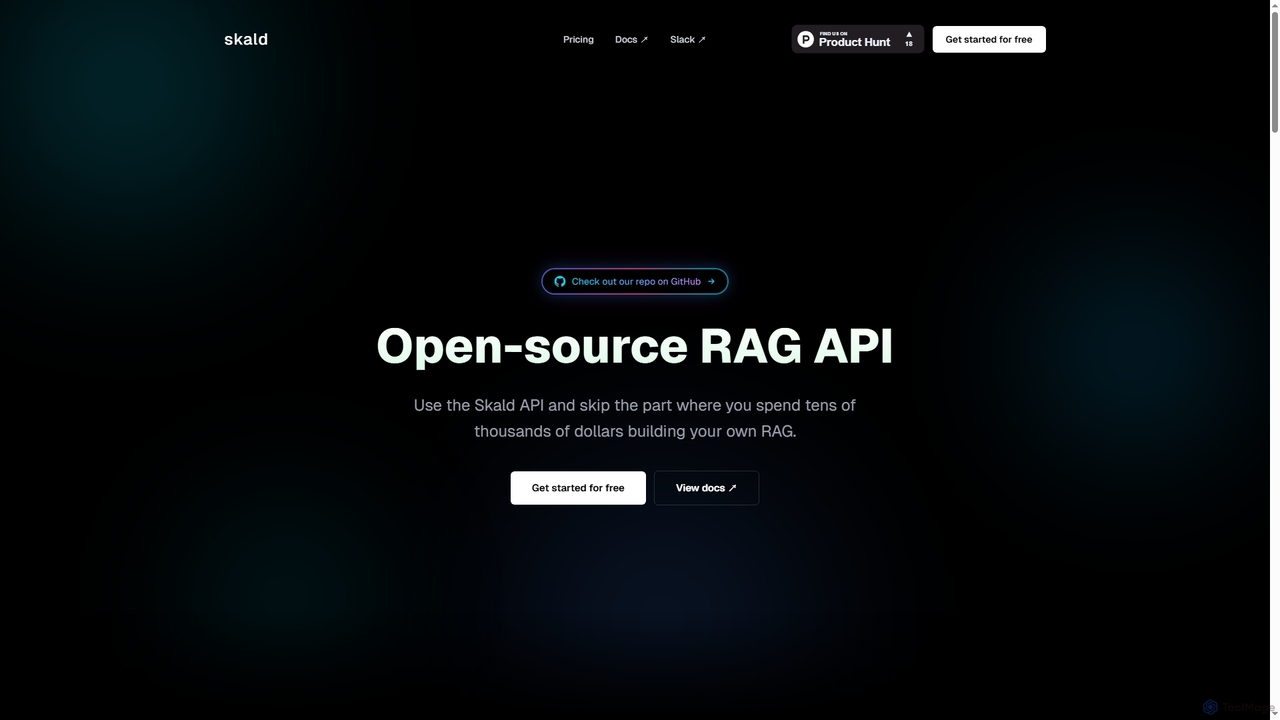
Skald is an open-source RAG API designed for developers to quickly build AI agents without the complexity of managing RAG infrastructure. It simplifies knowledge storage, context management, and semantic search, offering a powerful solution for integrating long-term memory into AI applications.

Rag
Visits 3.8KFavorites 98Likes 120
AI SDK
Free

AI SDK

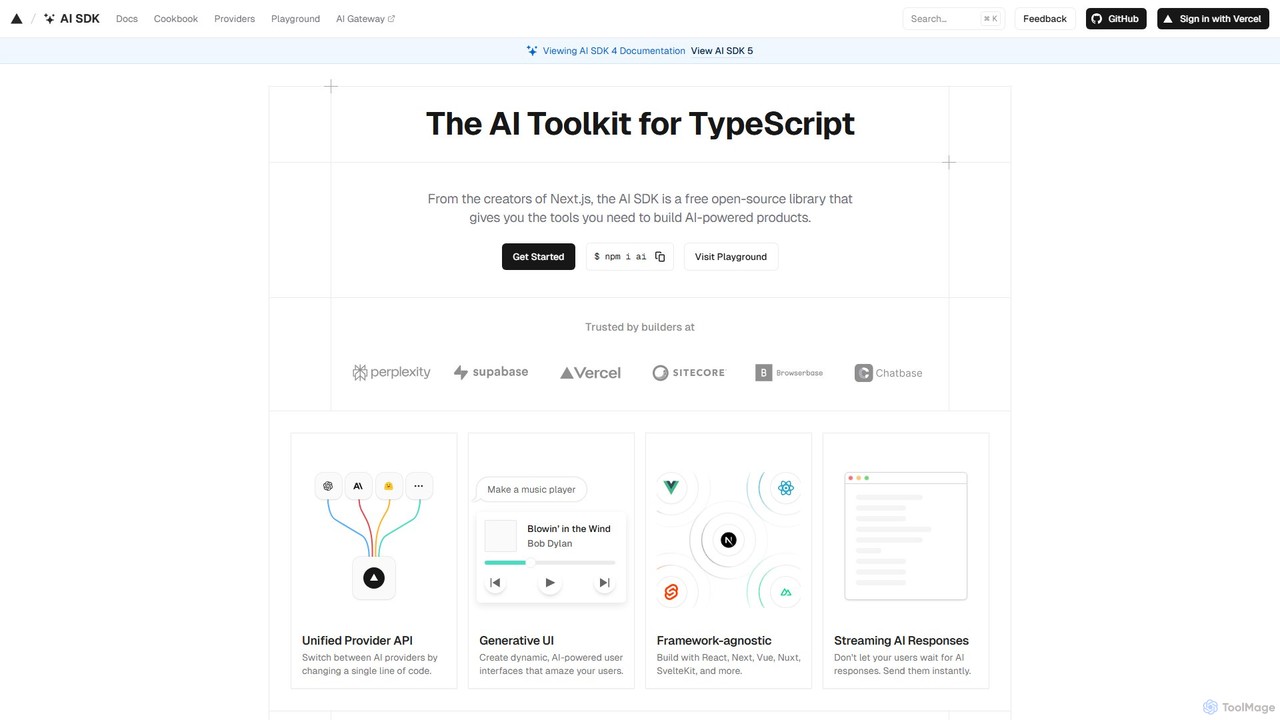
AI SDK by Vercel is a free, open-source TypeScript toolkit for building AI-powered applications. It provides a unified API to seamlessly integrate various large language models (LLMs) like OpenAI, Google, and Anthropic. It simplifies development with features like streaming responses, generative UI components, and tool calling, enabling developers to build and ship AI features faster across frameworks like Next.js, React, and Svelte.

Library
Visits 597KFavorites 90Likes 91
Langflow
Freemium

Langflow

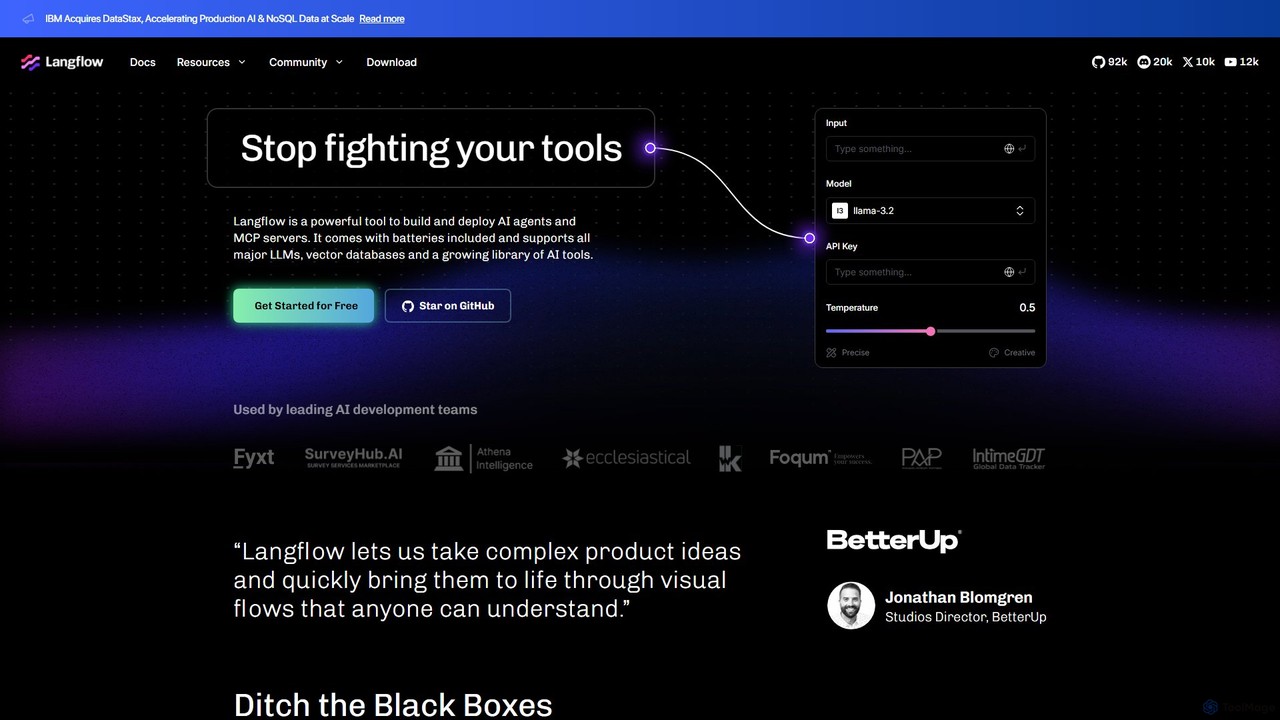
Langflow is an open-source, visual UI for building and deploying AI applications. It features a drag-and-drop interface to chain LLMs, agents, and tools, enabling rapid prototyping and deployment of complex workflows like RAG and multi-agent systems. It supports extensive integrations and offers both self-hosted and cloud options.

Low Code No Code
Visits 247.5KFavorites 70Likes 79
Meteron
Freemium

Meteron

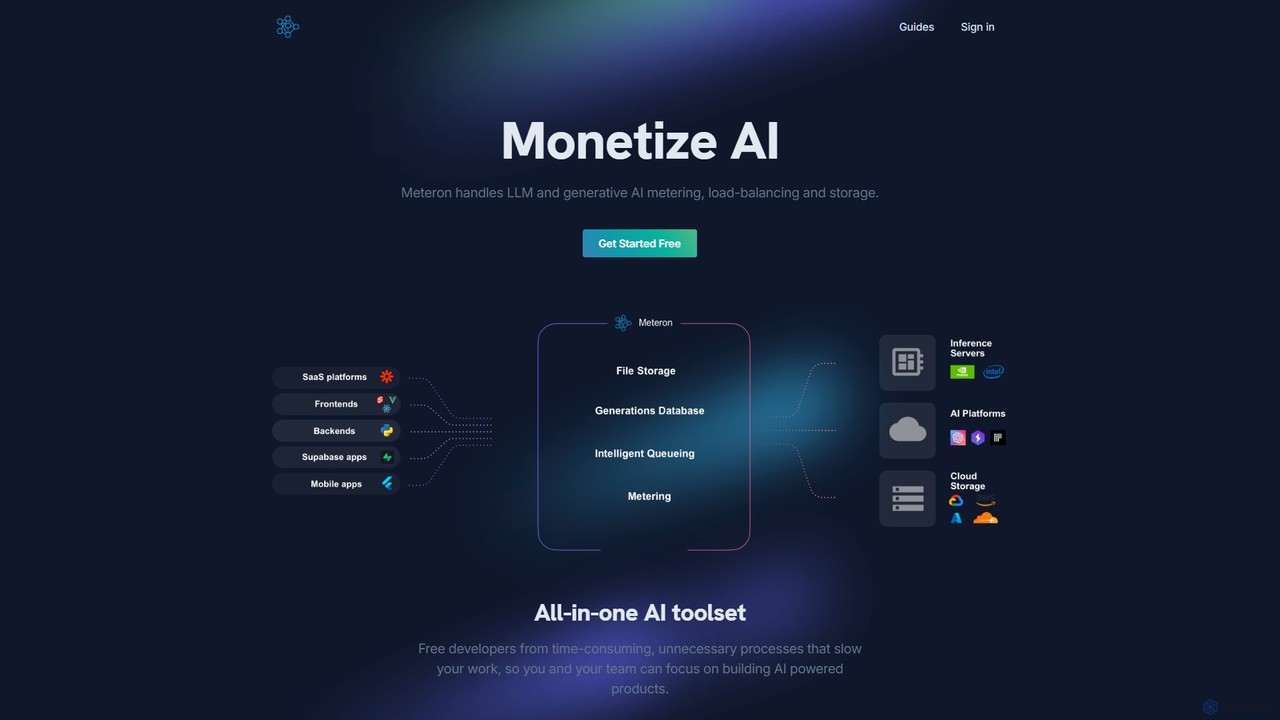
Meteron is an all-in-one developer platform that simplifies building and scaling AI applications. It provides tools for metering, load balancing, and cloud storage, enabling developers to monetize their AI models (like LLMs and image generators) and manage infrastructure with ease. By handling complex backend processes, Meteron allows creators to launch AI-powered products faster.

Monetization
Visits 5.6KFavorites 113Likes 127
TaskingAI
Freemium

TaskingAI

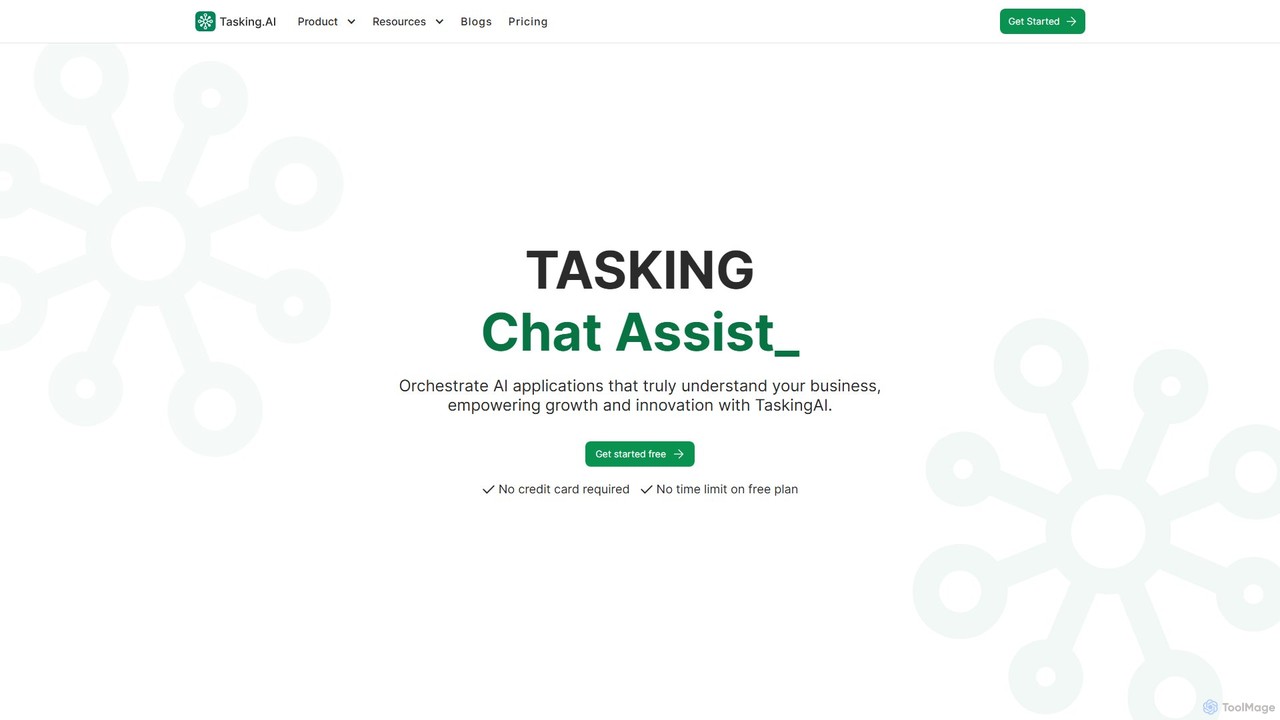
TaskingAI is an open-source AI-native application development platform designed to orchestrate sophisticated AI applications. It enables users to build, test, and deploy custom AI assistants and agents using various large language models (LLMs), Retrieval-Augmented Generation (RAG) with their own data, and powerful tool integrations. It offers a flexible, cloud-based environment for both no-code builders and developers.

Customer Support
Visits 5.3KFavorites 86Likes 103
Hypi
Freemium

Hypi

Hypi is a low-code platform designed to accelerate application development. It provides a serverless backend, instant GraphQL APIs, and real-time data synchronization, enabling developers and businesses to build and scale applications faster and more efficiently without managing infrastructure.

Backend As A Service (Baas)
Visits 3.7KFavorites 155Likes 130
Mayson
Freemium

Mayson

Mayson is a no-code Backend-as-a-Service (BaaS) platform that empowers developers and teams to build, deploy, and scale production-grade full-stack applications instantly. It eliminates the need for manual API development, offering a streamlined process to create robust backends with enterprise-grade security and no vendor lock-in.

Baas
Visits 9.8KFavorites 68Likes 64
Vectra

Vectra

Vectra is an open-source, production-grade SDK for Node.js and Python, designed to build, manage, and query advanced Retrieval-Augmented Generation (RAG) pipelines. It offers a comprehensive toolkit for developing context-aware AI applications, optimized for low latency, high precision, and scalability.

Rag Pipelines
Visits 3.8KFavorites 28Likes 29