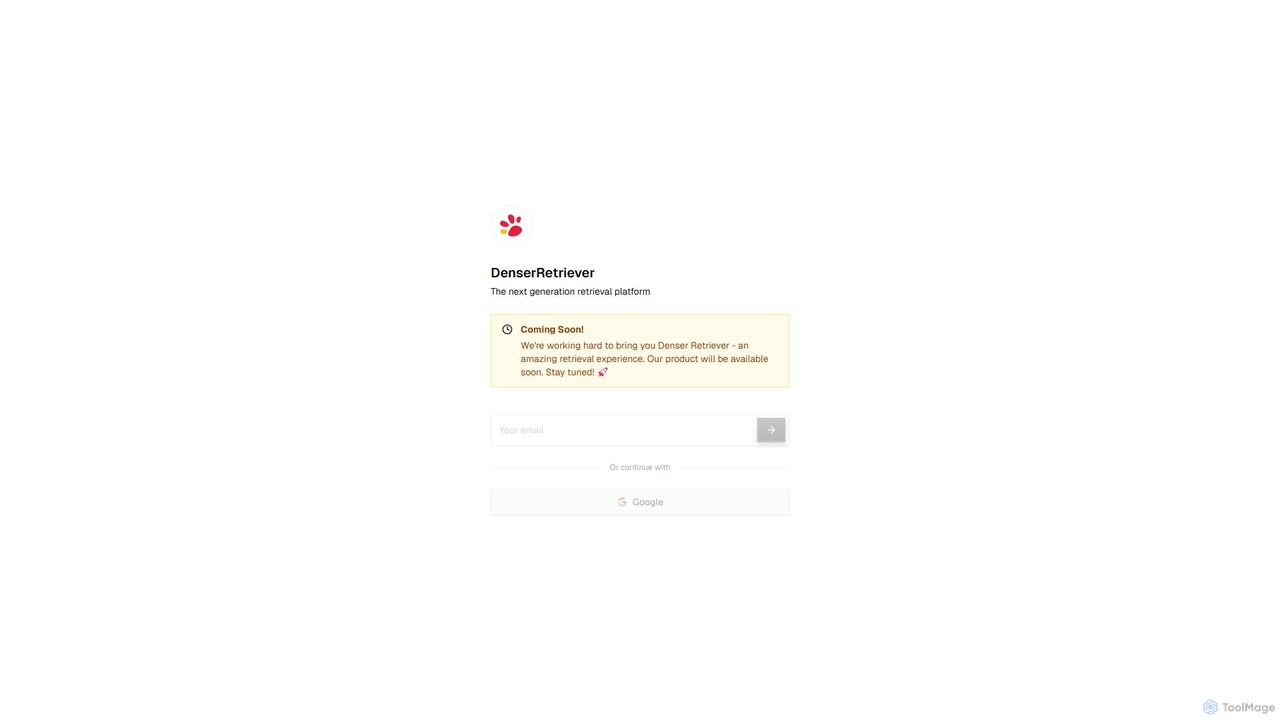
DenserRetriever is a next-generation, AI-powered retrieval platform for developers and enterprises. It specializes in high-performance semantic search using dense vector embeddings to build advanced RAG applications, sophisticated Q&A systems, and intelligent knowledge bases. It provides robust APIs to integrate superior information retrieval capabilities, ensuring more accurate and contextually relevant results.

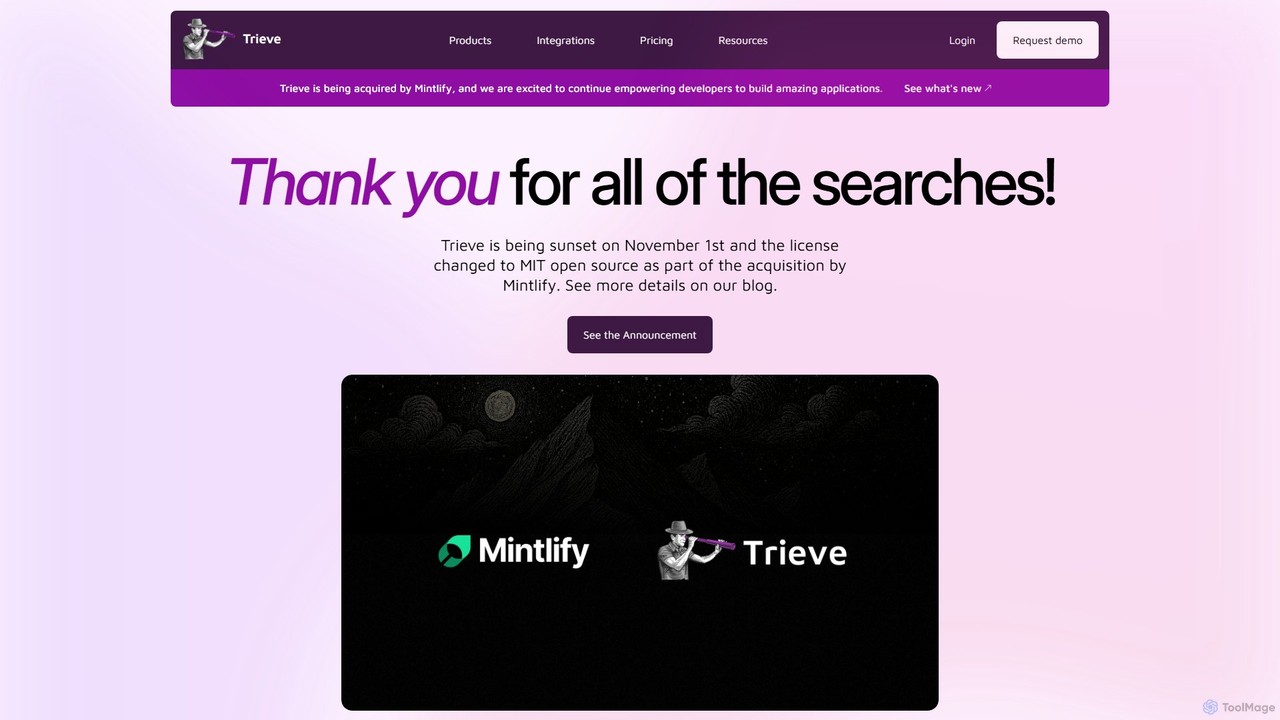
Trieve is a free, open-source AI search infrastructure for developers. Acquired by Mintlify and now under an MIT license, it empowers the creation of advanced discovery experiences, including conversational AI, state-of-the-art semantic search, and RAG applications, with a focus on self-hosting and customization.
Product overview
DenserRetriever Product overview
DenserRetriever is a next-generation, AI-powered retrieval platform for developers and enterprises. It specializes in high-performance semantic search using dense vector embeddings to build advanced RAG applications, sophisticated Q&A systems, and intelligent knowledge bases. It provides robust APIs to integrate superior information retrieval capabilities, ensuring more accurate and contextually relevant results.
Trieve Product overview
Trieve is a free, open-source AI search infrastructure for developers. Acquired by Mintlify and now under an MIT license, it empowers the creation of advanced discovery experiences, including conversational AI, state-of-the-art semantic search, and RAG applications, with a focus on self-hosting and customization.
Detailed feature comparison
| Feature | DenserRetriever | Trieve |
|---|---|---|
| Primary category | Customer Support | Database |
| Added | 2025-08-06 | 2025-08-07 |
| Pricing | Not verified | Free |
| Official website | retriever.denser.ai | www.trieve.ai |
| Product type | Website | Website |
| Performance data | ||
| User rating | Not verified | Not verified |
| Comments | 0 | 0 |
| Monthly visits | 3.9K | 9.2K |
| Monthly growth | Not verified | 155.4% |
| Favorites | 119 | 108 |
| Details | View details | View details |
DenserRetriever vs Trieve monthly traffic
Compare DenserRetriever and Trieve by monthly reach, traffic trend, visit depth, top regions, and acquisition sources.
How to interpret the traffic data
In the DenserRetriever vs Trieve monthly traffic comparison, DenserRetriever currently shows 3.9K visits and Trieve shows 9.2K; Trieve has about 2.4 times the visible traffic of DenserRetriever, an absolute difference of about 5.3K visits. This reflects visible reach, not feature quality or paid users.
Only Trieve has complete third-party traffic details; DenserRetriever uses visits recorded inside ToolMage. These scopes cannot estimate market share directly, and on-site views should not be treated as the product’s total website traffic.
DenserRetriever is registered at the retriever.denser.ai/login subpage. Because the current data does not state whether other host pages are excluded, treat this as domain-level context rather than independent traffic for one product or project.
DenserRetriever monthly traffic:
Latest traffic
Trieve monthly traffic:
Latest traffic
Monthly traffic trend
- 2025/9: 12.9K Monthly visits
- 2026/1: 7K Monthly visits
- 2026/2: 5.8K Monthly visits
- 2026/3: 4.1K Monthly visits
- 2026/4: 3.6K Monthly visits
- 2026/5: 9.2K Monthly visits
Top regions
Top 5 countries/regions
| Country/region | Percentage | Traffic |
|---|---|---|
| 🇺🇸United States | 68.24% | 6.3K |
| 🇮🇳India | 31.76% | 2.9K |
Search keywords
Usage comparison
Compare the core capabilities of DenserRetriever and Trieve
DenserRetriever Core features
Trieve Core features
Use cases
DenserRetriever Use cases
Trieve Use cases
DenserRetriever vs Trieve:In-depth comparison and selection guidance
First decide whether the products solve the same kind of need
This in-depth DenserRetriever vs Trieve comparison uses only the product records, taxonomy, audience, traffic, and community signals available on this page. DenserRetriever is primarily listed under “Customer Support”, while Trieve is primarily listed under “Database”, so the first decision is whether your actual task matches their recorded scope.
The structured fields currently show these decision-relevant differences: Primary category (DenserRetriever: Customer Support; Trieve: Database); Pricing (DenserRetriever: Not disclosed; Trieve: Free); Monthly visits (DenserRetriever: 3.9K; Trieve: 9.2K); Favorites (DenserRetriever: 119; Trieve: 108); Website (DenserRetriever: retriever.denser.ai; Trieve: www.trieve.ai). These facts are more useful for selection than brand visibility alone.
What market visibility and monthly traffic mean
In the DenserRetriever vs Trieve monthly traffic comparison, DenserRetriever currently shows 3.9K visits and Trieve shows 9.2K; Trieve has about 2.4 times the visible traffic of DenserRetriever, an absolute difference of about 5.3K visits. This reflects visible reach, not feature quality or paid users.
Only Trieve has complete third-party traffic details; DenserRetriever uses visits recorded inside ToolMage. These scopes cannot estimate market share directly, and on-site views should not be treated as the product’s total website traffic.
DenserRetriever is registered at the retriever.denser.ai/login subpage. Because the current data does not state whether other host pages are excluded, treat this as domain-level context rather than independent traffic for one product or project.
The current traffic scope is not sufficient for a reliable product ranking. Treat monthly visits as a market-interest signal, then decide using taxonomy, use cases, pricing, and a like-for-like trial rather than reading exposure as product capability.
Product positioning, use cases, and roles
DenserRetriever and Trieve currently overlap in shared categories: Knowledge Management; shared tags: AI infrastructure, developer API, knowledge base, RAG, and semantic search. This can place both on the same shortlist, but it does not prove equal implementation, depth, or cost.
DenserRetriever's unique categories/tags are Customer Support, Search, Database & Api, dense retrieval, enterprise AI, hybrid search, information retrieval, and vector database; Trieve's are Database, Search, conversational AI, open source, search as a service, self-hosted, and vector search. These unique fields are the strongest differentiators: validate the product whose recorded scope matches the task instead of following traffic alone.
What ratings, comments, and favorites can tell you
DenserRetriever has no verified rating, 0 comments, 119 favorites, and 115 likes;Trieve has no verified rating, 0 comments, 108 favorites, and 101 likes。
Neither product has enough rating or comment samples for a credible reputation ranking.
Selection guidance by actual need
When to evaluate DenserRetriever first
Put DenserRetriever on the priority trial list when the task aligns with “Customer Support” and especially Customer Support, Search, Database & Api, dense retrieval, enterprise AI, and hybrid search. This follows recorded positioning and does not imply unlisted capabilities are absent.
DenserRetriever also currently records: pricing is not verified, product type is website, 3.9K on-site monthly views, no verified user rating. Verify any hard requirement around price, platform, or reach before trial, and do not let sparse review data substitute for testing.
When to evaluate Trieve first
Put Trieve on the priority trial list when the task aligns with “Database” and especially Database, Search, conversational AI, open source, search as a service, and self-hosted. This follows recorded positioning and does not imply unlisted capabilities are absent.
Trieve also currently records: pricing is free, product type is website, 9.2K verified monthly visits, no verified user rating. Verify any hard requirement around price, platform, or reach before trial, and do not let sparse review data substitute for testing.
How to validate the recommendation before deciding
The available data describes positioning, public visibility, and community signals, but it cannot prove output quality, speed, integration effort, privacy, or long-term cost in your workflow. Before deciding, run the same representative tasks in DenserRetriever and Trieve, then record completion time, accuracy, manual corrections, and the real paid threshold. A like-for-like trial turns this comparison into a defensible adoption decision.
Comparison FAQ
How should I choose between DenserRetriever and Trieve?
Where does this comparison data come from?
What do unknown fields mean?
Related AI tools

vecrank
vecrank is an advanced AI-powered search and ranking platform for developers. It leverages vector embeddings to deliver highly relevant, semantic search results, moving beyond simple keyword matching. Ideal for building next-generation search experiences, recommendation engines, and RAG systems.
Database
Ducky
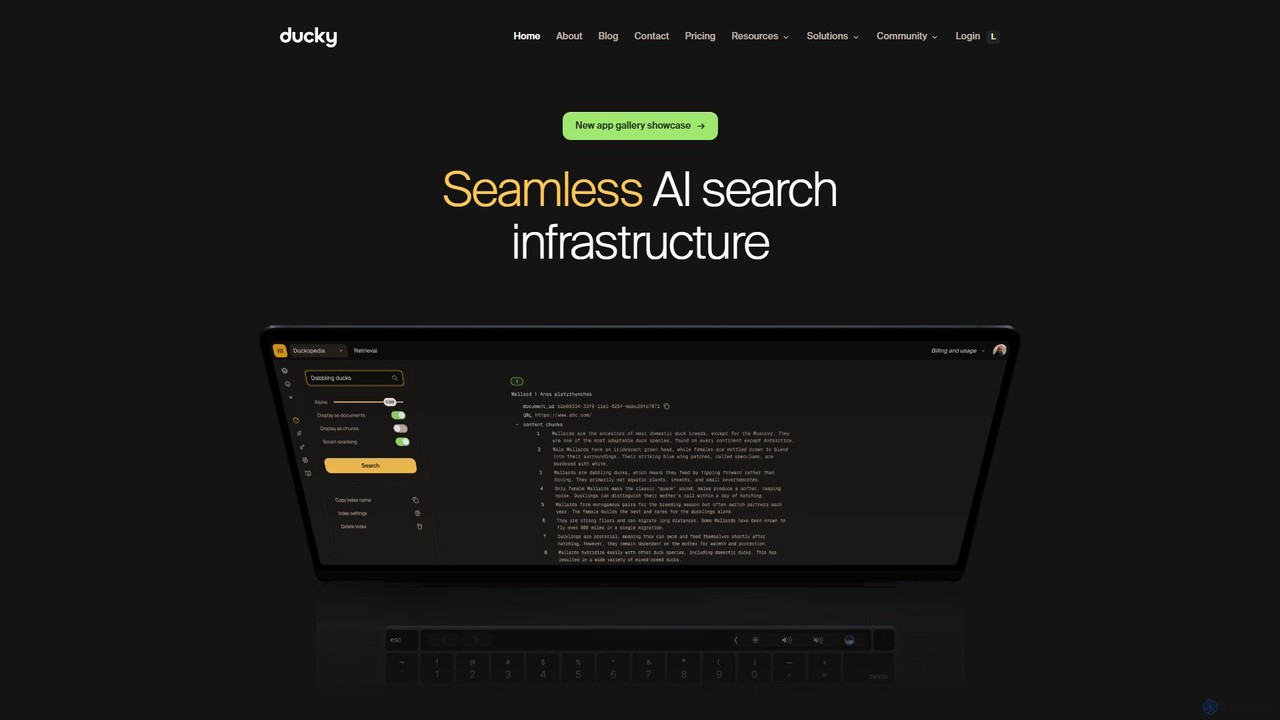
Ducky is a fully managed AI search infrastructure designed for developers. It simplifies the implementation of Retrieval-Augmented Generation (RAG) by handling complex tasks like data chunking, embedding, and reranking. With a simple Python SDK, Ducky enables developers to quickly build fast, accurate, and scalable semantic search capabilities into their applications, providing context-aware and hallucination-free responses from LLMs.
Retrieval Augmented Generation
semafind
Semafind is an AI-powered semantic search platform that enables developers and businesses to build intelligent, context-aware search experiences. It goes beyond keywords to understand user intent, delivering highly relevant results from any data source.
Database
Milvus
Milvus is a high-performance, open-source vector database built for AI applications. It enables developers to manage and search through billions of high-dimensional vectors with minimal latency. Ideal for building scalable systems like retrieval-augmented generation (RAG), recommendation engines, and semantic search, Milvus offers flexible deployment options from local prototyping to large-scale distributed clusters.
Machine Learning
Qdrant
Qdrant is a high-performance, open-source vector database and similarity search engine built in Rust. It's designed to power next-generation AI applications by efficiently managing and searching billions of high-dimensional vectors. With advanced features like rich filtering, payload storage, and various quantization methods, Qdrant enables developers to build scalable and cost-effective solutions for semantic search, recommendation systems, and Retrieval Augmented Generation (RAG).
Vector Search
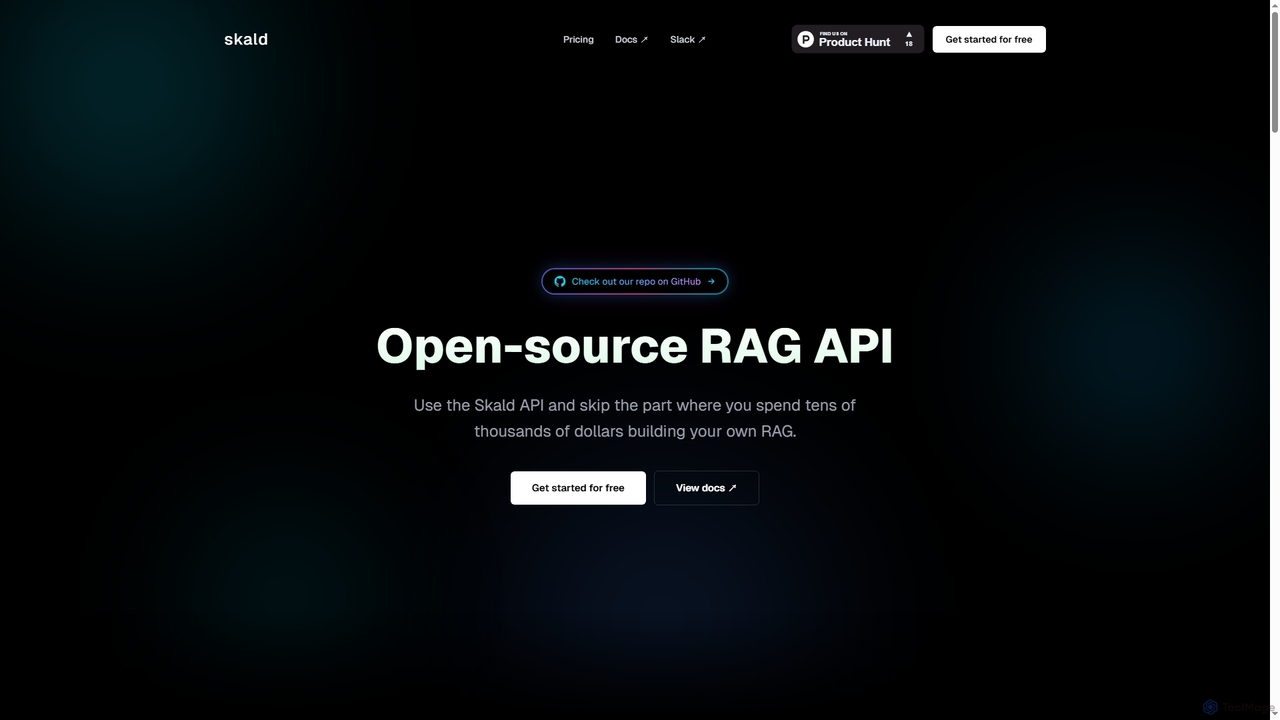
Skald
Skald is an open-source RAG API designed for developers to quickly build AI agents without the complexity of managing RAG infrastructure. It simplifies knowledge storage, context management, and semantic search, offering a powerful solution for integrating long-term memory into AI applications.
Rag
AnythingLLM
AnythingLLM is an open-source, all-in-one AI application that allows you to chat with any document, use AI agents, and leverage powerful LLMs. It runs locally on your desktop or in a private, self-hosted environment, ensuring complete data privacy and security for individuals and teams.
Document Analysis
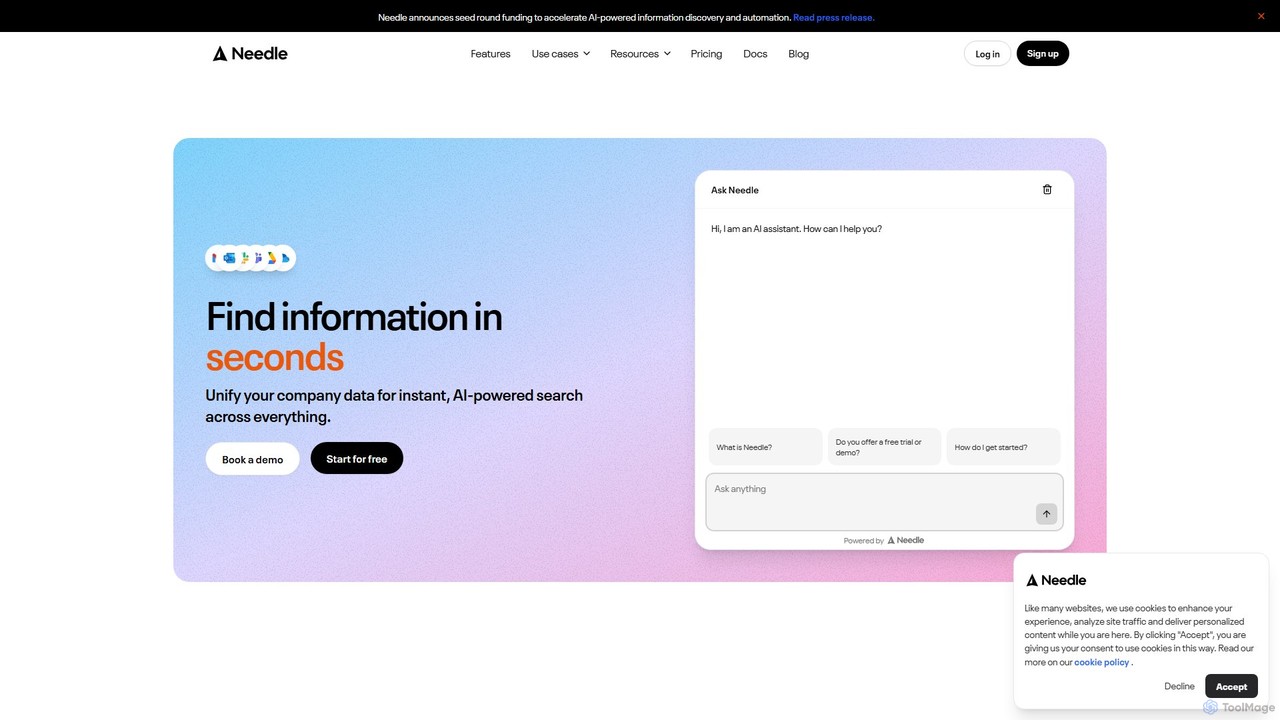
Needle
Needle is an enterprise AI platform that unifies all your company's data into a single, searchable knowledge base. Using advanced RAG technology, it allows teams to ask questions in natural language and get instant, referenced answers from sources like Slack, Google Drive, Notion, and more. It automates workflows, enhances customer support, and provides enterprise-grade security to break down information silos and boost productivity.
Enterprise Search
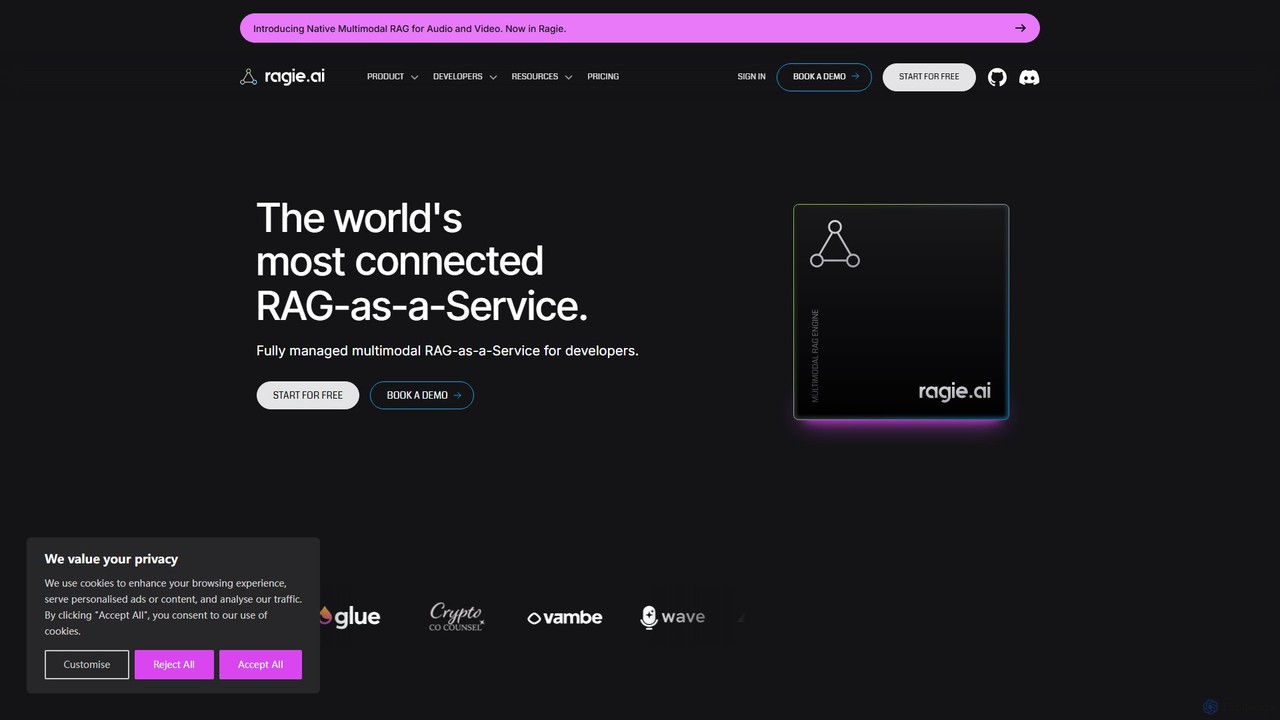
ragie
Ragie is a fully managed RAG-as-a-Service platform designed for developers. It simplifies the process of building and deploying AI applications by handling the entire Retrieval-Augmented Generation pipeline. Connect your data sources, and use a simple API to power accurate, context-aware chatbots, semantic search, and knowledge management systems without the complexity of managing infrastructure.
Machine Learning
Retrieve
Retrieve is an AI-powered knowledge management and enterprise search platform. It unifies your company's scattered information from apps like Slack, Google Drive, and Confluence, allowing teams to ask natural language questions and get instant, accurate answers. Boost productivity and break down data silos with a single source of truth.
Enterprise Search
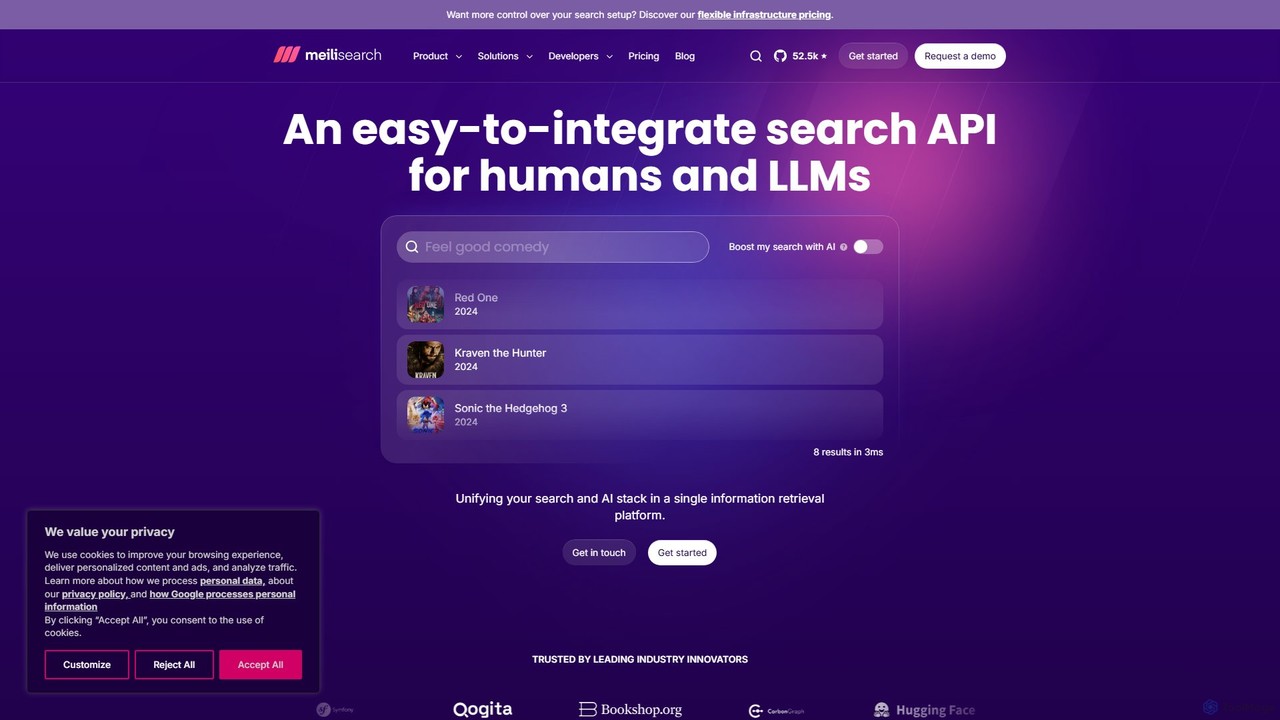
Meilisearch
Meilisearch is an open-source, lightning-fast, and AI-powered search engine. It's designed for developers to easily integrate advanced search capabilities, including full-text, semantic, and hybrid search, into any website or application. It offers an exceptional developer experience with powerful APIs and SDKs.
Database
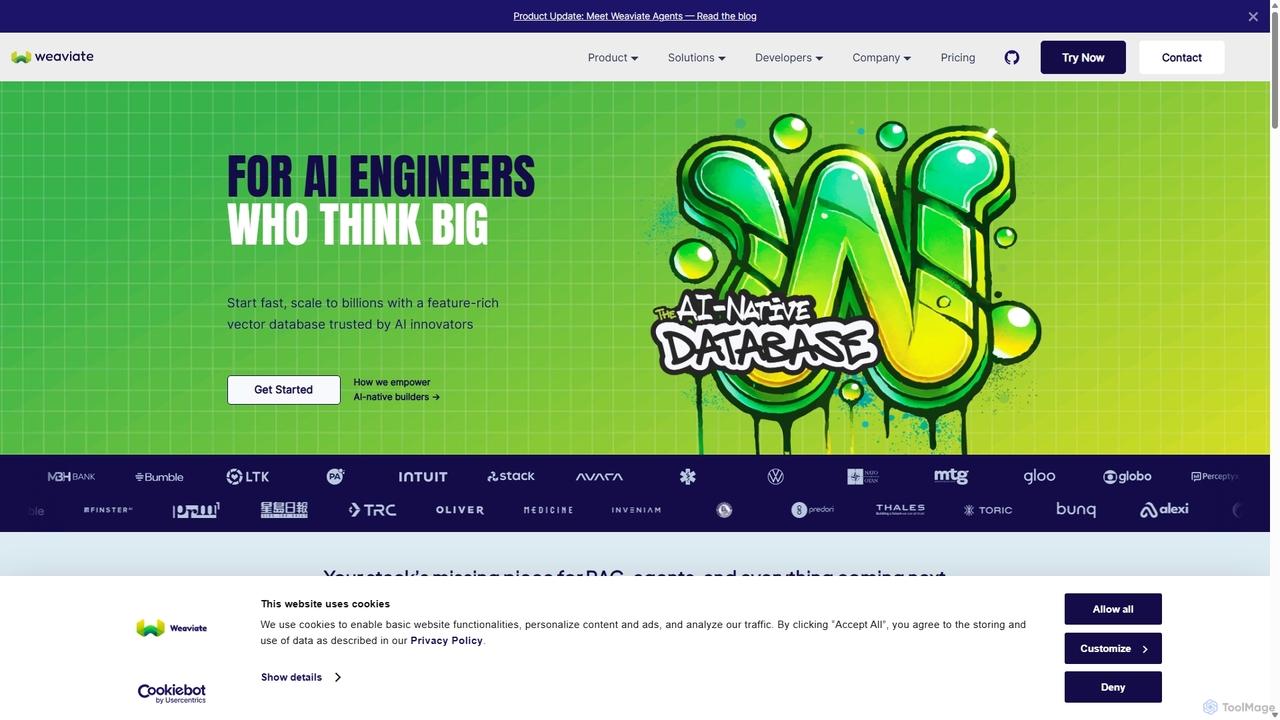
Weaviate
Weaviate is an open-source, AI-native vector database designed for developers. It enables scalable, low-latency vector, keyword, and hybrid search. Ideal for building AI applications like semantic search, recommendation engines, and Retrieval-Augmented Generation (RAG) systems, it integrates seamlessly with popular machine learning models to store and query data based on semantic meaning.
Vector Database
LanceDB
LanceDB is an open-source, AI-native multimodal lakehouse designed for building and scaling AI applications. It provides a unified platform for storing, searching, and managing complex data like text, images, voice, and vectors. Ideal for RAG, semantic search, and model training, LanceDB offers blazing-fast hybrid search, massive scalability to petabytes, and significant cost savings, making it a powerful foundation for enterprise-grade AI.
Vector Database
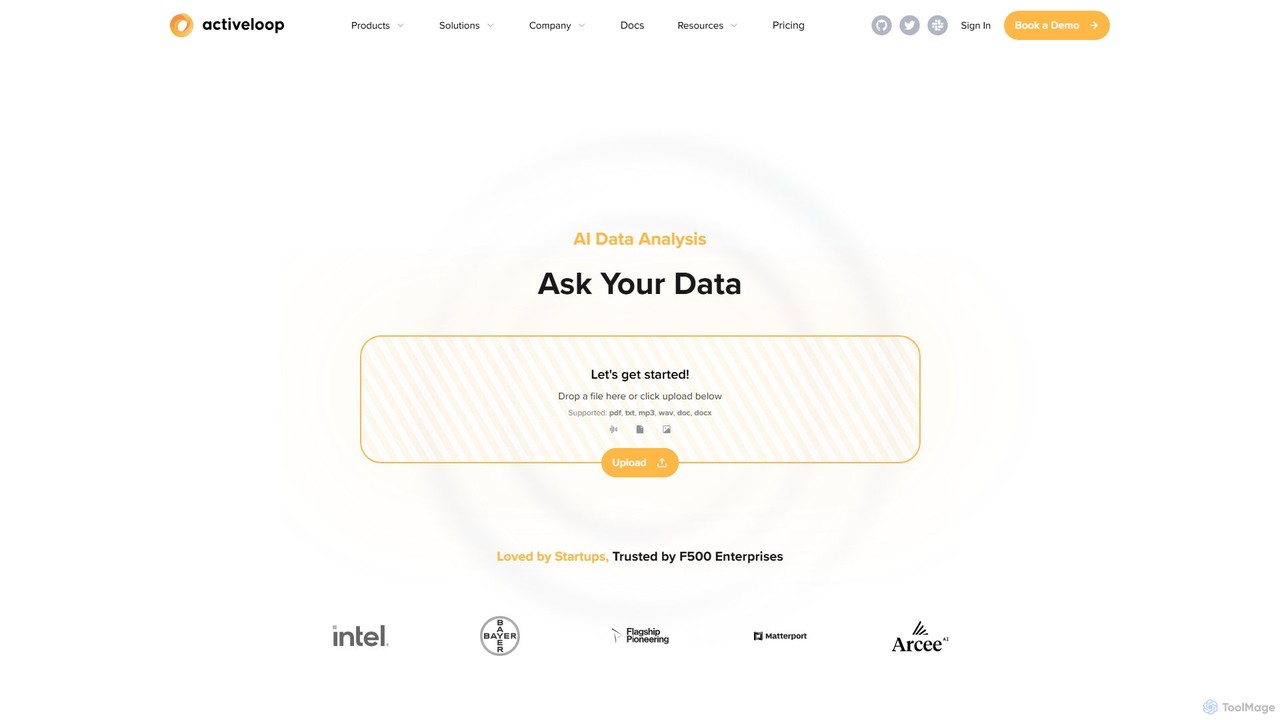
Activeloop
Activeloop provides Deep Lake, a specialized Database for AI, designed to manage, query, and stream large-scale multimodal datasets (text, images, audio, video) for building advanced AI applications. It simplifies complex data infrastructure, enabling developers to create powerful Retrieval-Augmented Generation (RAG) systems, semantic search engines, and intelligent AI agents with ease.
Data Management
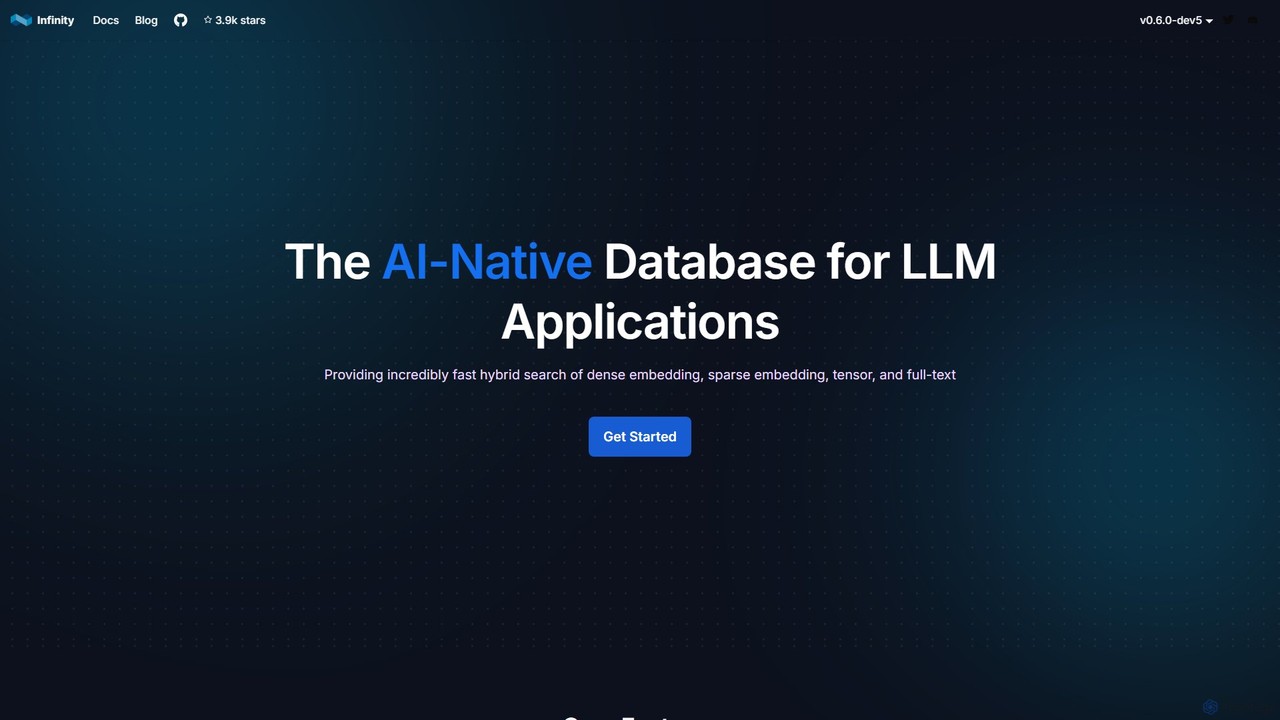
infiniflow
infiniflow is a high-performance, open-source, AI-native database specifically designed for LLM applications. It offers incredibly fast vector search, powerful hybrid search capabilities (vector, full-text, tensor), and simplified deployment. With an intuitive Python API, it's built to power demanding AI tasks like Retrieval-Augmented Generation (RAG) and semantic search with millisecond latency.
Vector Search