Eyeware provides AI-powered head and eye tracking software that transforms standard webcams into powerful tracking devices. It offers solutions for immersive gaming, enhanced live streaming, productivity, user research, and OEM integration, eliminating the need for specialized hardware.

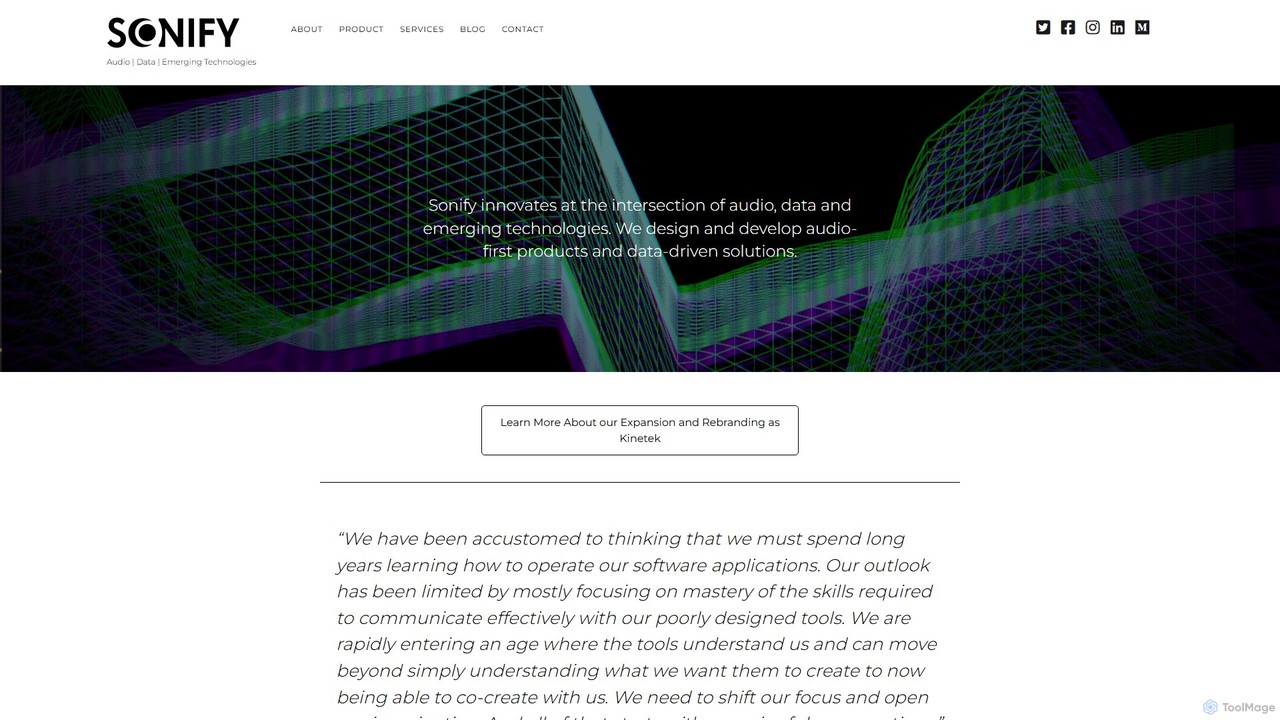
Sonify is an innovation studio that specializes in data sonification, using AI and emerging technologies to transform complex data into meaningful audio, music, and soundscapes. It focuses on making data more accessible, intuitive, and emotionally resonant for applications in research, art, and accessibility.
Product overview
Eyeware Product overview
Eyeware provides AI-powered head and eye tracking software that transforms standard webcams into powerful tracking devices. It offers solutions for immersive gaming, enhanced live streaming, productivity, user research, and OEM integration, eliminating the need for specialized hardware.
Sonify Product overview
Sonify is an innovation studio that specializes in data sonification, using AI and emerging technologies to transform complex data into meaningful audio, music, and soundscapes. It focuses on making data more accessible, intuitive, and emotionally resonant for applications in research, art, and accessibility.
Detailed feature comparison
| Feature | Eyeware | Sonify |
|---|---|---|
| Primary category | User Behavior | Sonification |
| Added | 2025-08-16 | 2025-08-01 |
| Pricing | Freemium | Not verified |
| Official website | eyeware.tech | www.sonify.io |
| Product type | App | Website |
| Performance data | ||
| User rating | Not verified | Not verified |
| Comments | 0 | 0 |
| Monthly visits | 143.2K | 2.8K |
| Monthly growth | 7.2% | -29.8% |
| Favorites | 93 | 100 |
| Details | View details | View details |
Eyeware vs Sonify monthly traffic
Compare Eyeware and Sonify by monthly reach, traffic trend, visit depth, top regions, and acquisition sources.
How to interpret the traffic data
In the Eyeware vs Sonify monthly traffic comparison, Eyeware currently shows 143.2K visits and Sonify shows 2.8K; Eyeware has about 51.4 times the visible traffic of Sonify, an absolute difference of about 140.4K visits. This reflects visible reach, not feature quality or paid users.
Both tools provide verified traffic details, so monthly trends, visit depth, regions, and acquisition sources can be compared on the same basis.
Eyeware monthly traffic:
Latest traffic
Monthly traffic trend
- 2025/9: 151.3K Monthly visits
- 2026/1: 181.2K Monthly visits
- 2026/2: 156.4K Monthly visits
- 2026/3: 166.5K Monthly visits
- 2026/4: 133.6K Monthly visits
- 2026/5: 143.2K Monthly visits
Top regions
Top 5 countries/regions
| Country/region | Percentage | Traffic |
|---|---|---|
| 🇺🇸United States | 51.45% | 73.7K |
| 🇷🇺Russia | 14.63% | 21K |
| 🇩🇪Germany | 13.53% | 19.4K |
| 🇫🇷France | 10.41% | 14.9K |
| 🇧🇷Brazil | 9.98% | 14.3K |
Traffic sources
| Source type | Percentage | Traffic |
|---|---|---|
| Direct | 81.4% | 116.6K |
| Referral | 11.75% | 16.8K |
| 6.85% | 9.8K |
Search keywords
Sonify monthly traffic:
Latest traffic
Monthly traffic trend
- 2025/9: 3K Monthly visits
- 2026/1: 1.4K Monthly visits
- 2026/2: 2.3K Monthly visits
- 2026/3: 1.6K Monthly visits
- 2026/4: 4K Monthly visits
- 2026/5: 2.8K Monthly visits
Top regions
Top 5 countries/regions
| Country/region | Percentage | Traffic |
|---|---|---|
| 🇺🇸United States | 100% | 2.8K |
Search keywords
Usage comparison
Compare the core capabilities of Eyeware and Sonify
Eyeware Core features
Sonify Core features
Use cases
Eyeware Use cases
Sonify Use cases
Eyeware vs Sonify:In-depth comparison and selection guidance
First decide whether the products solve the same kind of need
This in-depth Eyeware vs Sonify comparison uses only the product records, taxonomy, audience, traffic, and community signals available on this page. Eyeware is primarily listed under “User Behavior”, while Sonify is primarily listed under “Sonification”, so the first decision is whether your actual task matches their recorded scope.
The structured fields currently show these decision-relevant differences: Primary category (Eyeware: User Behavior; Sonify: Sonification); Product type (Eyeware: App; Sonify: Website); Pricing (Eyeware: Freemium; Sonify: Not disclosed); Monthly visits (Eyeware: 143.2K; Sonify: 2.8K); Monthly growth (Eyeware: 7.2%; Sonify: -29.8%). These facts are more useful for selection than brand visibility alone.
What market visibility and monthly traffic mean
In the Eyeware vs Sonify monthly traffic comparison, Eyeware currently shows 143.2K visits and Sonify shows 2.8K; Eyeware has about 51.4 times the visible traffic of Sonify, an absolute difference of about 140.4K visits. This reflects visible reach, not feature quality or paid users.
Both tools provide verified traffic details, so monthly trends, visit depth, regions, and acquisition sources can be compared on the same basis.
If public market visibility is an important first-pass criterion, investigate Eyeware first. The final choice should still follow taxonomy, use case, and a real trial because higher traffic does not prove broader capabilities or better workflow fit.
Product positioning, use cases, and roles
Eyeware and Sonify currently overlap in shared categories: Accessibility; shared tags: accessibility. This can place both on the same shortlist, but it does not prove equal implementation, depth, or cost.
Eyeware's unique categories/tags are User Behavior, Sdks, Game Enhancement, AI, computer vision, developer tools, eye-tracking, and gaming; Sonify's are Sonification, Data Visualization, ai music, audio data, data sonification, Data Storytelling, data to music, and data visualization. These unique fields are the strongest differentiators: validate the product whose recorded scope matches the task instead of following traffic alone.
What ratings, comments, and favorites can tell you
Eyeware has no verified rating, 0 comments, 93 favorites, and 82 likes;Sonify has no verified rating, 0 comments, 100 favorites, and 109 likes。
Neither product has enough rating or comment samples for a credible reputation ranking.
Selection guidance by actual need
When to evaluate Eyeware first
Put Eyeware on the priority trial list when the task aligns with “User Behavior” and especially User Behavior, Sdks, Game Enhancement, AI, computer vision, and developer tools. This follows recorded positioning and does not imply unlisted capabilities are absent.
Eyeware also currently records: pricing is freemium, product type is app, 143.2K verified monthly visits, no verified user rating. Verify any hard requirement around price, platform, or reach before trial, and do not let sparse review data substitute for testing.
When to evaluate Sonify first
Put Sonify on the priority trial list when the task aligns with “Sonification” and especially Sonification, Data Visualization, ai music, audio data, data sonification, and Data Storytelling. This follows recorded positioning and does not imply unlisted capabilities are absent.
Sonify also currently records: pricing is not verified, product type is website, 2.8K verified monthly visits, no verified user rating. Verify any hard requirement around price, platform, or reach before trial, and do not let sparse review data substitute for testing.
How to validate the recommendation before deciding
The available data describes positioning, public visibility, and community signals, but it cannot prove output quality, speed, integration effort, privacy, or long-term cost in your workflow. Before deciding, run the same representative tasks in Eyeware and Sonify, then record completion time, accuracy, manual corrections, and the real paid threshold. A like-for-like trial turns this comparison into a defensible adoption decision.
Comparison FAQ
How should I choose between Eyeware and Sonify?
Where does this comparison data come from?
What do unknown fields mean?
Related AI tools

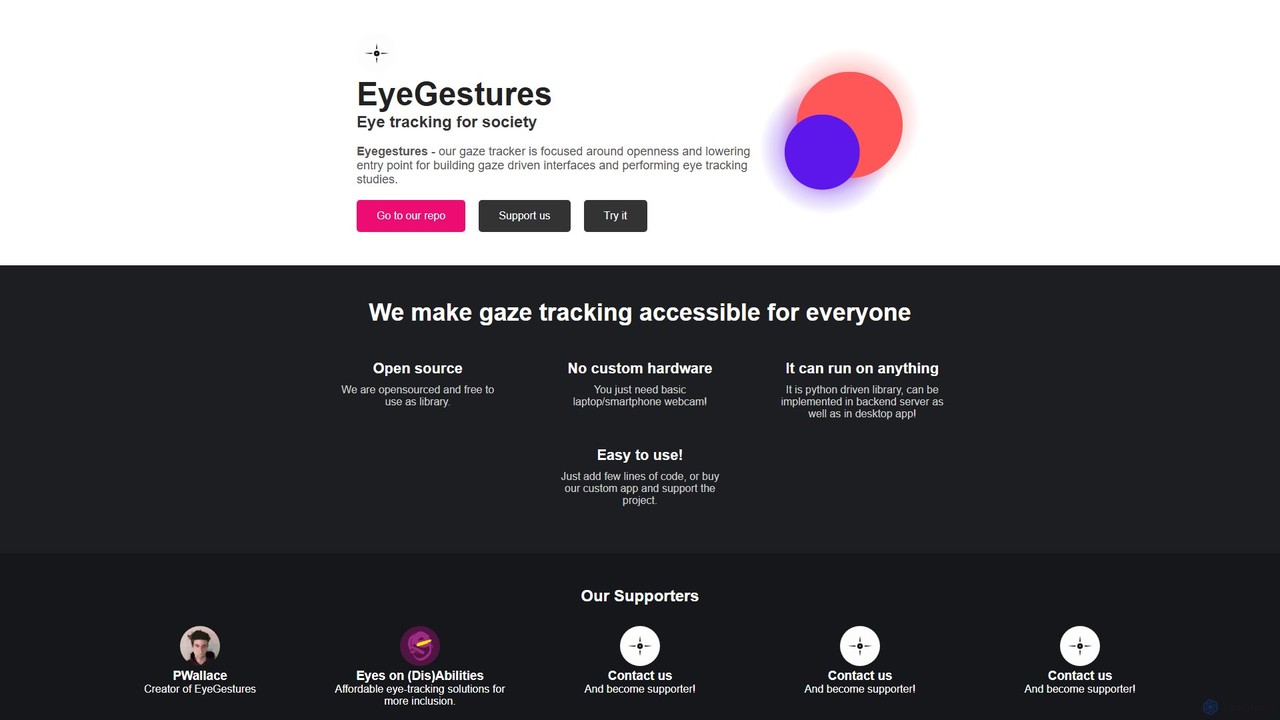
EyeGestures
EyeGestures is an open-source gaze tracking library that makes eye control accessible to everyone. It uses a standard webcam on a laptop or smartphone, eliminating the need for specialized hardware. Built with Python and JavaScript, it allows developers to easily integrate hands-free control into web, desktop, and server-side applications.
Assistive Technology
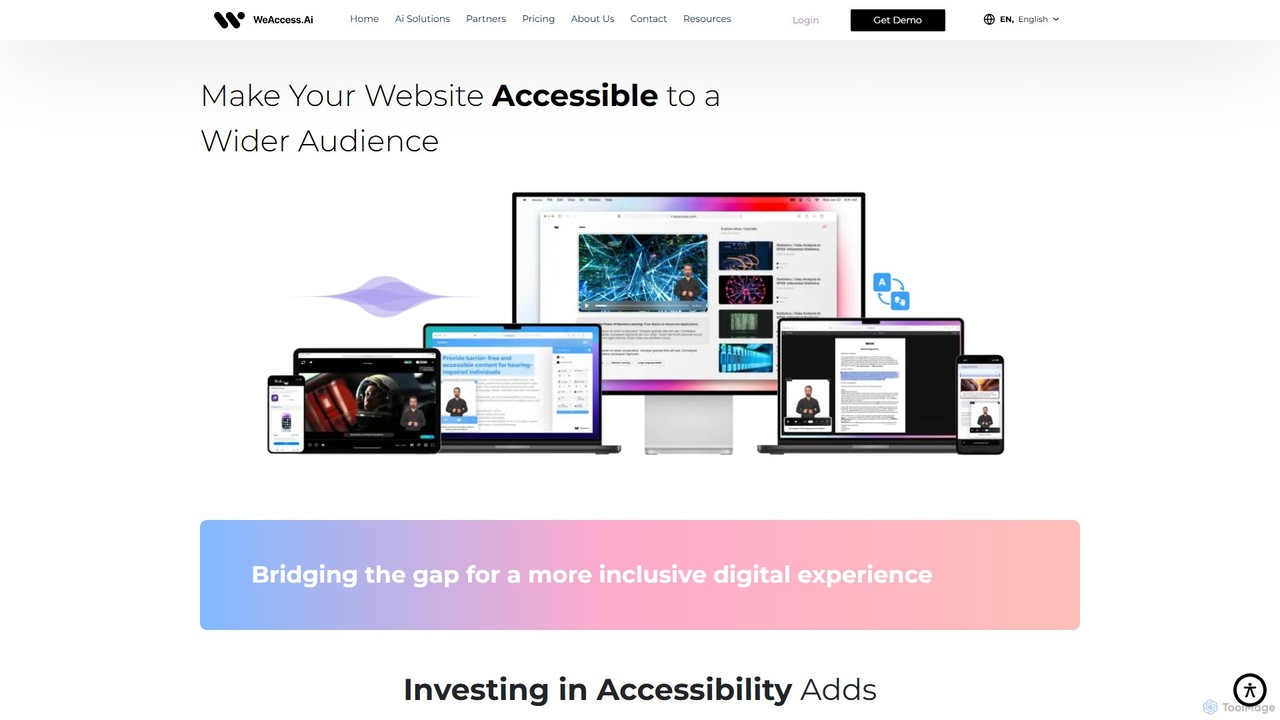
weaccess
weaccess is an AI-powered digital accessibility solution designed to help websites, mobile apps, and digital content achieve WCAG compliance. It offers a suite of tools including an accessibility widget, AI-generated audio descriptions for media, sign language translation for text and video, and detailed accessibility reports to ensure inclusivity for users with visual and hearing impairments.
Website Builders
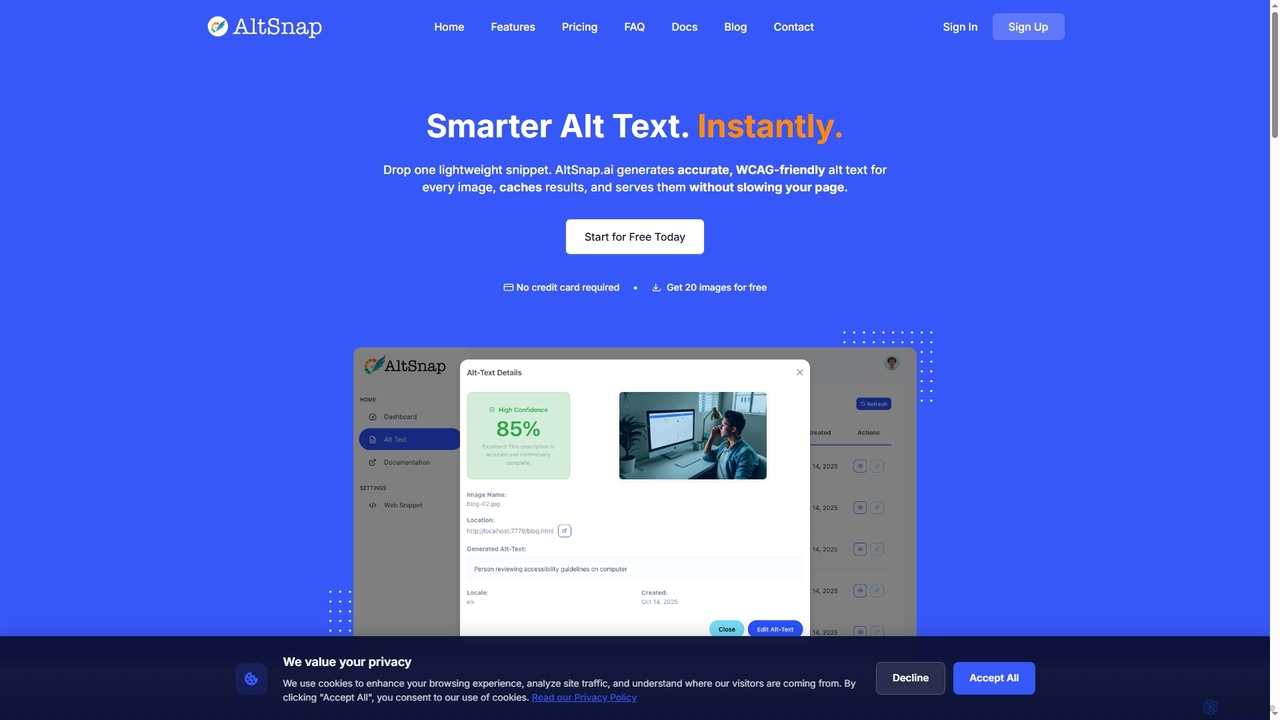
Altsnap
Altsnap is an AI-powered tool that automatically generates accurate, WCAG-compliant alt text for website images. It improves accessibility and SEO with a simple JavaScript snippet, offering features like a client dashboard, performance caching, and evaluation of existing alt text.
Web Development
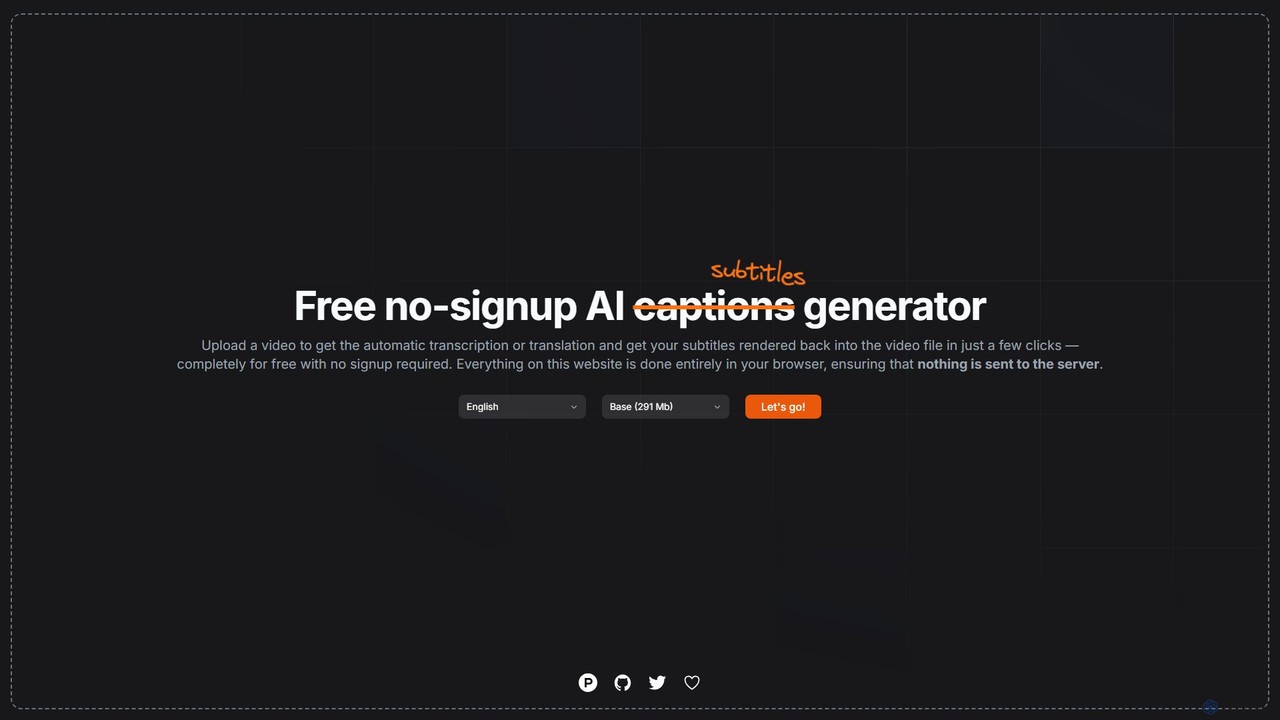
subtitles by fframes
A free, no-signup, browser-based AI tool for automatically generating, translating, and rendering subtitles directly into your videos. It ensures privacy by processing everything locally on your device.
Transcription
TongueType
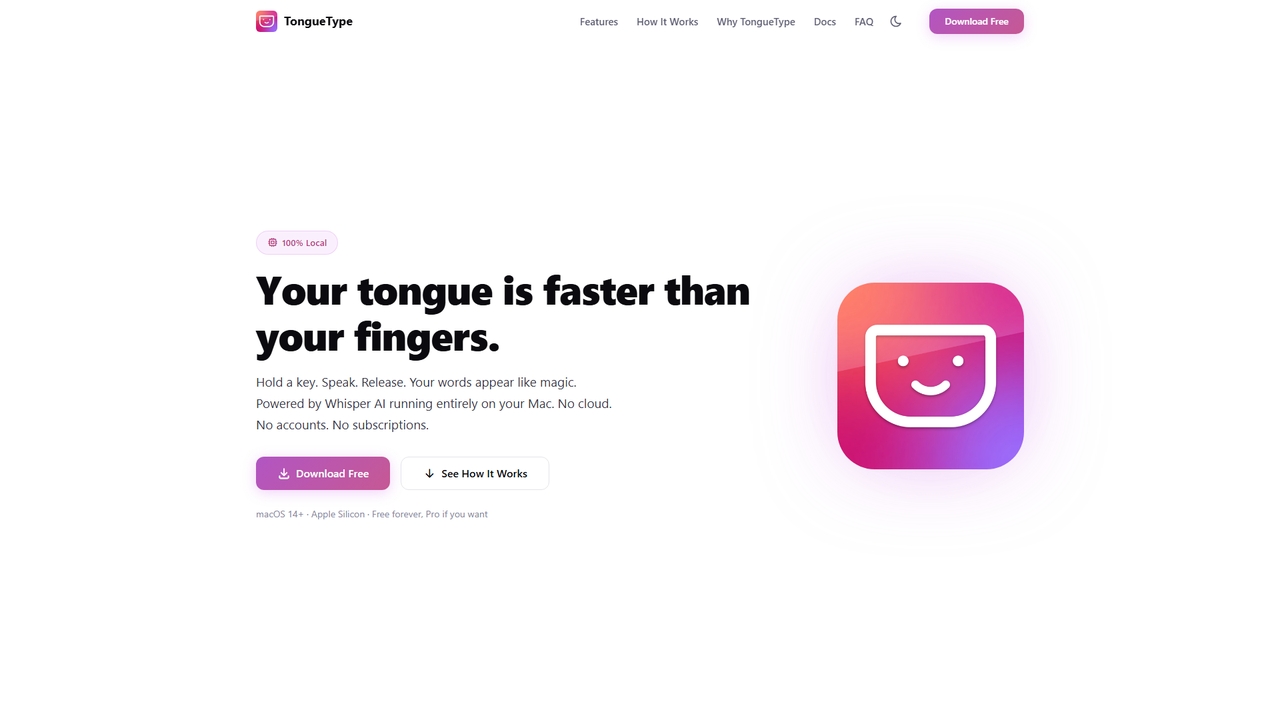
TongueType is a 100% private, offline voice dictation app for macOS. It uses the Whisper AI model locally on Apple Silicon, requiring no cloud, accounts, or subscriptions. Simply hold a hotkey, speak, and your words appear instantly. It's free forever, with a one-time Pro upgrade.
Text Expansion
Graphy
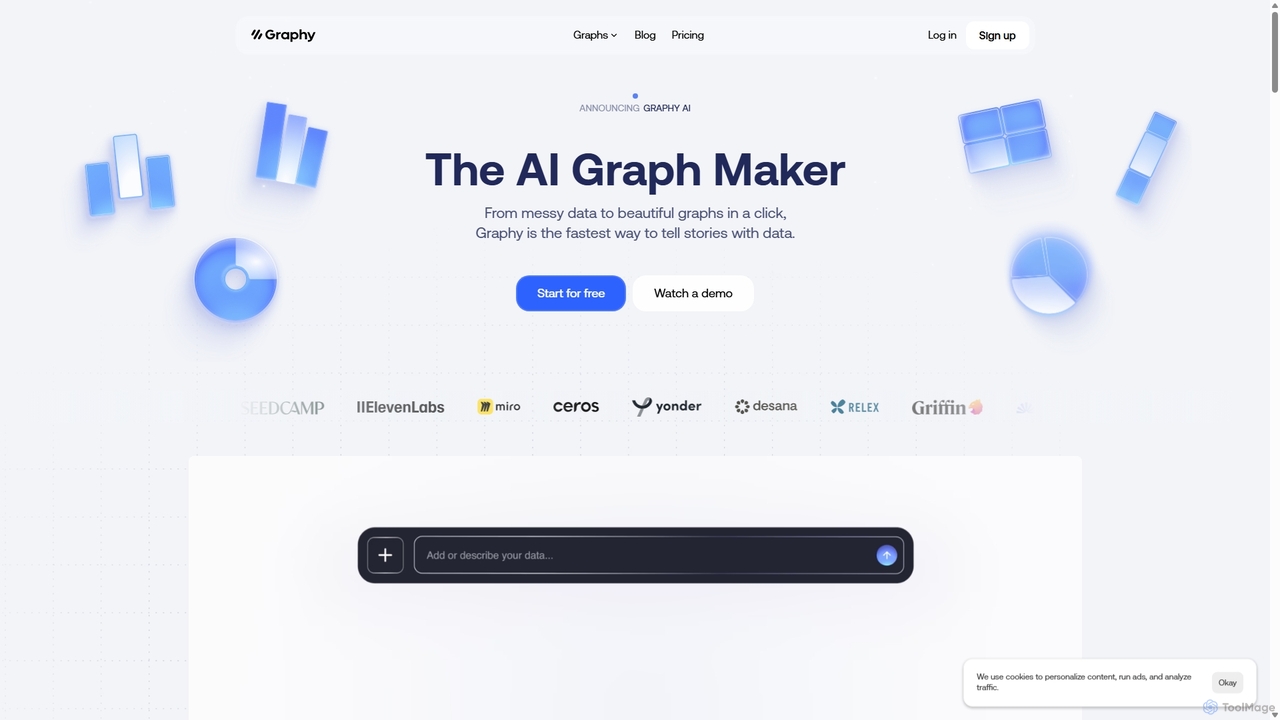
Graphy is an AI-powered data visualization tool that transforms raw data into beautiful, interactive charts and graphs in seconds. It simplifies data storytelling by automatically identifying key insights, allowing users to chat with their data, and offering extensive customization. Ideal for marketers, analysts, and teams who need to create compelling visual reports and presentations without complex software.
3D
AltText.ai
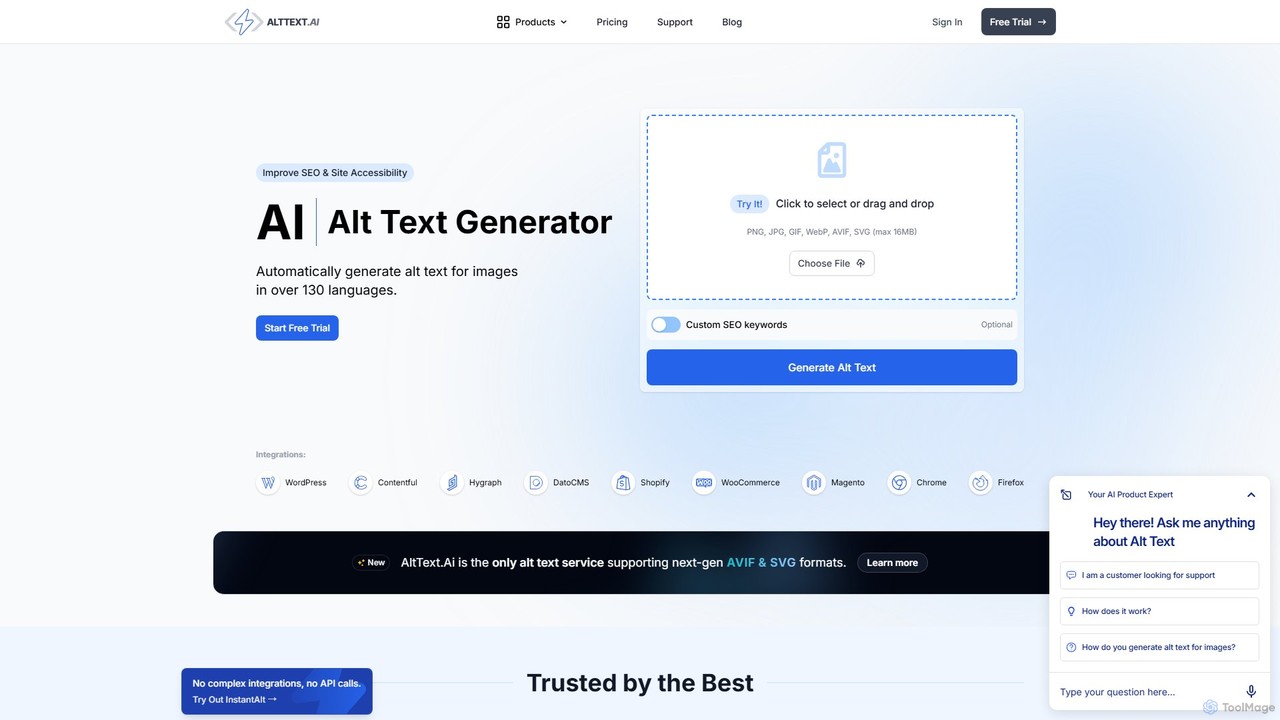
AltText.ai is an AI-powered tool that automatically generates accurate alt text for images in over 130 languages. It's designed to significantly improve website SEO and accessibility with minimal effort. Through seamless integrations with platforms like WordPress and Shopify, a developer API, and browser extensions, it automates the tedious task of writing image descriptions, saving users hundreds of hours while ensuring compliance and boosting search engine visibility.
Web Tools
describepicture
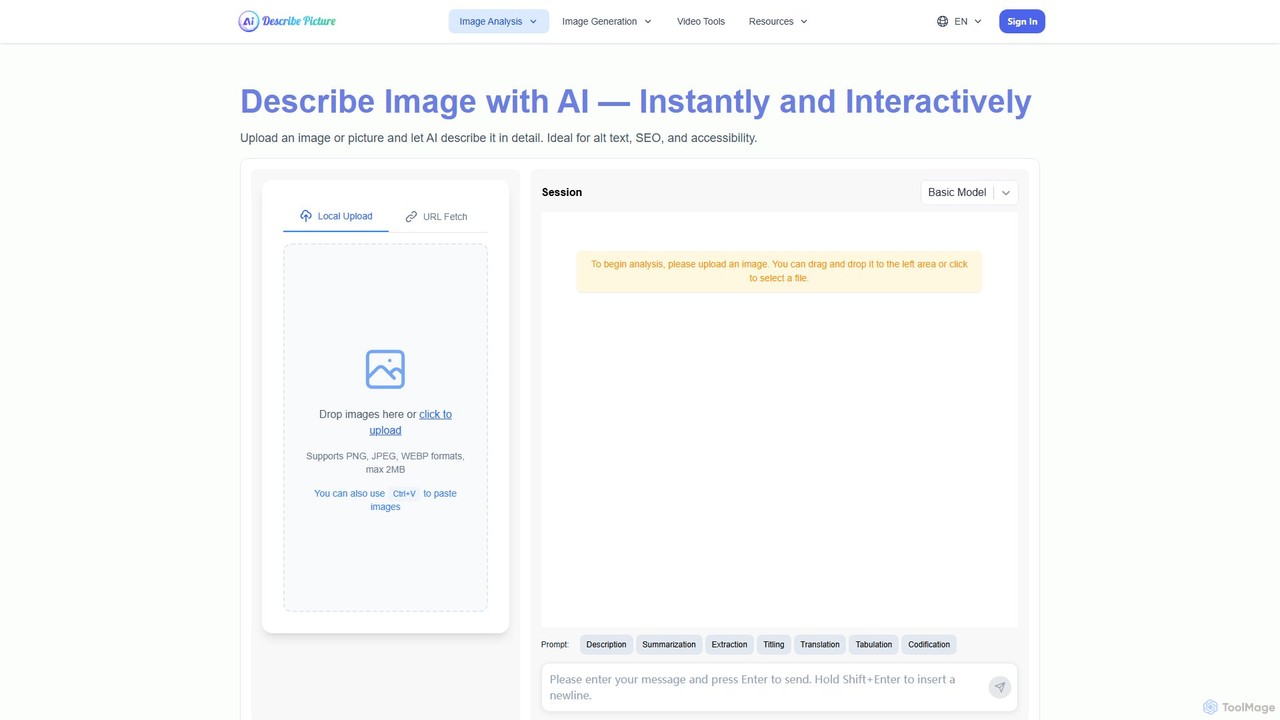
describepicture is a versatile AI platform that instantly generates detailed descriptions for images and videos. It excels at creating alt text for SEO and accessibility, extracting text from images (OCR), converting web screenshots into code (HTML/CSS/JS), and transforming image content into Markdown. It's an all-in-one tool for content creators, developers, and marketers to enhance productivity and make digital content more inclusive.
Screen Readers
Lumenore
Lumenore is an AI-powered, no-code business intelligence and data analytics platform designed to transform complex data into actionable insights. It offers a complete analytics workspace with advanced features like Gen AI-powered Natural Language Query (NLQ), automated insights, and data storytelling, enabling businesses to make faster, informed decisions without requiring deep technical expertise.
3D
VisActor
VisActor is an open-source, narrative-oriented intelligent visualization solution from ByteDance. It provides a comprehensive suite of tools, including VChart and VTable, to transform data into compelling visual stories. With its AI-powered component, VMind, it simplifies chart creation and enables dynamic, cross-platform data presentations.
Libraries & Frameworks
Thefrontkit
Thefrontkit provides production-ready UI kits for AI and SaaS applications, designed to accelerate development with WCAG-AA defaults, Figma-to-Tailwind token synchronization, and essential AI UX patterns. It offers structured, accessible UI components built with React and TailwindCSS, complete with Figma files and comprehensive documentation, enabling teams to ship faster and focus on product innovation.
Web Development
StudyCards App
StudyCards App is an AI-powered flashcard maker for efficient learning on the go. It uses a 'ChatGPT Wizard' to instantly generate custom study decks on any topic. Key features include text-to-speech for auditory learning, smartwatch synchronization for phone-free studying, and CSV import. It's built with accessibility in mind, aiding users with dyslexia or ADHD. Available on iOS and Android, it makes memorization easy and accessible for everyone, from students to professionals.
Learning
Satlas
Satlas is an AI-powered platform by the Allen Institute for AI that provides open, high-resolution geospatial data. It uses advanced computer vision models to analyze global satellite imagery, tracking changes in tree cover, renewable energy, and marine infrastructure. Its key feature is Super-Resolution, which enhances low-resolution images for detailed analysis.
Geospatial
kickstartDS
kickstartDS is an open-source starter kit and next-gen UI toolkit for building and maintaining Design Systems. It offers a low-code framework, a comprehensive component library, and an AI-powered assistant to help digital teams create consistent, high-performance, and brand-compliant web frontends with maximum efficiency.
Design System
Hurd.ai
Hurd.ai is a free, privacy-focused AI transcription tool for macOS. It automatically transcribes, summarizes, and tags your lectures, meetings, and conversations from audio/video files. Powered by OpenAI's Whisper, it offers high accuracy in over 90 languages. All processing is done locally on your device, ensuring your data remains private. Ideal for students, professionals, and anyone needing to capture spoken information without the distraction of manual note-taking.
Speech To Text