Framer
vs
Lobe
A comprehensive comparison of the core features, performance, user experience, and pricing strategies of two excellent AI tools
Providing objective and detailed selection advice based on real data and user feedback
Overview
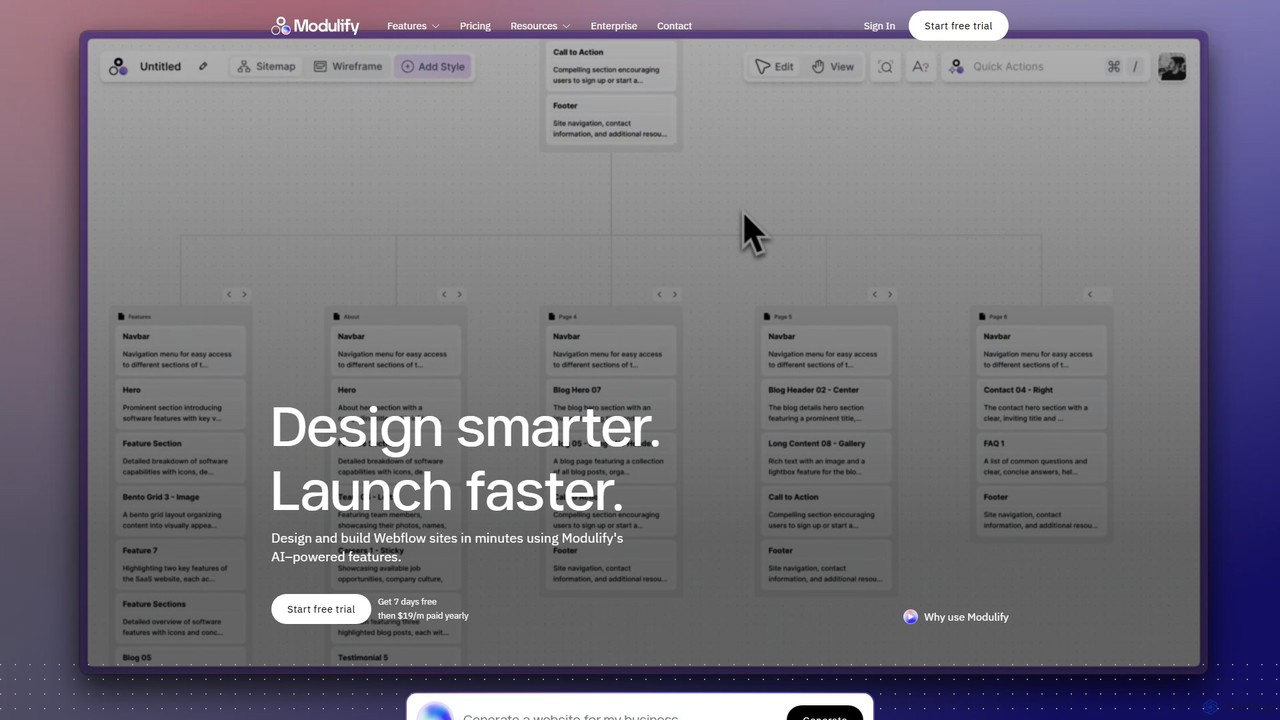
Framer Overview
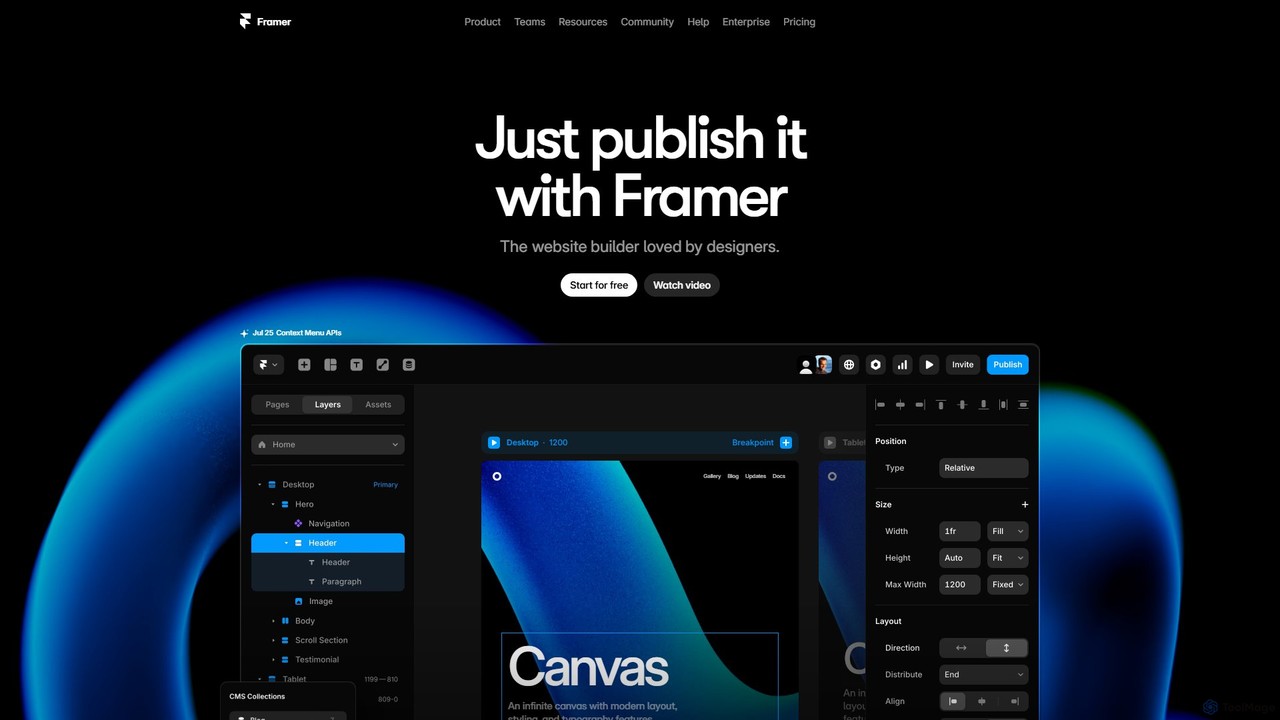
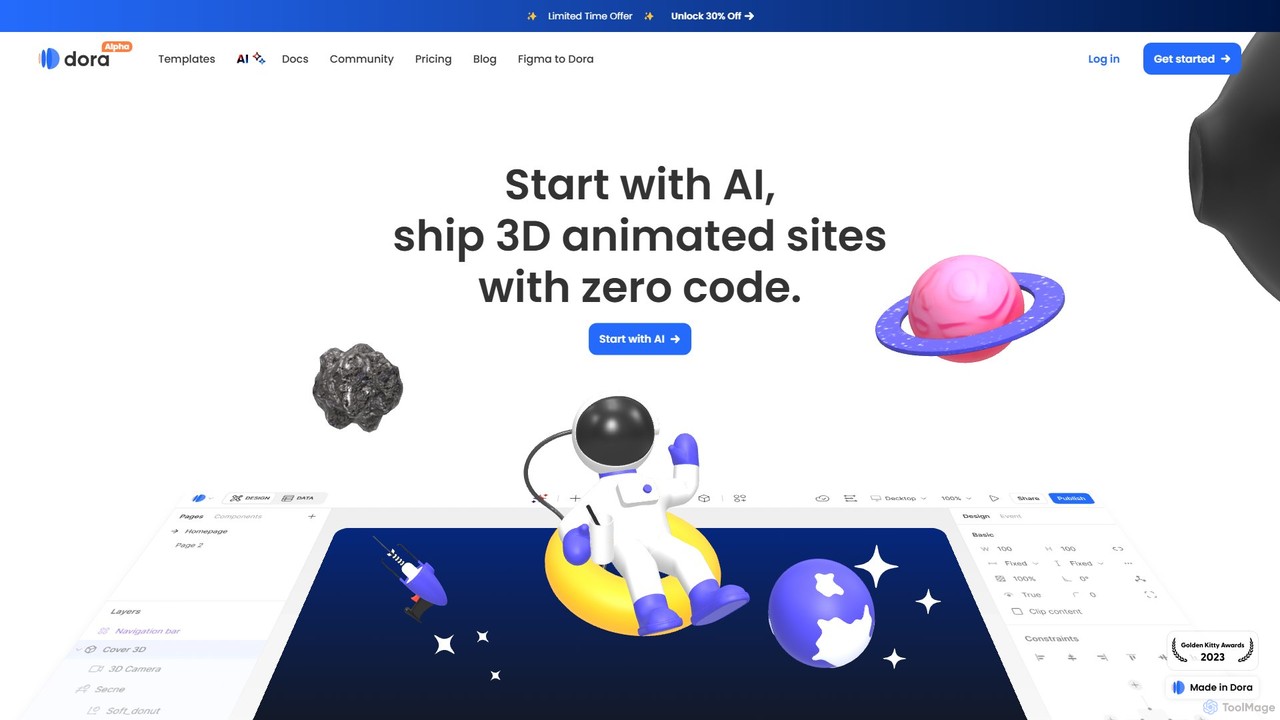
Build stunning, high-performance websites with Framer's AI-powered, no-code platform. Design, animate, collaborate, and publish from one canvas. Start for free.
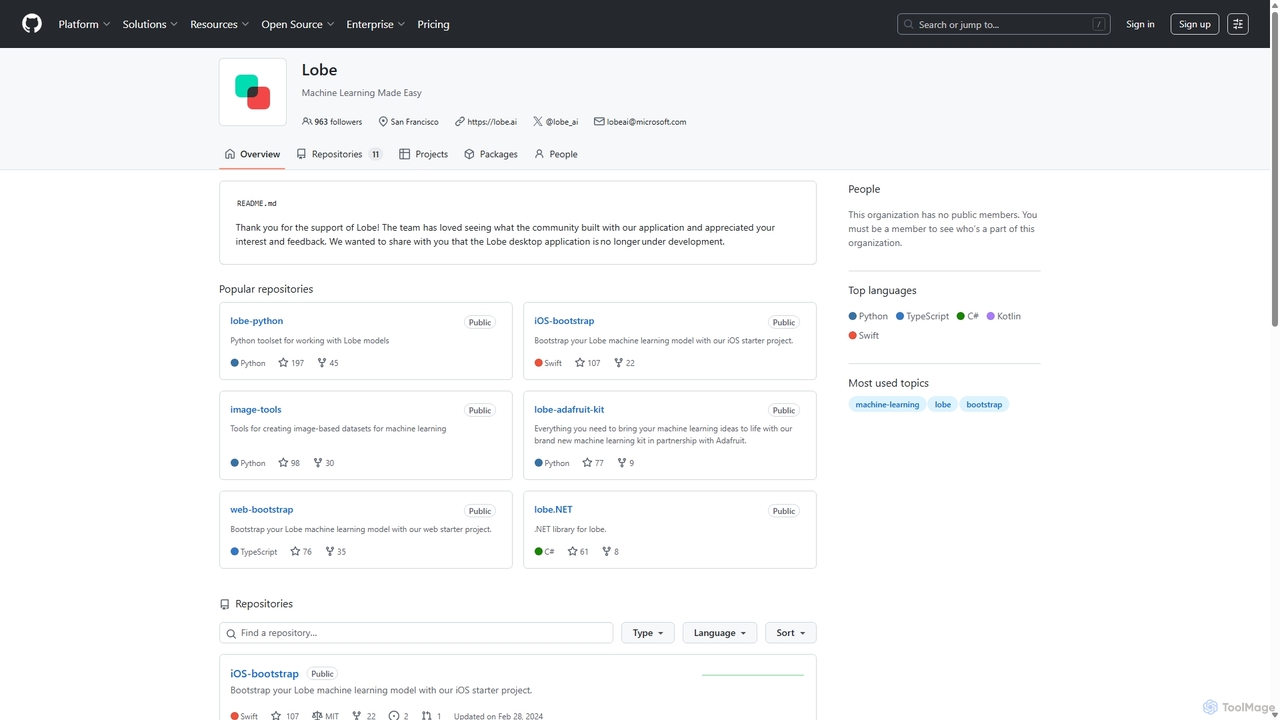
Lobe Overview
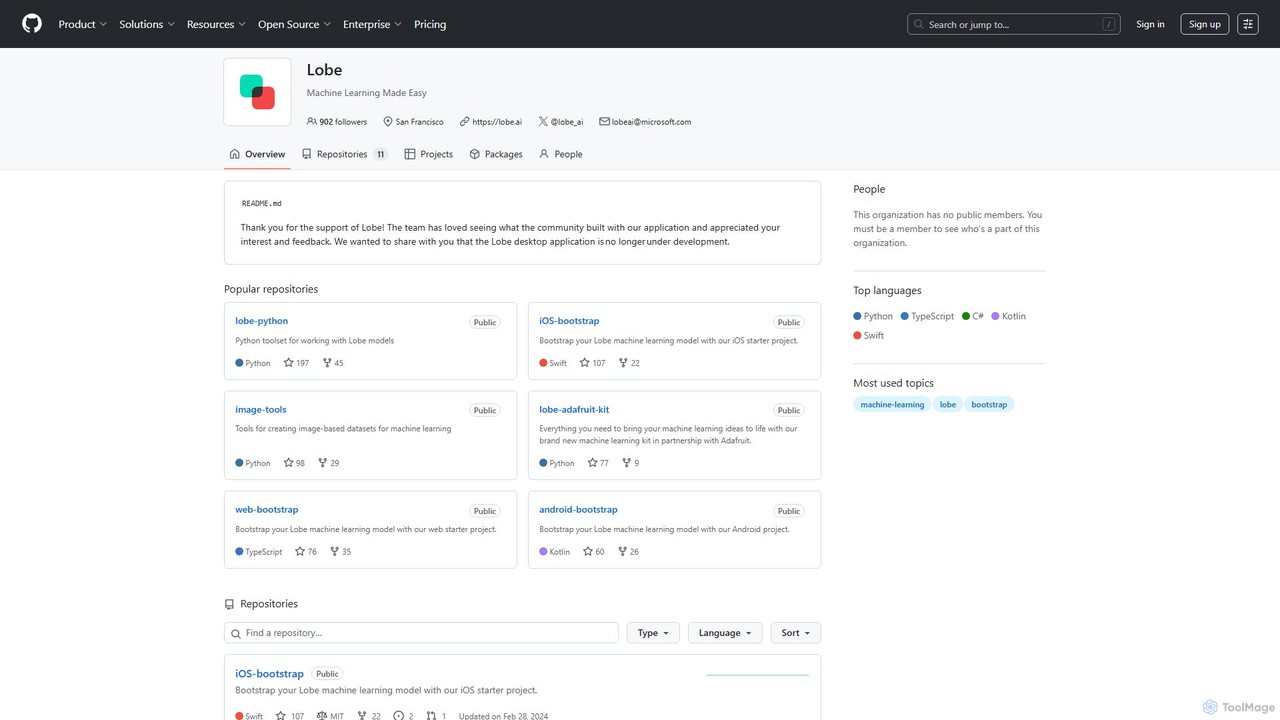
Lobe is a free, easy-to-use desktop app that lets you build, train, and ship custom machine learning models for image classification without writing any code. Export to iOS, Android, Web, and more.
Detailed Feature Comparison
Comprehensive comparison of the core features and characteristics of two AI tools
| Features | Framer | Lobe |
|---|---|---|
| Main Categories | Website Builder | Machine Learning |
| Inclusion Date | 2025-08-07 | 2025-08-01 |
| Pricing Type | Freemium | Free |
| Official Website | https://www.framer.com/ | https://github.com/lobe |
| Tool Type | Website | Application |
| Performance Data | ||
| User Rating | No Rating Yet | No Rating Yet |
| User Reviews | 0 reviews | 0 reviews |
| Monthly Visits | 5.7M | 631.0M |
| Details | View Details | View Details |
Compare Traffic / Monthly Visits
Framer's traffic
Framer Current monthly visible visits are 5.7M.
Latest Traffic
Monthly Traffic Trend
Geography
Top 5 Countries/Regions
| Country/Region | Percentage | Traffic |
|---|---|---|
|
🇮🇳
India
|
38.15% | 2.2M |
|
🇺🇸
United States
|
35.37% | 2.0M |
|
🇦🇺
Australia
|
9.01% | 516.5K |
|
🇬🇧
United Kingdom
|
8.76% | 502.2K |
|
🇫🇷
France
|
8.71% | 499.3K |
Traffic source
| Source Type | Percentage | Traffic |
|---|---|---|
|
Direct Access
|
88.27% | 5.1M |
|
Referral
|
9.24% | 529.7K |
|
Email
|
2.49% | 142.7K |
Popular Keywords
Lobe's traffic
Lobe Current monthly visible visits are 631.0M.
Latest Traffic
Monthly Traffic Trend
Geography
Top 5 Countries/Regions
| Country/Region | Percentage | Traffic |
|---|---|---|
|
🇺🇸
United States
|
37.53% | 236.8M |
|
🇨🇳
China
|
24.16% | 152.5M |
|
🇮🇳
India
|
17.69% | 111.6M |
|
🇷🇺
Russia
|
13.04% | 82.3M |
|
🇩🇪
Germany
|
7.58% | 47.8M |
Traffic source
| Source Type | Percentage | Traffic |
|---|---|---|
|
Direct Access
|
81.32% | 513.1M |
|
Referral
|
16.99% | 107.2M |
|
Email
|
1.69% | 10.7M |
Popular Keywords
Usage Comparison
Compare Framer and Lobe 's Advantages
Framer's Core Features
Lobe's Core Features
Use Cases
Understand the specific application scenarios and functional characteristics of the two AI tools
Framer Use Cases
Lobe Use Cases
Framer vs Lobe:In-depth Comparison Analysis and Selection Recommendations
Comprehensive comparison and evaluation based on real data and user feedback
Market Performance and User Preference Analysis
- Core positioning: Framer leans more toward Website Builder, while Lobe leans more toward Machine Learning.
- Traffic Signal: Lobe currently has higher monthly traffic, serving as a reference for market attention.
- Neither tool has reviewed ratings yet; it is recommended to prioritize comparing functional positioning, price, and actual trial experience.
Lobe has about 631.0M monthly visits, higher than Framer at 5.7M. Use this as a signal of market attention, not as product quality by itself.
In-depth Analysis of User Engagement
Both tools have third-party traffic analysis records, allowing comparison of visits, dwell time, pages per visit, and bounce rate; these metrics should be considered alongside the tool's purpose.
User Reviews vs. Community Feedback
Framer has no reviewed ratings yet. Lobe has no reviewed ratings yet.
Product Positioning and Application Scenario Analysis
Framer is in Website Builder with a Freemium pricing model; Lobe is in Machine Learning with a Free pricing model. Prioritize fit for your specific tasks rather than traffic or default ratings alone.
Frequently Asked Questions
FAQs about these two tools to help you better understand their features and differences
What are the biggest differences between the two?
Framer is primarily positioned in Website Builder, while Lobe is primarily positioned in Machine Learning. Which one suits you depends on which type of use case and workflow you need more.
Which tool is better to try first?
If budget-sensitive, you can try Lobe first; if the features don't match, then evaluate the other tool.
How should ratings and traffic data be interpreted?
Ratings only count reviewed user comments; no default 5-star rating is given when there are no comments. Traffic is used to gauge market attention but cannot solely represent product quality.
Related Tool Recommendations
Discover more excellent AI tools of the same kind
From Process
A platform for operators to quickly create forms, pages, and bio links with embedded options and agent support.
Brila
Brila uses AI and the Jobs To Be Done framework to analyze your Google Maps reviews and automatically …
Brila uses AI and the Jobs To Be Done framework to analyze your Google Maps reviews and automatically generate a website with compelling, customer-centric messaging for your local business.
MashuPack
A browser-based tool that packages a local code repository into a single structured text file, enabling AI models …
A browser-based tool that packages a local code repository into a single structured text file, enabling AI models like ChatGPT and Claude to navigate and understand the codebase as a virtual project for enhanced analysis.
Databerry
A business intelligence dashboard for founders that unifies data from tools like Stripe, PostHog, and Google Analytics. Track …
A business intelligence dashboard for founders that unifies data from tools like Stripe, PostHog, and Google Analytics. Track all key metrics like MRR, user sign-ups, and errors on a single page with no code required.
Agentium
Agentium is an AI runtime for TypeScript agent teams, providing a unified platform for orchestration, memory, tools, and …
Agentium is an AI runtime for TypeScript agent teams, providing a unified platform for orchestration, memory, tools, and observability to build sophisticated agent systems.
Regent
Regent is a version control system specifically designed for AI coding agents. It tracks every action, prompt, and …
Regent is a version control system specifically designed for AI coding agents. It tracks every action, prompt, and change made by agents like Claude Code and Codex, allowing you to audit, blame, undo, and replay agent sessions locally, providing an essential layer of oversight for AI-driven development.
InstaVM
InstaVM is a production-grade sandbox built for AI agents, offering hardware-isolated virtual machines with persistent state, secure networking, …
InstaVM is a production-grade sandbox built for AI agents, offering hardware-isolated virtual machines with persistent state, secure networking, and secret management. It provides a complete Linux environment for safely executing untrusted code from agents, with sub-200ms cold starts and seamless deployment.
Viberia
Viberia is a desktop application that provides a visual command center for managing and orchestrating swarms of AI …
Viberia is a desktop application that provides a visual command center for managing and orchestrating swarms of AI agents. Instead of using terminal screens, users can see all agents, tasks, and statuses on a single interface, like a game.
Trismik
Compare 50+ LLMs on your own data in minutes. Make evidence-based model decisions on quality, cost, and speed …
Compare 50+ LLMs on your own data in minutes. Make evidence-based model decisions on quality, cost, and speed without guesswork.
Beezi
Orchestrate AI development in one place. Beezi integrates with GitHub, Jira, and Slack to plan, code, and ship …
Orchestrate AI development in one place. Beezi integrates with GitHub, Jira, and Slack to plan, code, and ship features with intelligent AI agents, smart model routing, and real-time analytics.
Hive
Hive is an open-source, multi-agent AI swarm platform where autonomous coding agents collaborate and compete to solve and …
Hive is an open-source, multi-agent AI swarm platform where autonomous coding agents collaborate and compete to solve and improve upon complex programming tasks and benchmarks. It fosters collective intelligence for code optimization, algorithm enhancement, and performance benchmarking across various domains.
Lokuma Designer Agent
Lokuma Designer Agent is an AI-powered design intelligence layer that transforms raw, unstructured output from coding AI agents …
Lokuma Designer Agent is an AI-powered design intelligence layer that transforms raw, unstructured output from coding AI agents (like Cursor, Claude Code) into professionally structured and visually balanced designs. It acts as a built-in designer for your AI, automating layout composition, typography refinement, and visual consistency for web pages and digital interfaces.
AppScreenMagic
AppScreenMagic is an AI-powered tool that generates professional App Store and Google Play screenshots in under 30 seconds. …
AppScreenMagic is an AI-powered tool that generates professional App Store and Google Play screenshots in under 30 seconds. It analyzes styles from over 1,000 top-charting apps and applies them to your screenshots, eliminating the need for design skills or expensive freelancers. It supports localization in 40+ languages and all required device formats.
Pinza
Pinza is a managed service that sets up and hosts a personal OpenClaw AI assistant for you within …
Pinza is a managed service that sets up and hosts a personal OpenClaw AI assistant for you within 24 hours, without requiring any technical knowledge or server management. It connects to your tools (like email and calendar) to automate tasks such as meeting scheduling, email summarization, and lead management, allowing freelancers and small businesses to leverage advanced AI effortlessly.
Oncompute
Oncompute is a decentralized, peer-to-peer (P2P) GPU compute network. It connects users needing AI/ML compute power with providers …
Oncompute is a decentralized, peer-to-peer (P2P) GPU compute network. It connects users needing AI/ML compute power with providers of idle GPUs, offering a pay-per-use model directly from integrated development environments like VS Code. It aims to provide more affordable and accessible compute resources for containerized workloads.