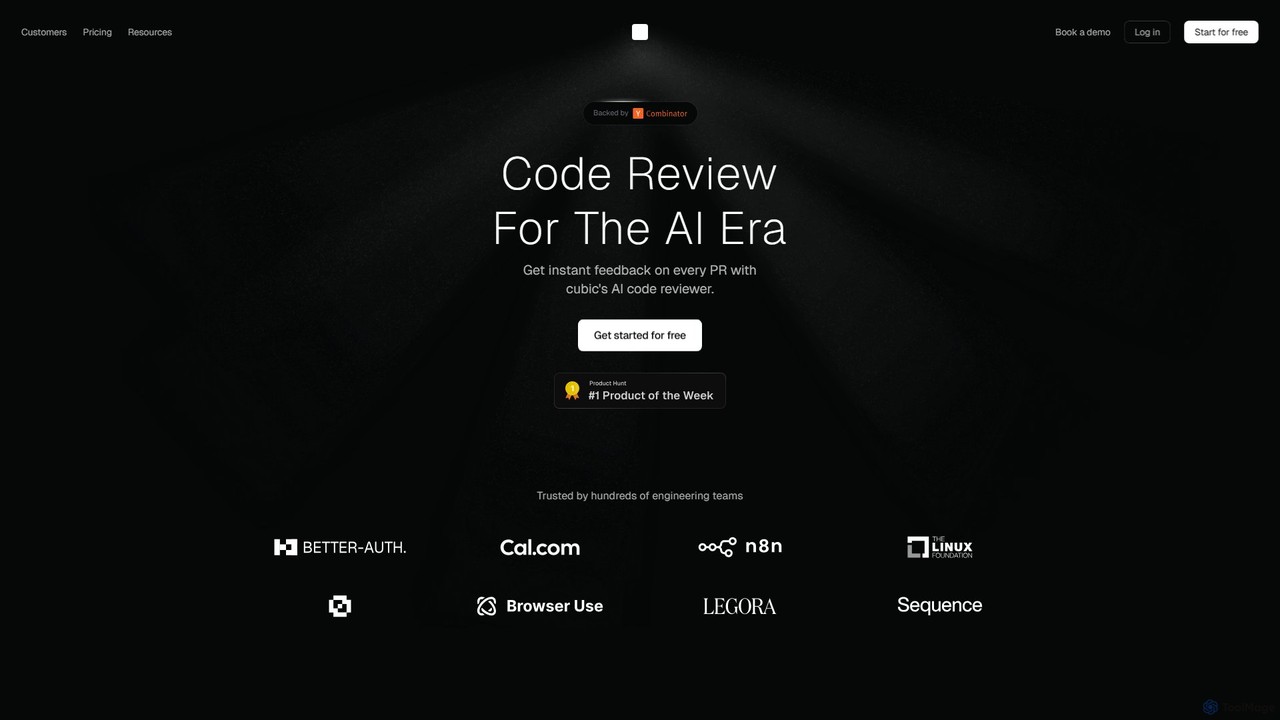
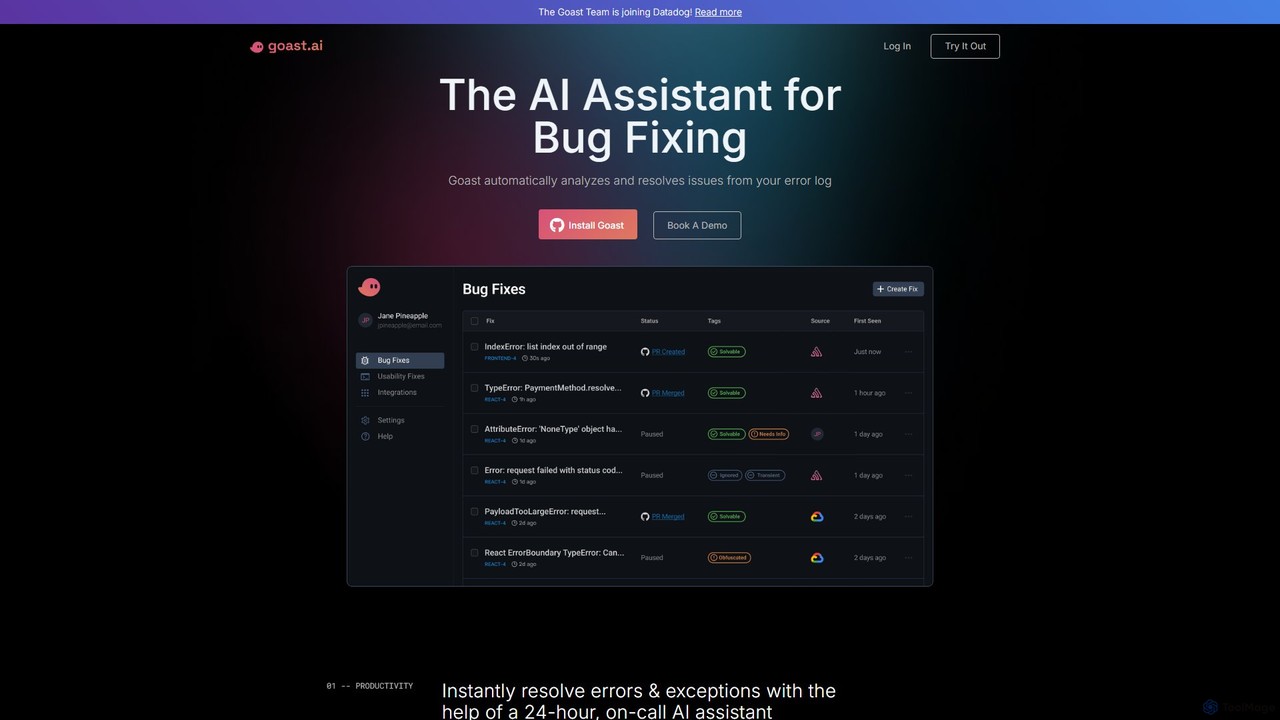
gitya is an AI-powered GitHub assistant designed to automate routine development tasks. It helps teams by handling minor bug fixes, managing pull requests with automated reviews, and resolving simple tickets, allowing developers to focus on high-impact engineering and innovation.

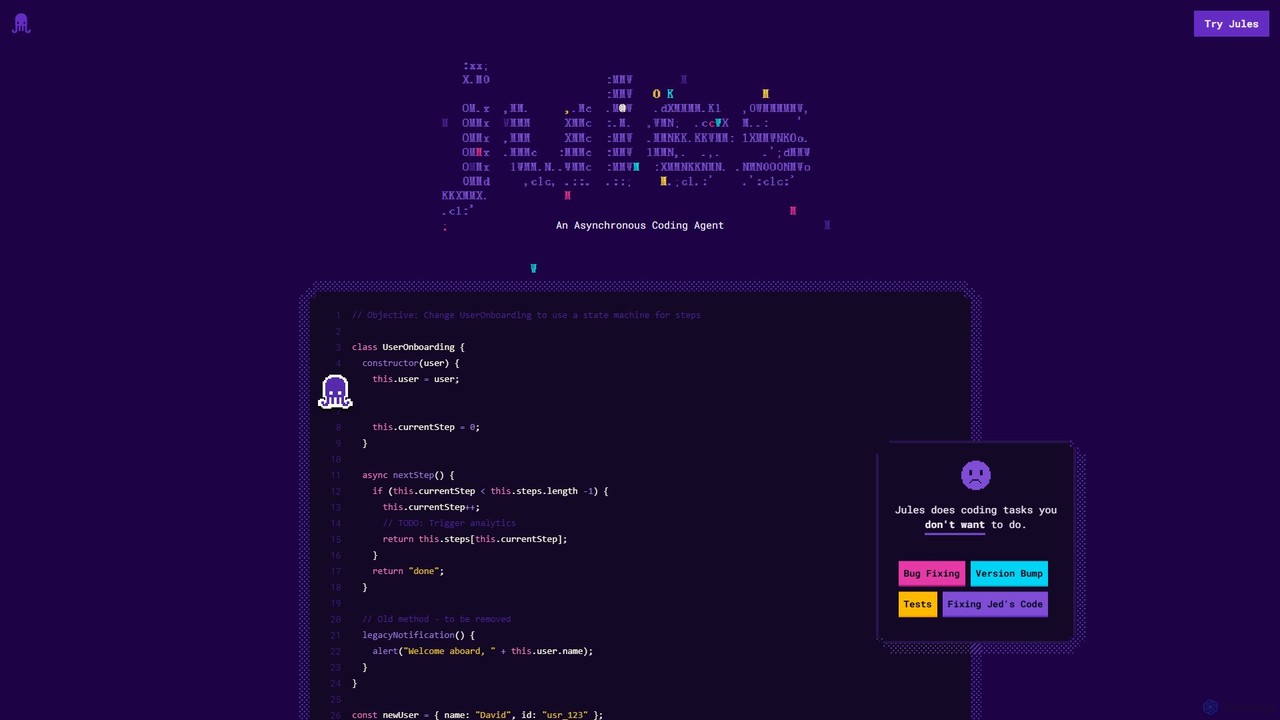
Jules is an experimental, asynchronous AI coding agent from Google. Powered by Gemini 2.5 Pro, it integrates with your GitHub repositories to help fix bugs, build new features, and refactor code. Simply provide a prompt, and Jules will create a plan, write the code, and submit a pull request for your review, streamlining your development workflow.
Product overview
gitya Product overview
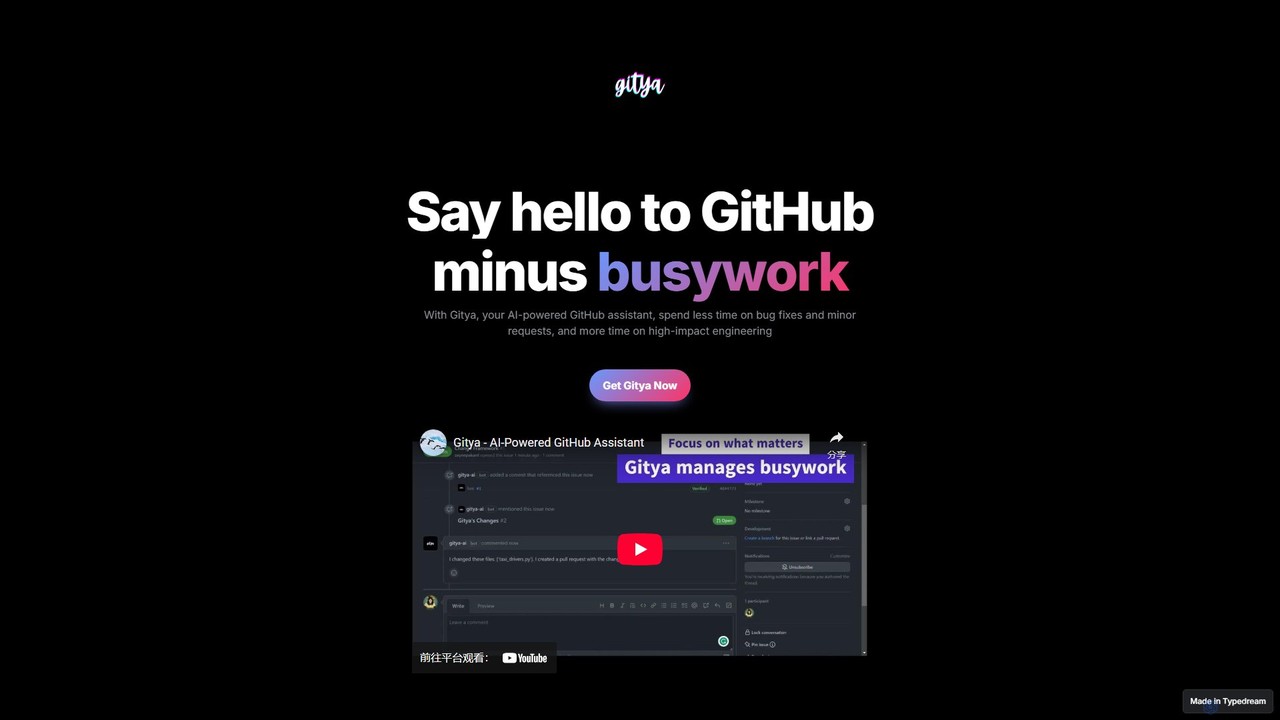
gitya is an AI-powered GitHub assistant designed to automate routine development tasks. It helps teams by handling minor bug fixes, managing pull requests with automated reviews, and resolving simple tickets, allowing developers to focus on high-impact engineering and innovation.
Jules Product overview
Jules is an experimental, asynchronous AI coding agent from Google. Powered by Gemini 2.5 Pro, it integrates with your GitHub repositories to help fix bugs, build new features, and refactor code. Simply provide a prompt, and Jules will create a plan, write the code, and submit a pull request for your review, streamlining your development workflow.
Detailed feature comparison
| Feature | gitya | Jules |
|---|---|---|
| Primary category | Version Control | Code Generation |
| Added | 2025-08-12 | 2025-08-10 |
| Pricing | Freemium | Free |
| Official website | gitya.typedream.app | jules.google |
| Product type | Website | Website |
| Performance data | ||
| User rating | Not verified | Not verified |
| Comments | 0 | 0 |
| Monthly visits | 4.4K | 638.7K |
| Monthly growth | Not verified | 34% |
| Favorites | 129 | 138 |
| Details | View details | View details |
gitya vs Jules monthly traffic
Compare gitya and Jules by monthly reach, traffic trend, visit depth, top regions, and acquisition sources.
How to interpret the traffic data
In the gitya vs Jules monthly traffic comparison, gitya currently shows 4.4K visits and Jules shows 638.7K; Jules has about 146 times the visible traffic of gitya, an absolute difference of about 634.4K visits. This reflects visible reach, not feature quality or paid users.
Only Jules has complete third-party traffic details; gitya uses visits recorded inside ToolMage. These scopes cannot estimate market share directly, and on-site views should not be treated as the product’s total website traffic.
gitya monthly traffic:
Latest traffic
Jules monthly traffic:
Latest traffic
Monthly traffic trend
- 2025/9: 718.1K Monthly visits
- 2026/1: 742.5K Monthly visits
- 2026/2: 525.1K Monthly visits
- 2026/3: 315.3K Monthly visits
- 2026/4: 476.6K Monthly visits
- 2026/5: 638.7K Monthly visits
Top regions
Top 5 countries/regions
| Country/region | Percentage | Traffic |
|---|---|---|
| 🇺🇸United States | 41.46% | 264.8K |
| 🇮🇳India | 30.83% | 196.9K |
| 🇩🇪Germany | 13.42% | 85.7K |
| 🇷🇺Russia | 8.56% | 54.7K |
| 🇵🇱Poland | 5.73% | 36.6K |
Traffic sources
| Source type | Percentage | Traffic |
|---|---|---|
| Direct | 58.35% | 372.7K |
| Referral | 40.48% | 258.6K |
| 1.17% | 7.5K |
Search keywords
Usage comparison
Compare the core capabilities of gitya and Jules
gitya Core features
Jules Core features
Use cases
gitya Use cases
Jules Use cases
gitya vs Jules:In-depth comparison and selection guidance
First decide whether the products solve the same kind of need
This in-depth gitya vs Jules comparison uses only the product records, taxonomy, audience, traffic, and community signals available on this page. gitya is primarily listed under “Version Control”, while Jules is primarily listed under “Code Generation”, so the first decision is whether your actual task matches their recorded scope.
The structured fields currently show these decision-relevant differences: Primary category (gitya: Version Control; Jules: Code Generation); Pricing (gitya: Freemium; Jules: Free); Monthly visits (gitya: 4.4K; Jules: 638.7K); Favorites (gitya: 129; Jules: 138); Website (gitya: gitya.typedream.app; Jules: jules.google). These facts are more useful for selection than brand visibility alone.
What market visibility and monthly traffic mean
In the gitya vs Jules monthly traffic comparison, gitya currently shows 4.4K visits and Jules shows 638.7K; Jules has about 146 times the visible traffic of gitya, an absolute difference of about 634.4K visits. This reflects visible reach, not feature quality or paid users.
Only Jules has complete third-party traffic details; gitya uses visits recorded inside ToolMage. These scopes cannot estimate market share directly, and on-site views should not be treated as the product’s total website traffic.
The current traffic scope is not sufficient for a reliable product ranking. Treat monthly visits as a market-interest signal, then decide using taxonomy, use cases, pricing, and a like-for-like trial rather than reading exposure as product capability.
Product positioning, use cases, and roles
gitya and Jules currently overlap in shared categories: Code Assistant and Automation; shared tags: bug fixing, github, and pull request. This can place both on the same shortlist, but it does not prove equal implementation, depth, or cost.
gitya's unique categories/tags are Version Control, AI, automation, code assistant, code review, developer tools, devops, and productivity; Jules's are Code Generation, AI developer, asynchronous programming, code automation, coding agent, gemini, google ai, and refactoring. These unique fields are the strongest differentiators: validate the product whose recorded scope matches the task instead of following traffic alone.
What ratings, comments, and favorites can tell you
gitya has no verified rating, 0 comments, 129 favorites, and 128 likes;Jules has no verified rating, 0 comments, 138 favorites, and 136 likes。
Neither product has enough rating or comment samples for a credible reputation ranking.
Selection guidance by actual need
When to evaluate gitya first
Put gitya on the priority trial list when the task aligns with “Version Control” and especially Version Control, AI, automation, code assistant, code review, and developer tools. This follows recorded positioning and does not imply unlisted capabilities are absent.
gitya also currently records: pricing is freemium, product type is website, 4.4K on-site monthly views, no verified user rating. Verify any hard requirement around price, platform, or reach before trial, and do not let sparse review data substitute for testing.
When to evaluate Jules first
Put Jules on the priority trial list when the task aligns with “Code Generation” and especially Code Generation, AI developer, asynchronous programming, code automation, coding agent, and gemini. This follows recorded positioning and does not imply unlisted capabilities are absent.
Jules also currently records: pricing is free, product type is website, 638.7K verified monthly visits, no verified user rating. Verify any hard requirement around price, platform, or reach before trial, and do not let sparse review data substitute for testing.
How to validate the recommendation before deciding
The available data describes positioning, public visibility, and community signals, but it cannot prove output quality, speed, integration effort, privacy, or long-term cost in your workflow. Before deciding, run the same representative tasks in gitya and Jules, then record completion time, accuracy, manual corrections, and the real paid threshold. A like-for-like trial turns this comparison into a defensible adoption decision.
Comparison FAQ
How should I choose between gitya and Jules?
Where does this comparison data come from?
What do unknown fields mean?
Related AI tools

Tembo
Tembo is an asynchronous AI software engineer designed to automate critical development tasks. It acts as a tireless AI teammate, monitoring systems, fixing bugs, optimizing databases, and converting tickets into code, allowing engineering teams to focus on building new features and increasing velocity.
Code Assistant
Engine
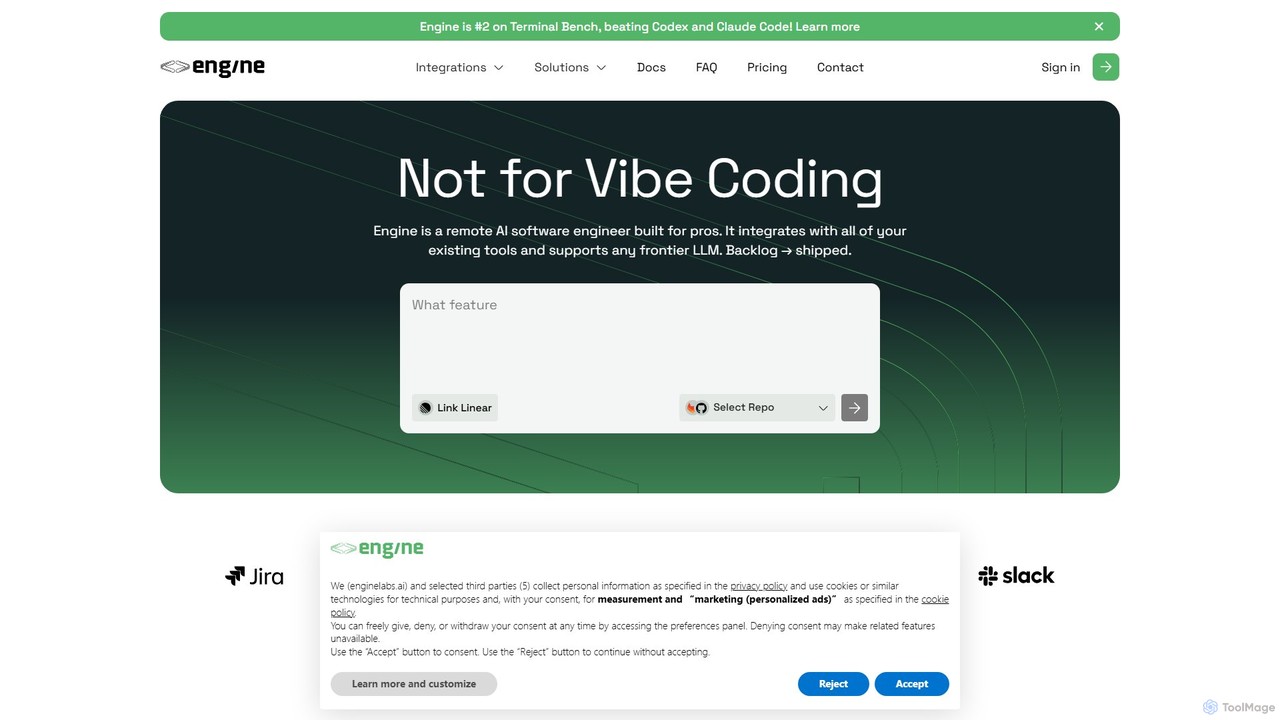
Engine is an AI software engineer designed for professional development teams. It integrates with your existing tools like GitHub and Linear to autonomously fix bugs, ship features, and clear your backlog by creating and managing pull requests, effectively acting as a remote AI team member.
Version Control
Git Assistant
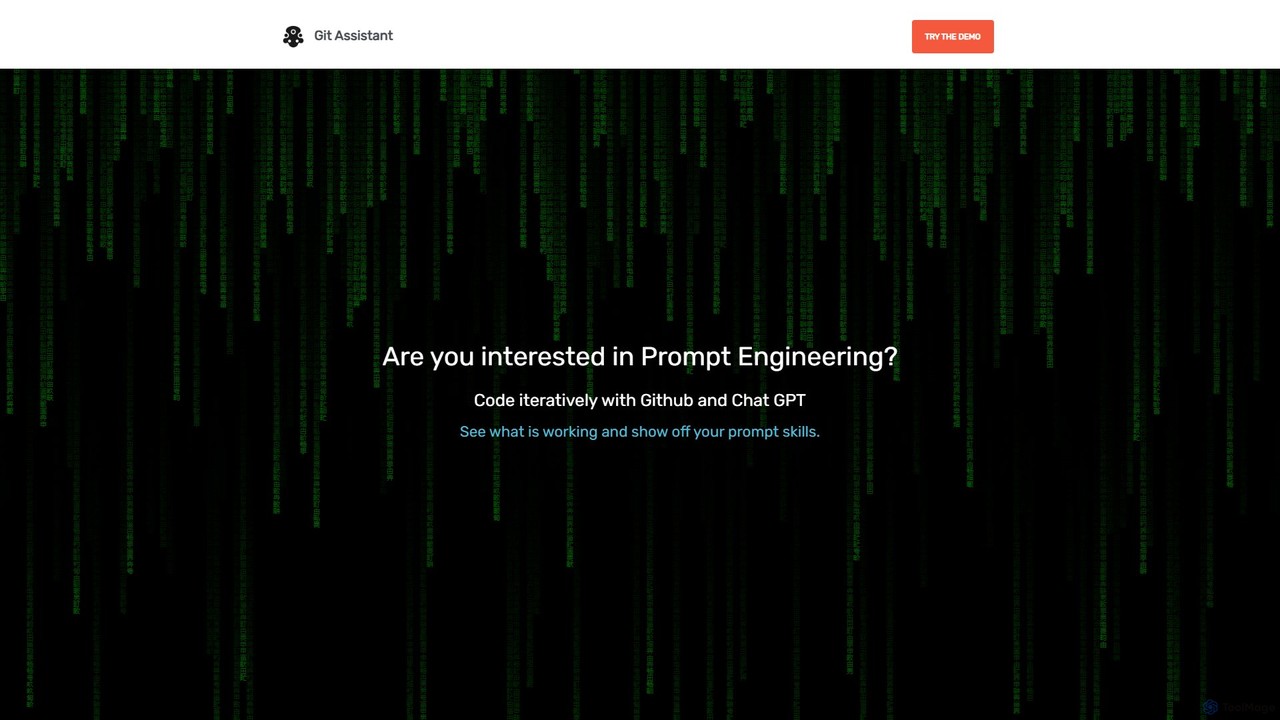
Git Assistant is an AI-powered tool that integrates with GitHub and ChatGPT to streamline your coding workflow. It allows developers to use natural language prompts to generate, refactor, and iterate on code, and then automatically create pull requests. It's designed to boost productivity by automating repetitive tasks and simplifying version control.
Version Control
Patched
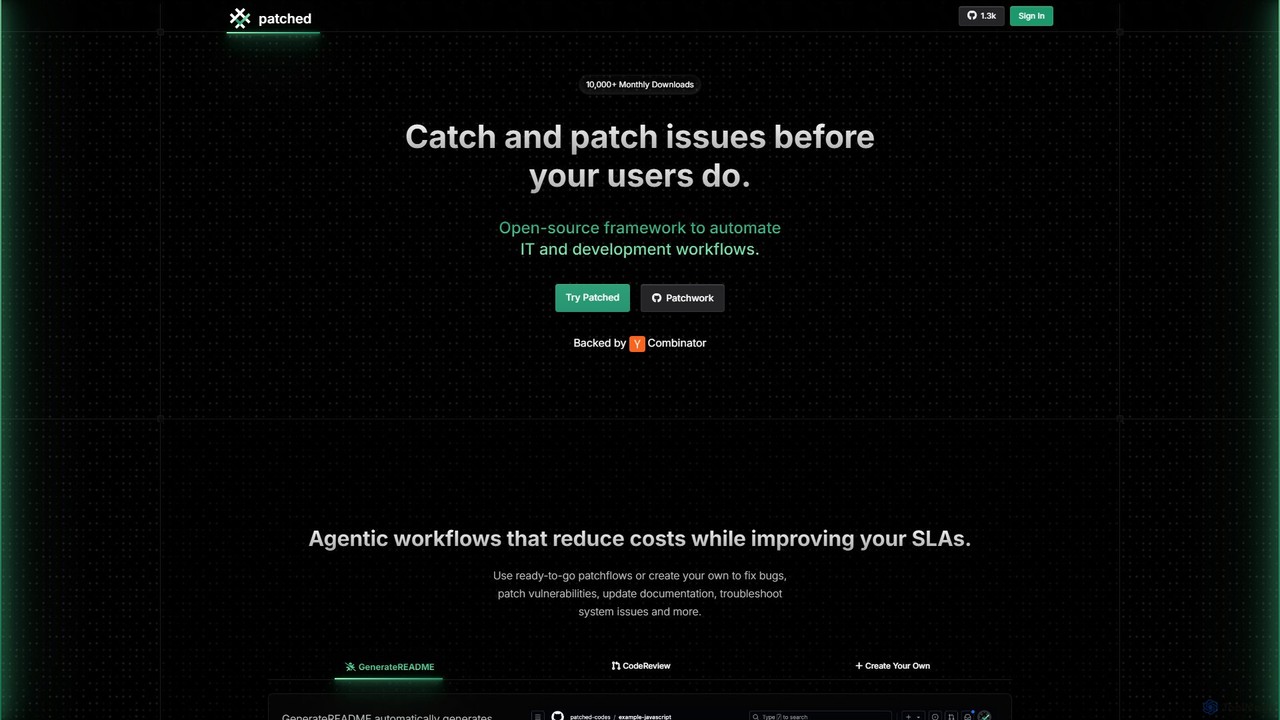
Patched is an open-source framework designed to automate IT and development workflows. It leverages AI to proactively catch and fix issues like bugs and vulnerabilities before they impact users. The platform allows for creating custom, agentic workflows to streamline tasks such as code review, documentation generation, and dependency updates.
Code Assistant
What The Diff
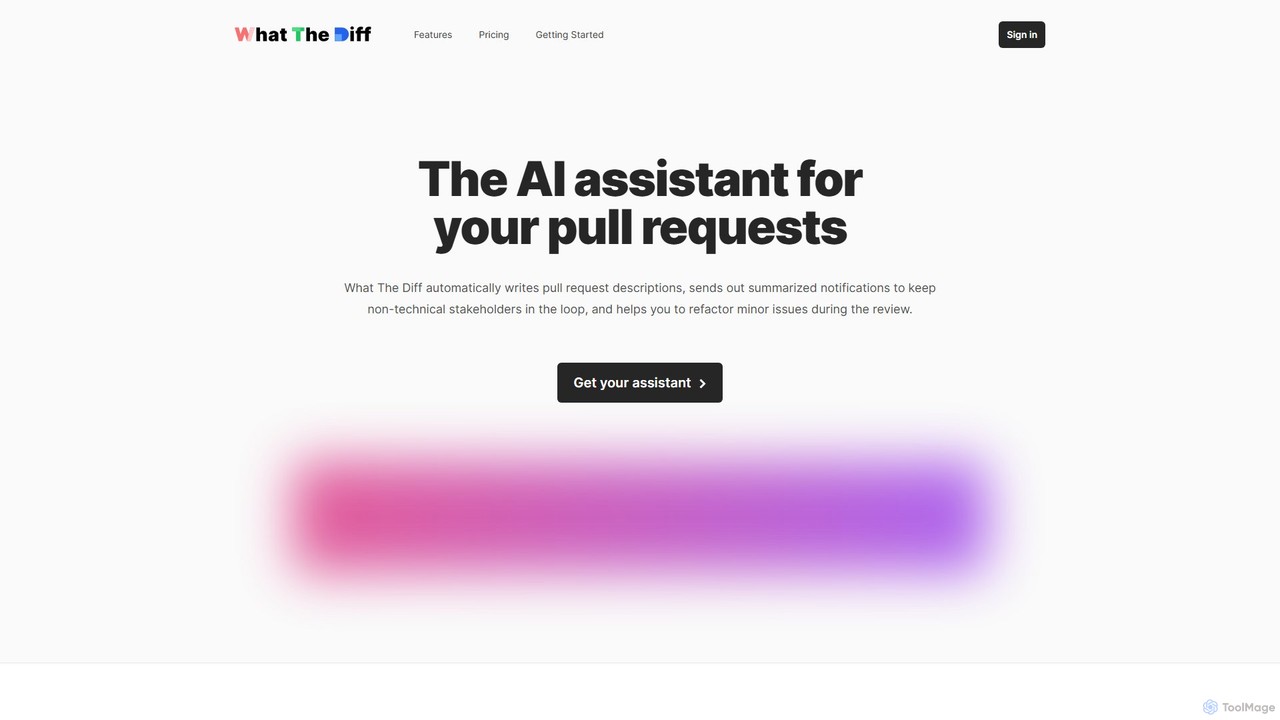
What The Diff is an AI-powered code review assistant that integrates with GitHub and GitLab. It automatically generates pull request descriptions, sends summarized notifications to stakeholders, and helps refactor code directly within the review process, streamlining development workflows.
Code Review
devlo
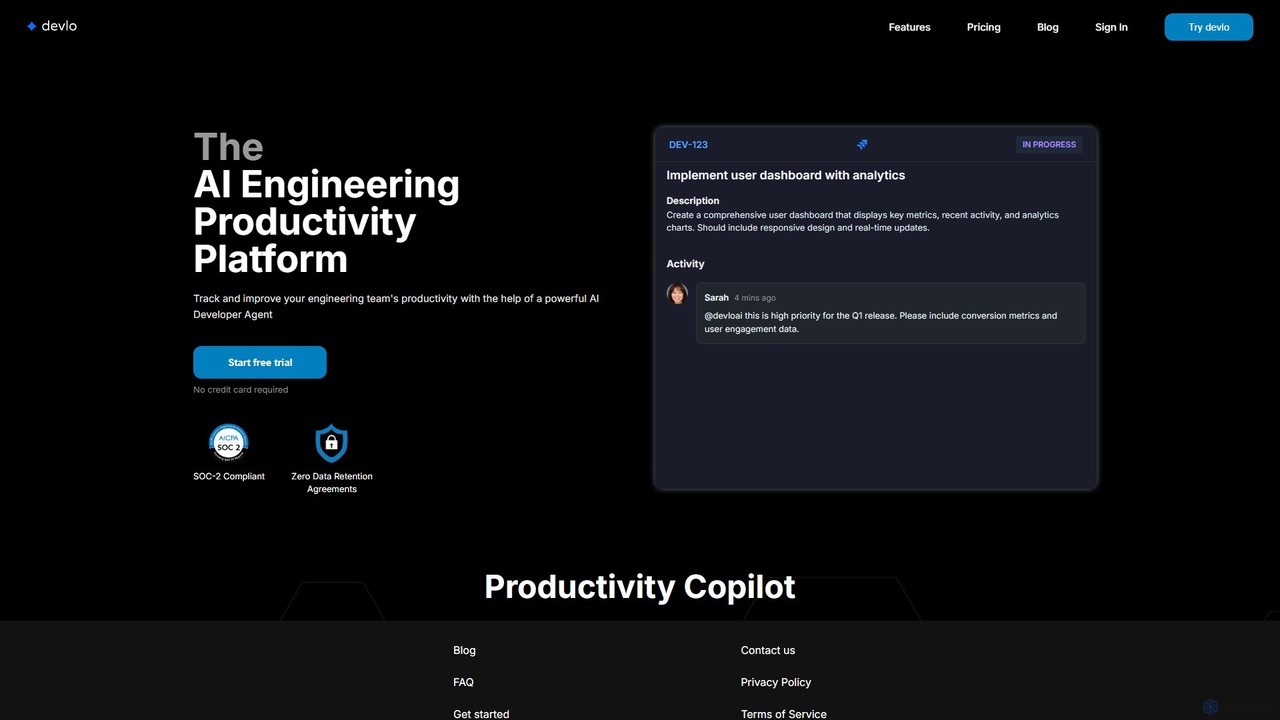
devlo is an AI Engineering Productivity Platform designed to supercharge software development teams. It features an advanced AI Developer Agent that automates coding tasks, performs intelligent code reviews, and provides deep, actionable insights into team performance, helping to accelerate delivery and improve code quality.
Code Assistant
HOJI AI
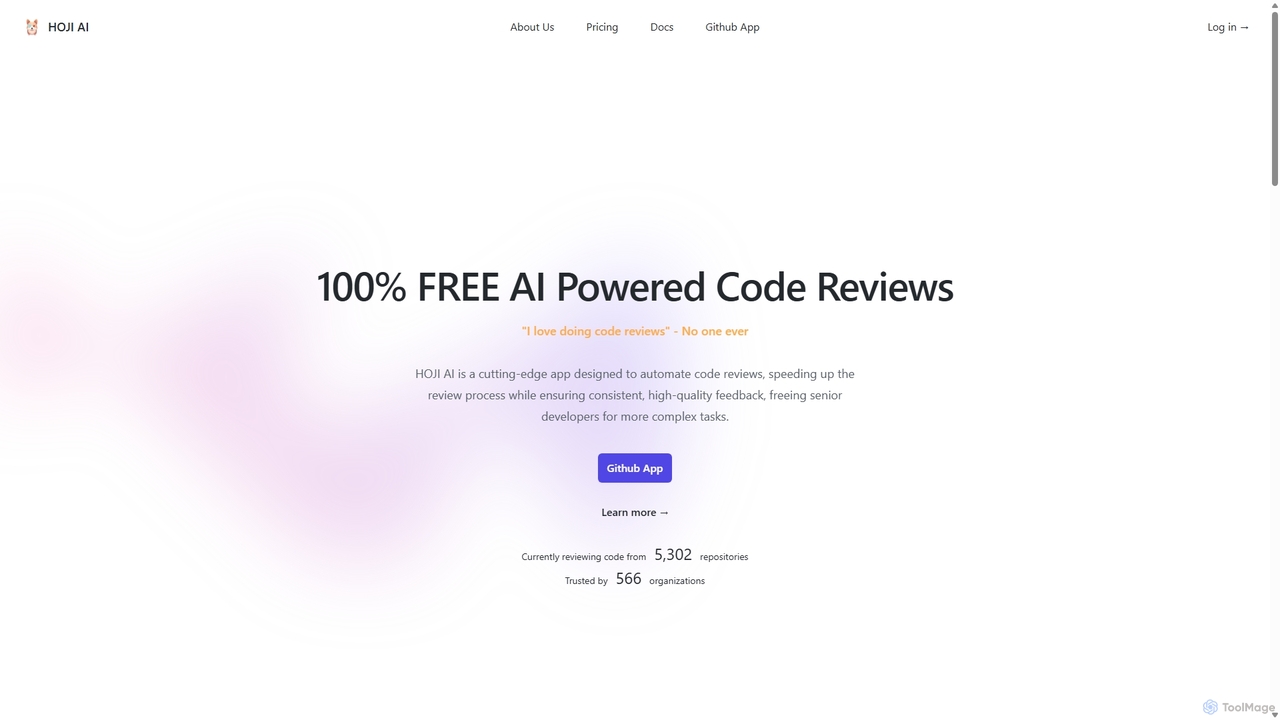
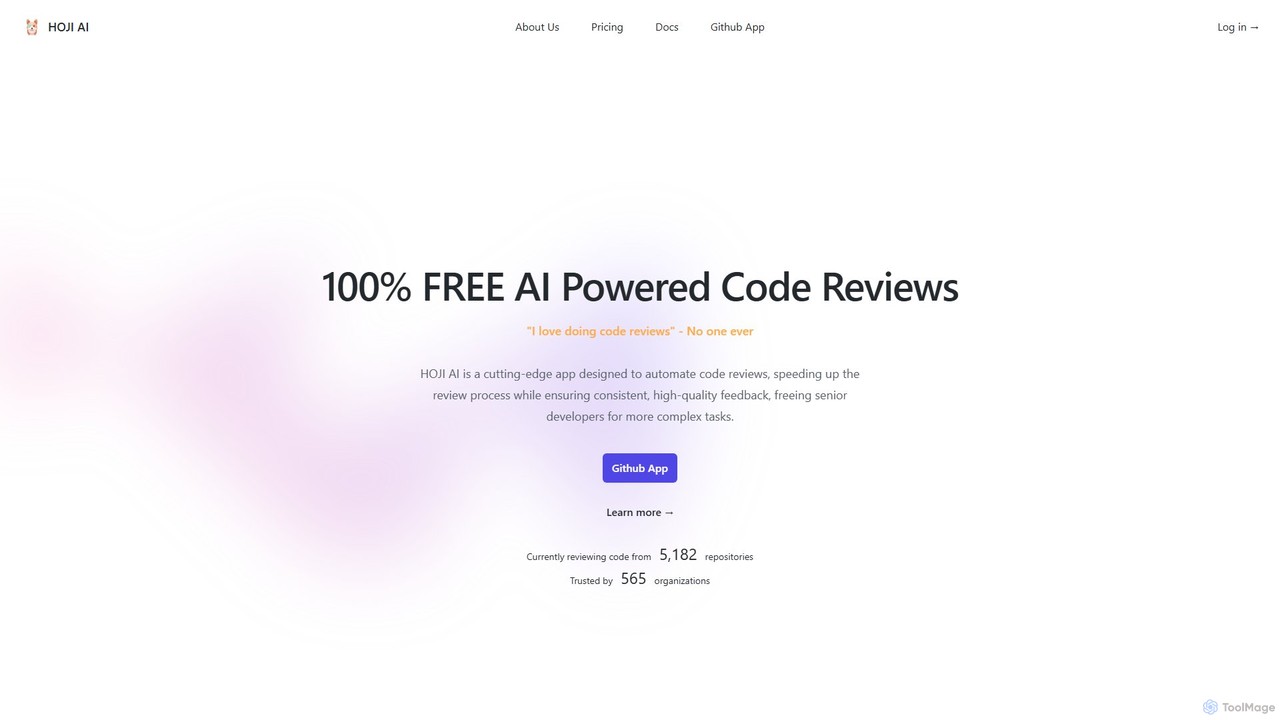
HOJI AI is a free, AI-powered tool that automates code reviews directly within GitHub. It provides instant, consistent, and high-quality feedback on pull requests, helping development teams increase productivity, improve code quality, and accelerate their development cycles by freeing up senior engineers.
Code Assistant
GitPack
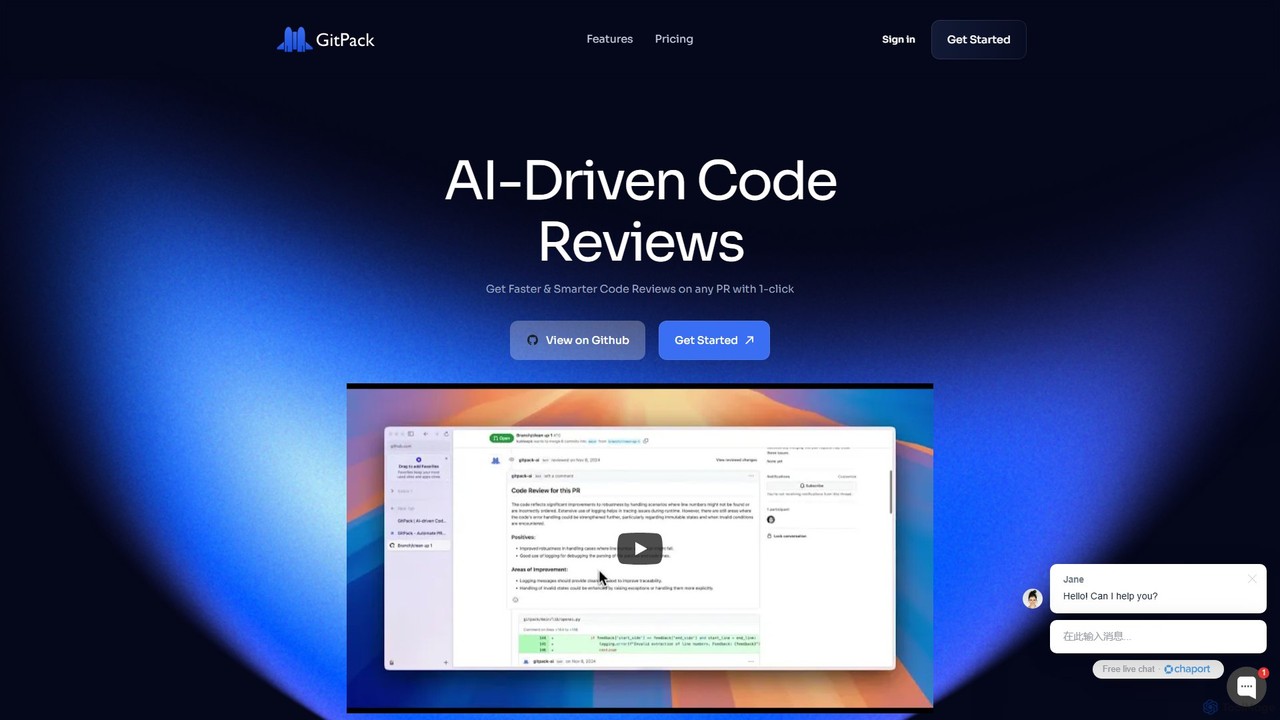
GitPack is an AI-driven tool that automates code reviews on GitHub. It analyzes pull requests, provides context-aware feedback, and helps improve code quality, allowing developers to save time and streamline their workflow.
Code Assistant
hoji
hoji is a free, AI-powered code review assistant that integrates directly with GitHub. It automates the code review process, providing instant, consistent, and unbiased feedback on pull requests. This helps development teams increase productivity, improve code quality, and reduce friction, freeing up senior developers for more complex tasks.
Code Assistant
fsck.ai
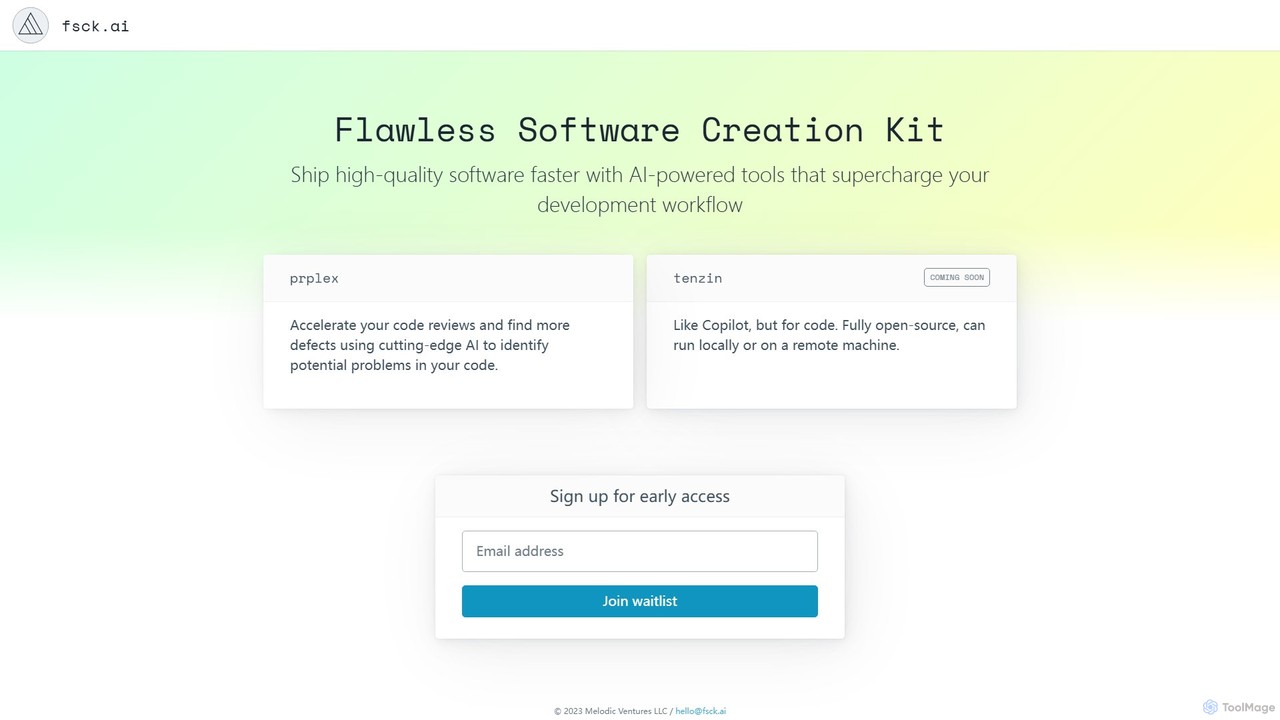
fsck.ai is an open-source AI-powered code review assistant designed to accelerate development workflows. It automatically analyzes pull requests, identifies potential defects and bugs, and provides direct feedback within GitHub, much like a Copilot for code quality.
Code Assistant
Swe Studio
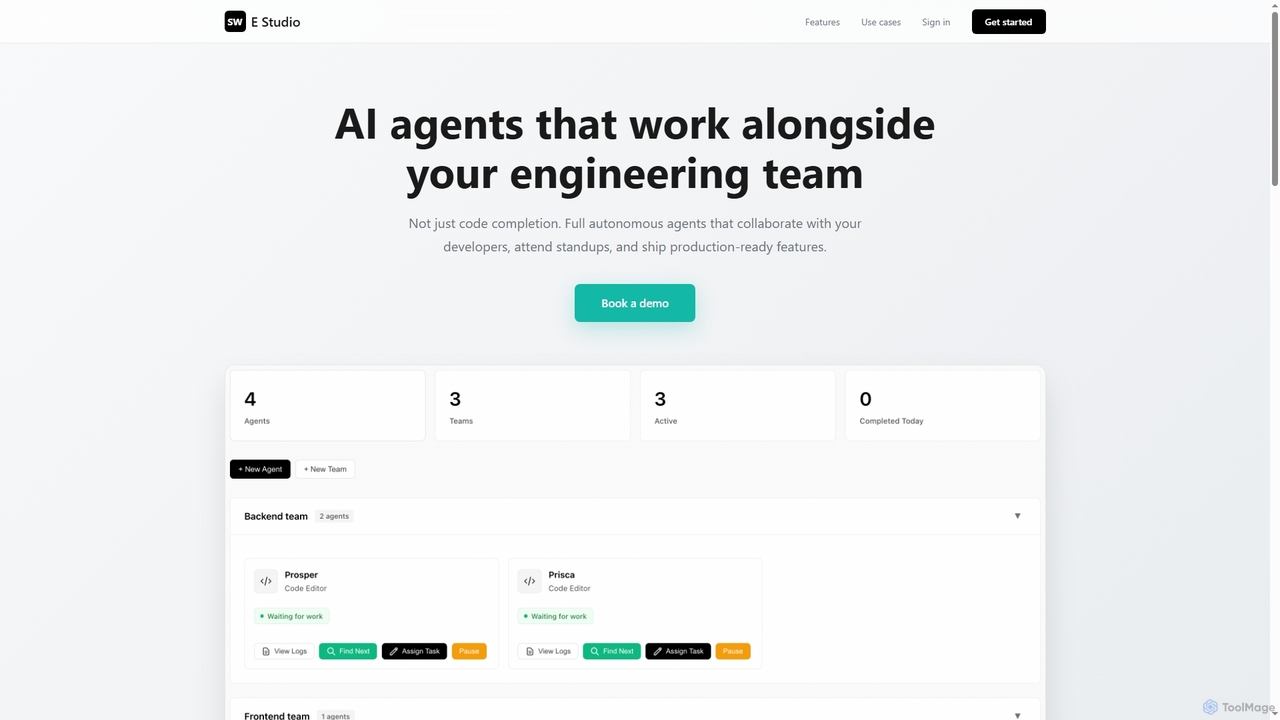
Swe Studio provides autonomous AI agents that function as full members of your engineering team. They independently handle development tasks from Jira tickets to pull requests, collaborating via Slack and GitHub to ship production-ready features.
Code Assistant
CodeRabbit
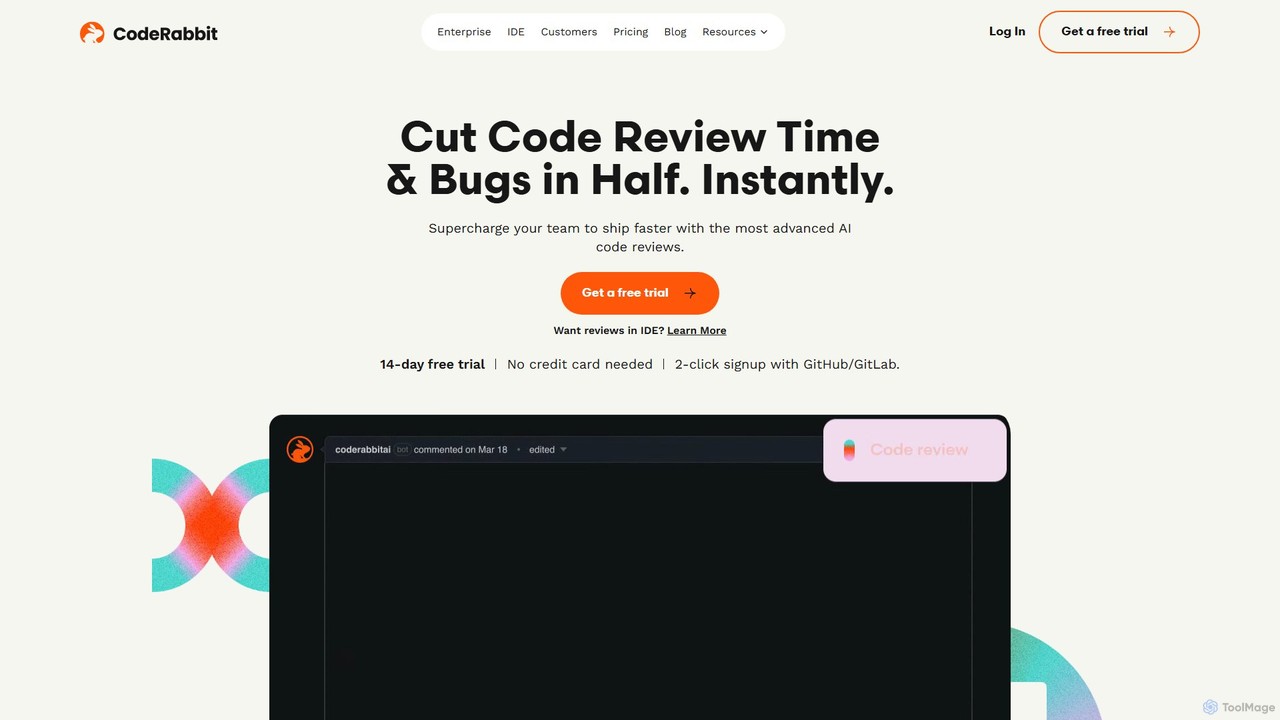
CodeRabbit is an AI-powered code review tool that supercharges development teams to ship faster and reduce bugs. It provides instant, context-aware reviews, pull request summaries, and security analysis directly within GitHub, GitLab, and IDEs like VS Code.
Code Review
cubic
cubic is an AI-powered code review platform that helps software teams ship higher-quality code up to 3x faster. It automatically reviews pull requests in GitHub, catches bugs, enforces custom style guides, and provides one-click fixes, significantly reducing review bottlenecks and improving developer productivity.
Code Assistant
Kodus
Kodus is an AI-powered code review tool that acts like a senior developer on your team. It automatically analyzes pull requests in Git, providing actionable feedback on code quality, security, and performance. It helps teams reduce review time, ship faster, and decrease bugs in production.
Code Quality
Goast.ai
Goast.ai is an AI-powered assistant designed for engineering teams to automate bug fixing. It analyzes error logs, identifies the root cause, and automatically generates pull requests with code fixes, significantly speeding up the resolution process. NOTE: The Goast.ai team has been acquired by and joined Datadog.
Code Review