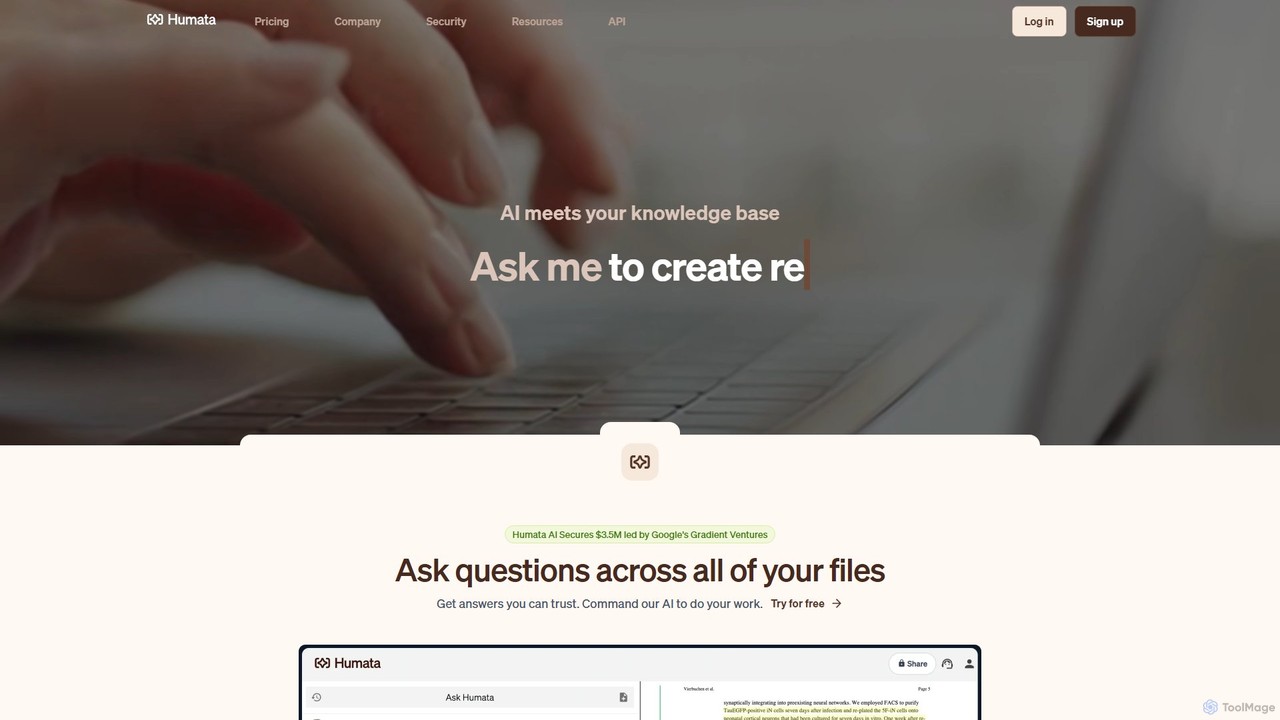
Humata is an AI platform that acts like ChatGPT for your files. Upload any document, such as PDFs, research papers, or legal contracts, and ask questions to get instant, accurate answers. The AI summarizes, synthesizes, and extracts valuable information, providing citations from your source documents to ensure trustworthiness. It's designed to accelerate research, analysis, and knowledge discovery for students, professionals, and teams.
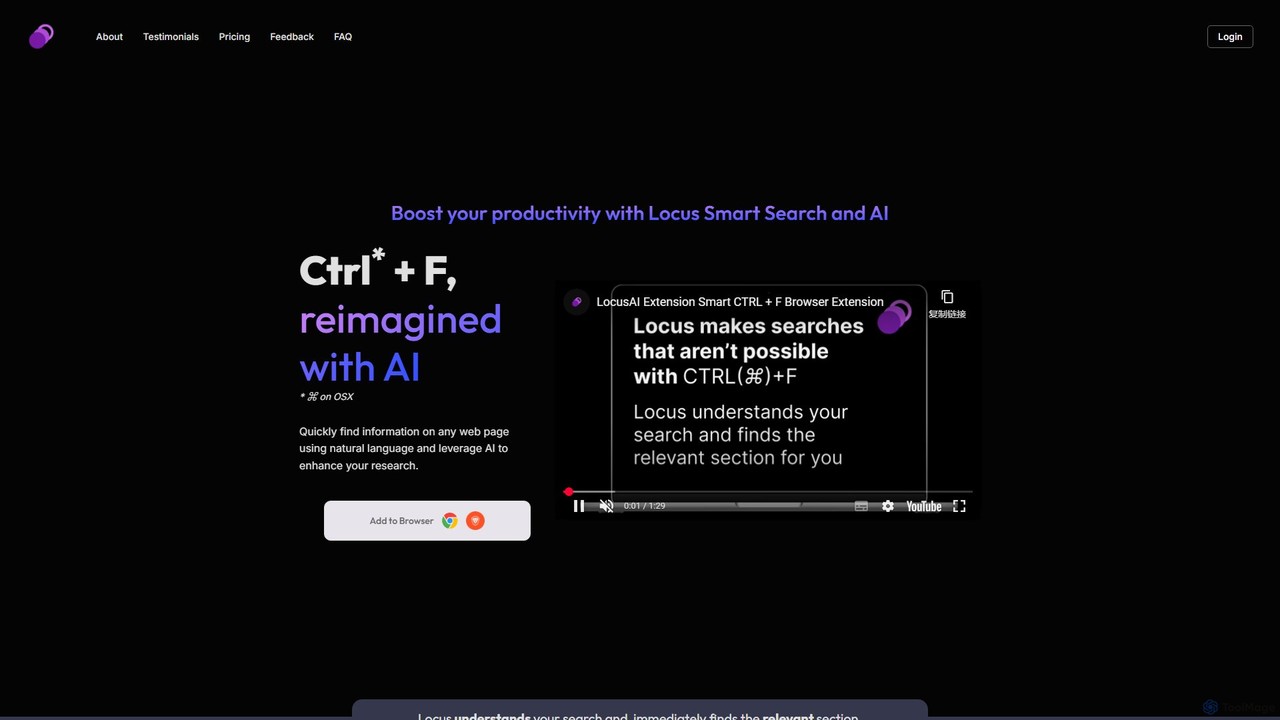
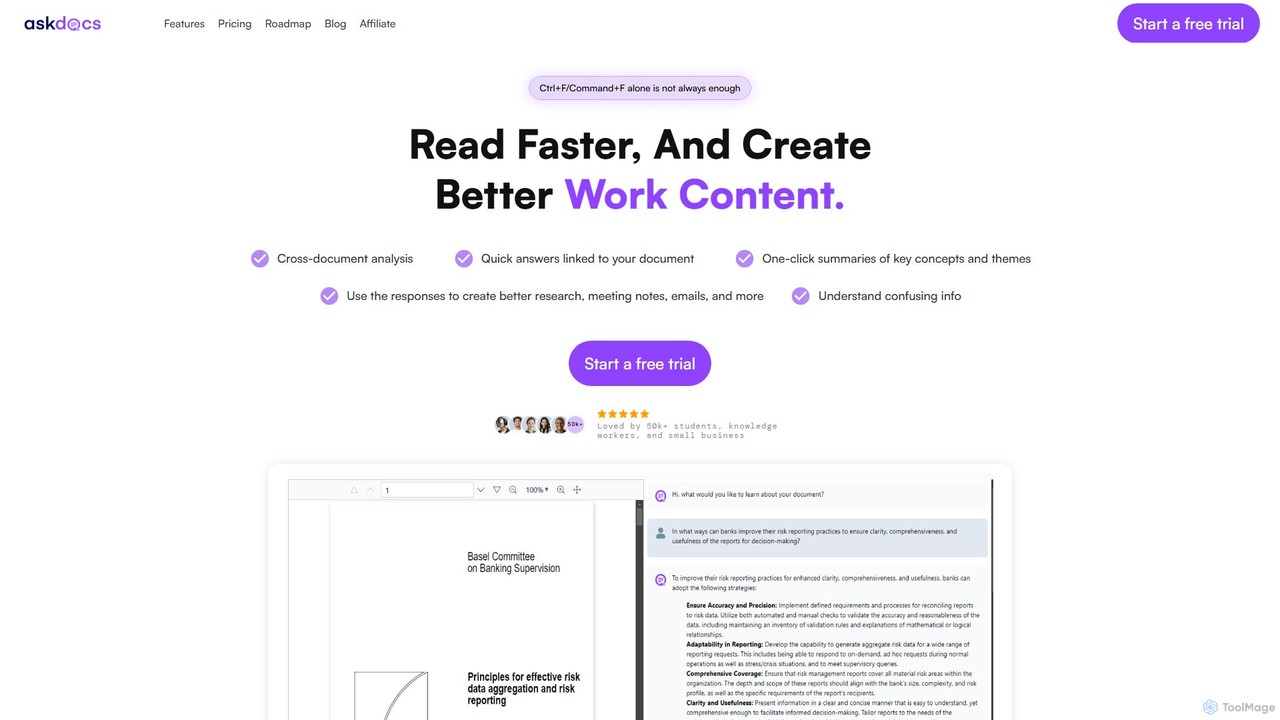
Locus is an AI-powered browser extension that reimagines the Ctrl+F function. It allows you to use natural language to search web pages and PDFs, instantly finding relevant information without needing exact keywords. Locus also offers AI assistance to summarize content, brainstorm ideas, and create study notes, significantly boosting your research and reading productivity.
Product overview
Humata Product overview
Humata is an AI platform that acts like ChatGPT for your files. Upload any document, such as PDFs, research papers, or legal contracts, and ask questions to get instant, accurate answers. The AI summarizes, synthesizes, and extracts valuable information, providing citations from your source documents to ensure trustworthiness. It's designed to accelerate research, analysis, and knowledge discovery for students, professionals, and teams.
Locus Product overview
Locus is an AI-powered browser extension that reimagines the Ctrl+F function. It allows you to use natural language to search web pages and PDFs, instantly finding relevant information without needing exact keywords. Locus also offers AI assistance to summarize content, brainstorm ideas, and create study notes, significantly boosting your research and reading productivity.
Detailed feature comparison
| Feature | Humata | Locus |
|---|---|---|
| Primary category | Data Analysis | Search |
| Added | 2025-08-07 | 2025-08-05 |
| Pricing | Freemium | Freemium |
| Official website | www.humata.ai | www.locusextension.com |
| Product type | Website | Browser extension |
| Performance data | ||
| User rating | Not verified | Not verified |
| Comments | 0 | 0 |
| Monthly visits | 223.4K | 646 |
| Monthly growth | -4.7% | -40.6% |
| Favorites | 146 | 114 |
| Details | View details | View details |
Humata vs Locus monthly traffic
Compare Humata and Locus by monthly reach, traffic trend, visit depth, top regions, and acquisition sources.
How to interpret the traffic data
In the Humata vs Locus monthly traffic comparison, Humata currently shows 223.4K visits and Locus shows 646; Humata has about 345.9 times the visible traffic of Locus, an absolute difference of about 222.8K visits. This reflects visible reach, not feature quality or paid users.
Both tools provide verified traffic details, so monthly trends, visit depth, regions, and acquisition sources can be compared on the same basis.
Humata monthly traffic:
Latest traffic
Monthly traffic trend
- 2025/9: 469K Monthly visits
- 2026/1: 261.2K Monthly visits
- 2026/2: 257.3K Monthly visits
- 2026/3: 254.8K Monthly visits
- 2026/4: 234.4K Monthly visits
- 2026/5: 223.4K Monthly visits
Top regions
Top 5 countries/regions
| Country/region | Percentage | Traffic |
|---|---|---|
| 🇮🇩Indonesia | 51.41% | 114.9K |
| 🇨🇴Colombia | 15.06% | 33.6K |
| 🇮🇳India | 12.62% | 28.2K |
| 🇵🇪Peru | 10.86% | 24.3K |
| 🇨🇿Czech Republic | 10.05% | 22.5K |
Traffic sources
| Source type | Percentage | Traffic |
|---|---|---|
| Direct | 81.5% | 182.1K |
| Referral | 14.27% | 31.9K |
| 4.23% | 9.5K |
Search keywords
Locus monthly traffic:
Latest traffic
Monthly traffic trend
- 2025/9: 2.8K Monthly visits
- 2026/1: 1.1K Monthly visits
- 2026/2: 3.3K Monthly visits
- 2026/3: 1.9K Monthly visits
- 2026/4: 1.1K Monthly visits
- 2026/5: 646 Monthly visits
Top regions
Top 5 countries/regions
| Country/region | Percentage | Traffic |
|---|---|---|
| 🇺🇸United States | 100% | 646 |
Search keywords
Usage comparison
Compare the core capabilities of Humata and Locus
Humata Core features
Locus Core features
Use cases
Humata Use cases
Locus Use cases
Humata vs Locus:In-depth comparison and selection guidance
First decide whether the products solve the same kind of need
This in-depth Humata vs Locus comparison uses only the product records, taxonomy, audience, traffic, and community signals available on this page. Humata is primarily listed under “Data Analysis”, while Locus is primarily listed under “Search”, so the first decision is whether your actual task matches their recorded scope.
The structured fields currently show these decision-relevant differences: Primary category (Humata: Data Analysis; Locus: Search); Product type (Humata: Website; Locus: Browser extension); Monthly visits (Humata: 223.4K; Locus: 646); Monthly growth (Humata: -4.7%; Locus: -40.6%); Favorites (Humata: 146; Locus: 114). These facts are more useful for selection than brand visibility alone.
What market visibility and monthly traffic mean
In the Humata vs Locus monthly traffic comparison, Humata currently shows 223.4K visits and Locus shows 646; Humata has about 345.9 times the visible traffic of Locus, an absolute difference of about 222.8K visits. This reflects visible reach, not feature quality or paid users.
Both tools provide verified traffic details, so monthly trends, visit depth, regions, and acquisition sources can be compared on the same basis.
If public market visibility is an important first-pass criterion, investigate Humata first. The final choice should still follow taxonomy, use case, and a real trial because higher traffic does not prove broader capabilities or better workflow fit.
Product positioning, use cases, and roles
Humata and Locus currently overlap in shared categories: Document Analysis; shared tags: document analysis, research, and summarizer. This can place both on the same shortlist, but it does not prove equal implementation, depth, or cost.
Humata's unique categories/tags are Data Analysis, Knowledge Management, academic research, AI chat, data extraction, file chat, knowledge base, and legal tech; Locus's are Search, Assistant, AI search, browser extension, natural language processing, pdf search, productivity, and search. These unique fields are the strongest differentiators: validate the product whose recorded scope matches the task instead of following traffic alone.
What ratings, comments, and favorites can tell you
Humata has no verified rating, 0 comments, 146 favorites, and 136 likes;Locus has no verified rating, 0 comments, 114 favorites, and 122 likes。
Neither product has enough rating or comment samples for a credible reputation ranking.
Selection guidance by actual need
When to evaluate Humata first
Put Humata on the priority trial list when the task aligns with “Data Analysis” and especially Data Analysis, Knowledge Management, academic research, AI chat, data extraction, and file chat. This follows recorded positioning and does not imply unlisted capabilities are absent.
Humata also currently records: pricing is freemium, product type is website, 223.4K verified monthly visits, no verified user rating. Verify any hard requirement around price, platform, or reach before trial, and do not let sparse review data substitute for testing.
When to evaluate Locus first
Put Locus on the priority trial list when the task aligns with “Search” and especially Search, Assistant, AI search, browser extension, natural language processing, and pdf search. This follows recorded positioning and does not imply unlisted capabilities are absent.
Locus also currently records: pricing is freemium, product type is browser extension, 646 verified monthly visits, no verified user rating. Verify any hard requirement around price, platform, or reach before trial, and do not let sparse review data substitute for testing.
How to validate the recommendation before deciding
The available data describes positioning, public visibility, and community signals, but it cannot prove output quality, speed, integration effort, privacy, or long-term cost in your workflow. Before deciding, run the same representative tasks in Humata and Locus, then record completion time, accuracy, manual corrections, and the real paid threshold. A like-for-like trial turns this comparison into a defensible adoption decision.
Comparison FAQ
How should I choose between Humata and Locus?
Where does this comparison data come from?
What do unknown fields mean?
Related AI tools

Doculogy
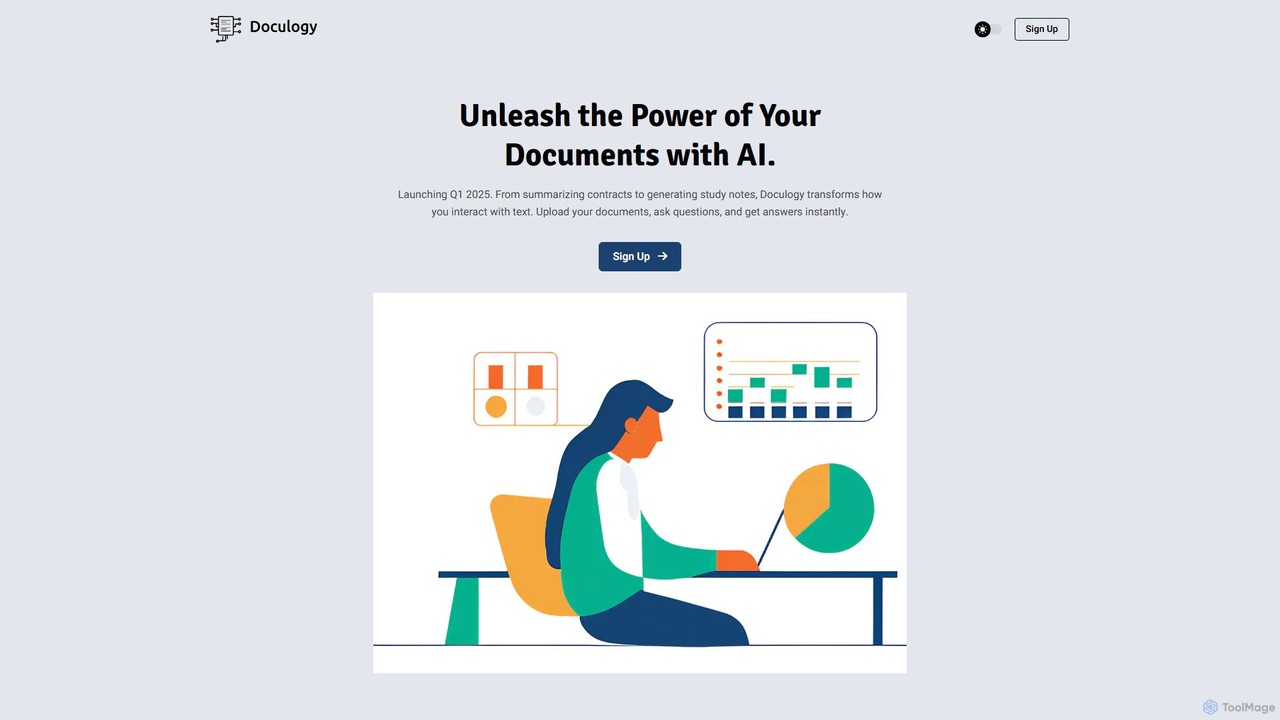
Doculogy is an AI-powered document analysis platform that transforms how you interact with text. Upload contracts, research papers, or CVs, ask questions in natural language, and receive instant, precise answers. It summarizes, analyzes multiple documents at once, and provides actionable insights, saving time and improving decision-making for professionals across various fields.
Reporting
Doclime
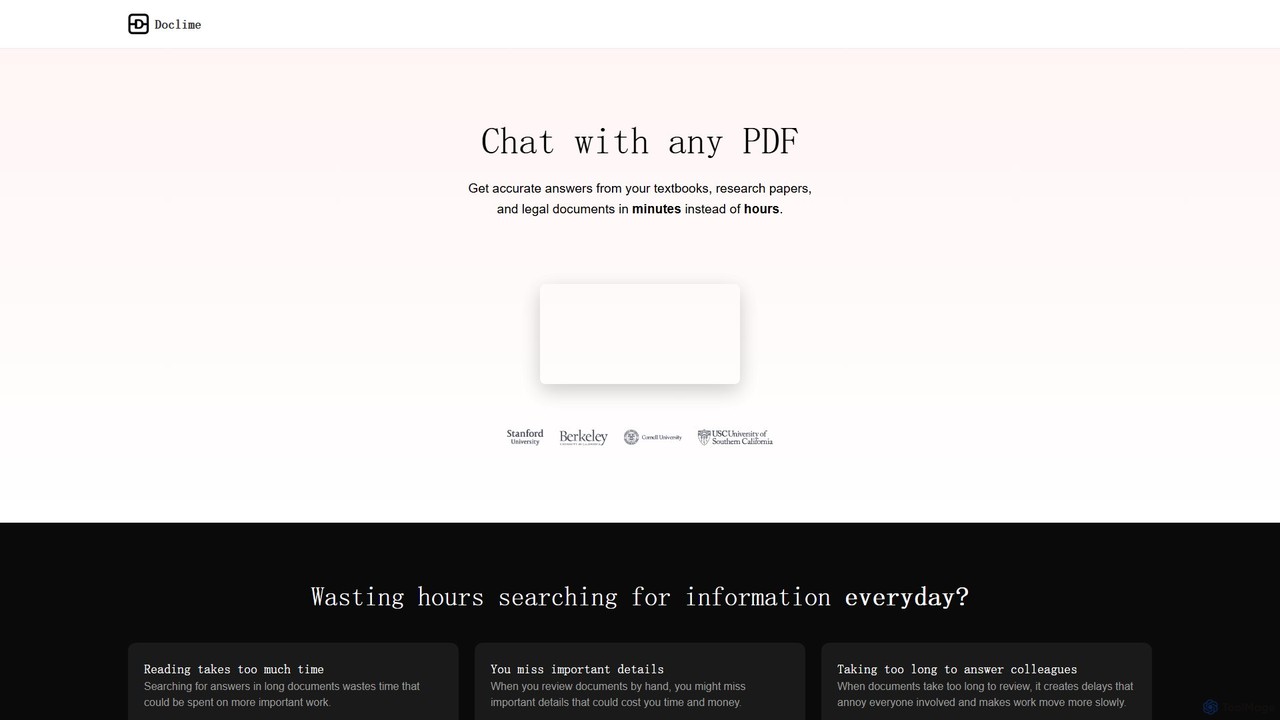
Doclime is an AI-powered document assistant that lets you chat with your PDFs. Upload any document, ask questions in plain English, and get instant, accurate answers with citations. It's designed to help students, researchers, and professionals quickly extract information and insights from dense materials.
Study
pdfpilot.ai
pdfpilot.ai is an AI-powered assistant that transforms your PDF documents into interactive chatbots. Instantly get summaries, ask complex questions, and extract key information from research papers, reports, and contracts, saving you hours of reading time.
Data Analysis
ClarifyPDF
ClarifyPDF is an AI-powered tool for interacting with your PDF documents. Simply upload one or more PDFs to summarize content, extract key information, and ask specific questions in any language. It supports large files and offers a shareable chat interface, making it ideal for students, researchers, and professionals to quickly understand complex documents without recurring subscription fees.
Data Extraction
Chatwithpdf
Chatwithpdf is an AI-powered tool that allows you to interact with your PDF documents conversationally. Simply upload a file and start asking questions, get summaries, and extract key information instantly. It's designed for students, researchers, and professionals to analyze documents faster and more efficiently.
Data Extraction
pdf_talk
pdf_talk is an AI-powered platform that revolutionizes how you interact with documents. Simply upload your PDF files and start a conversation. Ask questions, request summaries, and extract key information instantly. It supports querying across multiple documents, making it ideal for students, researchers, and professionals.
Data Extraction
AskDocs
AskDocs is an AI-powered document assistant designed to help you quickly read, understand, and extract information from your files. Chat with single or multiple documents (PDF, DOCX, CSV, etc.), get instant summaries, and receive answers with precise source citations. It's an ideal tool for students, researchers, and professionals looking to accelerate their research and analysis workflows.
Data Analysis
ChatPDF
ChatPDF is an AI-powered platform that allows you to interact with your documents as if you were having a conversation. Simply upload a PDF, and the AI will help you summarize content, answer specific questions, and extract key information in seconds. It's designed for students, researchers, and professionals to enhance productivity and understanding.
Research
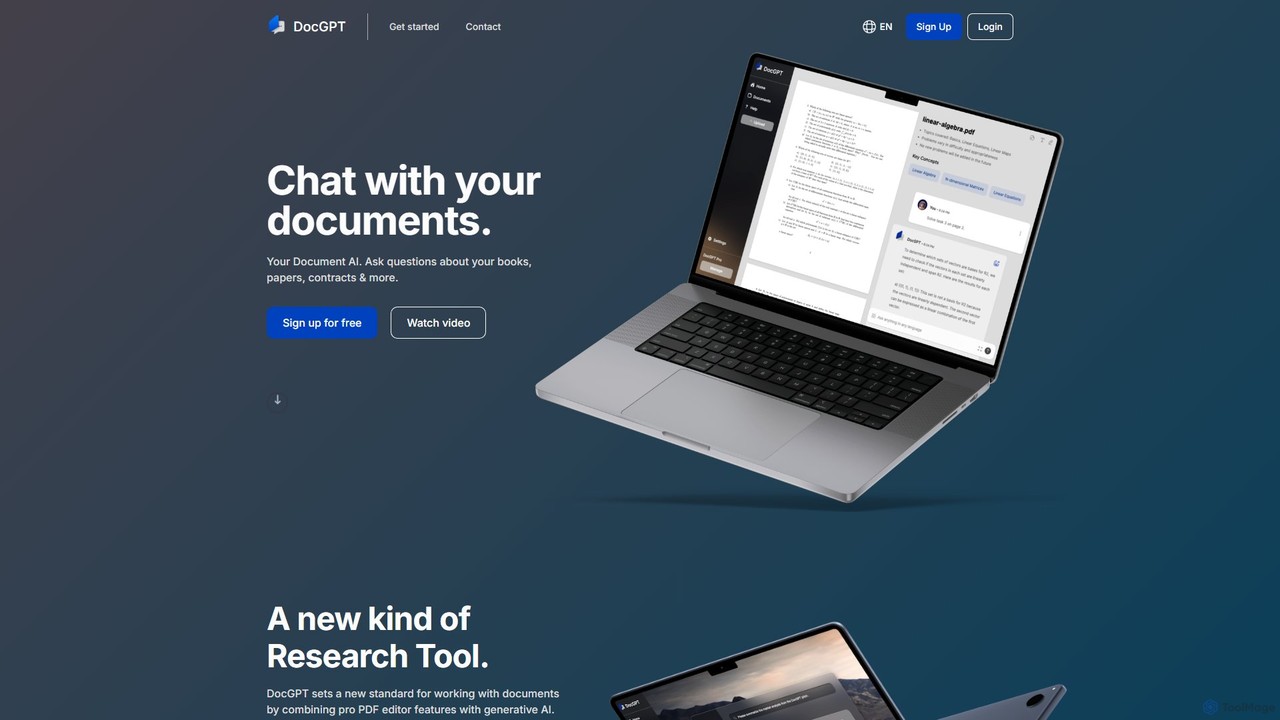
DocGPT
DocGPT is an AI-powered tool that allows you to chat directly with your documents. Simply upload files like PDFs, DOCX, or TXT, and ask questions in natural language to instantly extract information, get summaries, and find key insights. It's designed to boost productivity for students, researchers, and professionals by making document analysis fast and intuitive.
Study Aid
pdfai.io
pdfai.io is an AI-powered document assistant that lets you chat with your PDF files. Instantly summarize complex documents, ask questions, and extract key information effortlessly. It's designed to boost productivity for students, researchers, and professionals by turning static PDFs into interactive knowledge bases.
Data Extraction
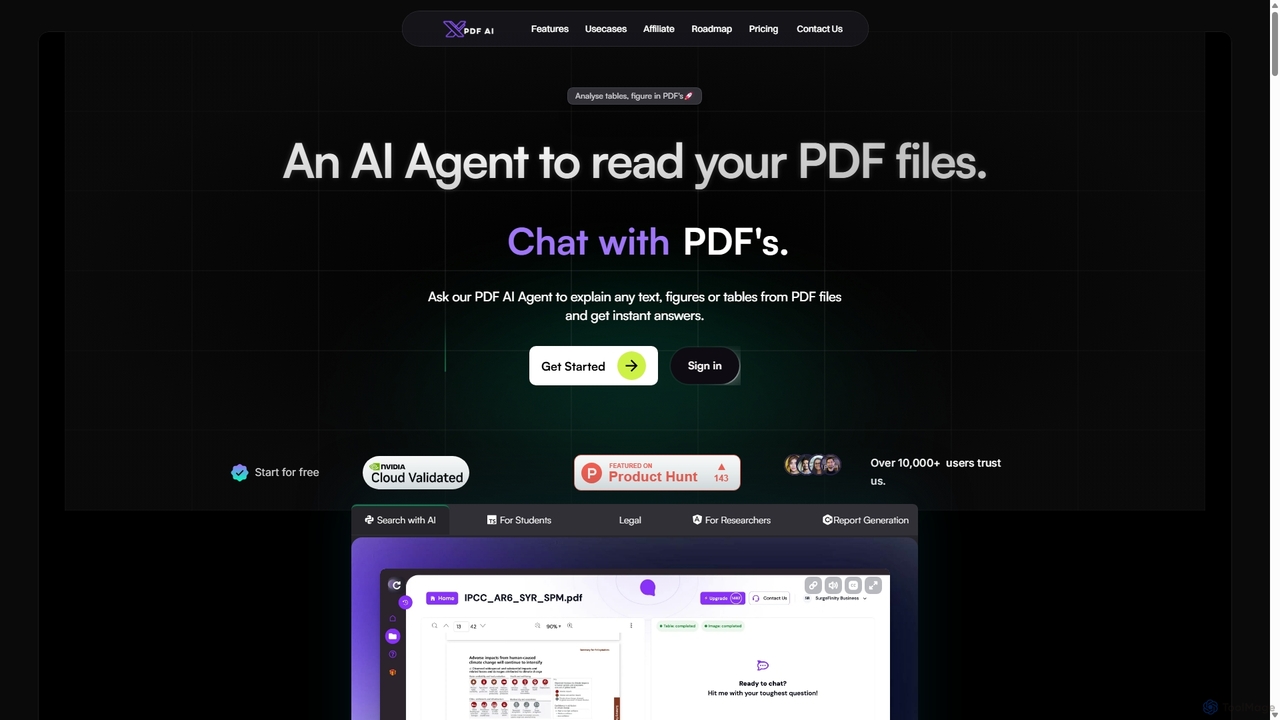
XPDF AI
xPDF AI is a personal AI assistant that transforms your interaction with PDF documents. Chat with any PDF, ask questions, and get instant answers from text, tables, and figures. It features multimodal analysis, an AI summarizer, report generation, and a voice-activated interface, making it an essential tool for students, researchers, and professionals to quickly extract insights and boost productivity.
Data Extraction
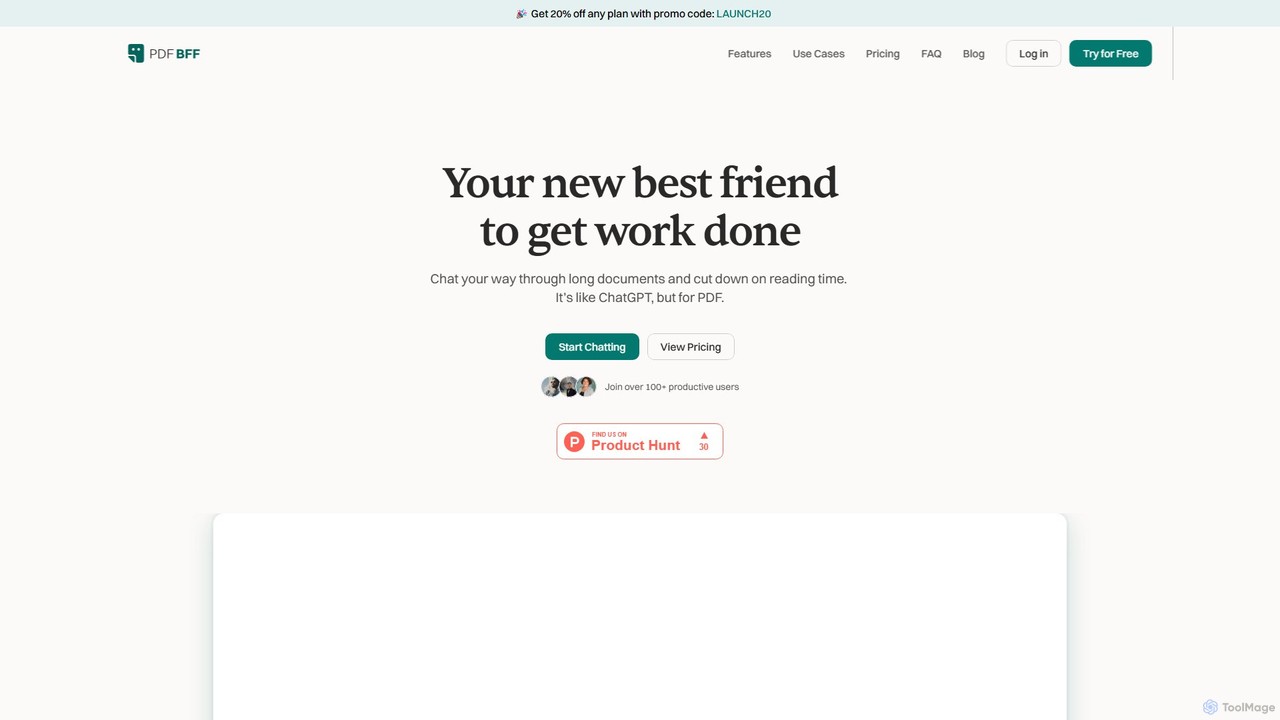
pdfbff
pdfbff is an AI chat tool, like ChatGPT, designed for your PDF documents. Interact with files by asking questions, get instant summaries, and extract key insights in any language. It helps students, researchers, and professionals save time, understand complex information, and streamline their workflow with features like automatic citations and document highlights.
Study
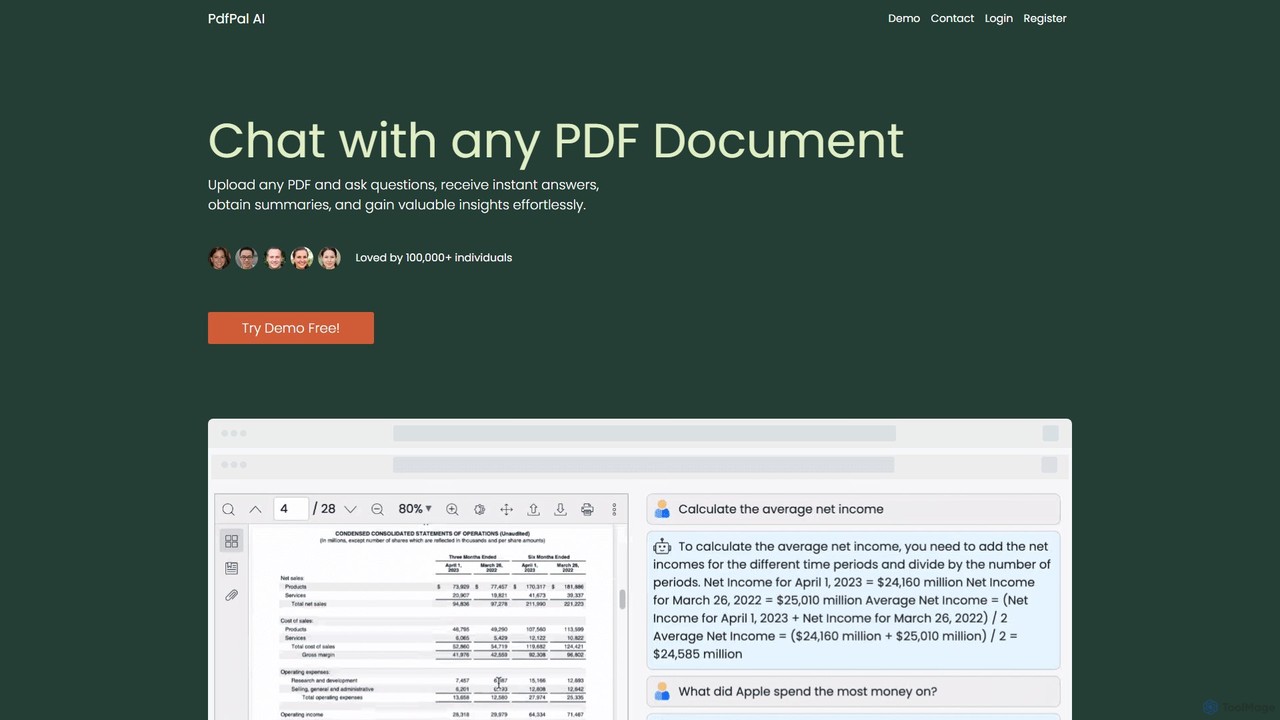
pdfpal
pdfpal is an AI-powered tool that lets you chat with any PDF document. Simply upload your file and ask questions in natural language to get instant summaries, find specific information, and gain deep insights without reading the entire document. It's designed to save time and boost productivity for students, researchers, and professionals by simplifying complex information.
Data Analysis
PDF Interact
PDF Interact is an AI-powered chat assistant that transforms how you engage with your documents. Simply upload a PDF and ask questions in natural language to get instant answers, summaries, and key insights. Ideal for students, researchers, and professionals looking to save time and analyze complex information efficiently.
Data Analysis
SmartaDoc AI
SmartaDoc AI is an intelligent tool that allows you to chat directly with your documents. Upload files like PDF, DOCX, CSV, and PPTX to ask questions, get instant summaries, and extract key information, making it ideal for students, researchers, and professionals to analyze content efficiently.
Data Analysis