

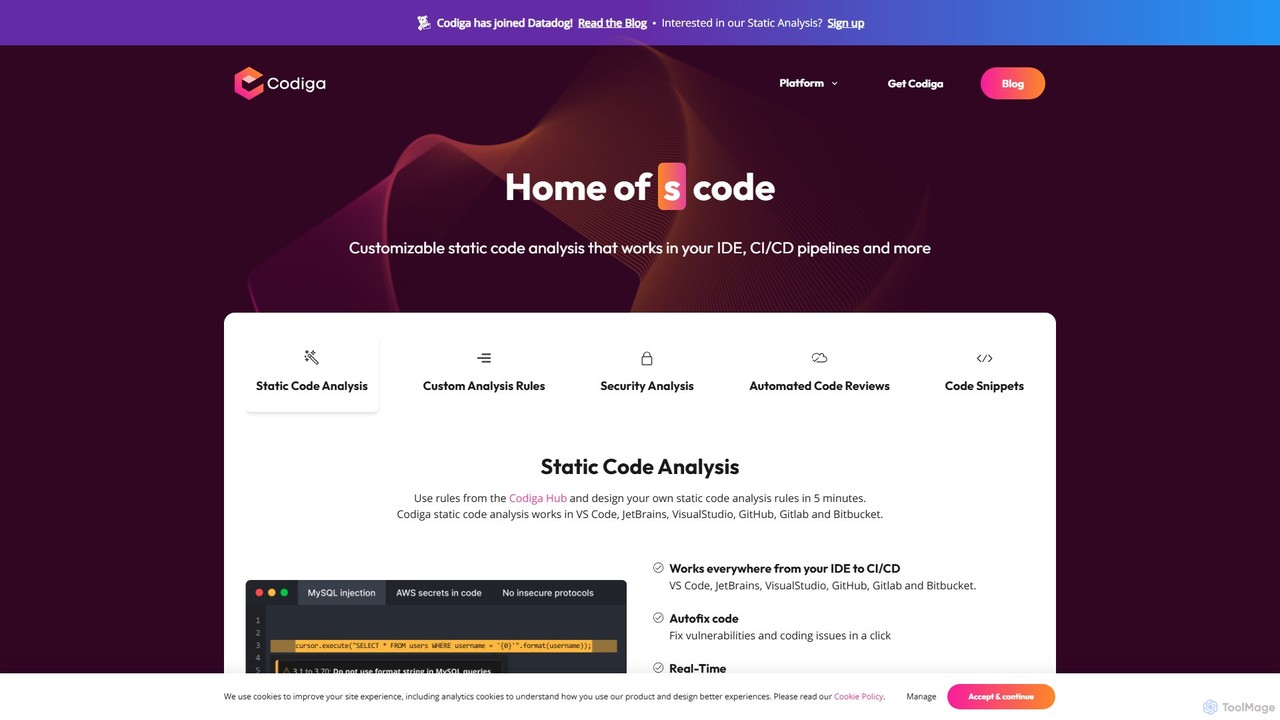
Codiga Overview
Codiga was a comprehensive static code analysis tool designed to improve code quality and security throughout the software development lifecycle. It empowered developers by providing real-time feedback, automated fixes, and deep insights into code health. By integrating seamlessly into developers' existing workflows, Codiga aimed to help teams write better code, faster.
Important Notice: In April 2023, Codiga announced it had been acquired by Datadog. As a result, all standalone Codiga products, including IDE plugins and Git integrations, were shut down on May 4, 2023. The technology and team behind Codiga are now part of Datadog, contributing to its static analysis capabilities. This description reflects the features and functionality of the Codiga platform as it existed before the acquisition.
How to use Codiga
The platform was designed for easy integration into a developer's daily routine:
- IDE Integration: Developers would start by installing the Codiga plugin for their preferred IDE, such as VS Code, JetBrains, or Visual Studio.
- Real-Time Analysis: As they wrote code, the plugin would analyze it instantaneously, highlighting potential bugs, vulnerabilities, and style violations directly in the editor.
- Automated Fixes: For many detected issues, Codiga offered one-click "autofix" suggestions, allowing developers to resolve problems without manual intervention.
- Custom Rules: Teams could define their own static analysis rules via the Codiga Hub to enforce specific coding standards or check for domain-specific issues.
- CI/CD Integration: Codiga could be integrated into CI/CD pipelines (e.g., GitHub, GitLab, Bitbucket). It would automatically review pull requests, flagging violations and preventing poor-quality code from being merged.
- Quality Dashboard: The Codiga dashboard provided a high-level overview of code quality, tracking metrics like code violations, duplicates, and complex functions over time.
Core Features of Codiga
- Real-Time Static Code Analysis: Instant feedback on code quality and security as you type in your IDE.
- Automated Code Reviews: Automatically analyzed pull requests and merge requests, leaving comments on detected issues.
- Security-Focused Scanning: Specialized rules to detect common security vulnerabilities, including those from OWASP Top 10 and MITRE CWE.
- Customizable Rule Engine: Allowed users to create and share their own analysis rules to enforce team-specific standards.
- One-Click Autofixes: Suggested and applied fixes for common coding errors and vulnerabilities with a single click.
- Broad IDE & Platform Support: Integrated with popular IDEs (VS Code, JetBrains, VisualStudio) and code hosting platforms (GitHub, GitLab, Bitbucket).
- Code Quality Dashboards: Visualized code health metrics, helping teams track improvements and identify technical debt hotspots.
- Code Snippets: A feature to create, share, and use secure and vetted code snippets across a team.
Use Cases for Codiga
Codiga was valuable for various roles within a software team:
- For Developers: To receive immediate feedback, learn best practices, and fix issues before committing code, reducing rework.
- For Tech Leads & Managers: To enforce consistent coding standards, monitor team-wide code quality, and reduce technical debt.
- For DevOps Engineers: To implement automated quality gates in CI/CD pipelines, ensuring that only high-quality, secure code is deployed.
- For Security Teams: To proactively scan for security vulnerabilities early in the development process, shifting security left.
Advantages of Codiga
The platform's main advantages were its focus on the developer experience and its comprehensive integration:
- Proactive Quality Control: It identified issues at the earliest possible stage—while the code was being written.
- Increased Developer Productivity: Real-time feedback and autofixes significantly reduced the time spent on manual code reviews and debugging.
- Improved Code Security: Built-in security checks helped prevent common vulnerabilities from ever reaching production.
- Consistency Across Teams: Ensured that all developers followed the same standards, leading to a more maintainable and robust codebase.
Pricing and Plans
Codiga operated on a freemium model, with free plans for individuals and small projects, and paid subscription plans for teams and enterprises that required advanced features and support. However, following its acquisition by Datadog, all Codiga products and subscription plans were discontinued as of May 4, 2023. Users interested in similar functionality are encouraged to explore Datadog's static analysis offerings.
Traffic
Latest traffic
Status
Monthly traffic trend
- 2025-9: 62.3K
- 2026-1: 52.4K
- 2026-2: 41.6K
- 2026-3: 29.2K
- 2026-4: 26.3K
- 2026-5: 28.2K
Geography
Top 5 countries / regions
- 🇺🇸United States37.9%
- 🇳🇬Nigeria21.0%
- 🇮🇳India14.1%
- 🇷🇺Russia14.1%
- 🇧🇷Brazil12.9%
Top keywords
| Keyword | Cost per click |
|---|---|
| code snippets manager | $0.00 |
| codiga | $1.31 |
| différence superlinter (github actions) vs sonarqube cloud | $0.00 |
| how do you make a list immutable in java -ai | $0.00 |
| javascript cors permit individual eval | $0.00 |
Codiga Alternatives
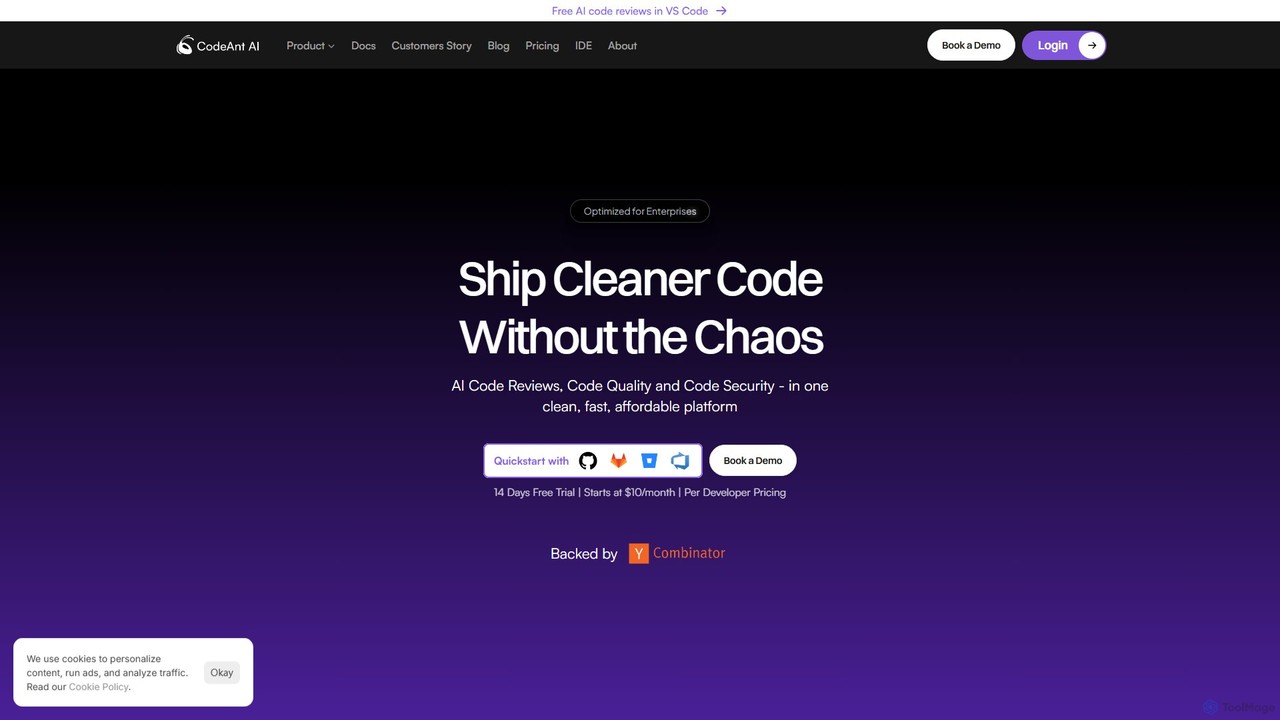
CodeAnt AI
CodeAnt AI is an AI-powered platform that automates code reviews, enhances code quality, and ensures application security. It integrates seamlessly into developer workflows, providing AI-generated pull request summaries, one-click fixes, and continuous scanning for vulnerabilities, helping teams ship cleaner, more secure code faster.
Code Quality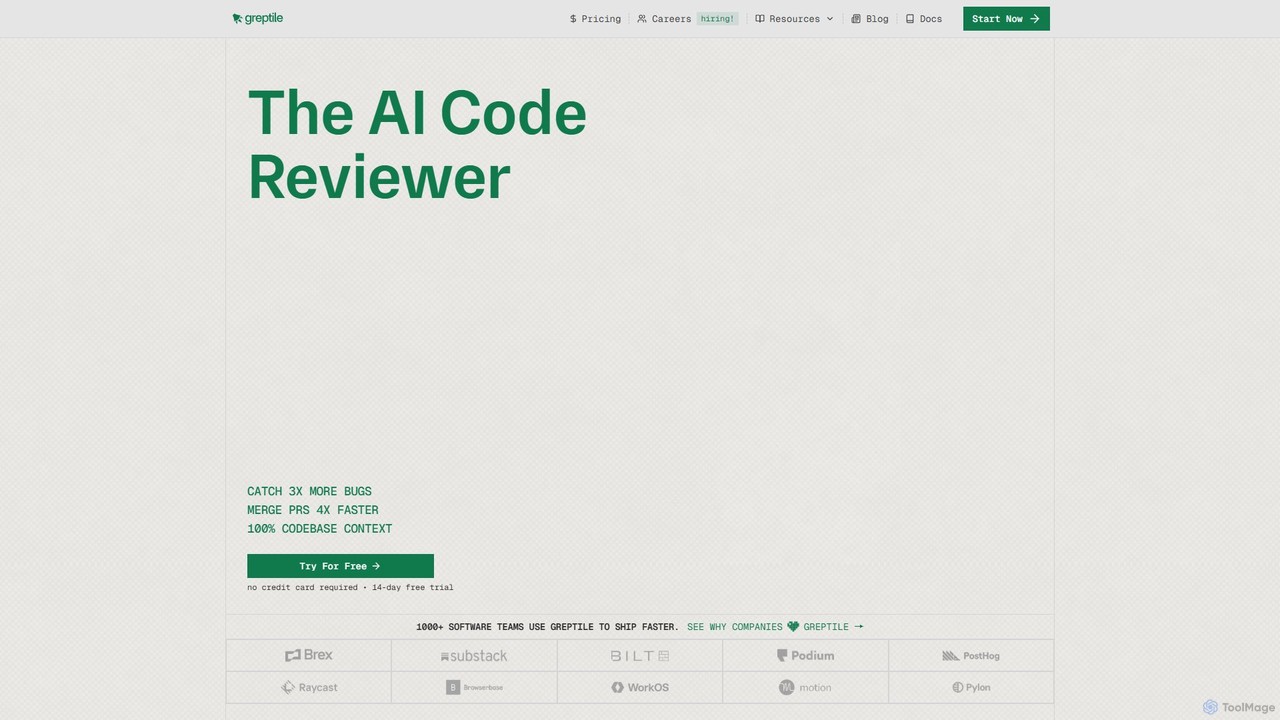
Greptile
Greptile is an AI-powered code review tool that integrates with GitHub and GitLab to help development teams merge pull requests 4x faster and catch 3x more bugs. By understanding the full context of your codebase, it provides in-line comments, actionable suggestions, and natural-language summaries for every PR. It supports over 30 programming languages and can be customized with specific rules and style guides to enhance code quality and consistency.
Code Review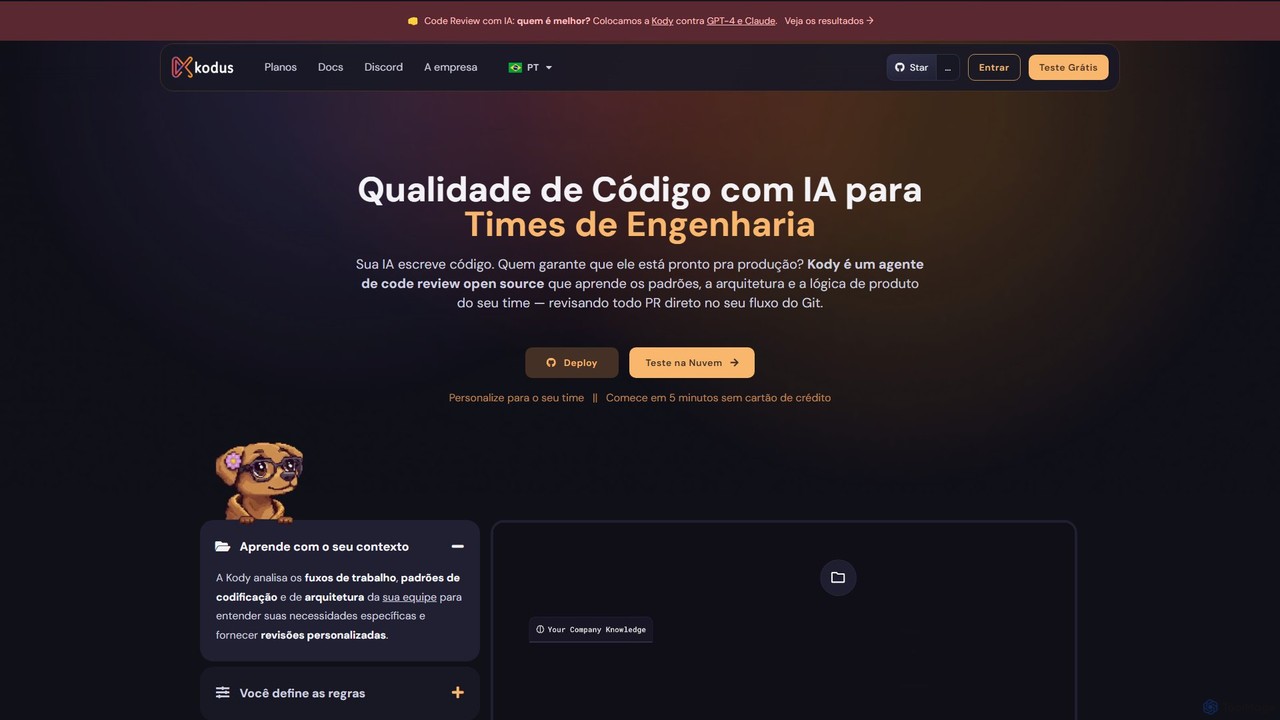
Kodus
Kodus is an AI-powered code review tool that acts like a senior developer on your team. It automatically analyzes pull requests in Git, providing actionable feedback on code quality, security, and performance. It helps teams reduce review time, ship faster, and decrease bugs in production.
Code Quality
AI Code Reviewer
An AI-powered tool that automatically reviews your code to find bugs, suggest improvements, and ensure quality. It acts as an instant second pair of eyes for developers, helping to streamline the development workflow, improve code maintainability, and enforce best practices across teams.
Code Review
CodePal
A powerful AI coding companion and autonomous engineer that integrates directly into GitHub. Automate code reviews, generate documentation, resolve issues, and write unit tests with simple commands to accelerate your development workflow.
Code AssistantCodiga Categories
Codiga Embed Widget
Copy this embed code to place the badge on your blog, article, or product site and send readers directly to this ToolMage detail page.

Related AI tools
flushai
FlushAI is an AI-powered platform that automatically cleans and optimizes code and datasets. It intelligently detects bugs, security vulnerabilities, and data inconsistencies, helping developers and data scientists build more robust and reliable applications faster.
Data Cleaning
AI Code Reviewer
AI Code Reviewer is an automated tool that uses artificial intelligence to analyze your code. It integrates with your development workflow, like GitHub, to automatically review pull requests. The tool identifies bugs, security vulnerabilities, and style issues, providing instant, actionable feedback to help developers improve code quality and accelerate the development cycle.
Code ReviewCodeAnt AI
CodeAnt AI is an AI-powered platform that automates code reviews, enhances code quality, and ensures application security. It integrates seamlessly into developer workflows, providing AI-generated pull request summaries, one-click fixes, and continuous scanning for vulnerabilities, helping teams ship cleaner, more secure code faster.
Code Quality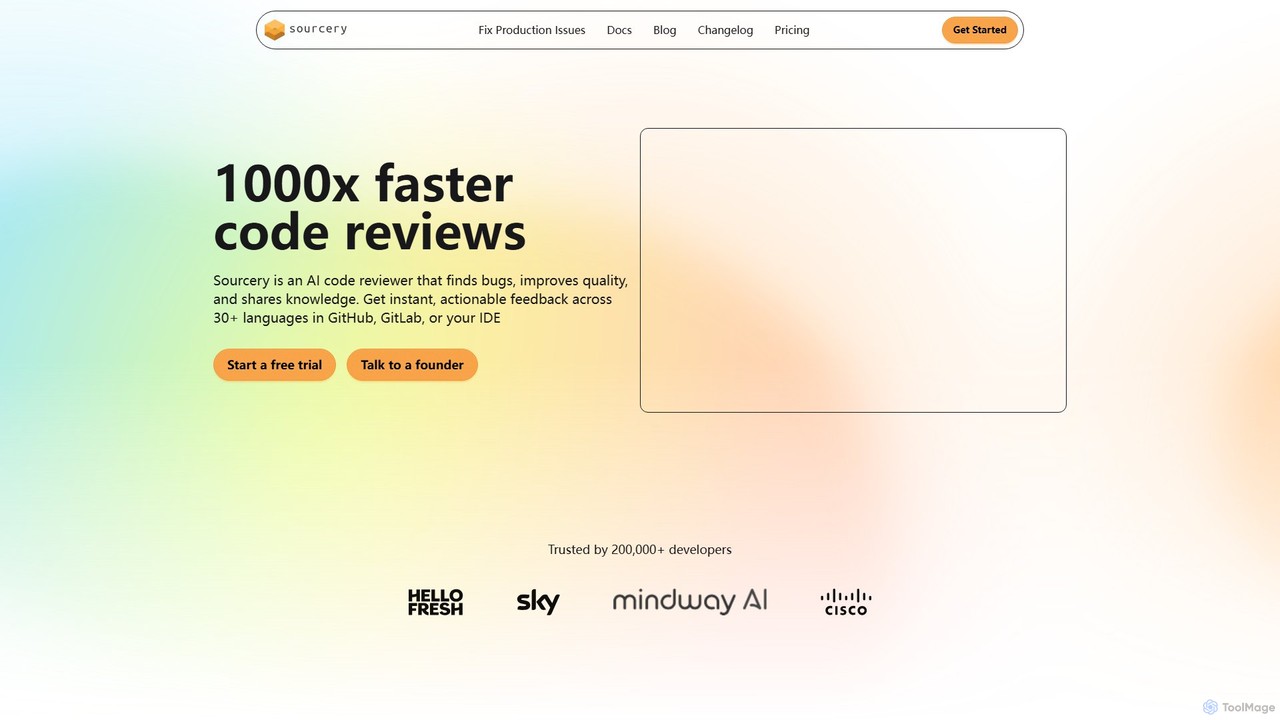
Sourcery
Sourcery is an AI-powered code reviewer that automates code reviews, finds bugs, improves code quality, and accelerates knowledge sharing. It integrates directly into your IDE, GitHub, and GitLab workflows, providing instant feedback and refactoring suggestions for over 30 languages.
Code Assistant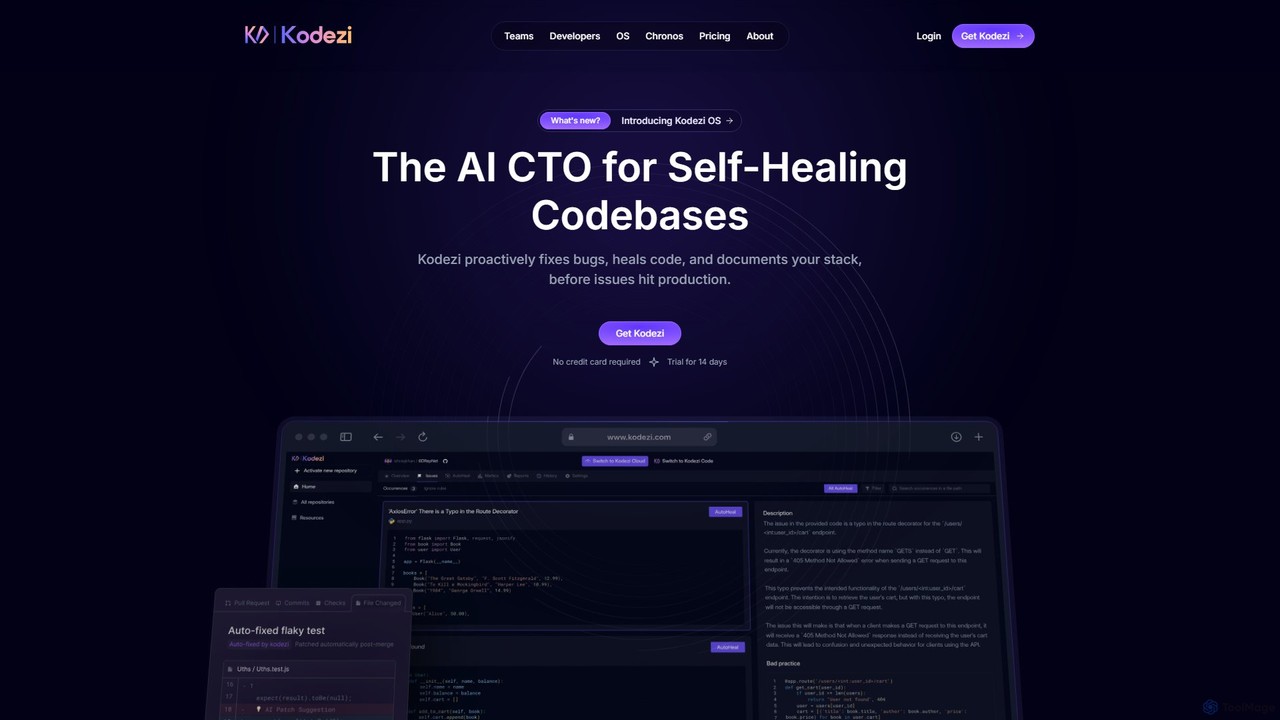
Kodezi
Kodezi is an AI-powered developer platform that acts as an AI CTO for your codebase. It autonomously fixes bugs, refines code, detects vulnerabilities, and automates documentation, integrating seamlessly into your development workflow to enhance productivity and code quality.
Code Assistant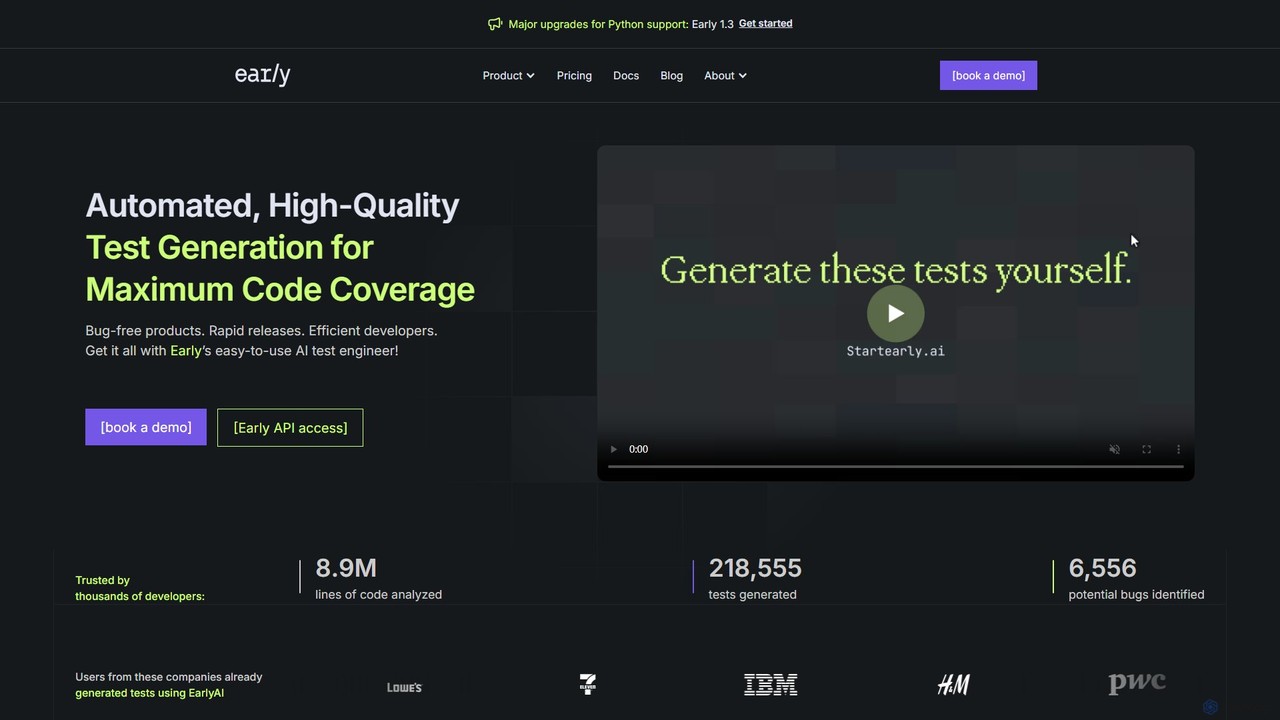
startearly
startearly is an AI-powered test engineering agent that automates the generation of high-quality unit tests directly within your IDE and CI/CD pipeline. It helps developers catch bugs early, increase code coverage, and accelerate development cycles by handling tedious testing tasks.
Code Generation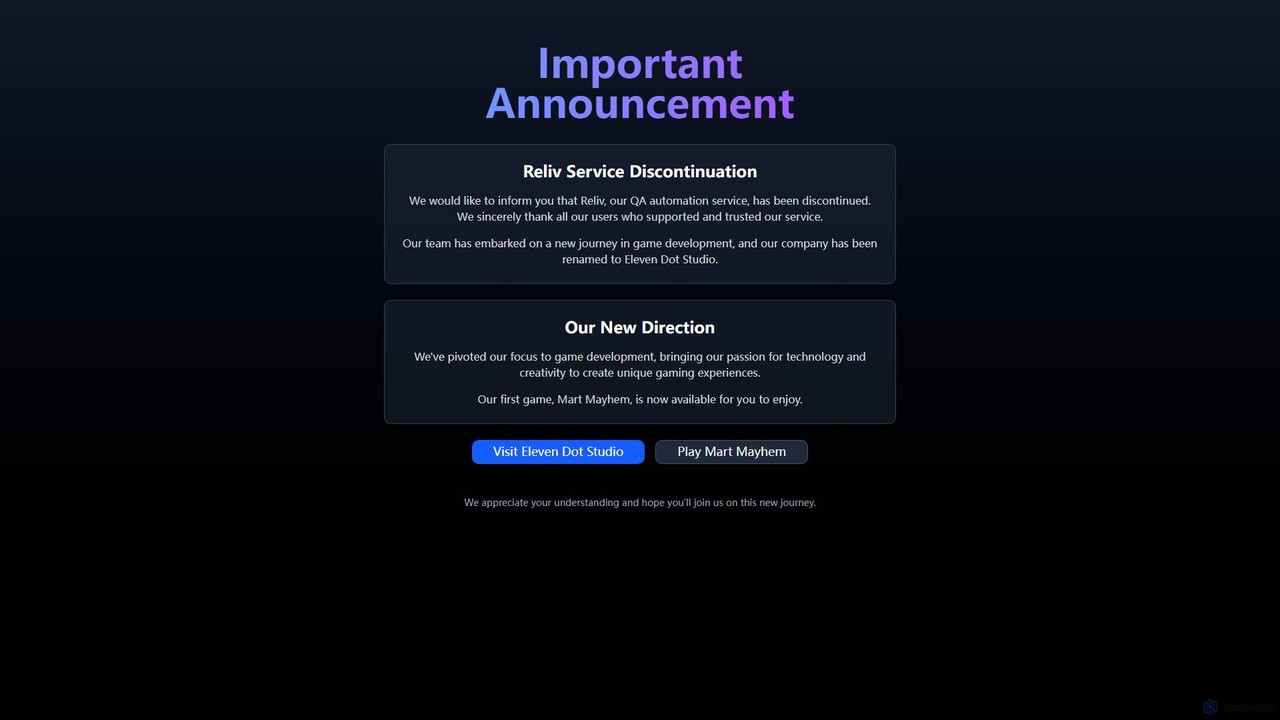
Reliv
Reliv was an AI-powered QA automation service designed to streamline software testing. It enabled teams to create, manage, and execute automated tests without extensive coding, accelerating development cycles and improving application quality. The service has since been discontinued.
No Code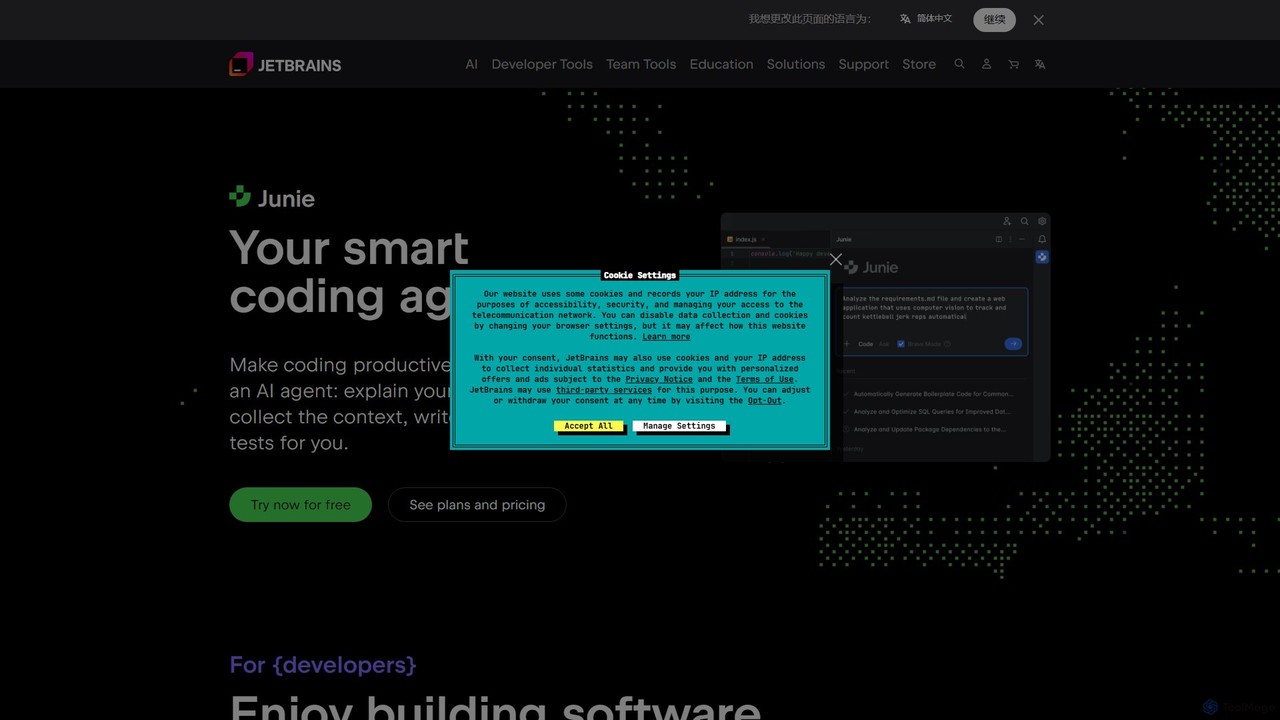
JetBrains
JetBrains provides a comprehensive suite of intelligent tools for software developers and teams, including powerful IDEs and an integrated AI Assistant. It enhances productivity with smart code completion, refactoring, and bug detection, streamlining the entire development lifecycle from coding to deployment. It supports a wide range of languages and offers robust team collaboration platforms.
Integrated Development Environment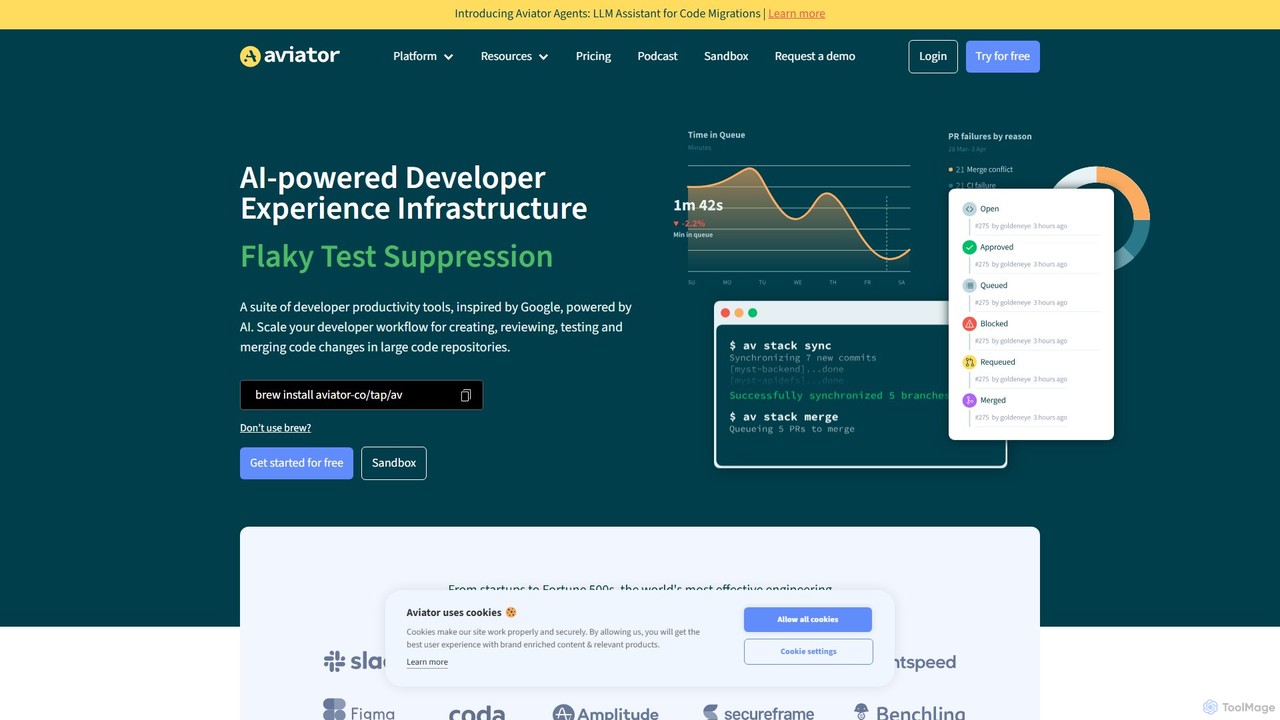
Aviator
Aviator is a developer collaboration suite that automates the CI/CD pipeline, focusing on pull request management. It uses an automated merge queue to test, rebase, and merge code, ensuring the main branch remains stable and deployable, thereby boosting developer productivity and code quality.
Code Collaboration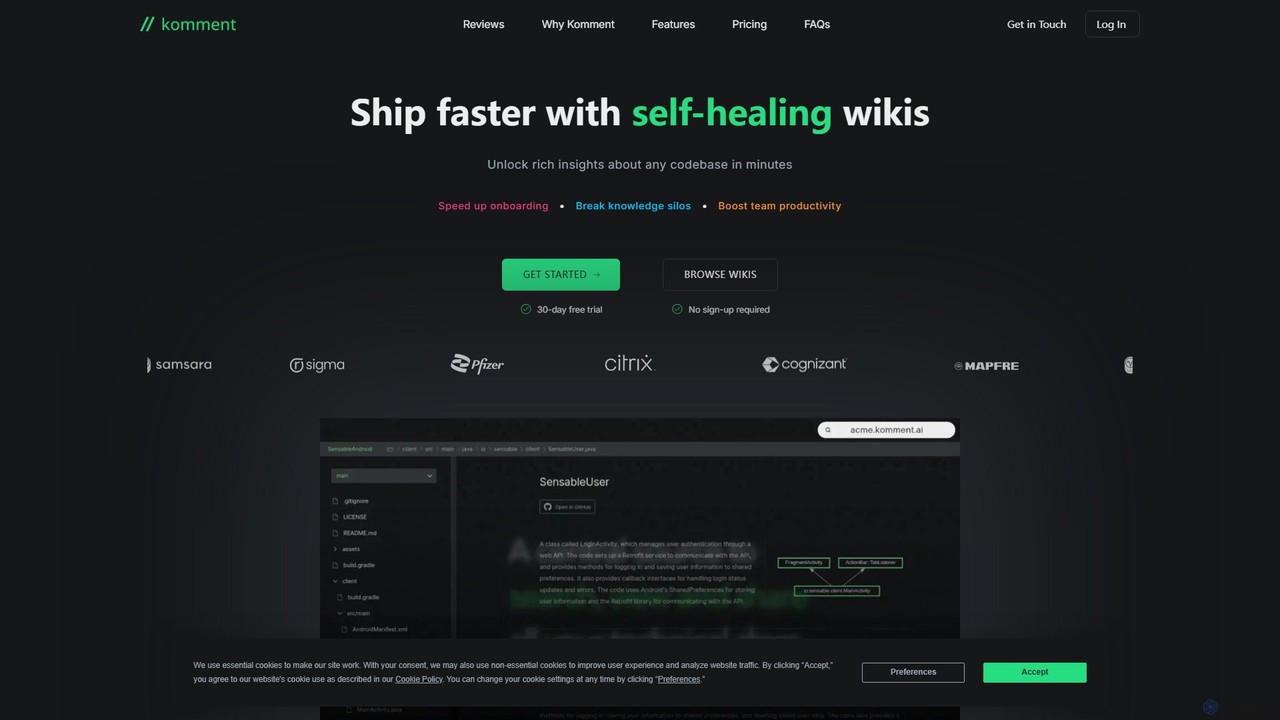
Komment
Komment is an AI-powered platform that automates the creation and maintenance of technical documentation for software projects. It generates self-healing wikis, API docs, architecture diagrams, and in-code comments directly from your codebase, integrating seamlessly into CI/CD pipelines to keep documentation always up-to-date and accurate.
Code AssistantGreptile
Greptile is an AI-powered code review tool that integrates with GitHub and GitLab to help development teams merge pull requests 4x faster and catch 3x more bugs. By understanding the full context of your codebase, it provides in-line comments, actionable suggestions, and natural-language summaries for every PR. It supports over 30 programming languages and can be customized with specific rules and style guides to enhance code quality and consistency.
Code ReviewKodus
Kodus is an AI-powered code review tool that acts like a senior developer on your team. It automatically analyzes pull requests in Git, providing actionable feedback on code quality, security, and performance. It helps teams reduce review time, ship faster, and decrease bugs in production.
Code QualityAI Code Reviewer
An AI-powered tool that automatically reviews your code to find bugs, suggest improvements, and ensure quality. It acts as an instant second pair of eyes for developers, helping to streamline the development workflow, improve code maintainability, and enforce best practices across teams.
Code Review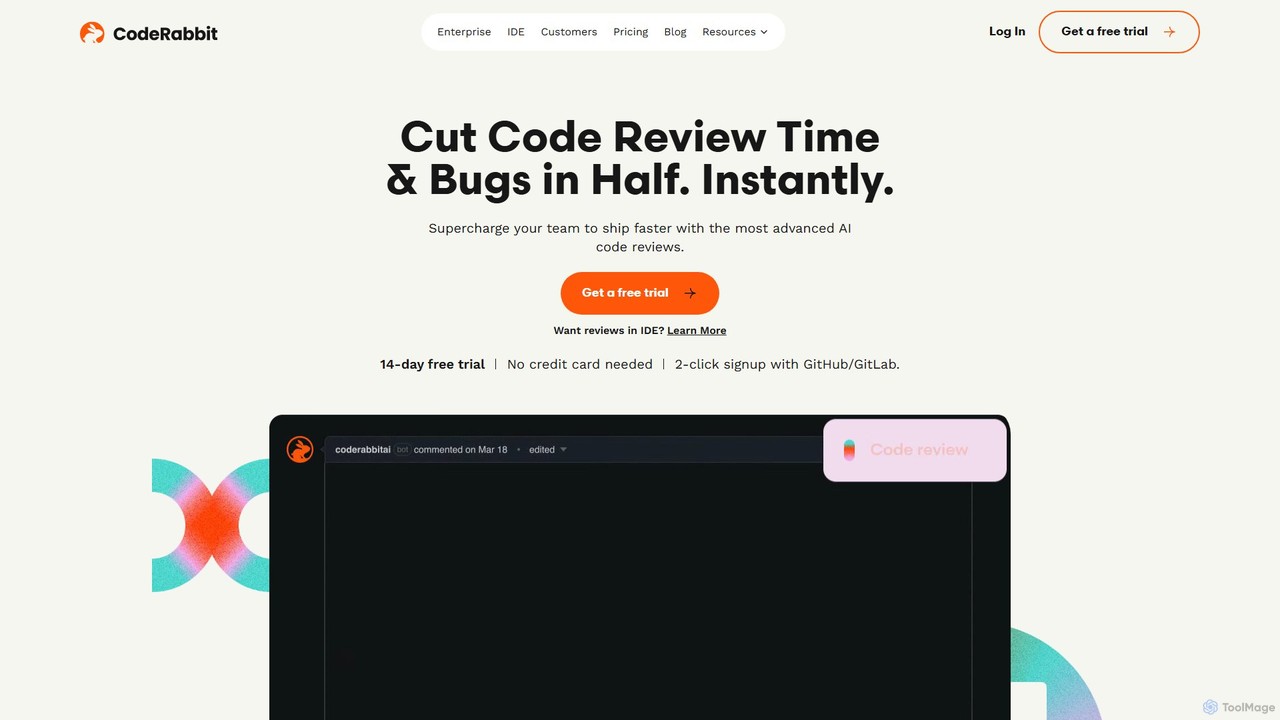
CodeRabbit
CodeRabbit is an AI-powered code review tool that supercharges development teams to ship faster and reduce bugs. It provides instant, context-aware reviews, pull request summaries, and security analysis directly within GitHub, GitLab, and IDEs like VS Code.
Code Review
Jyek
Jyek is an AI agent platform that understands objectives, creates execution plans, uses tools, and delivers verifiable results for complex, multi-step tasks.
Automation
Codiga Comments (0)
Sign in to comment.
Sign inNo comments yet.