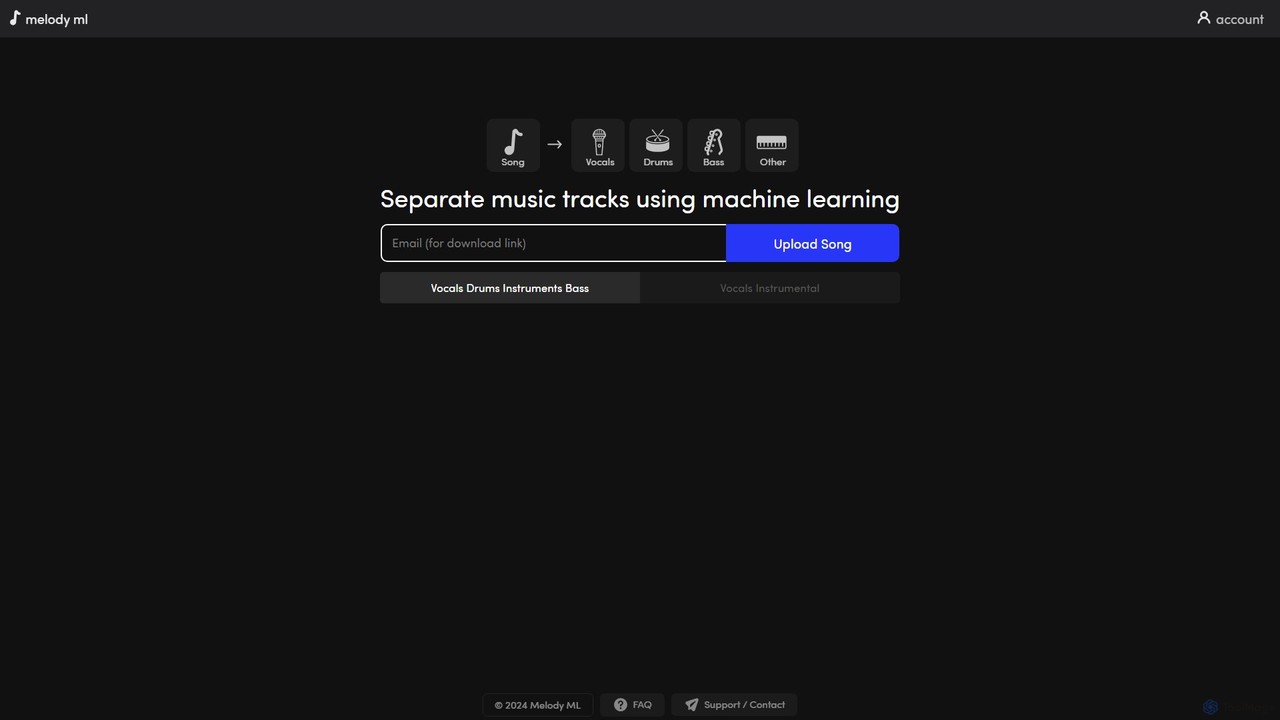
AI Music Separation tools are a specialized class of audio software that use deep learning algorithms to deconstruct a mixed audio track into its individual components, such as vocals, drums, bass, and other instruments. These tools analyze the complex frequency and time-domain information within a song to isolate each sound source, often referred to as 'stems.' This capability empowers creators to remix, sample, or analyze music with a level of control previously only possible with original multitrack recordings. The technology enables a wide range of creative and practical applications, from producing karaoke tracks to detailed musical transcription.
Core Features
- Vocal Isolation: Extracts a clean acapella track by removing all instrumental elements from a song.
- Instrument Stem Separation: Separates a song into multiple tracks, typically including drums, bass, piano, and guitar.
- Instrumental Creation: Removes the main vocal line to produce a high-quality instrumental or karaoke version.
- Multi-Stem Output: Provides individual audio files for each separated component for flexible use in other software.
- Artifact Reduction: Employs advanced algorithms to minimize audio artifacts and bleeding between separated tracks.
Use Cases
These tools are widely used by music producers for sampling and remixing, DJs for creating mashups, and musicians for learning and practice. Audio engineers also use them for post-production tasks, while content creators can generate instrumental versions of songs for background music in their videos.
How to Choose
When selecting a tool, evaluate the separation quality and the presence of artifacts. Consider the number and type of stems it can generate (e.g., 2, 4, or 5 stems). Also, assess processing speed, supported file formats (MP3, WAV, FLAC), and whether it offers a user-friendly interface or an API for integration.