Heyario
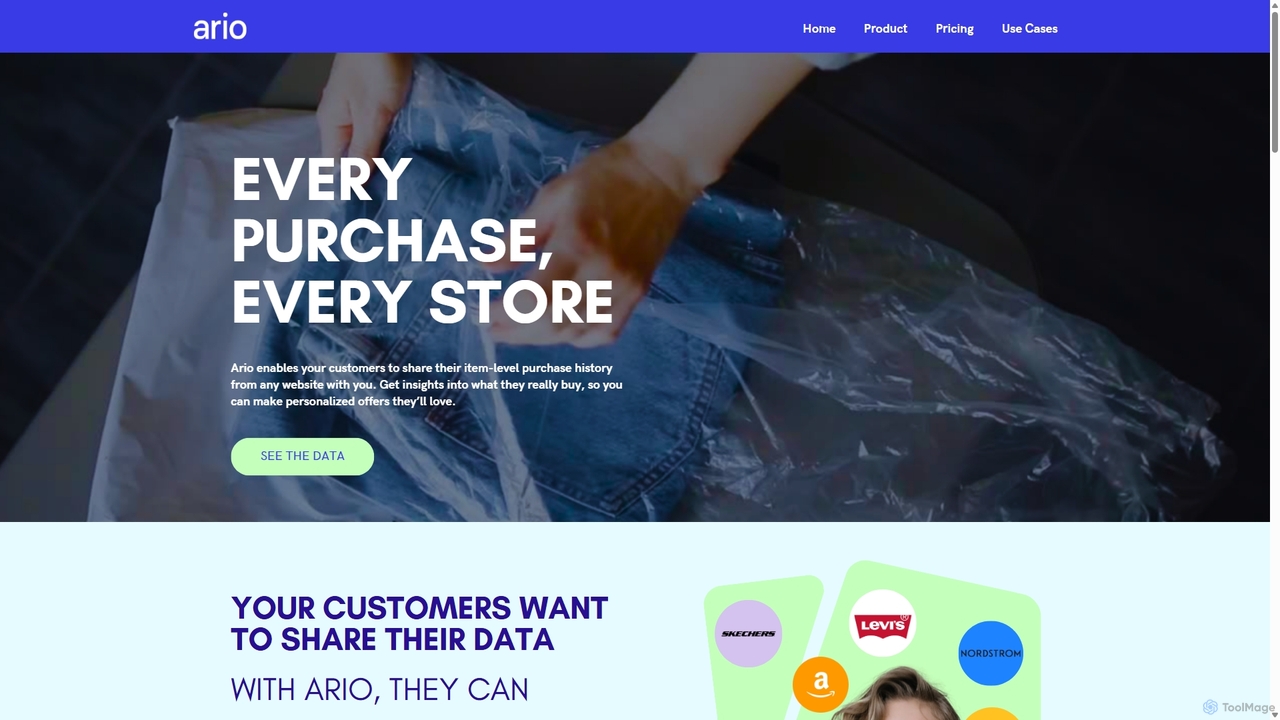
Heyario is an API that enables businesses to access customers' consented, item-level purchase history from any website. It …
Heyario is an API that enables businesses to access customers' consented, item-level purchase history from any website. It provides deep insights into real buying behavior to power hyper-personalized marketing, reduce returns, and increase customer lifetime value.
Ortto
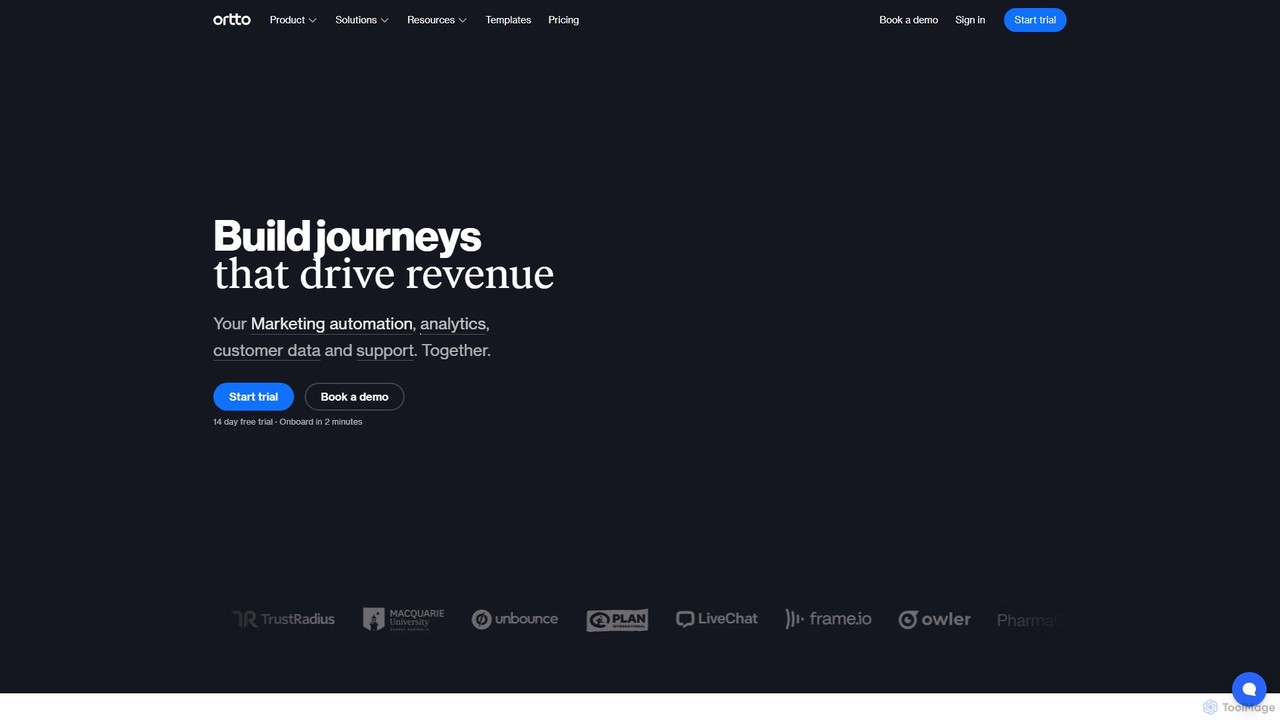
Ortto is an AI-powered, all-in-one platform that unifies customer data, marketing automation, and analytics. It enables businesses to …
Ortto is an AI-powered, all-in-one platform that unifies customer data, marketing automation, and analytics. It enables businesses to create personalized, data-driven customer journeys across email, SMS, push notifications, and live chat. By consolidating multiple tools into one, Ortto helps companies attract, convert, and retain customers more effectively, providing a complete view of the customer lifecycle and tools to optimize every interaction.
About Customer Data Platform
A Customer Data Platform (CDP) is a system that collects and unifies first-party customer data from multiple sources to build a single, coherent, complete view of each customer. It works by ingesting data from touchpoints like websites, apps, and CRM systems, then resolving identities to create persistent user profiles. This unified database enables businesses to drive personalized marketing, enhance customer service, and conduct in-depth analytics. Unlike other data tools, a CDP is designed to be accessible by other systems, making it a central hub for customer intelligence.
Core Features
- Data Collection & Unification: Gathers data from various online and offline sources into a single repository.
- Identity Resolution: Stitches together data points from different devices and channels to a single customer profile.
- Audience Segmentation: Creates dynamic customer segments based on behavior, transactions, and demographic data.
- Data Activation: Pushes unified profiles and segments to marketing, analytics, and customer service tools for execution.
Use Cases
CDPs are primarily used by marketing, product, and data teams in B2C industries like e-commerce, media, and SaaS. They are essential for executing omnichannel marketing strategies, personalizing the user experience on websites and apps, and understanding the complete customer journey across different touchpoints.
How to Choose
When selecting a Customer Data Platform, consider its integration capabilities with your existing tech stack, the sophistication of its identity resolution engine, its ability to process data in real-time versus batches, and its support for data privacy and governance regulations like GDPR and CCPA. Also, evaluate whether its primary focus is on analytics, orchestration, or both.

Customer Data PlatformUse Cases
Create Hyper-Personalized Marketing Campaigns
An e-commerce marketing manager uses a Customer Data Platform to build a highly specific audience segment. They filter for users who have viewed products in the 'running shoes' category more than three times in the last 7 days but have not made a purchase. The CDP then activates this segment by sending the user list to their email marketing tool for a targeted campaign offering a 10% discount on running shoes and to their advertising platform to run retargeting ads. This results in a higher conversion rate compared to generic campaigns.
Deliver a Consistent Omnichannel Customer Experience
A customer service agent at a retail company receives a call. Within their helpdesk software, they see a unified customer profile powered by the CDP. This profile shows the customer's recent website activity, their last purchase in a physical store, and a previous support ticket submitted via the mobile app. Armed with this complete context, the agent can provide relevant, efficient support without asking the customer to repeat information. This creates a seamless experience, regardless of the channel the customer uses to interact.
Reduce Wasted Ad Spend with Suppression Lists
A digital advertiser for a SaaS company wants to avoid showing acquisition ads to existing customers. They use their CDP to create a dynamic segment of all users who have an 'active subscription' status. This segment is automatically synced as a suppression list (or exclusion audience) to their advertising platforms like Google Ads and Facebook Ads. As new customers sign up, the CDP updates the segment in near real-time, ensuring ad spend is focused solely on acquiring new prospects, thereby improving the return on ad spend (ROAS).
Analyze the Complete Customer Journey
A product manager for a media subscription service uses a CDP to understand user behavior from the first touchpoint to conversion. By analyzing the unified data, they discover that users who first engage with content via a social media link, then visit the pricing page, and later open a marketing email are most likely to subscribe. This insight, derived from a cross-channel view only a CDP can provide, allows them to optimize the user journey by investing more in social media content and tailoring email follow-ups for users who visit the pricing page.
Enable Predictive Lead Scoring
A B2B marketing operations team integrates their CDP with a machine learning model. The CDP feeds the model a rich, unified dataset for each lead, including website behavior, content downloads, email engagement, and firmographic data from their CRM. The model then calculates a predictive score indicating the likelihood of conversion. This score is written back to the CDP and then synced to the CRM, allowing the sales team to prioritize their outreach efforts on the leads most likely to close, increasing sales efficiency and conversion rates.
Streamline Data Privacy and Compliance Management
A data privacy officer uses the CDP as a central system for managing user consent and data requests. When a user in Europe submits a 'right to be forgotten' request under GDPR, the officer locates the user's unified profile in the CDP. With a single action, they can trigger a process that deletes or anonymizes the user's data not only within the CDP but also sends deletion requests to all connected downstream systems like the email platform and analytics tools. This centralizes and simplifies compliance, reducing manual effort and the risk of errors.