Datun
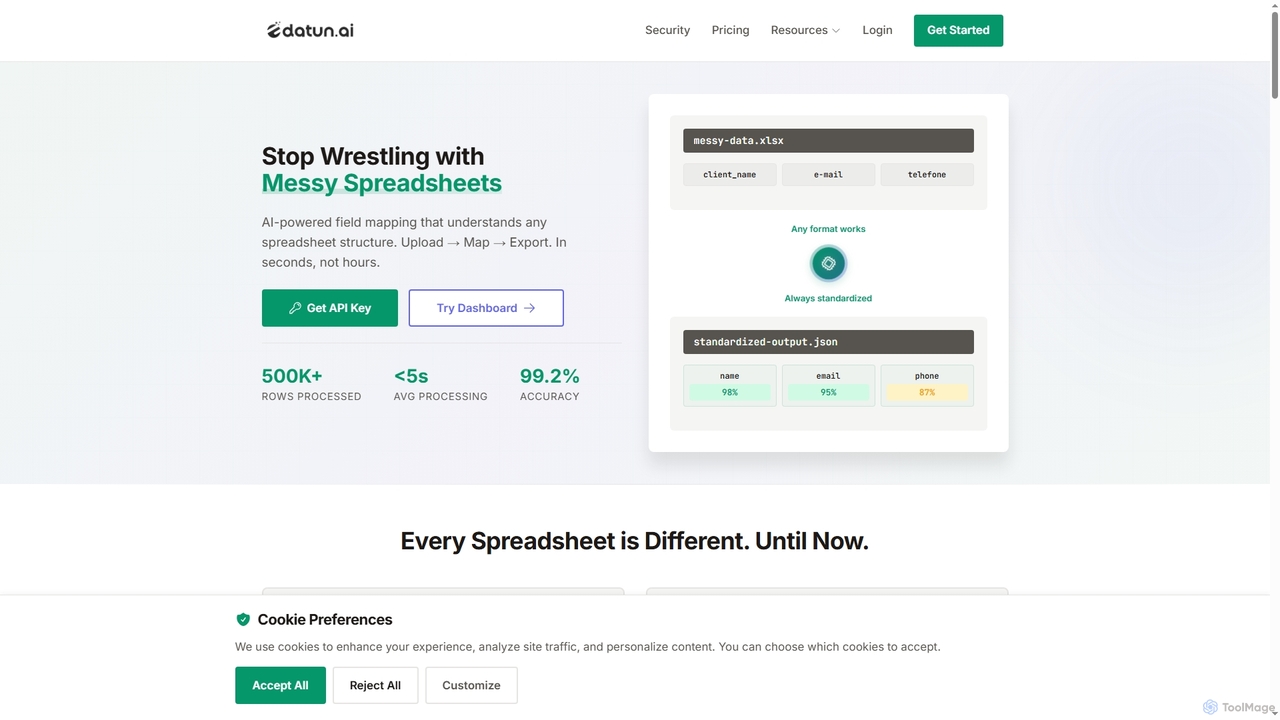
Datun is an AI-powered platform that automates the processing of messy spreadsheets. It intelligently maps fields from any spreadsheet structure, format, or language, standardizing data in seconds for developers and data teams.
AutomationPopular Data Cleaning AI tools in Data include Datun, Charm, flushai, goodlookup, and connect, helping you work more efficiently.

Datun is an AI-powered platform that automates the processing of messy spreadsheets. It intelligently maps fields from any spreadsheet structure, format, or language, standardizing data in seconds for developers and data teams.
Automation
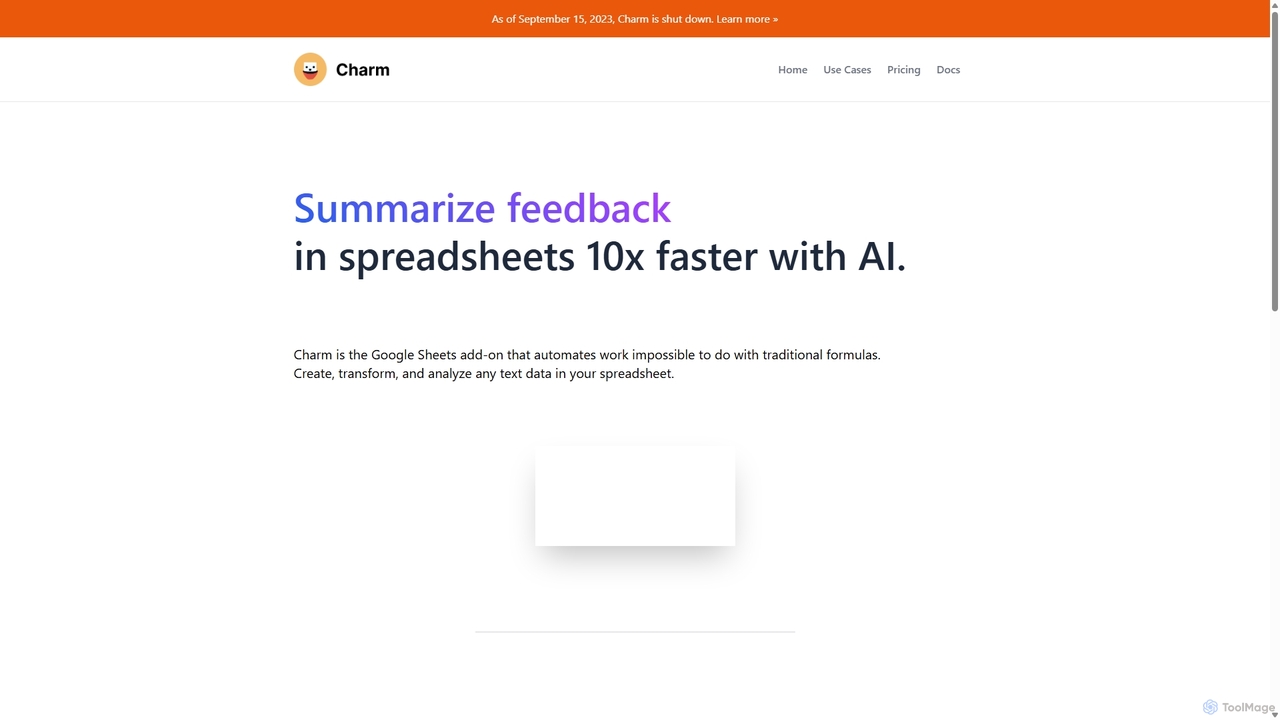
Charm was an AI-powered assistant integrated directly into Google Sheets as an add-on. It was designed to automate complex text-based tasks, such as cleaning messy data, generating content, summarizing text, and classifying information, without requiring traditional formulas or coding. Please note: Charm was officially shut down on September 15, 2023.
Automation
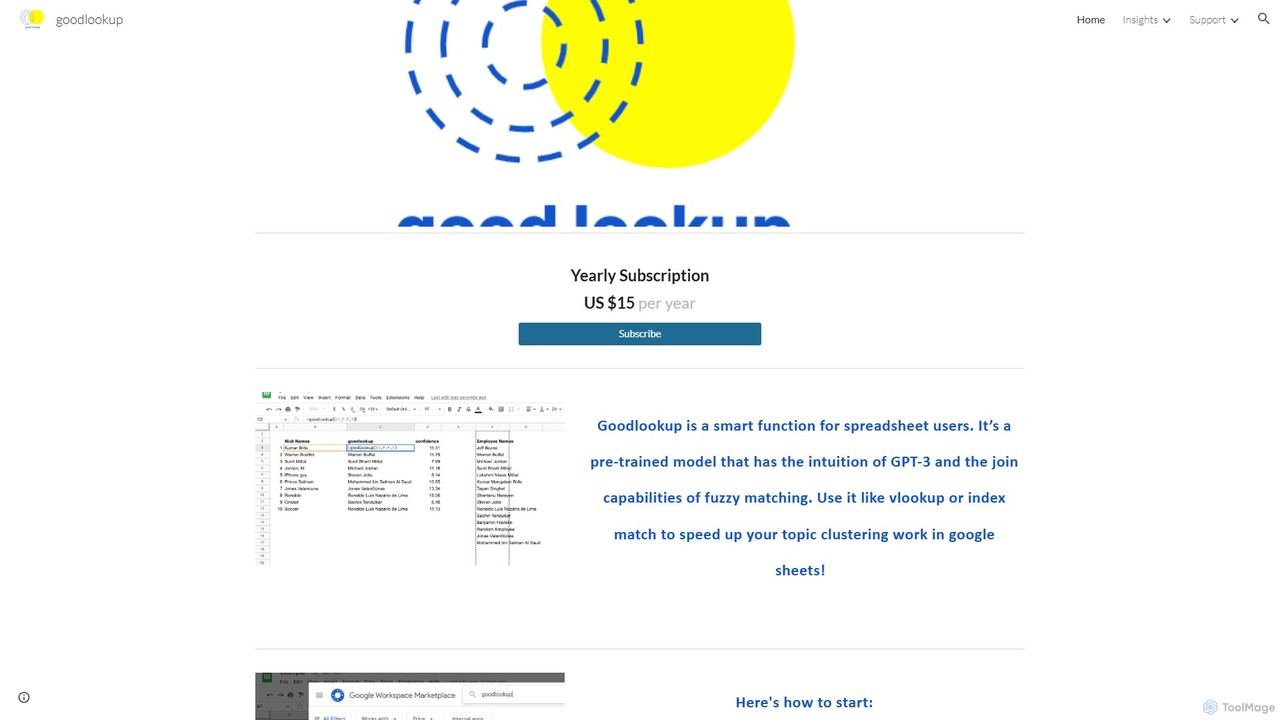
goodlookup is an intelligent function for Google Sheets that revolutionizes data matching. Powered by GPT-3's intuition and advanced NLP, it goes beyond traditional fuzzy matching to understand semantic relationships, synonyms, and context. Use it like a supercharged VLOOKUP to effortlessly clean data, link records with inconsistent names, and perform topic clustering, saving hours of manual work.
Data Analysis
FlushAI is an AI-powered platform that automatically cleans and optimizes code and datasets. It intelligently detects bugs, security vulnerabilities, and data inconsistencies, helping developers and data scientists build more robust and reliable applications faster.
Data Cleaning
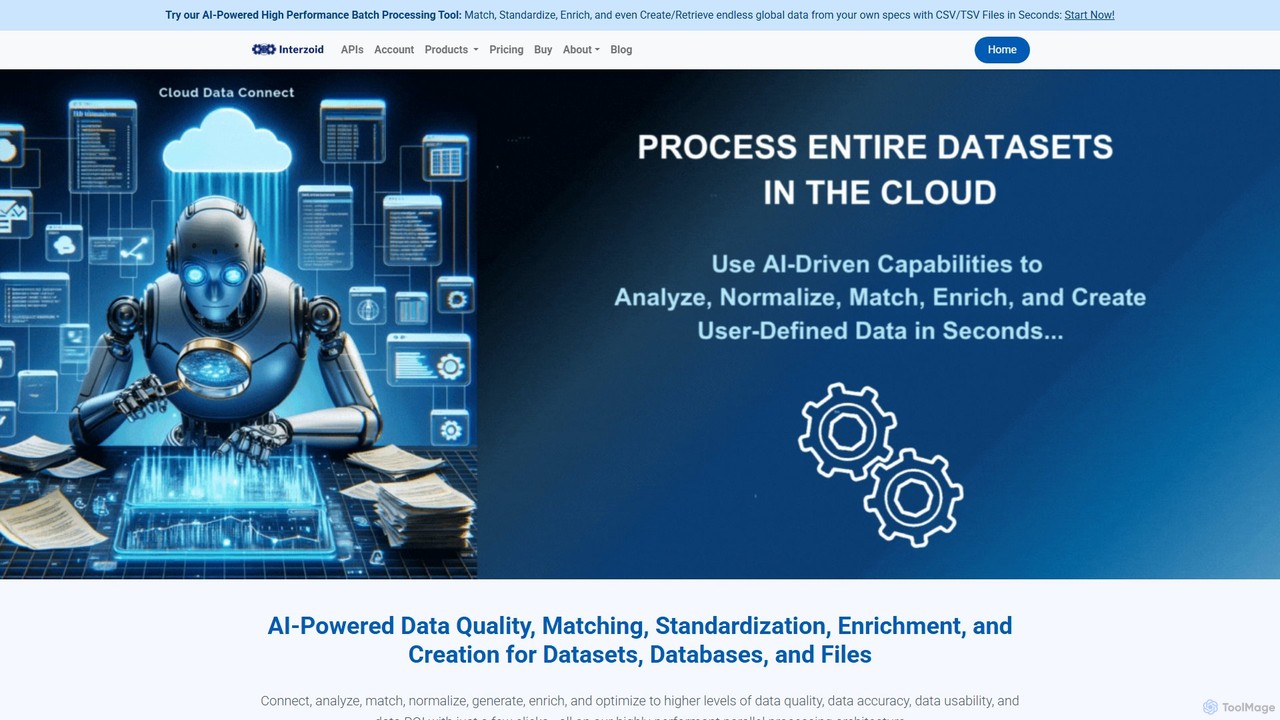
connect by Interzoid is an AI-powered platform for data quality, matching, and enrichment. It helps businesses clean, standardize, and enhance their datasets, databases, and files. Using advanced algorithms and generative AI, it identifies duplicates, corrects inconsistencies, and appends custom real-world data on demand. Available via a no-code web app or a powerful REST API, connect streamlines data pipelines and improves data ROI for marketing, CRM, and analytics.
Data CleaningData Cleaning tools are AI-powered solutions designed to identify, correct, and remove errors, inconsistencies, and inaccuracies from datasets, ensuring high-quality data for analysis and operations. As a critical step in data preprocessing, these tools leverage machine learning algorithms to automate the detection of anomalies, missing values, and duplicates, significantly enhancing data reliability. By streamlining the data preparation phase, they enable businesses to make more informed decisions and improve the accuracy of AI models.
Data Cleaning tools are essential for data scientists preparing datasets for model training, business analysts ensuring report accuracy, and marketing teams maintaining clean customer databases. They are used in scenarios ranging from financial fraud detection to improving e-commerce product catalog consistency and ensuring regulatory compliance across industries.
When selecting a Data Cleaning tool, consider its ability to handle diverse data types and volumes, the flexibility of its rule-based and AI-driven cleaning capabilities, and its integration with existing data pipelines. Evaluate the user interface for ease of use, the level of customization offered for specific cleaning tasks, and its scalability for future data growth.
Marketing teams and CRM managers use AI Data Cleaning tools to automatically identify and merge duplicate customer records, correct misspelled names and addresses, and standardize contact information. This ensures a unified customer view, improves personalization accuracy for campaigns, and reduces wasted marketing spend on invalid contacts, leading to more effective customer engagement strategies.
E-commerce platforms leverage these tools to standardize product descriptions, categories, and attributes across thousands of items. AI can detect inconsistencies in pricing, missing specifications, or incorrect image links, ensuring a consistent and accurate product catalog for customers and internal inventory management. This leads to improved searchability, fewer customer complaints, and better conversion rates.
Data scientists and ML engineers utilize AI Data Cleaning to preprocess raw data before model training. This involves imputing missing values, removing outliers, standardizing features, and handling categorical data, which significantly improves model performance, accuracy, and reduces training time. Clean data is crucial for building robust and reliable predictive models.
Financial institutions employ Data Cleaning tools to identify suspicious transactions or account activities that deviate from normal patterns. AI algorithms can flag unusual spending habits, inconsistent personal details, or duplicate claims, aiding in the early detection and prevention of fraudulent activities. This proactive approach helps protect assets and maintain regulatory compliance.
Healthcare providers use these tools to clean and standardize patient demographic information, medical codes, and treatment histories from various sources. This ensures data consistency for accurate diagnosis, treatment planning, and regulatory compliance, while also facilitating better data analysis for public health research. Clean records are vital for patient safety and operational efficiency.
Business analysts rely on clean data to generate accurate and trustworthy reports for strategic decision-making. Data Cleaning tools help by validating data from multiple enterprise systems, resolving discrepancies, and ensuring that all metrics are based on consistent and reliable information, leading to more credible insights and better business outcomes. This reduces the risk of flawed decisions.
AI Data Cleaning tools are software solutions that use artificial intelligence, particularly machine learning, to automate and enhance the process of identifying and correcting errors, inconsistencies, and inaccuracies in datasets. They go beyond traditional rule-based methods by learning patterns and anomalies to improve data quality and reliability for various applications, making data ready for analysis and model training.
Traditional data validation primarily relies on predefined rules and manual checks to ensure data integrity, often flagging issues without correcting them. AI Data Cleaning tools, however, use machine learning to dynamically identify complex patterns, detect subtle anomalies, and even impute missing values based on context. This offers more sophisticated, automated error detection and correction capabilities beyond static rules, making the process more efficient and comprehensive.
The main benefits include significantly increased efficiency and speed in cleaning large datasets, improved accuracy in identifying complex errors that manual methods might miss, and reduced human effort and cost. Furthermore, enhanced data quality leads to more reliable analytics, better decision-making, and more robust AI/ML model performance, ultimately driving greater business value.
AI Data Cleaning tools can address a wide range of errors, including duplicate records, missing values, inconsistent formatting (e.g., dates, addresses), outliers and anomalies, incorrect data types, and structural errors. They are particularly effective at identifying subtle inconsistencies and complex relationships that are difficult to catch with simple rule-based systems, ensuring comprehensive data integrity.
AI Data Cleaning tools are primarily used by data professionals such as data scientists, data analysts, and business intelligence specialists who require high-quality data for their work. They are also valuable for marketing teams, sales operations, finance departments, and any organization that relies heavily on accurate and consistent data for operations, reporting, or strategic initiatives, ensuring data-driven decisions are sound.