NocoBase
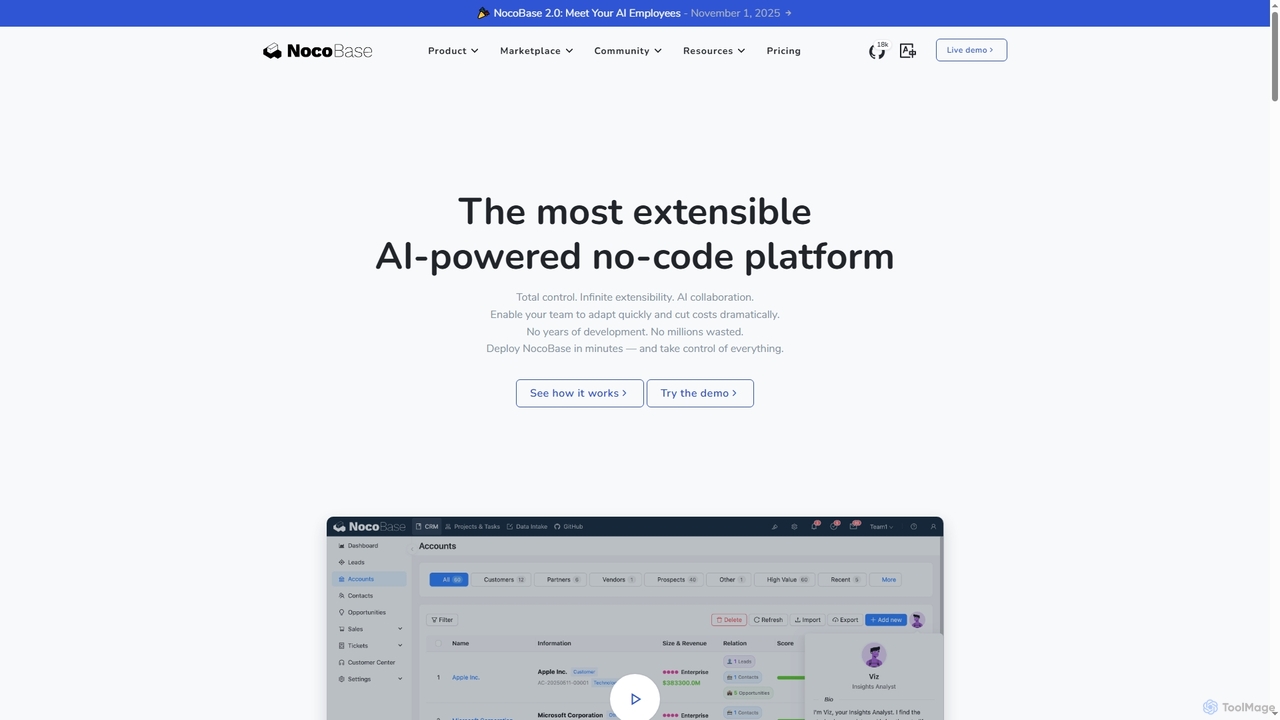
NocoBase is an open-source, self-hosted no-code and low-code development platform. It empowers users to build custom business applications …
NocoBase is an open-source, self-hosted no-code and low-code development platform. It empowers users to build custom business applications like CRMs and internal tools with high flexibility, granular permissions, and automated workflows, ensuring data security through on-premises deployment.
TableSprint
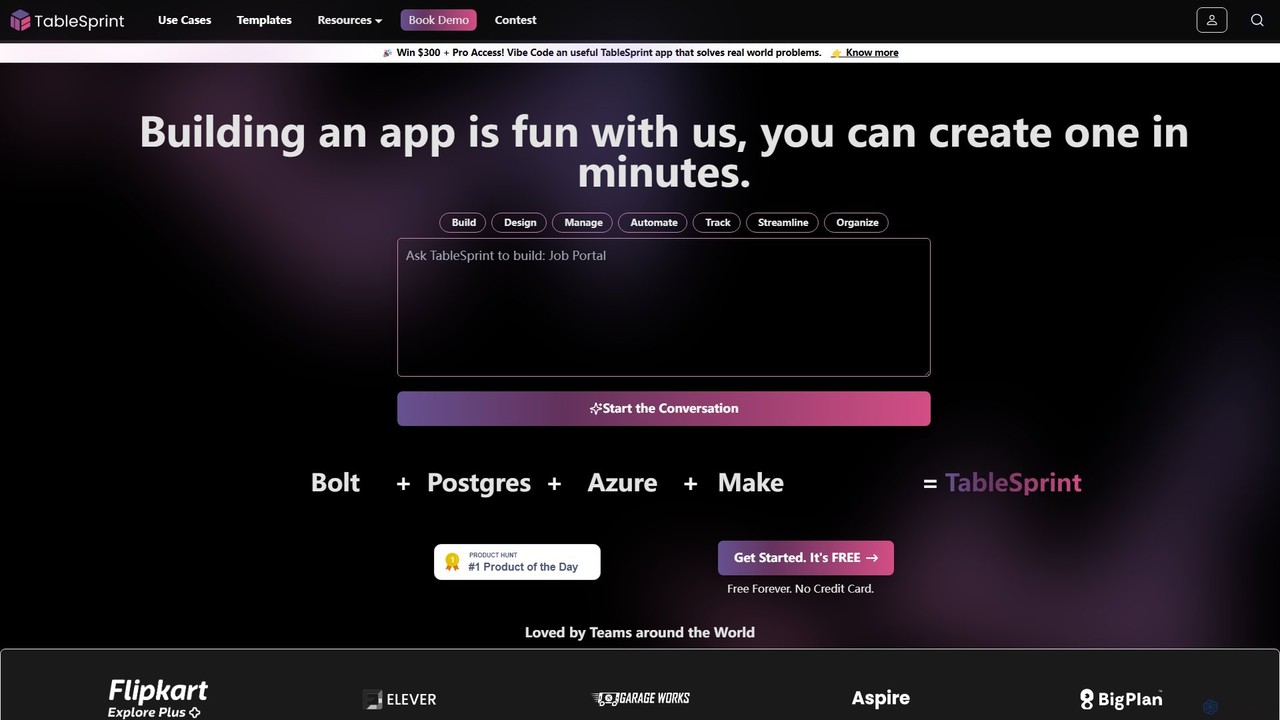
TableSprint is an AI-powered, no-code platform that enables businesses to build custom enterprise applications in minutes. With an …
TableSprint is an AI-powered, no-code platform that enables businesses to build custom enterprise applications in minutes. With an intuitive Excel-like interface, users can create, manage, and automate workflows for tasks like project management, lead generation, and HR onboarding. It offers an all-in-one solution with a built-in database, AI assistance, and powerful integrations, eliminating the need for complex, multi-tool setups and empowering teams to build scalable solutions without technical expertise.
About Database Management
AI Database Management tools are a specialized category of software that leverages artificial intelligence to automate and optimize the administration, monitoring, and security of databases. They use machine learning algorithms to analyze query patterns, predict workloads, and proactively identify potential issues like performance bottlenecks or security threats. This intelligent automation significantly reduces manual effort for database administrators (DBAs), improves query performance, and enhances data security. Unlike traditional tools that rely on predefined rules, these AI-driven solutions can adapt to changing data patterns and self-optimize for peak efficiency.
Core Features
- Automated Performance Tuning: AI analyzes workloads and automatically adjusts indexes, configurations, and resource allocation.
- Natural Language Query (NLQ): Allows users to retrieve data by asking questions in plain language, without writing complex SQL.
- Predictive Anomaly Detection: Uses machine learning to monitor database activity and flag unusual patterns that could indicate failures or threats.
- Intelligent Security Monitoring: Identifies and alerts on potential threats, such as SQL injection attempts or unauthorized data access, in real-time.
- Automated Schema Optimization: Recommends changes to the database structure based on usage patterns to improve efficiency.
Use Cases
These tools are primarily used by Database Administrators (DBAs), DevOps engineers, and data analysts in organizations with complex or mission-critical data infrastructures. Common applications include real-time performance optimization for high-traffic e-commerce sites, simplifying data access for business users through natural language, and proactive threat detection in financial services databases.
How to Choose
When selecting an AI Database Management tool, consider its compatibility with your specific database systems (e.g., PostgreSQL, MySQL, Oracle). Evaluate the level of automation it offers, from simple recommendations to fully autonomous actions. Also, check its integration capabilities with your existing monitoring and cloud infrastructure, and determine if it provides a natural language interface for non-technical users.

Database ManagementUse Cases
Automated Performance Tuning for E-commerce Databases
An e-commerce DevOps engineer manages a large online store that experiences performance slowdowns during peak shopping seasons. Manually tuning the database is slow and reactive. An AI Database Management tool continuously monitors query performance and server metrics. It automatically identifies slow queries, suggests optimal indexes, and reallocates resources based on predictive workload analysis. This ensures the database self-optimizes in real-time, maintaining fast page loads and a smooth user experience under heavy traffic, preventing revenue loss from site slowdowns.
Natural Language Data Exploration for Business Analysts
A marketing analyst needs to understand customer purchasing trends but lacks the SQL skills to query the database directly, causing delays. Using a tool with Natural Language Query (NLQ), the analyst types questions like "Show me the top 10 selling products in Germany last quarter." The AI translates this into a complex SQL query and returns the data instantly in a user-friendly format. This empowers non-technical users to perform self-service analytics, accelerating data-driven decision-making without relying on the IT department.
Proactive Security Threat Detection in Fintech
A security operations team in a financial institution must protect sensitive customer data. An AI tool establishes a baseline of normal database access patterns. It then monitors all activity in real-time, using anomaly detection to flag suspicious behavior, such as a user account accessing unusual tables or exporting large volumes of data at odd hours. The team receives immediate alerts on potential threats, allowing them to investigate and neutralize attacks before a major data breach occurs, ensuring compliance and customer trust.
Intelligent Resource Management for Cloud Databases
A cloud infrastructure engineer struggles with managing costs for cloud databases like AWS RDS. Over-provisioning wastes money, while under-provisioning hurts performance. An AI tool analyzes historical usage and predicts future resource needs. It automatically scales database instances up or down based on real-time demand, ensuring optimal resource allocation. This leads to significant cost savings by eliminating waste from idle resources, while performance SLAs are consistently met during demand spikes.
Automating Database Schema Evolution
As an application evolves, a software development team finds that frequent schema updates are needed. Poorly designed changes can degrade performance over time. An AI tool analyzes how the application queries the data and suggests optimal schema modifications, such as adding or removing indexes, changing data types, or denormalizing tables for better read performance. This provides developers with data-driven recommendations, reducing the risk of performance regressions and ensuring the database architecture remains efficient as the application grows.
Predictive Maintenance for Database Health
A Database Administrator (DBA) must maintain high availability for a critical system where unexpected failures cause major disruptions. An AI tool continuously monitors hundreds of health metrics like disk space and connection pools. It uses predictive models to forecast potential issues, such as running out of storage, well before they become critical. The DBA receives early warnings and actionable recommendations (e.g., "Disk space on server X is predicted to be full in 7 days"), allowing for proactive maintenance that prevents downtime.