Betty Sports
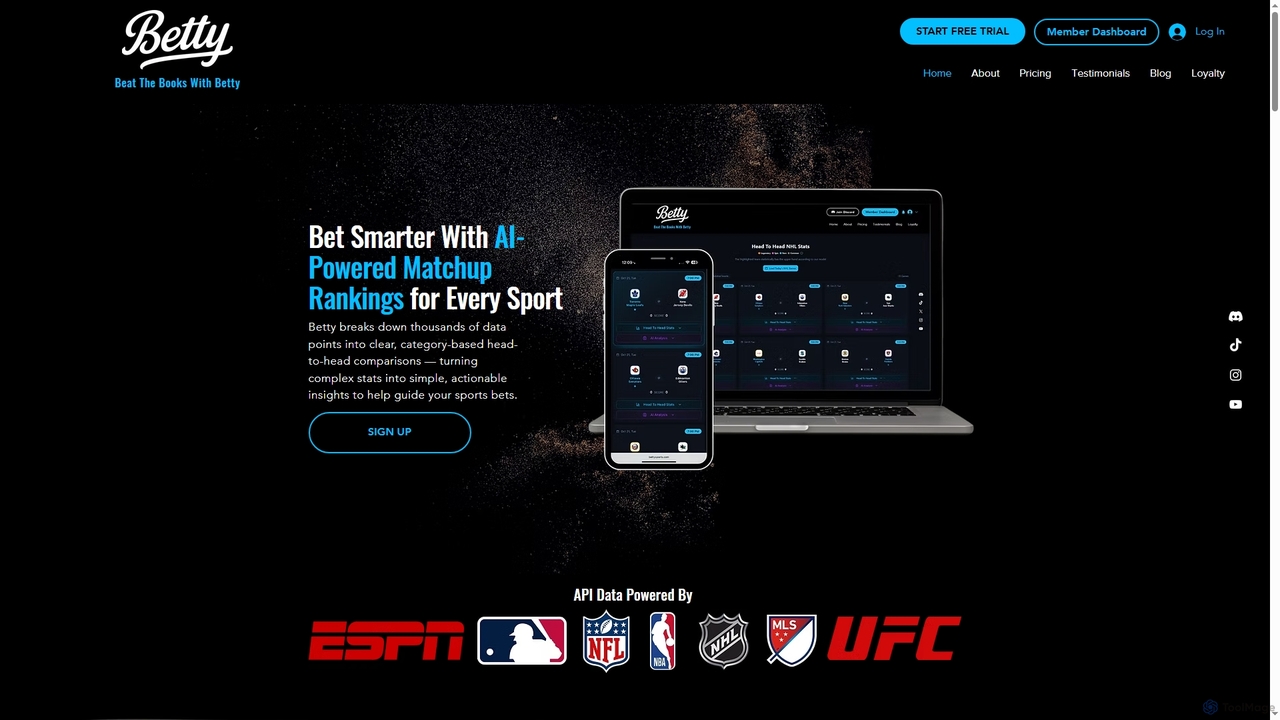
An AI-powered sports betting assistant providing data-driven sports picks and analytics. It analyzes over 1000 variables per game, …
An AI-powered sports betting assistant providing data-driven sports picks and analytics. It analyzes over 1000 variables per game, offering transparent head-to-head comparisons and matchup rankings for major sports like NFL, MLB, and NHL to help users bet smarter.
mysports.ai
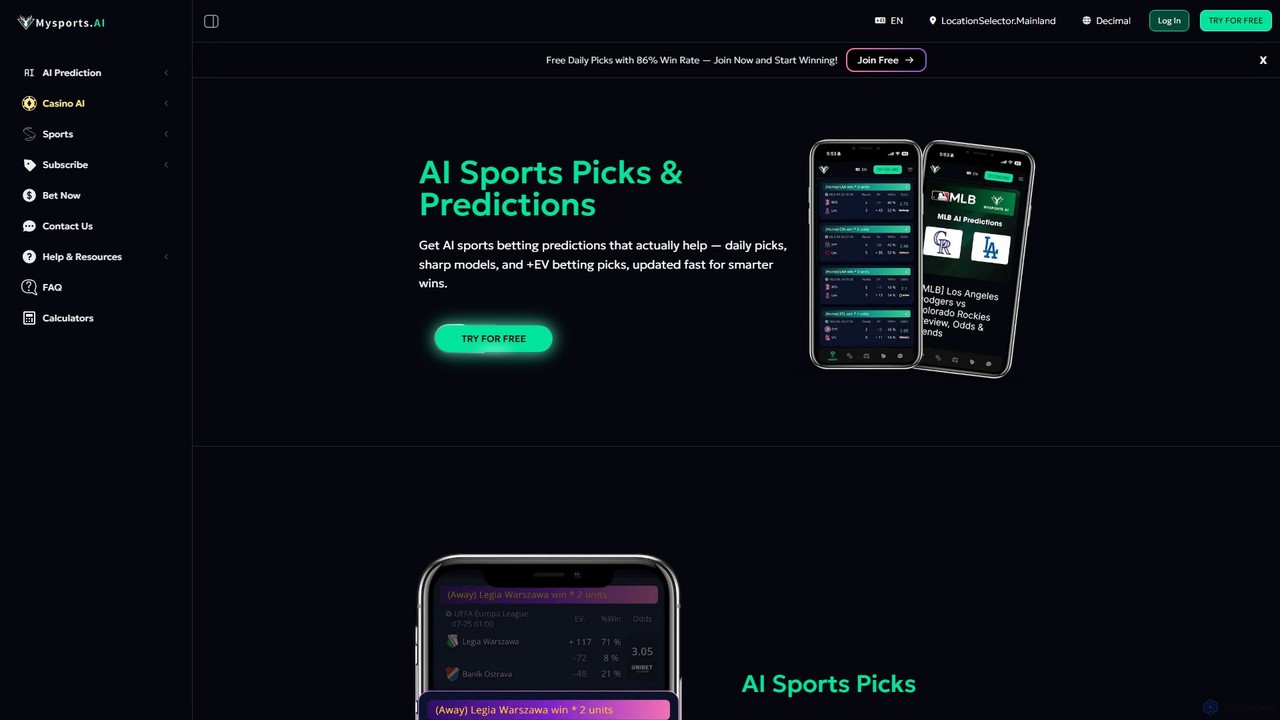
mysports.ai is an AI-powered platform providing daily sports betting picks and predictions. It uses advanced machine learning models …
mysports.ai is an AI-powered platform providing daily sports betting picks and predictions. It uses advanced machine learning models trained on over a decade of historical data to analyze games across major leagues like the NFL, NBA, MLB, and soccer. The tool focuses on identifying high-value (+EV) bets and offers real-time odds comparison to help users make smarter, data-driven betting decisions and improve long-term profitability.
About Prediction
Prediction tools are AI-powered solutions that leverage machine learning algorithms to analyze historical data and forecast future outcomes. These tools are designed to identify patterns, trends, and anomalies within complex datasets, enabling users to anticipate events and make proactive, data-driven decisions. They provide critical insights for strategic planning, risk management, and operational optimization across various industries.
Core Features
- Time Series Forecasting: Predicts future values based on historical time-stamped data, crucial for sales, stock, and weather.
- Anomaly Detection: Identifies unusual patterns or outliers in data that deviate from expected behavior, indicating potential issues or opportunities.
- Risk Assessment & Scoring: Evaluates potential risks by predicting probabilities of specific events, such as credit default or equipment failure.
- Customer Churn Prediction: Forecasts which customers are likely to discontinue using a service or product, allowing for targeted retention efforts.
- Sentiment & Trend Analysis: Predicts market sentiment or emerging trends from unstructured data like social media or news.
Use Cases
Prediction tools are indispensable for professionals in finance, retail, manufacturing, and healthcare. They are used by data scientists to build sophisticated models, business analysts to inform strategic decisions, and operations managers to optimize resource allocation. These tools transform raw data into actionable foresight, driving efficiency and competitive advantage.
How to Choose
When selecting a prediction tool, consider its accuracy metrics (e.g., RMSE, MAE), the types of algorithms supported (e.g., regression, classification, deep learning), and its ability to integrate with existing data sources. Evaluate the interpretability of its models, scalability for large datasets, and the user-friendliness of its interface, especially for non-technical users. Cost, support, and deployment options (cloud vs. on-premise) are also crucial factors.

PredictionUse Cases
Forecasting Sales Demand for Retail
Retail managers use AI prediction tools to analyze past sales data, seasonality, promotional impacts, and external factors like holidays. By accurately forecasting future product demand, they can optimize inventory levels, reduce stockouts, minimize waste, and improve supply chain efficiency. This leads to better profitability and enhanced customer satisfaction by ensuring products are available when needed.
Predicting Equipment Failure in Manufacturing
Maintenance teams in manufacturing deploy AI prediction tools to monitor sensor data from machinery, including temperature, vibration, and pressure. By identifying subtle anomalies and patterns indicative of impending failure, they can schedule proactive maintenance. This prevents costly unplanned downtime, extends asset lifespan, and optimizes operational efficiency, moving from reactive to predictive maintenance strategies.
Optimizing Marketing Campaigns with Predictive Analytics
Marketing professionals leverage prediction tools to analyze customer behavior, demographic data, and past campaign performance. By predicting which customer segments are most likely to respond to specific offers or channels, they can personalize marketing messages, optimize ad spend, and improve conversion rates. This data-driven approach ensures campaigns are more effective and achieve higher ROI.
Predicting Financial Market Trends
Financial analysts and traders use AI prediction tools to analyze vast amounts of market data, including stock prices, trading volumes, economic indicators, and news sentiment. These tools can identify complex patterns and predict future market movements, helping in making informed investment decisions, managing portfolios, and mitigating risks. This enables more strategic and potentially profitable trading strategies.
Predicting Customer Churn for Subscription Services
Subscription-based businesses (e.g., SaaS, streaming services) use prediction tools to identify customers at high risk of churning. By analyzing usage patterns, engagement metrics, support interactions, and billing history, these tools can flag at-risk customers. This allows companies to proactively intervene with targeted offers, personalized support, or engagement campaigns, significantly improving customer retention rates and lifetime value.
Predicting Healthcare Outcomes and Disease Risk
Healthcare providers and researchers utilize AI prediction tools to analyze patient data, including medical history, genetic information, lifestyle factors, and lab results. These tools can predict the likelihood of disease onset, treatment effectiveness, or patient readmission. This enables personalized medicine, early intervention, and more efficient resource allocation, ultimately improving patient care and public health outcomes.