ToolMage
Sign in

Best 17 Scraping AI tools for Data

Popular Scraping AI tools in Data include axiom.ai, scrapetoai, Scrapeless, igleads, Automatio, mapleadscraper, Cohesive AI, NioLeads, hystruct, and Synterrix, helping you work more efficiently.

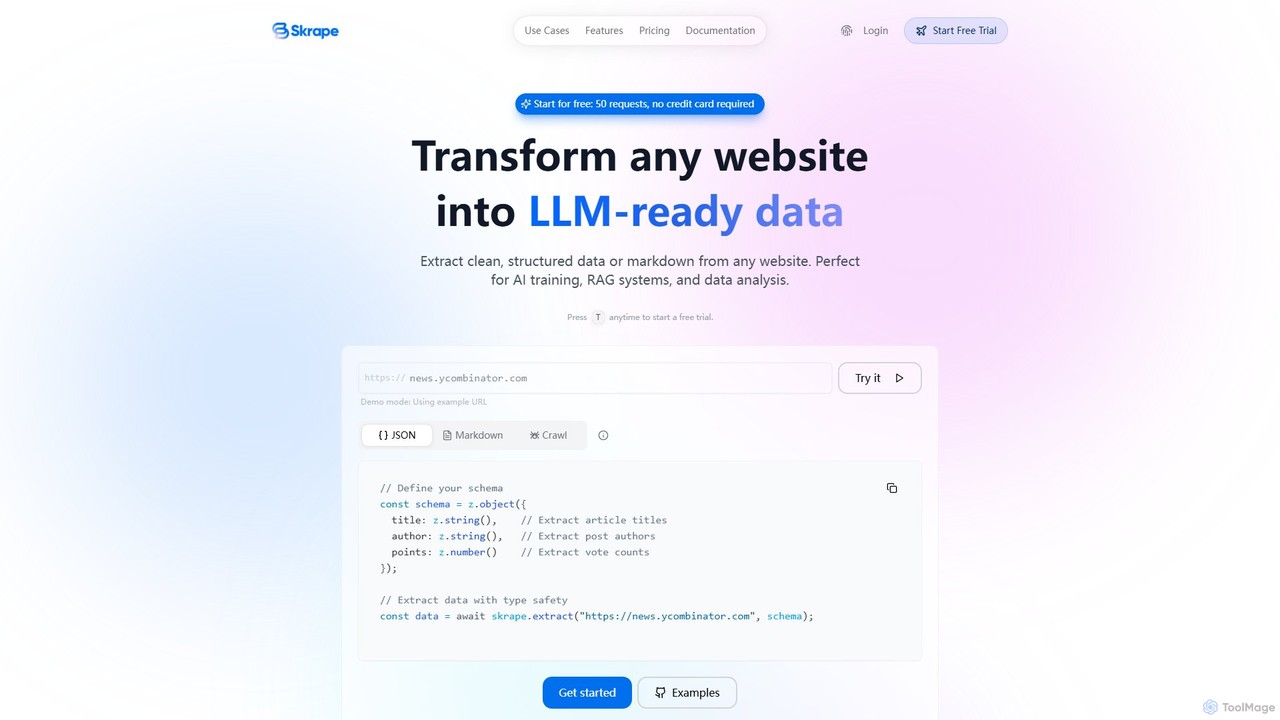
Skrape
Freemium

Skrape

Skrape is an LLM-powered web scraping API designed to transform any website into clean, structured, and LLM-ready data. It simplifies data extraction by converting web pages into structured JSON or clean markdown, making it ideal for AI training, RAG systems, and data analysis. With features like dynamic content handling and smart crawling, Skrape provides a reliable solution for developers and businesses to automate their data collection pipelines.

Scraping
Visits 5.5KFavorites 120Likes 116
scrapetoai
Freemium

scrapetoai

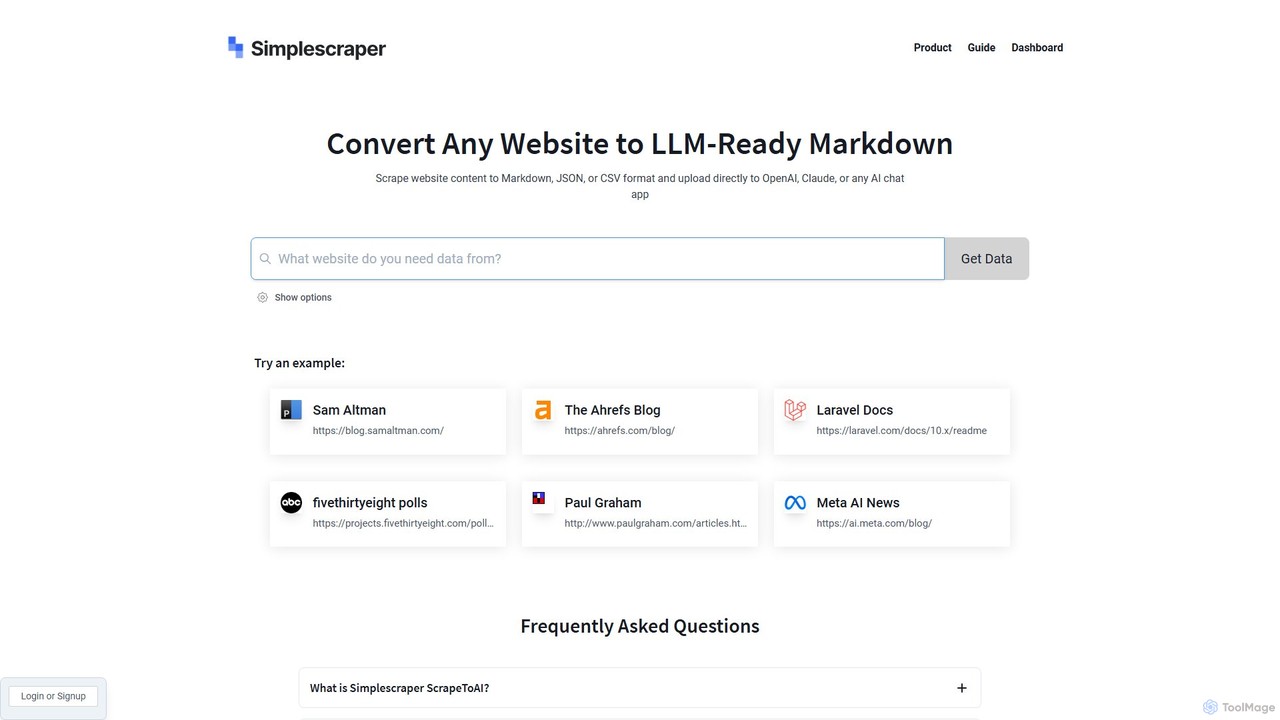
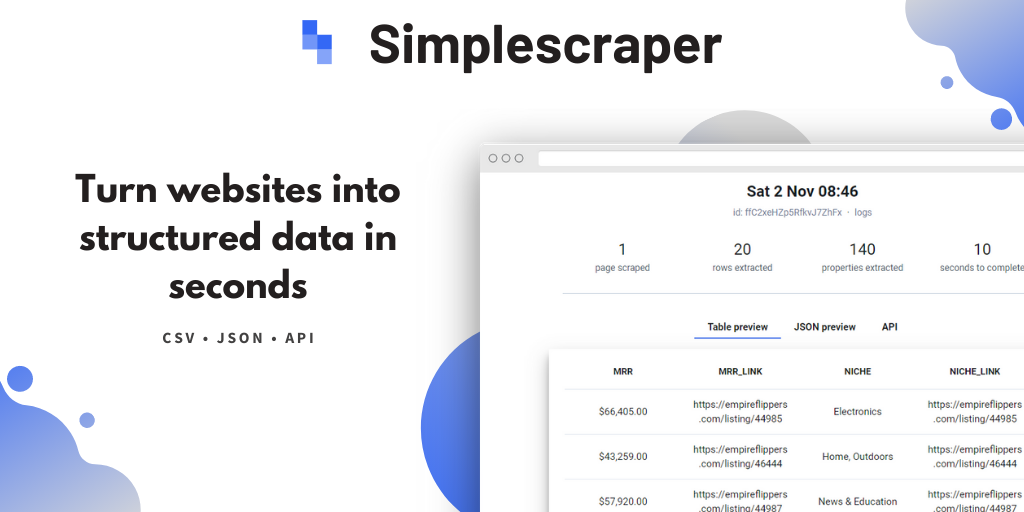
scrapetoai is a free online tool that converts any website's content into clean, LLM-ready formats like Markdown, JSON, or CSV. Simply enter a URL to scrape and format data, making it easy to upload to custom GPTs, Claude, or other AI models for building knowledge bases or providing context.

Data Preparation
Visits 109.7KFavorites 147Likes 140
Automatio
Freemium

Automatio

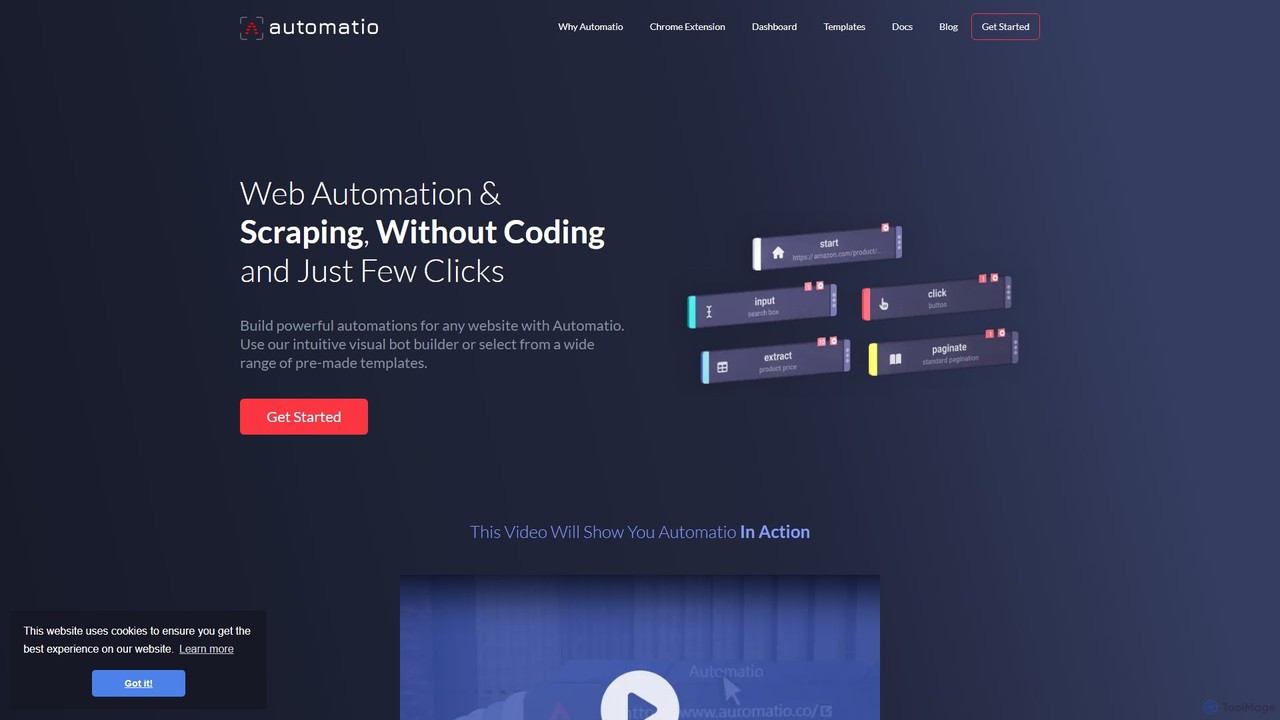
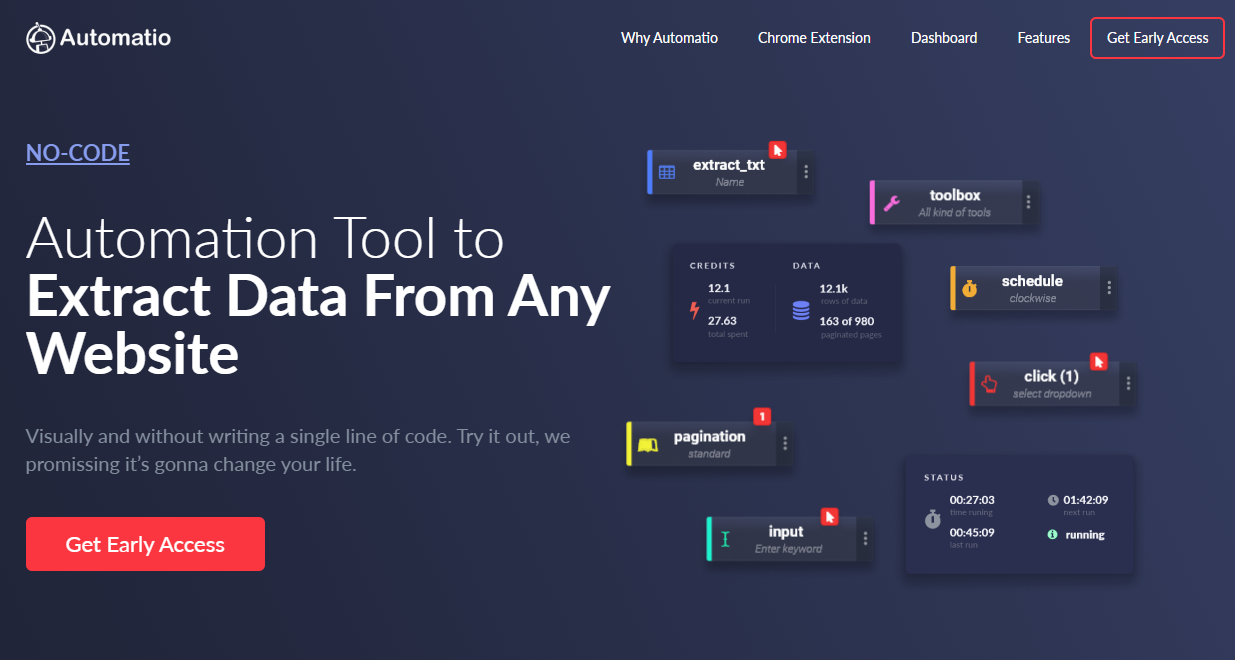
Automatio is a powerful no-code platform for web scraping and browser automation. It allows users to build bots through a visual interface to extract data, fill forms, and automate repetitive tasks on any website without writing a single line of code. It's designed for both non-technical and technical users to save time and resources.

Scraping
Visits 53.5KFavorites 156Likes 147
Curlent
Freemium

Curlent

Curlent is an AI-powered web scraping and data extraction platform that automates the collection of structured data from any website. It intelligently handles dynamic content, anti-bot measures, and complex layouts, providing clean, ready-to-use data via a powerful API.

Scraping
Visits 4.9KFavorites 147Likes 130
Cohesive AI
Freemium

Cohesive AI

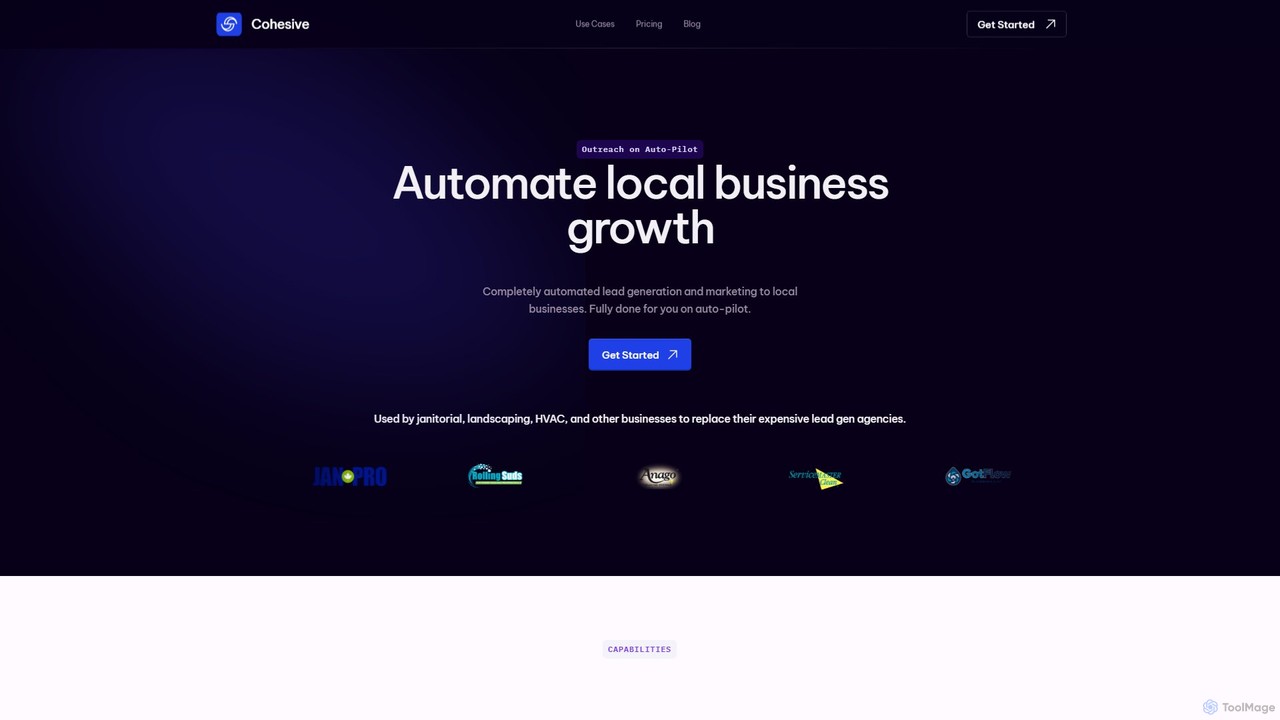
Cohesive AI is a specialized lead generation platform designed for local service businesses. It offers both a fully managed, automated outreach service and a powerful Google Sheets extension for self-service web scraping and AI-powered data enrichment. It automates finding and contacting local business leads, personalizing emails, and managing campaigns to drive growth.

Scraping
Visits 10.8KFavorites 129Likes 115
igleads
Freemium

igleads

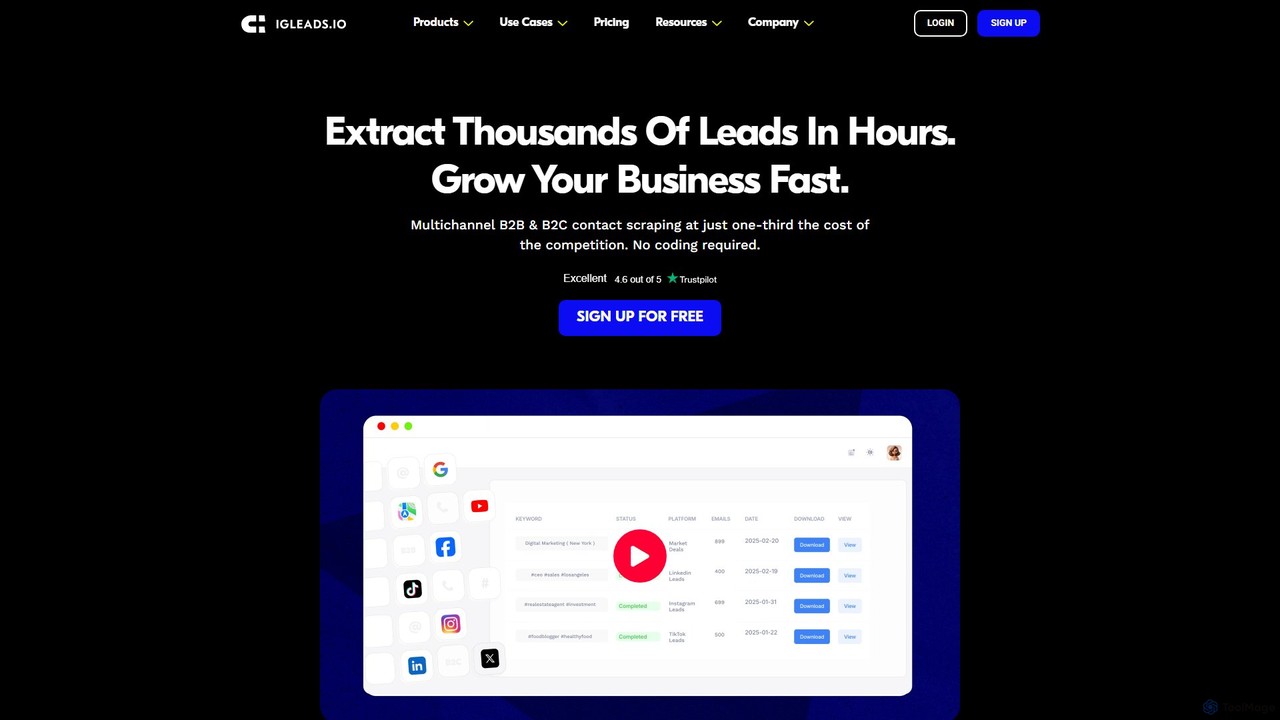
A no-code, AI-powered platform for scraping targeted B2B and B2C leads from social media and the web. It automates finding emails, phone numbers, and business details from platforms like Instagram, LinkedIn, and Google Maps. Ideal for sales, marketing, and recruitment teams looking to build high-quality contact lists quickly and affordably without coding skills.

Scraping
Visits 57.1KFavorites 133Likes 119
hystruct
Freemium

hystruct

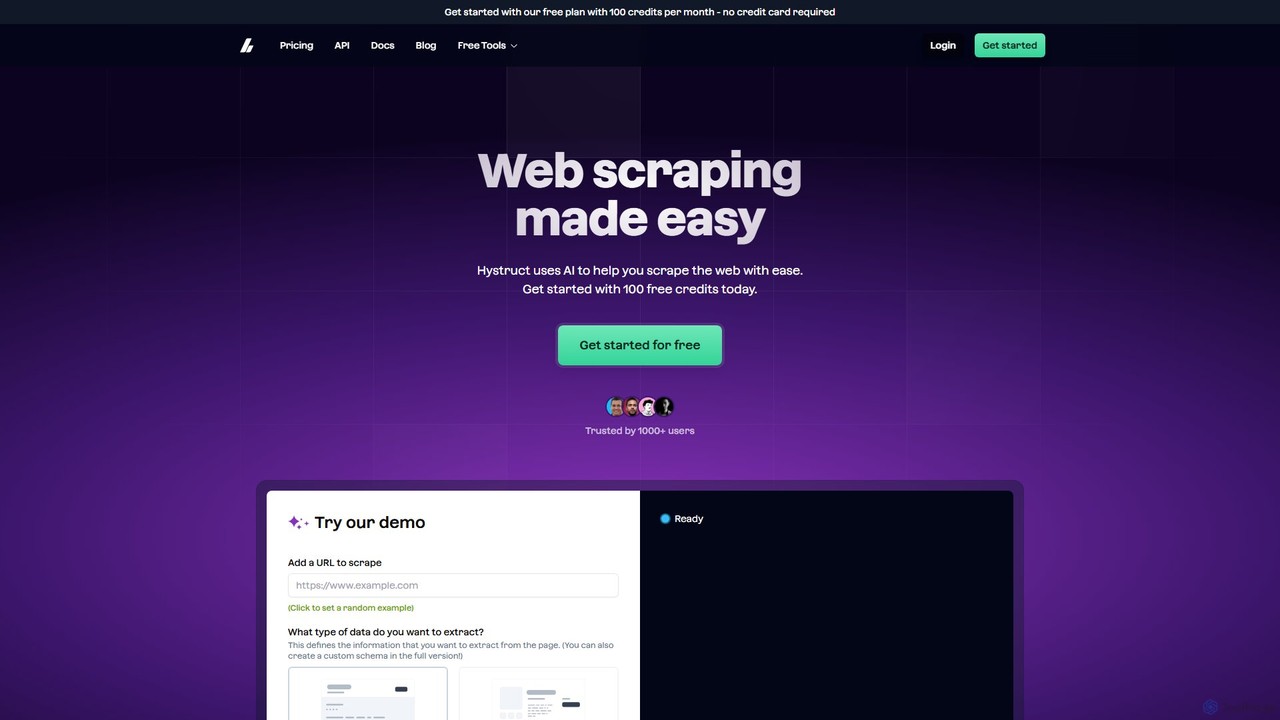
hystruct is an AI-powered web scraping tool that simplifies data extraction. It allows users to easily turn unstructured web content into structured data using pre-built or custom schemas, without needing to code. With integrations like Zapier, it automates workflows for market research, lead generation, and more. It's designed for everyone from beginners to enterprise teams.

Scraping
Visits 6.9KFavorites 115Likes 124
Scrapeless
Freemium

Scrapeless

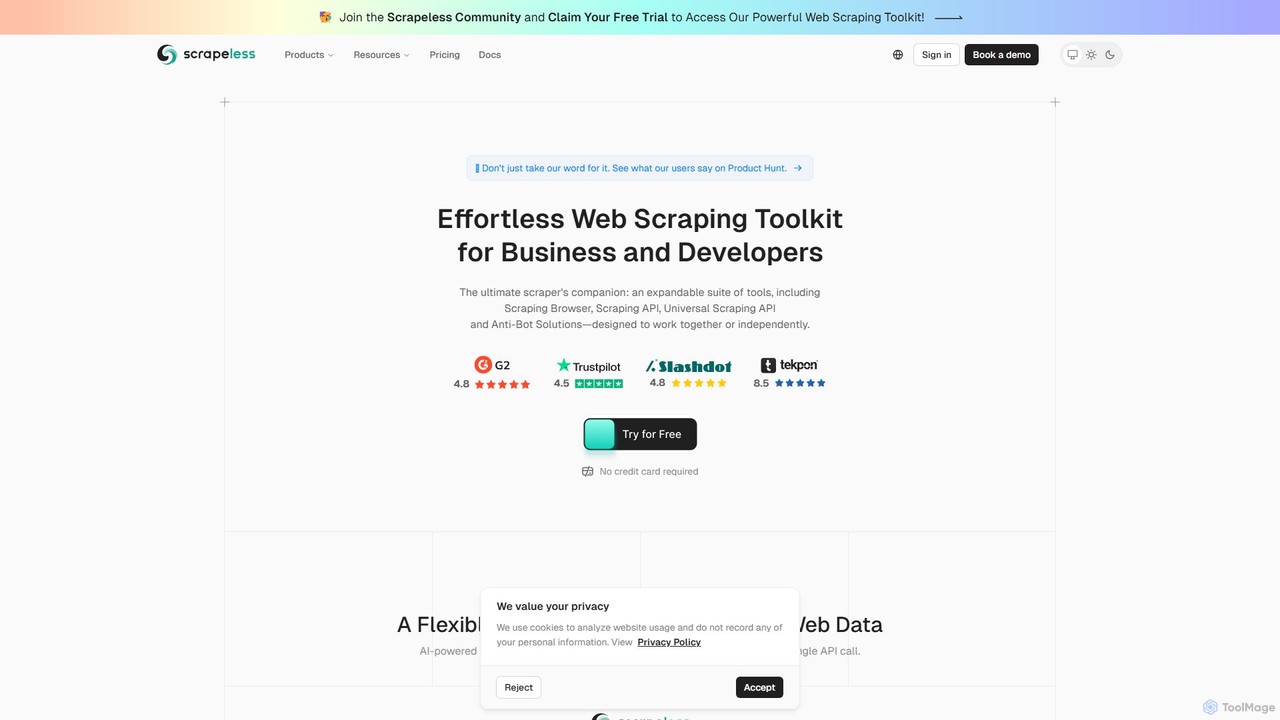
An AI-powered web scraping toolkit for developers and businesses. It offers a suite of tools including a Scraping Browser, Universal Scraping API, and Deep SERP API to effortlessly extract public web data at scale. It specializes in bypassing anti-bot measures, providing structured data for e-commerce, market research, and AI model training, with a focus on reliability and ease of use.

Scraping
Visits 82KFavorites 151Likes 159

About Scraping

Scraping tools are AI-powered solutions designed to automate the extraction of data from websites and other digital sources. These tools leverage artificial intelligence to intelligently navigate complex web structures, handle dynamic content, and bypass anti-scraping measures. They provide businesses and individuals with structured data for analysis, enabling informed decision-making and operational efficiency.

Core Features

  • Intelligent Data Extraction: AI algorithms adapt to website changes and extract data accurately from dynamic and complex web pages.
  • Anti-Scraping Bypass: Automatically handles CAPTCHAs, IP rotation, user-agent management, and other bot detection mechanisms.
  • Unstructured Data Processing: Utilizes natural language processing (NLP) and computer vision to extract meaningful information from free-form text and visual elements.
  • Scalability & Automation: Supports large-scale data collection, allowing for scheduled and continuous monitoring of target sources.
  • Data Structuring & Cleaning: Transforms raw, extracted data into clean, structured formats (e.g., CSV, JSON) ready for analysis or integration.

Use Cases

AI scraping tools are invaluable for market researchers gathering competitive intelligence, e-commerce businesses monitoring product prices, and sales teams building targeted lead lists. They also serve content creators aggregating information and academics collecting specific datasets for research.

How to Choose

When selecting an AI scraping tool, consider the complexity of your target data sources (static vs. dynamic, structured vs. unstructured) and the required data volume and frequency. Evaluate its anti-scraping capabilities, the flexibility of output formats, and its integration options with existing workflows. Ease of use, customization options, and pricing models are also crucial factors.

Featured tool rankings

Scraping use cases

1

Monitor Competitor Pricing for E-commerce

An e-commerce business owner uses an AI scraping tool to automatically collect product prices, stock levels, and promotional offers from competitor websites daily. The tool intelligently navigates dynamic product pages and handles anti-bot measures, providing structured data that helps adjust pricing strategies in real-time to maintain competitiveness and maximize sales.

2

Gather Market Trends and Sentiment Analysis

A market research analyst employs an AI scraping tool to extract public opinions, reviews, and discussions from social media platforms, forums, and news sites. The AI's NLP capabilities process unstructured text to identify emerging trends, brand sentiment, and consumer preferences, providing valuable insights for product development and marketing campaigns.

3

Generate Sales Leads and Contact Information

A sales team utilizes an AI scraping tool to automatically extract contact details, company information, and job titles from professional networking sites and public directories. The AI helps to identify relevant prospects based on predefined criteria, significantly accelerating lead generation efforts and enabling more targeted outreach campaigns, saving hours of manual data entry.

4

Aggregate Content for News and Blog Platforms

A content curator for a news aggregator platform uses an AI scraping tool to automatically collect articles, headlines, and summaries from various news outlets and blogs. The AI intelligently identifies relevant content, handles different website layouts, and extracts key information, ensuring a constant stream of fresh, diverse content for the platform's audience without manual collection.

5

Collect Real Estate Listings for Property Portals

A real estate portal operator uses an AI scraping tool to gather property listings, including details like price, location, number of rooms, and images, from various real estate agencies and individual seller websites. The AI's ability to parse diverse layouts and extract specific data points ensures a comprehensive and up-to-date database of available properties, enhancing the portal's value proposition.

6

Automate Academic Research Data Collection

An academic researcher uses an AI scraping tool to systematically collect specific datasets from online journals, public databases, and government websites for their studies. The AI's precision in targeting relevant information and handling various data formats significantly reduces the time spent on manual data gathering, allowing the researcher to focus more on analysis and interpretation of findings.

Scraping FAQ

What are AI Scraping tools?

AI Scraping tools are advanced software solutions that use artificial intelligence to automatically extract data from websites and other digital sources. Unlike traditional scrapers, they leverage AI to handle complex tasks such as navigating dynamic content, bypassing anti-bot measures, and intelligently parsing unstructured data. This enables more robust, efficient, and accurate data collection for various analytical and operational needs.

How do AI Scraping tools differ from traditional web scrapers?

AI Scraping tools offer significant advantages over traditional web scrapers, which often rely on predefined rules and static selectors. AI tools can adapt to changes in website layouts, handle dynamic content loaded by JavaScript, and intelligently bypass sophisticated anti-bot mechanisms like CAPTCHAs and IP blocks. Furthermore, AI-powered scrapers can process unstructured data using NLP and computer vision, extracting meaningful insights that rule-based systems would miss, making them more resilient and versatile.

What are the main challenges in web scraping, and how do AI tools address them?

Key challenges in web scraping include dynamic content (JavaScript-rendered pages), anti-bot measures (CAPTCHAs, IP blocking, user-agent detection), and handling unstructured or inconsistently formatted data. AI tools address these by using headless browsers to render dynamic content, employing machine learning for CAPTCHA solving and adaptive IP rotation, and leveraging NLP and computer vision to intelligently identify and extract relevant data from complex layouts, even when patterns change. This makes the scraping process far more robust and less prone to breakage.

Is it legal to use AI Scraping tools?

The legality of using AI scraping tools is complex and depends on several factors, including the website's terms of service, the nature of the data being collected (public vs. private), and relevant data privacy laws (e.g., GDPR, CCPA). While scraping publicly available data is generally permissible, violating terms of service or collecting personal data without consent can lead to legal issues. Ethical considerations are paramount; it's crucial to respect website policies and data privacy regulations to ensure responsible and lawful data collection.

What kind of data can AI Scraping tools extract?

AI Scraping tools are highly versatile and can extract a wide range of data types. This includes structured data like product prices, descriptions, reviews, contact information (emails, phone numbers), and job postings. They can also handle unstructured data such as news articles, blog posts, social media comments, and forum discussions, using AI to identify key entities, sentiments, and topics. Essentially, if data is visible on a webpage, an AI scraping tool can likely be configured to extract it and transform it into a usable format.