Data Best in category 3 results Search Engine AI Tool

Popular AI tools in the Search Engine field of Data include Exa、Linkup、LangSearch, etc., helping you quickly improve efficiency.

Free
LangSearch

LangSearch

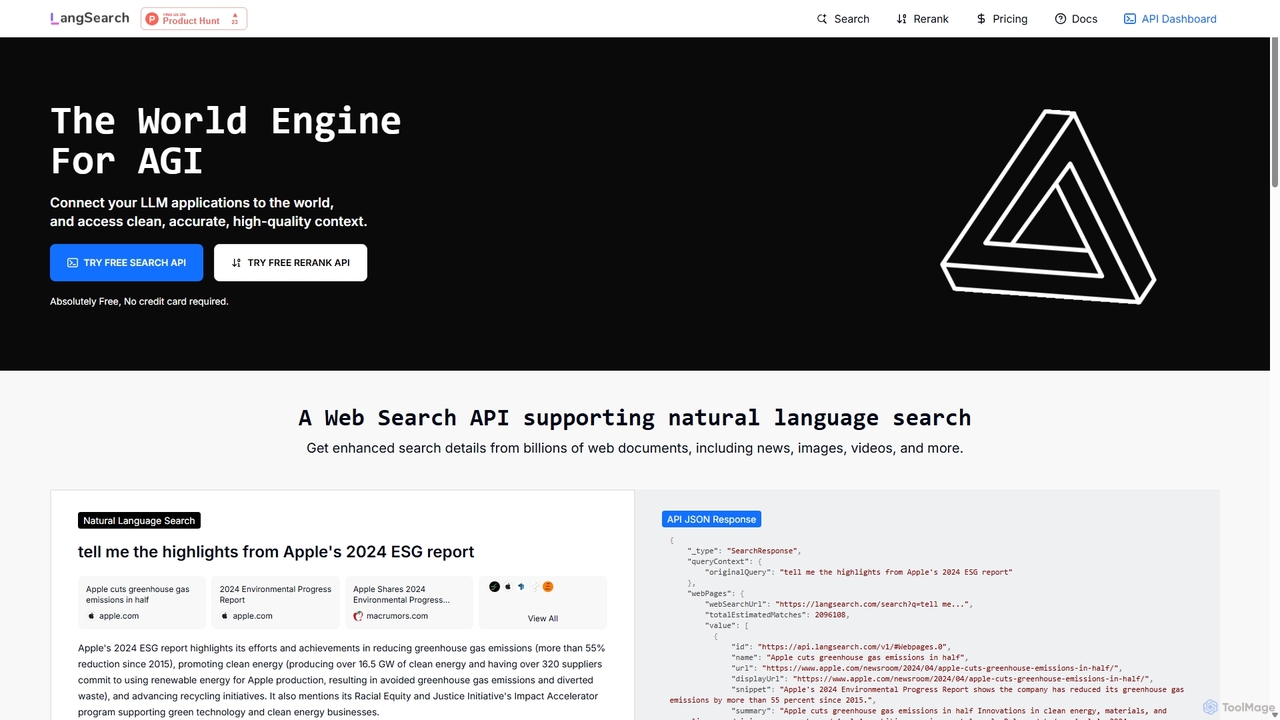
LangSearch provides free Web Search and Semantic Rerank APIs designed to connect LLM applications with clean, accurate, real-world …

4.0K
Exa

Exa

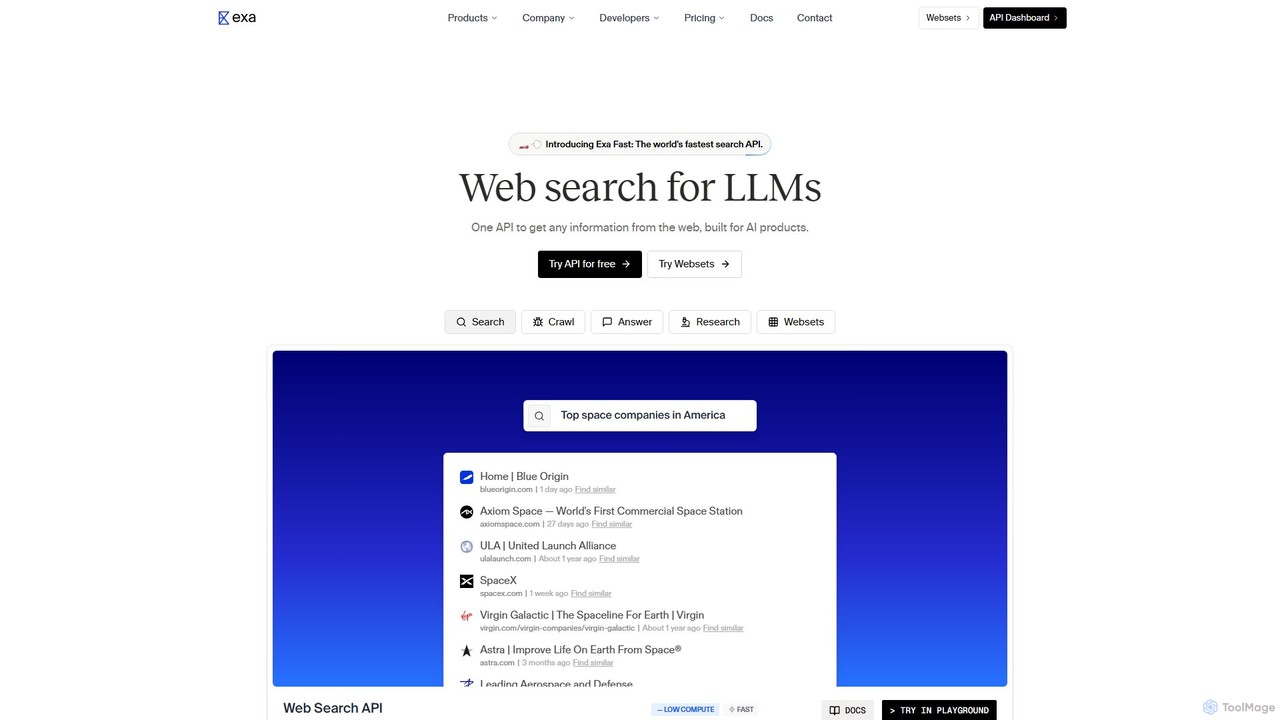
Exa is an AI-native search engine and API designed for LLMs. It provides high-quality, real-time web data through …

835.1K
Linkup

Linkup

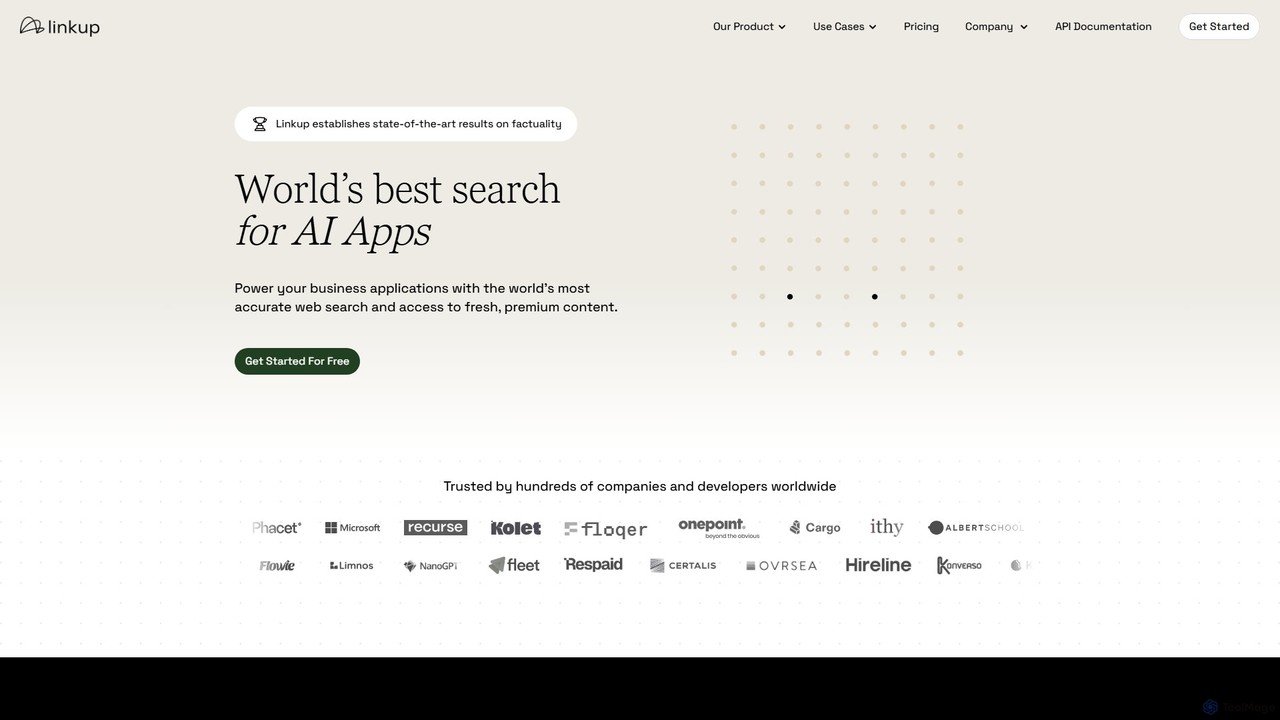
Linkup is an advanced AI-powered search API designed to provide AI applications, agents, and LLMs with accurate, verifiable, …

68.1K

About Search Engine

AI Search Engines are a new generation of tools that use artificial intelligence to understand the intent and context behind a user's query, going far beyond simple keyword matching. They leverage technologies like Natural Language Processing (NLP) and machine learning to interpret complex questions and retrieve or generate highly relevant, direct answers. This enables users to find precise information and synthesized insights from vast datasets, transforming how we interact with and extract value from data. These tools are particularly effective for complex research, enterprise knowledge discovery, and specialized problem-solving.

Core Features

  • Semantic Understanding: Interprets the meaning and context of queries, not just the keywords used.
  • Answer Synthesis: Generates concise, direct answers by summarizing information from multiple sources.
  • Natural Language Query: Allows users to ask questions in a conversational, human-like manner.
  • Multimodal Search: Capable of searching across different data types, including text, images, and code.
  • Personalized Results: Adapts search results based on user context, history, and preferences.

Use Cases

AI Search Engines are widely used by researchers, developers, and business analysts. In academic settings, they accelerate literature reviews by synthesizing findings from numerous papers. Within enterprises, they function as an intelligent knowledge base, allowing employees to get immediate answers from internal documents. Developers also use them to find specific code solutions and debug complex technical issues efficiently.

How to Choose

When selecting an AI Search Engine, first consider the data sources it can access—whether it's the public web, specific academic databases, or your private company data. Evaluate the format of its output, whether you need direct answers, summarized reports, or a list of sources. Also, consider its integration capabilities via APIs for embedding into your own applications, and assess the level of customization and security offered, especially for enterprise use.

Search EngineUse Cases

1

Accelerating Academic Research and Literature Reviews

A postgraduate researcher is working on a complex thesis and needs to review hundreds of scientific papers. Instead of manually searching databases with keywords, they use an AI Search Engine. They can ask complex questions like, "What are the latest findings on the impact of CRISPR-Cas9 on non-model organisms?" The tool scans millions of academic articles, synthesizes the key findings, identifies trends, and provides a summarized answer with direct citations. This process reduces research time from weeks to hours, allowing the researcher to focus on analysis and experimentation rather than information retrieval.

2

Enterprise Knowledge Management and Internal Q&A

A new employee in a large corporation needs to understand the company's internal policies on project management. Instead of browsing a complex intranet or asking colleagues, they use the company's internal AI search portal. They type, "What is our standard procedure for initiating a new client project?" The AI search engine processes internal wikis, policy documents, and past project reports to provide a step-by-step checklist and links to relevant templates. This empowers employees with instant, accurate information, improving onboarding efficiency and ensuring consistent adherence to company protocols.

3

Advanced Code Search and Technical Troubleshooting

A software developer is facing a cryptic error message in a large codebase. Traditional text search fails because the error could be caused by a logical flaw, not a specific string. Using an AI-powered code search engine, they can describe the problem in natural language, such as "Find code examples for asynchronous data fetching that handle rate-limiting errors in Python." The engine understands the semantic meaning, searches across GitHub, Stack Overflow, and internal repositories, and returns relevant, high-quality code snippets and architectural patterns. This significantly speeds up debugging and problem-solving for complex technical challenges.

4

Market Research and Competitive Analysis

A business analyst needs to understand emerging trends in the renewable energy sector. They use an AI Search Engine to query vast amounts of unstructured data, including news articles, industry reports, patent filings, and social media conversations. They ask, "What are the main challenges and innovations in battery storage technology discussed in the last quarter?" The AI tool aggregates information, identifies key themes like solid-state batteries and sodium-ion chemistry, gauges public sentiment, and presents a concise summary with links to key sources. This provides deeper, faster insights than traditional keyword-based monitoring.

5

Personalized Learning and Skill Development

A lifelong learner wants to understand the principles of quantum computing but finds traditional textbooks too dense. They use a conversational AI search tool designed for learning. They can ask foundational questions and follow-up queries like, "Explain quantum superposition with an analogy," and then, "How does that relate to qubits?" The AI provides clear, easy-to-understand explanations tailored to their level of knowledge, suggests relevant articles or videos, and can even create a simple quiz to test their understanding. This creates a personalized and interactive learning path that adapts to the user's pace and curiosity.

6

Legal and Compliance Document Review

A paralegal at a law firm is tasked with finding precedents related to a specific intellectual property case. The firm's archives contain thousands of lengthy legal documents. Using an AI Search Engine specialized for legal text, they can search for concepts rather than exact phrases, such as "Find cases where 'transformative use' was a successful defense in software copyright infringement." The system understands the legal terminology, identifies relevant case files, and highlights the specific paragraphs discussing this concept. This drastically reduces the time and effort required for legal research and ensures no critical precedents are missed.

Search EngineFrequently Asked Questions