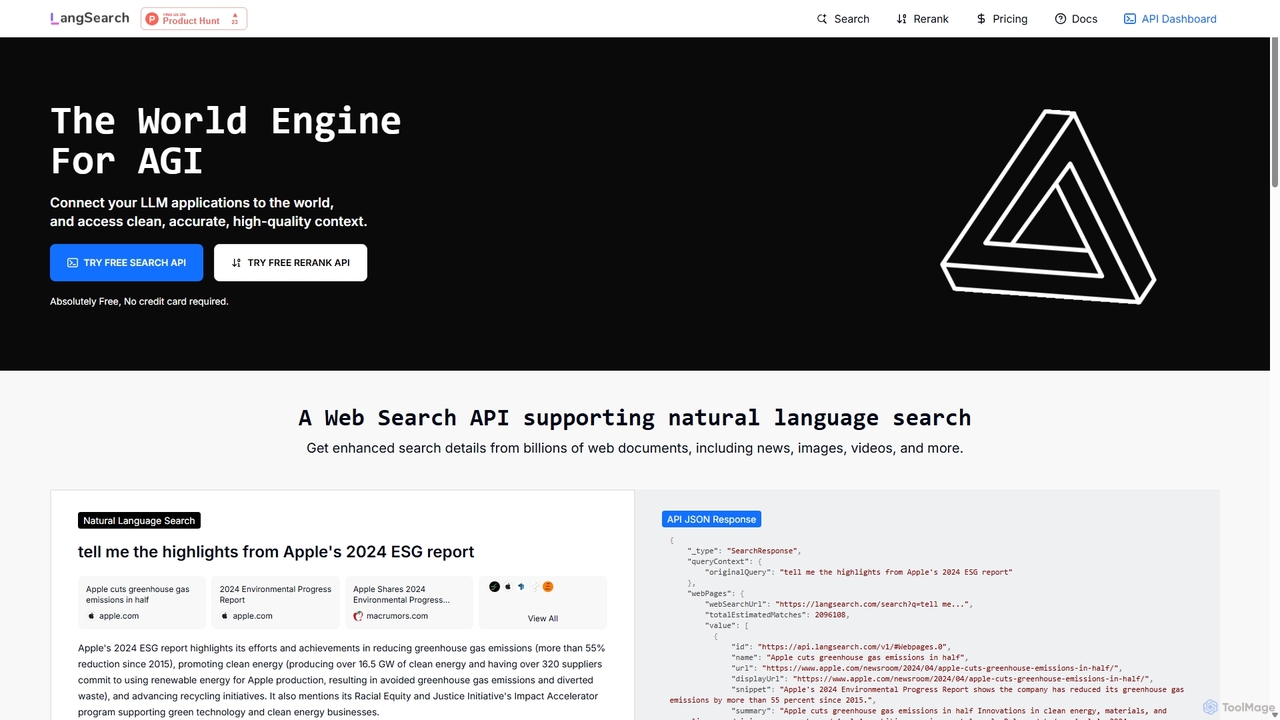
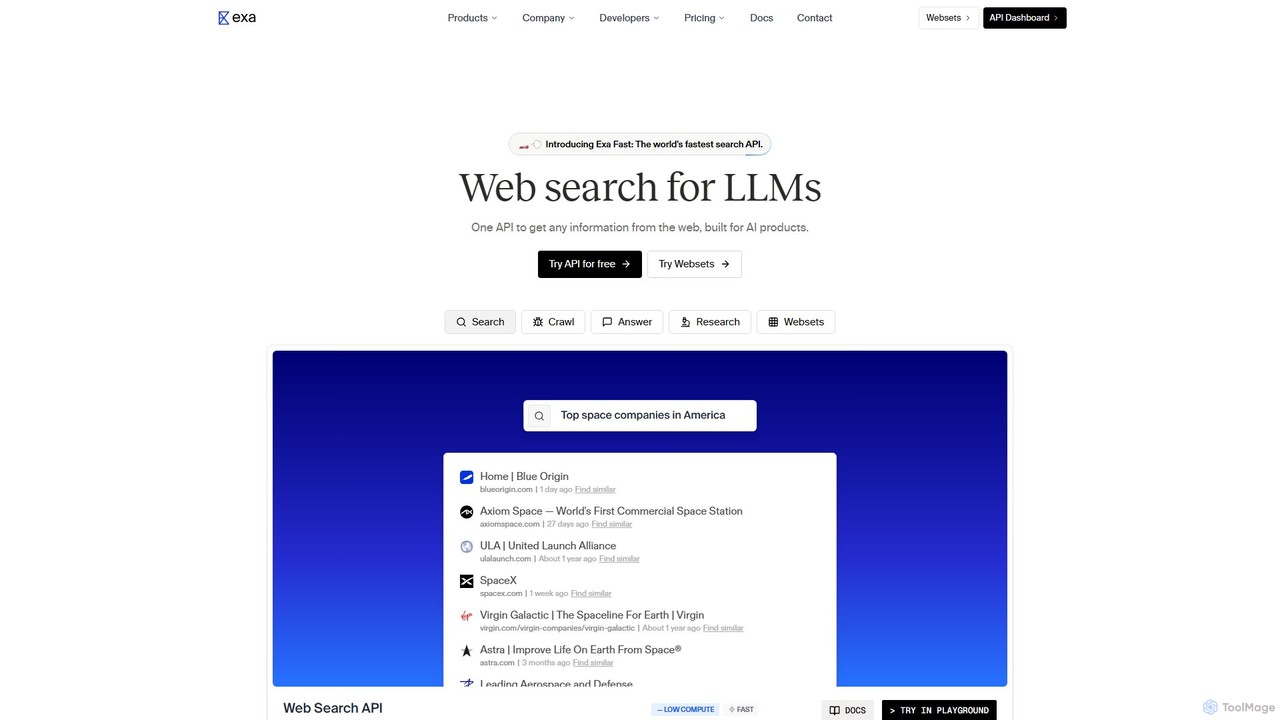
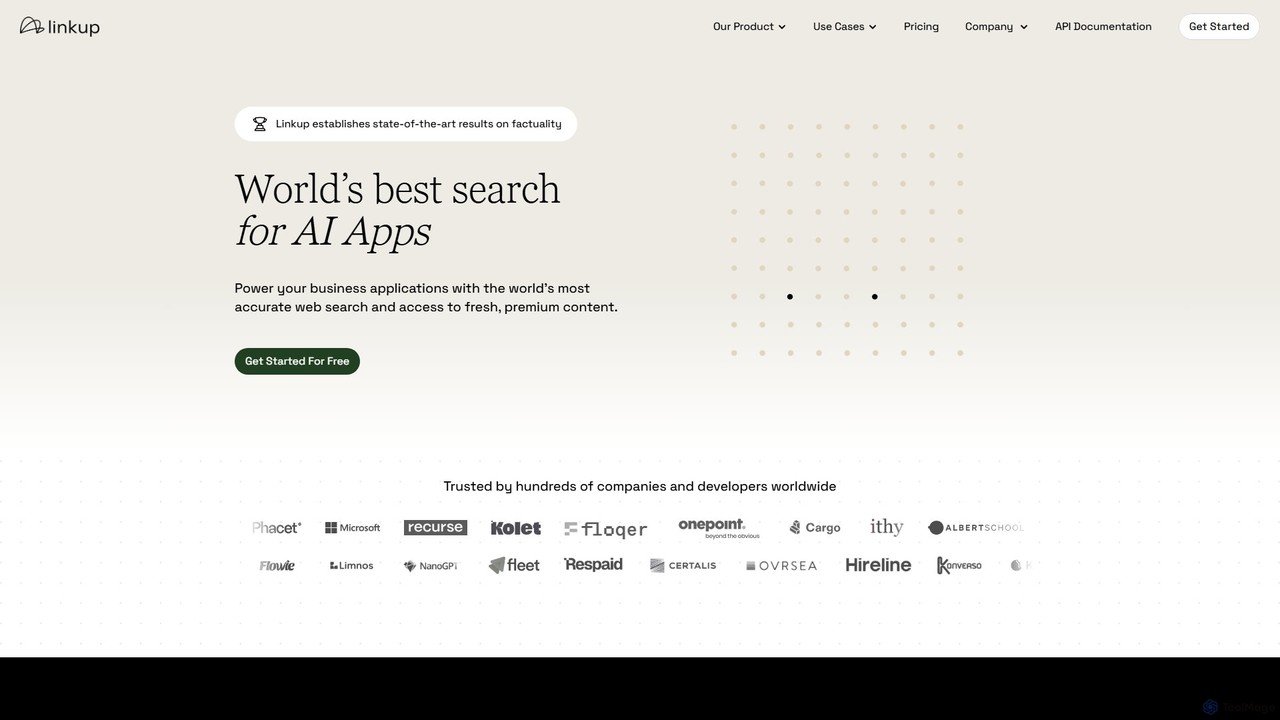
AI Search Engines are a new generation of tools that use artificial intelligence to understand the intent and context behind a user's query, going far beyond simple keyword matching. They leverage technologies like Natural Language Processing (NLP) and machine learning to interpret complex questions and retrieve or generate highly relevant, direct answers. This enables users to find precise information and synthesized insights from vast datasets, transforming how we interact with and extract value from data. These tools are particularly effective for complex research, enterprise knowledge discovery, and specialized problem-solving.
Core Features
- Semantic Understanding: Interprets the meaning and context of queries, not just the keywords used.
- Answer Synthesis: Generates concise, direct answers by summarizing information from multiple sources.
- Natural Language Query: Allows users to ask questions in a conversational, human-like manner.
- Multimodal Search: Capable of searching across different data types, including text, images, and code.
- Personalized Results: Adapts search results based on user context, history, and preferences.
Use Cases
AI Search Engines are widely used by researchers, developers, and business analysts. In academic settings, they accelerate literature reviews by synthesizing findings from numerous papers. Within enterprises, they function as an intelligent knowledge base, allowing employees to get immediate answers from internal documents. Developers also use them to find specific code solutions and debug complex technical issues efficiently.
How to Choose
When selecting an AI Search Engine, first consider the data sources it can access—whether it's the public web, specific academic databases, or your private company data. Evaluate the format of its output, whether you need direct answers, summarized reports, or a list of sources. Also, consider its integration capabilities via APIs for embedding into your own applications, and assess the level of customization and security offered, especially for enterprise use.