ToolMage
Sign in

Best 11 No Code Development AI tools for Development

Popular No Code Development AI tools in Development include FlowEngine, TheNoah, iAgent, Flow, Ideazflow, Stryama, Swipies, Web4, Frozyn, and Frase, helping you work more efficiently.

Vibecodly
Freemium

Vibecodly

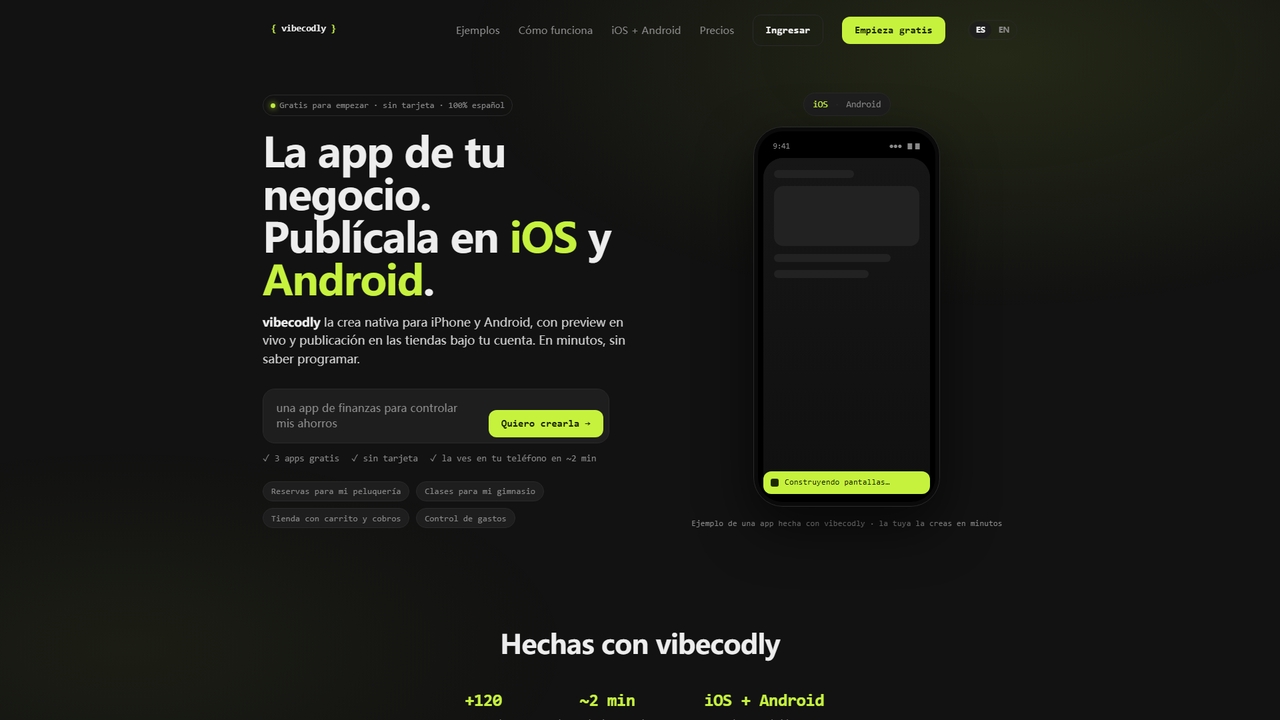
Vibecodly is a no-code platform that turns your ideas into native iOS and Android apps in minutes. Describe your app in plain language, preview it live on your phone, and publish to the App Store and Google Play — no programming required. Free to start, no credit card needed.

Mobile Commerce
Visits 2.2KFavorites 17Likes 22
Swipies
Freemium

Swipies

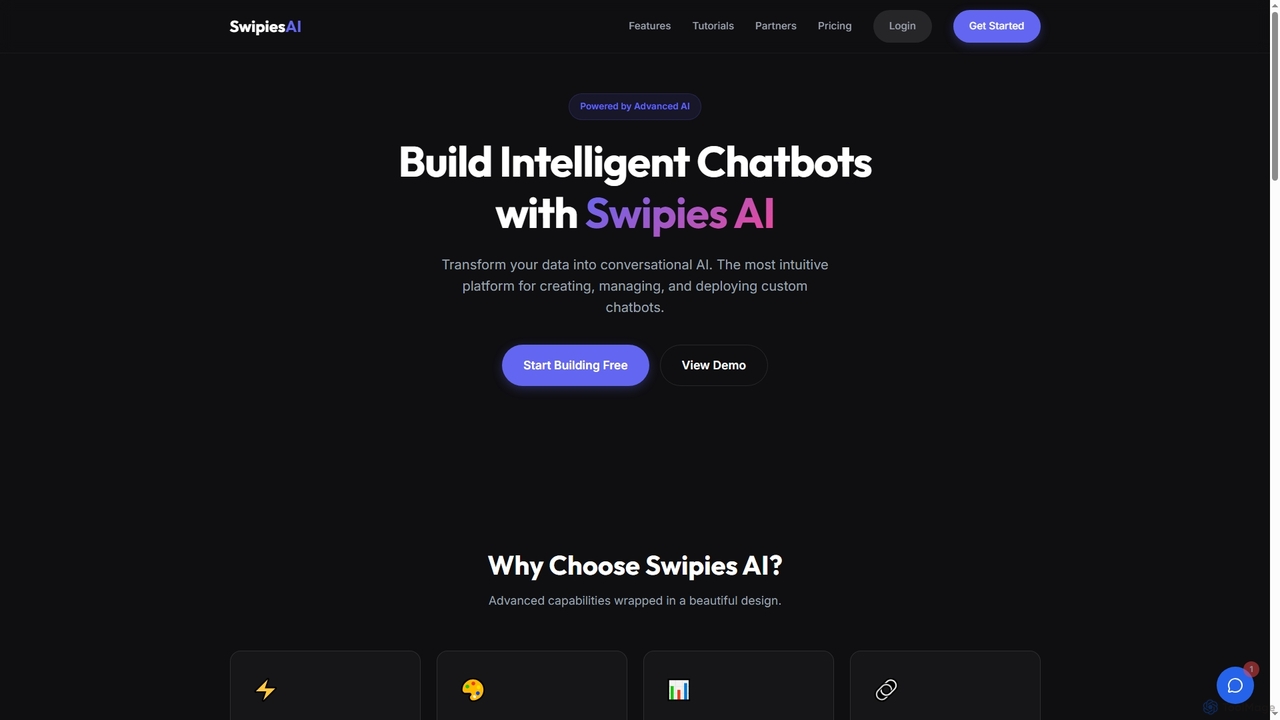
Swipies is an intuitive AI platform designed to instantly build, manage, and deploy intelligent chatbots. It transforms your data into conversational AI, offering advanced capabilities, customizable UI, and deep analytics without requiring complex coding. Deploy your chatbot across various platforms including websites, messaging apps, and business tools.

Chatbot
Visits 6.4KFavorites 56Likes 57
Stryama
Freemium

Stryama

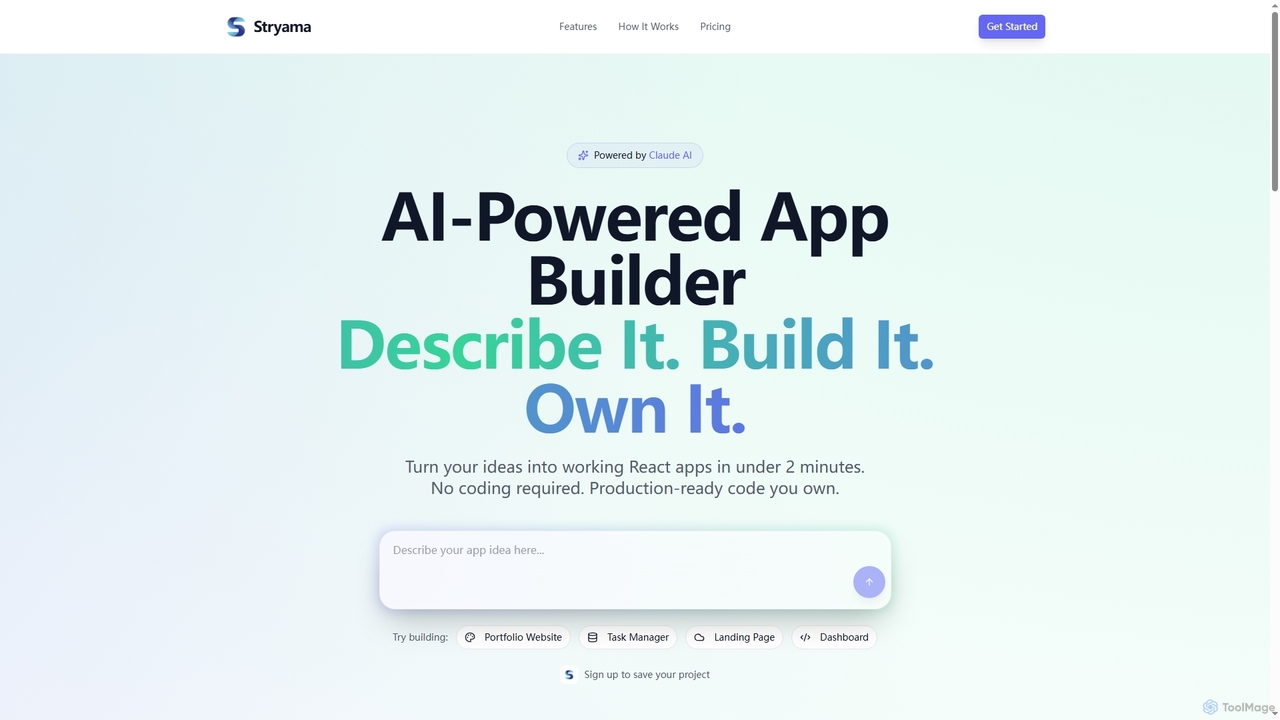
Stryama is an AI-powered app builder that transforms your ideas into functional React applications in minutes, requiring no coding. It generates production-ready code that you fully own, enabling rapid development and deployment for various web projects.

App Development
Visits 6.4KFavorites 70Likes 56
Flow
Freemium

Flow

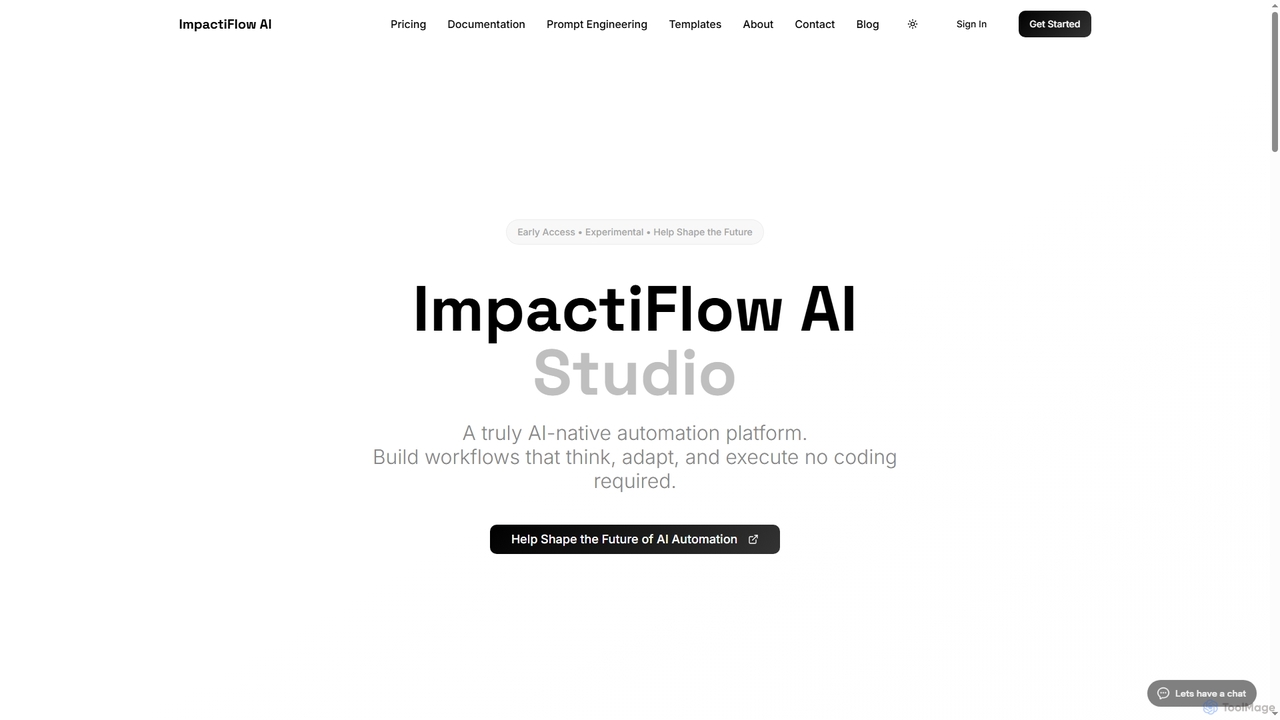
Flow is an AI-native, agentic automation platform designed to build intelligent workflows that think, adapt, and execute without requiring any coding. It empowers teams to streamline repetitive tasks and focus on strategic work.

Workflow Automation
Visits 6.5KFavorites 78Likes 85
iAgent

iAgent

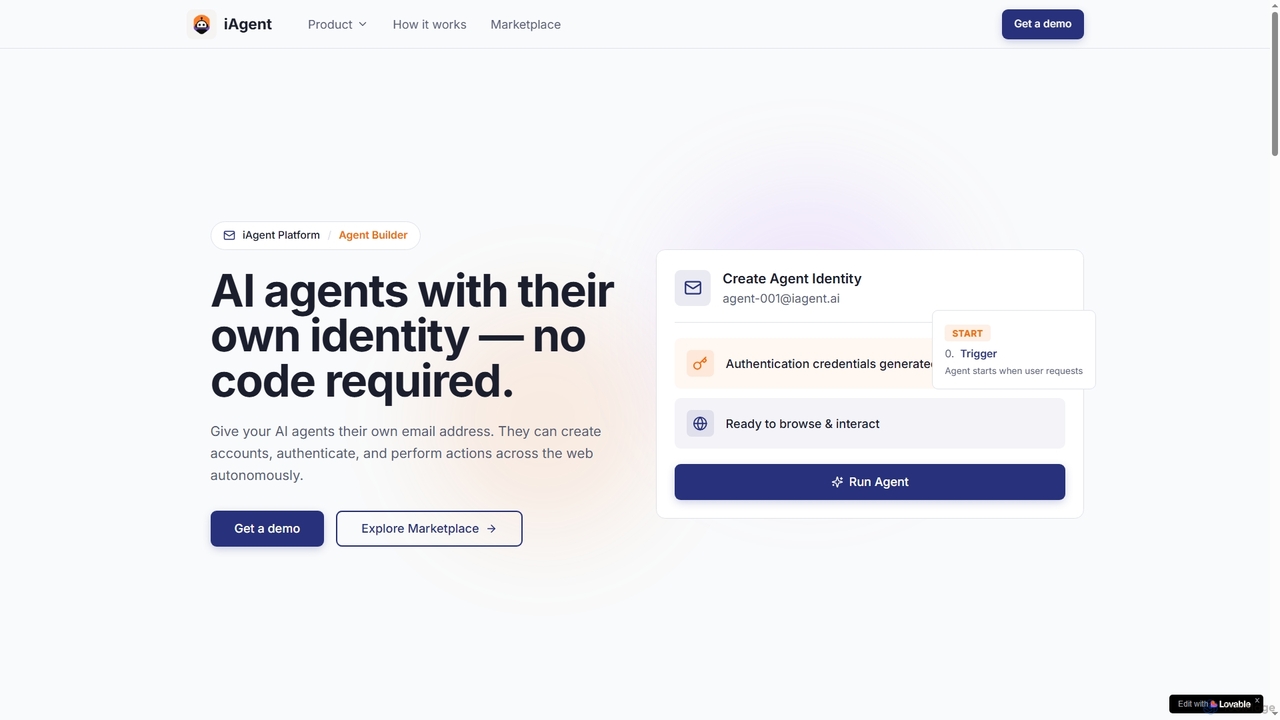
iAgent is a no-code platform that empowers users to create autonomous AI agents with unique digital identities. These agents can perform web actions, authenticate, and manage accounts using their own email addresses, streamlining complex workflows and enabling automated tasks across the internet.

Ai Agents
Visits 7.2KFavorites 95Likes 83
FlowEngine
Freemium

FlowEngine

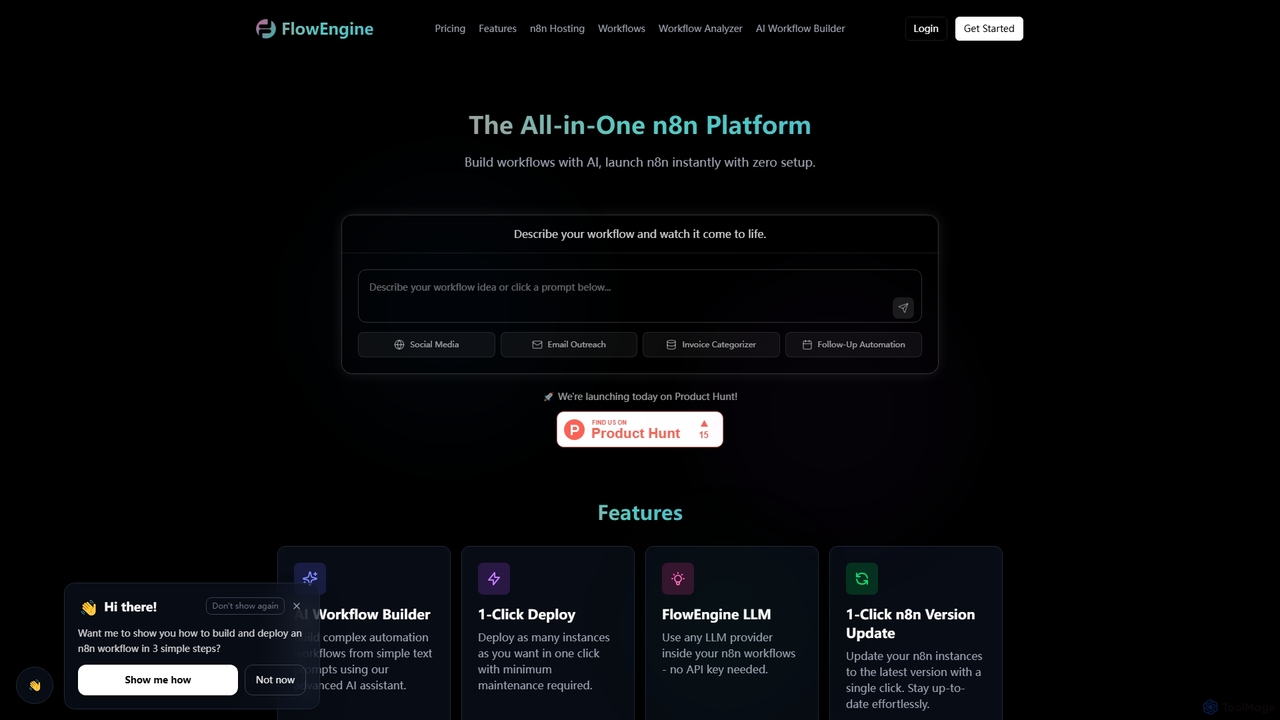
FlowEngine is an all-in-one n8n hosting platform that simplifies workflow automation with AI. It allows users to build complex automation workflows from simple text prompts, deploy n8n instances instantly with zero setup, and manage them with ease. It integrates over 100 pre-loaded LLMs and offers managed hosting, ensuring security and reliability for all your automation needs.

Ai Workflow Generation
Visits 19KFavorites 134Likes 129
Frase
Paid

Frase

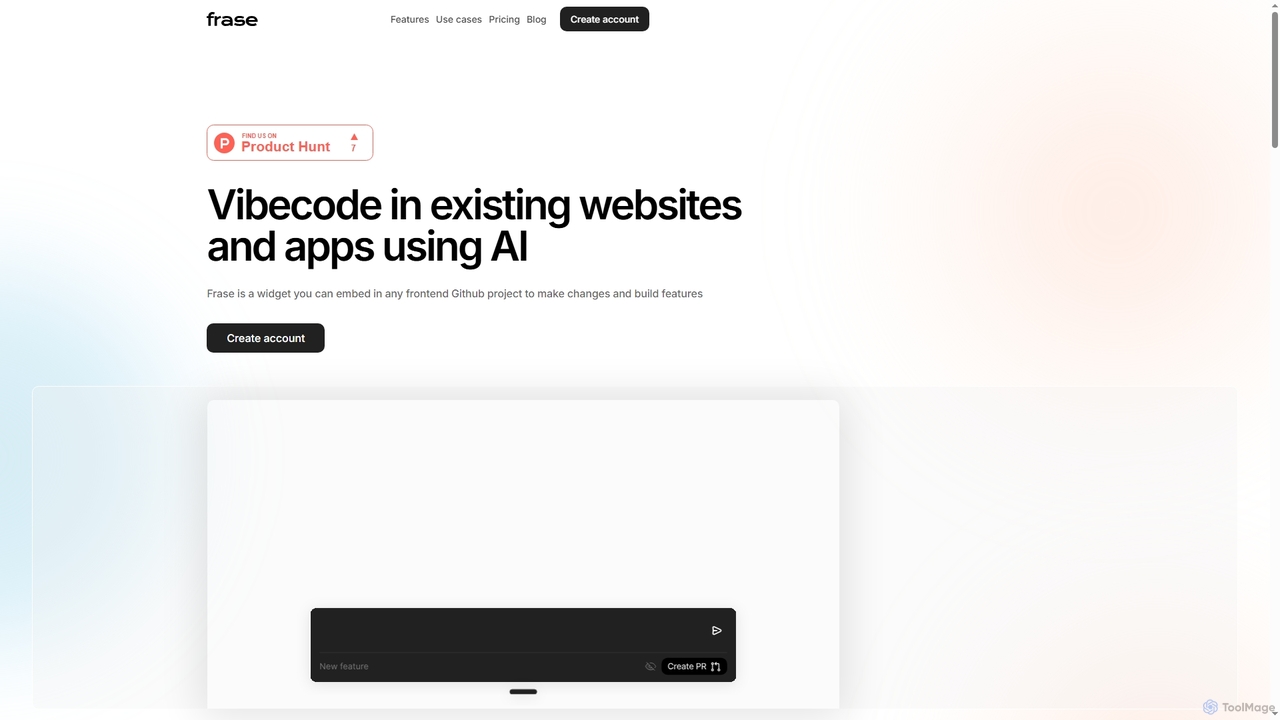
Frase is an AI-powered widget designed for marketing teams, product managers, and non-technical founders to edit existing websites and build features without writing code. It allows real-time preview of changes, integrates with GitHub, and streamlines frontend development by enabling direct, natural language modifications.

Ui Editing
Visits 6.4KFavorites 178Likes 165
TheNoah
Paid

TheNoah

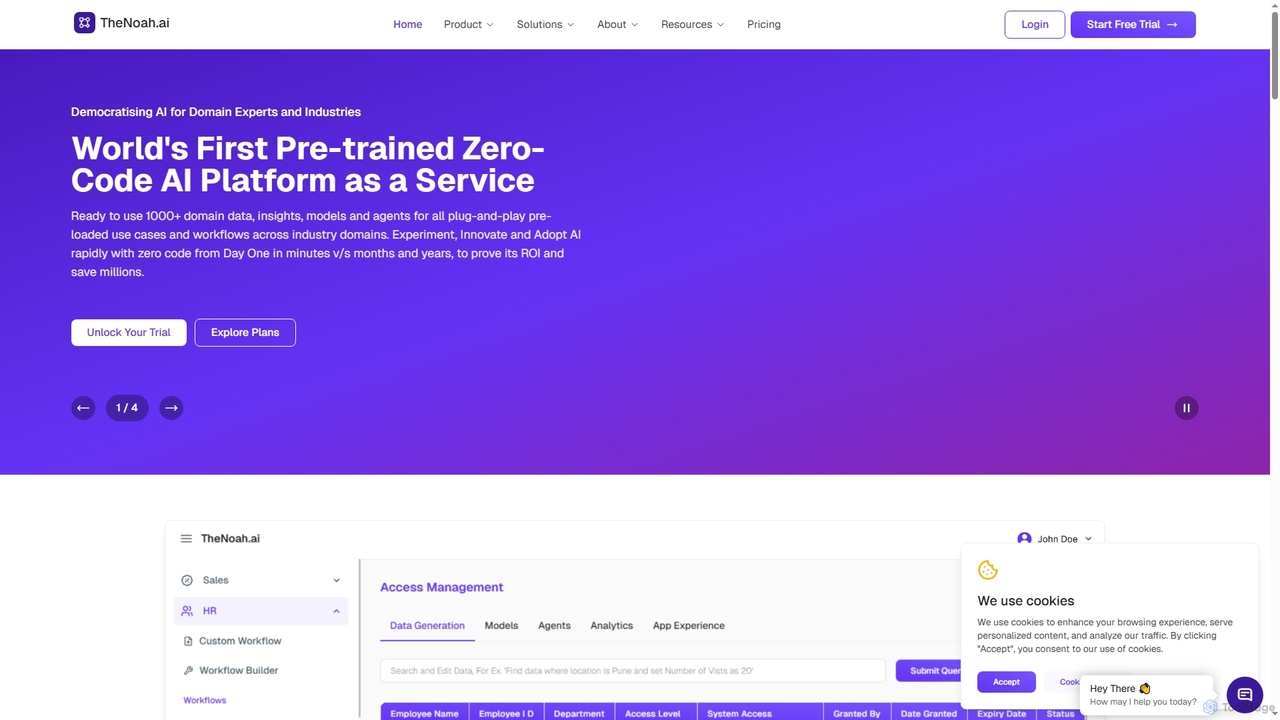
TheNoah is the world's first pre-trained, zero-code AI platform designed for enterprises and domain experts. It offers over 1000 ready-to-use domain-specific models, AI agents, and data simulation capabilities to rapidly automate workflows, generate actionable insights, and accelerate AI adoption across industries without requiring technical expertise.

Data Simulation
Visits 9.3KFavorites 152Likes 172
Web4
Freemium

Web4

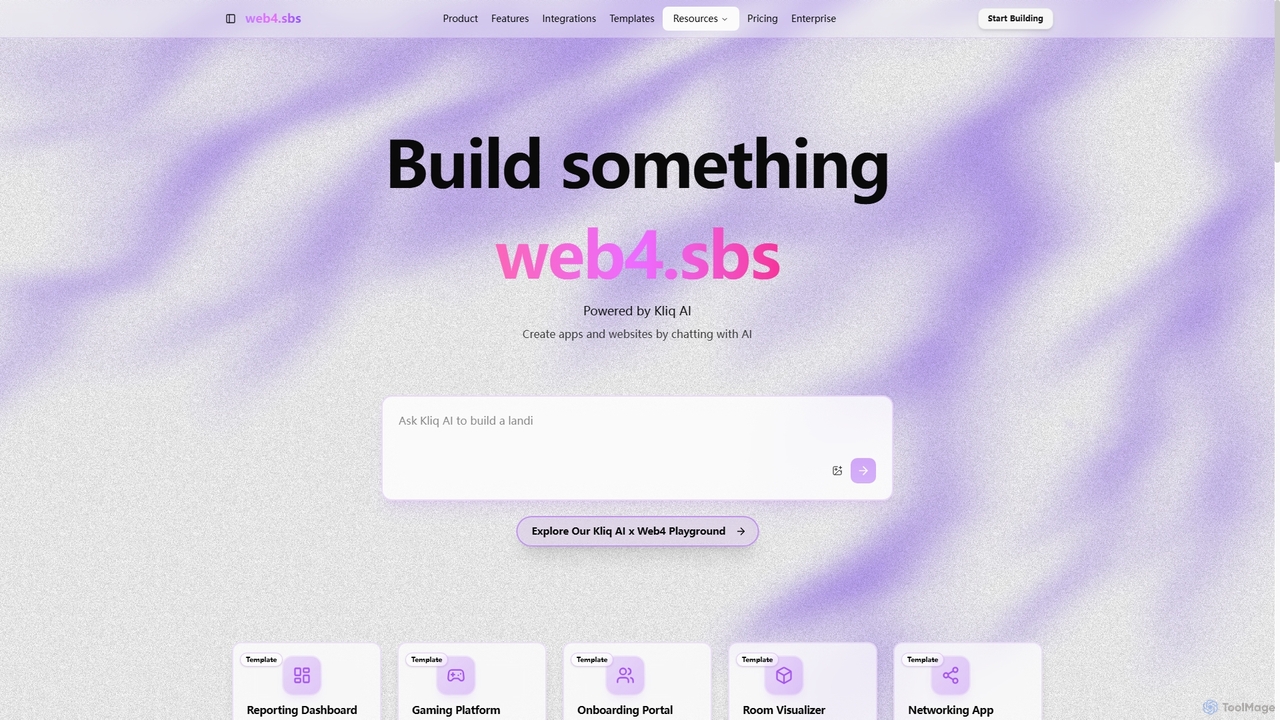
Web4, powered by Kliq AI, is an innovative platform that enables users to create functional web applications and websites simply by chatting with AI. It automates the entire development process, from generating core components and features to setting up the backend and providing built-in hosting for instant deployment, making app creation accessible to everyone.

Coding Assistant
Visits 6.4KFavorites 155Likes 136
Frozyn
Freemium

Frozyn

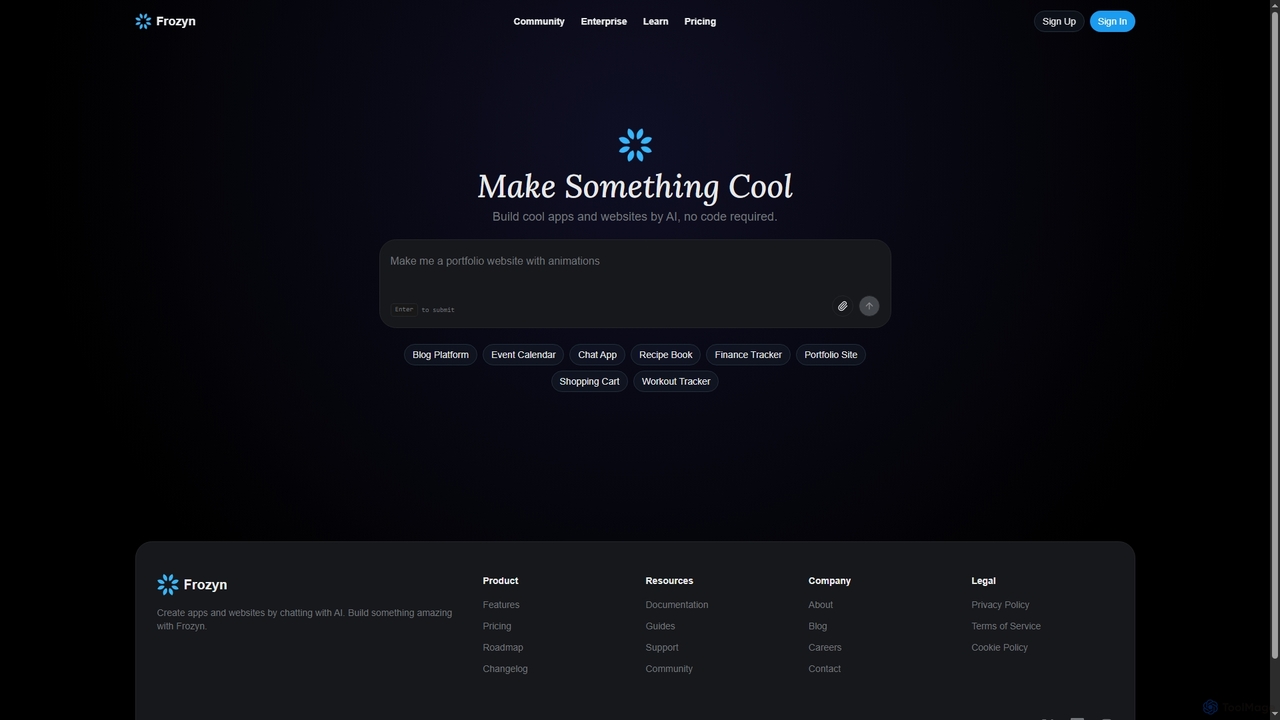
Frozyn is an AI-powered no-code platform that enables users to build cool apps and websites by simply chatting with AI. It offers real-time code suggestions, collaborative project management, and robust security features, making web development accessible to everyone.

Team Project Management
Visits 6.4KFavorites 150Likes 154
Ideazflow
Paid

Ideazflow

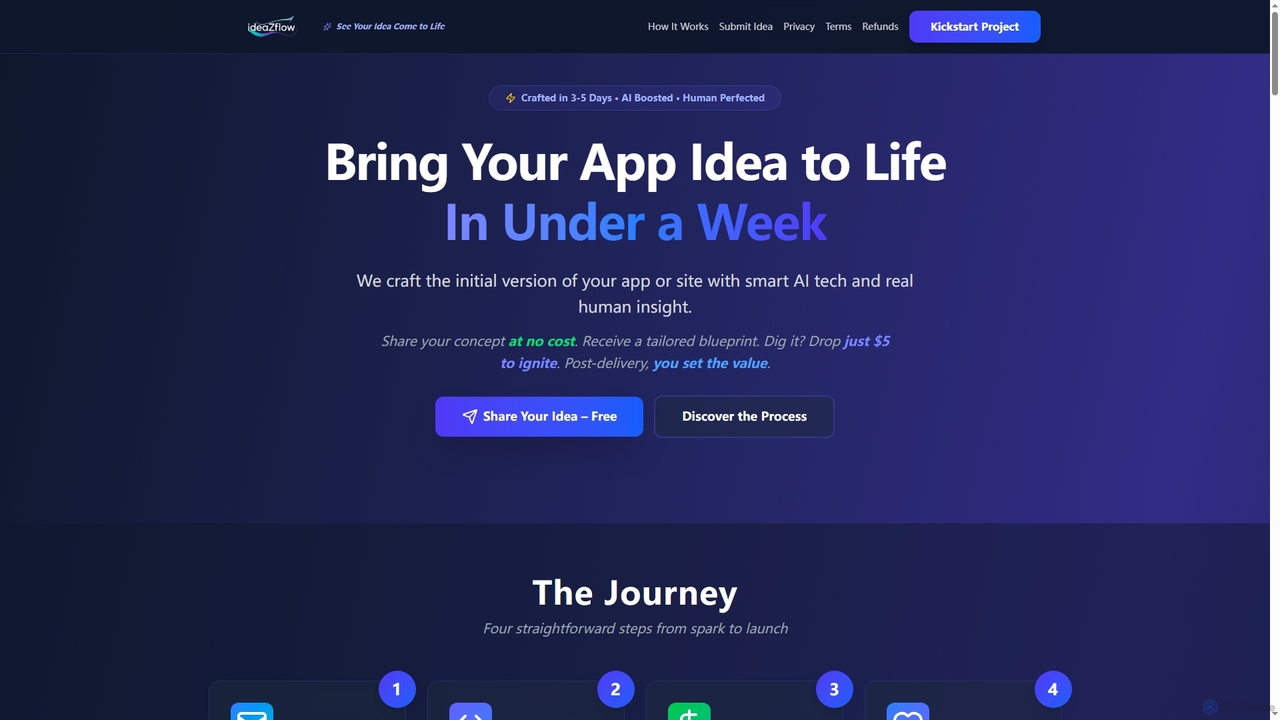
Ideazflow is an AI-boosted service that transforms your app or website ideas into a functional Minimum Viable Product (MVP) within 3-7 days, without requiring any coding skills. It combines smart AI technology with human expertise to deliver custom digital solutions, offering full code ownership and a unique 'pay what you want' model after an initial $5 kick-off fee.

Startup Tools
Visits 6.4KFavorites 151Likes 152

About No Code Development

No Code Development refers to tools that enable users to build applications and websites without writing traditional code. These platforms abstract complex programming logic through intuitive visual interfaces, drag-and-drop components, and pre-built templates. This empowers non-technical individuals and business teams to rapidly create functional digital products, significantly accelerating innovation and market responsiveness. No Code Development dramatically lowers the technical barrier, fostering greater autonomy in digital transformation initiatives.

Core Features

  • Visual Interface Builder: Drag-and-drop components for intuitive, what-you-see-is-what-you-get design.
  • Pre-built Templates & Component Library: Accelerate project initiation with a rich collection of functional modules.
  • Data Modeling & Database Integration: Easily manage and connect data sources for dynamic applications.
  • Workflow Automation: Define business logic and automate processes without scripting.
  • API Integration Capabilities: Seamlessly connect with third-party services and existing systems.

Use Cases

No Code Development tools are widely adopted across various industries and roles. They are ideal for rapid prototyping and Minimum Viable Product (MVP) creation, allowing product managers and entrepreneurs to validate ideas quickly. Businesses leverage them to build internal management tools like custom CRMs or project trackers, and to automate repetitive business processes such as lead nurturing or data synchronization. Small businesses and individual entrepreneurs also use these platforms to launch e-commerce websites or online stores efficiently.

How to Choose

When selecting a No Code Development platform, consider its feature richness and extensibility to ensure it meets current and future project needs, including plugin or API support. Evaluate the ease of use and learning curve, looking for intuitive interfaces, comprehensive tutorials, and active community support. Assess its integration capabilities with your existing systems (e.g., CRM, ERP). Finally, compare pricing models and cost-effectiveness based on your project scale and team size, and review available deployment and hosting options.

Featured tool rankings

No Code Development use cases

1

Build Custom Internal Management Tools

An operations manager at a small to medium-sized enterprise (SME) needs a custom system to manage customer data, project progress, or inventory. By using a No Code platform, they can drag-and-drop forms, database components, and reporting modules to quickly build a tailored CRM or project management system. This allows the tool to go live within hours or days, without requiring IT department involvement, significantly boosting internal collaboration efficiency.

2

Rapid Prototyping and MVP Development

A product manager or entrepreneur needs to validate a new product concept or market demand quickly. By leveraging No Code tools' templates and visual editors, they can build an interactive Minimum Viable Product (MVP) within days. This enables them to gather user feedback rapidly, reduce development costs and risks, and accelerate product iteration cycles, bringing ideas to market faster with minimal investment.

3

Automate Repetitive Business Processes

A marketing specialist or sales team frequently performs repetitive tasks like lead follow-ups, email marketing campaigns, or data synchronization across different platforms. Using a No Code platform, they can configure triggers and actions to connect form submissions, email sending, and CRM updates into an automated workflow. This significantly reduces manual, repetitive work, ensures process consistency, and improves response times and customer satisfaction without needing custom code.

4

Launch E-commerce Websites or Online Stores

A small business owner or individual entrepreneur wants to quickly launch an online sales platform with product display, shopping cart, and payment functionalities. By selecting a No Code e-commerce template, they can drag-and-drop products, set up payment gateways, and configure shipping options. This allows them to establish a professional-grade e-commerce website in a short amount of time, enabling online sales without any programming knowledge.

5

Create Mobile or Web Applications for Events/Communities

A community organizer or event planner needs to provide information dissemination, registration, and interaction functionalities for a specific event or community. Using a No Code app builder, they can design user interfaces and integrate features like maps, calendars, and notifications. This allows them to quickly publish a customized application, enhancing user engagement and information delivery efficiency without the need for native development expertise.

6

Data Visualization and Report Generation

A business analyst or data operations specialist needs to consolidate scattered business data and present it in chart form, generating regular reports. By connecting a No Code platform to various data sources (e.g., Google Sheets, Airtable), they can utilize its chart components to create interactive dashboards. This enables real-time monitoring of key business indicators and rapid generation of visual reports, aiding decision-making without writing complex data query code.

No Code Development FAQ

What is No Code Development?

No Code Development is a method of creating software applications without writing any traditional code. It abstracts complex programming logic through visual interfaces, drag-and-drop components, and configuration options. This approach empowers non-technical users to build functional websites, mobile apps, and automated workflows, significantly lowering the technical barrier and accelerating product development cycles. It's designed to enable business users to innovate independently.

What is the difference between No Code and Low Code Development?

The primary difference lies in the level of coding required and the target audience. No Code platforms are designed for non-technical users, allowing them to build applications entirely through visual interfaces and pre-set functionalities, with zero code. Low Code platforms, conversely, are aimed at developers and technical users, providing visual tools to accelerate development but still allowing for the writing of some code for customization and complex integrations. No Code offers a lower entry barrier, while Low Code provides greater flexibility for more complex projects.

What types of projects are suitable for No Code Development?

No Code Development is ideal for projects requiring rapid deployment, limited budgets, and relatively standardized functionalities. This includes internal tools (e.g., custom CRMs, project management systems), Minimum Viable Products (MVPs) for quick validation, simple websites, e-commerce platforms, automated workflows, data dashboards, and event registration applications. It's less suitable for highly customized, performance-critical applications, complex algorithmic solutions, or large-scale enterprise core systems.

What are the advantages and disadvantages of using No Code Development?

Advantages: No Code significantly accelerates development speed, reducing time-to-market and enabling quick responses to market changes. It offers high cost-effectiveness by minimizing reliance on professional developers. The low technical barrier empowers non-technical teams to build solutions, increasing business agility. Visual modification also facilitates easy and rapid iteration. Disadvantages: Customization can be limited by platform-provided components. Scalability might be a challenge for very complex logic or large-scale integrations. There's a risk of vendor lock-in, making migration difficult. Performance might also be constrained compared to native code for high-concurrency or complex computations.

How to choose a suitable No Code Development platform?

To choose a suitable No Code Development platform, first, define your functional requirements to ensure the platform can meet your core project needs. Evaluate its ease of use and learning curve, looking for intuitive interfaces, comprehensive tutorials, and active community support. Assess its integration capabilities with your existing tools and third-party services. Consider the platform's extensibility, checking for support for custom code, API connections, or plugins. Finally, compare pricing models, feature limitations, and user counts across different platforms, and review available deployment options (cloud-hosted vs. self-hosted).