ToolMage
Sign in

Best 32 Personalized Learning AI tools for Education

Popular Personalized Learning AI tools in Education include Edmentum, flintk12, SchoolAI, Delphi, Smartick, trophi.ai, Tutor AI, esparklearning, abhyas.ai, and Soul Machines, helping you work more efficiently.

MyDreamTeam
Freemium

MyDreamTeam

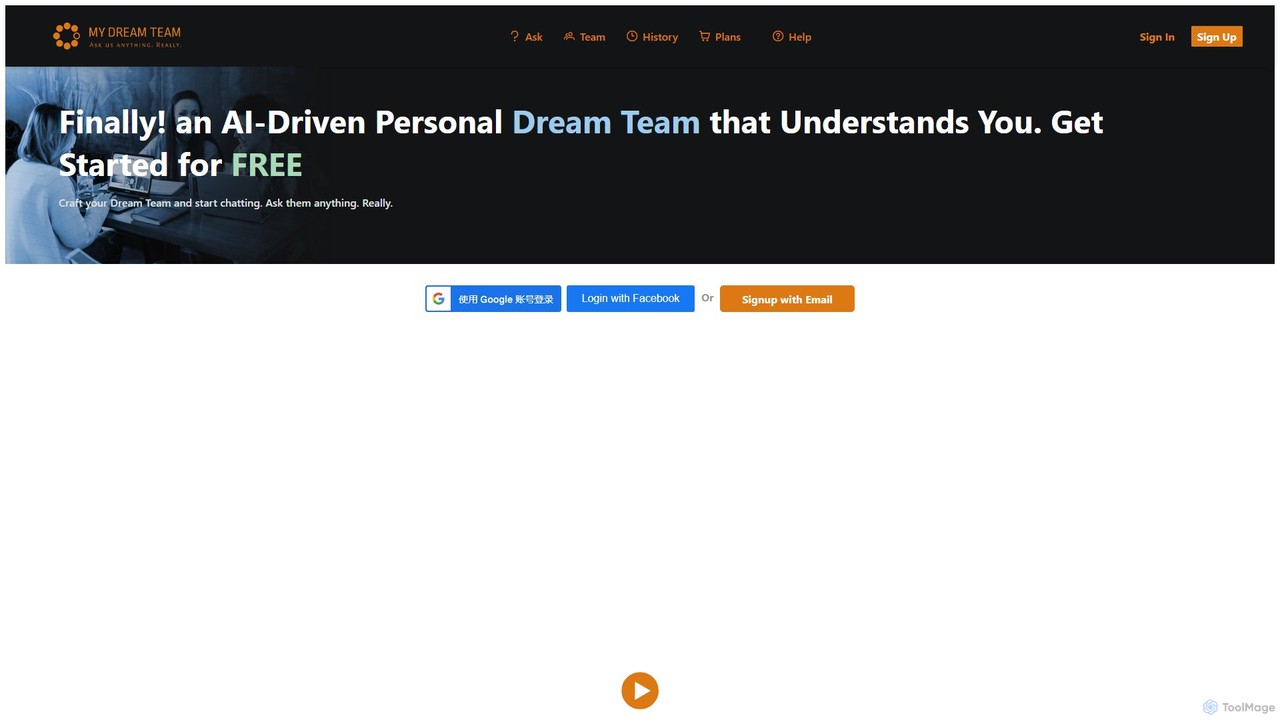
MyDreamTeam is an AI-driven platform that lets you build and chat with a personalized virtual team of experts. Craft advisors with specific expertise, personalities, and backgrounds to get multi-faceted advice, brainstorm ideas, and solve complex problems in a unique conversational experience.

Brainstorming
Visits 5.7KFavorites 118Likes 126
PCSports
Freemium

PCSports

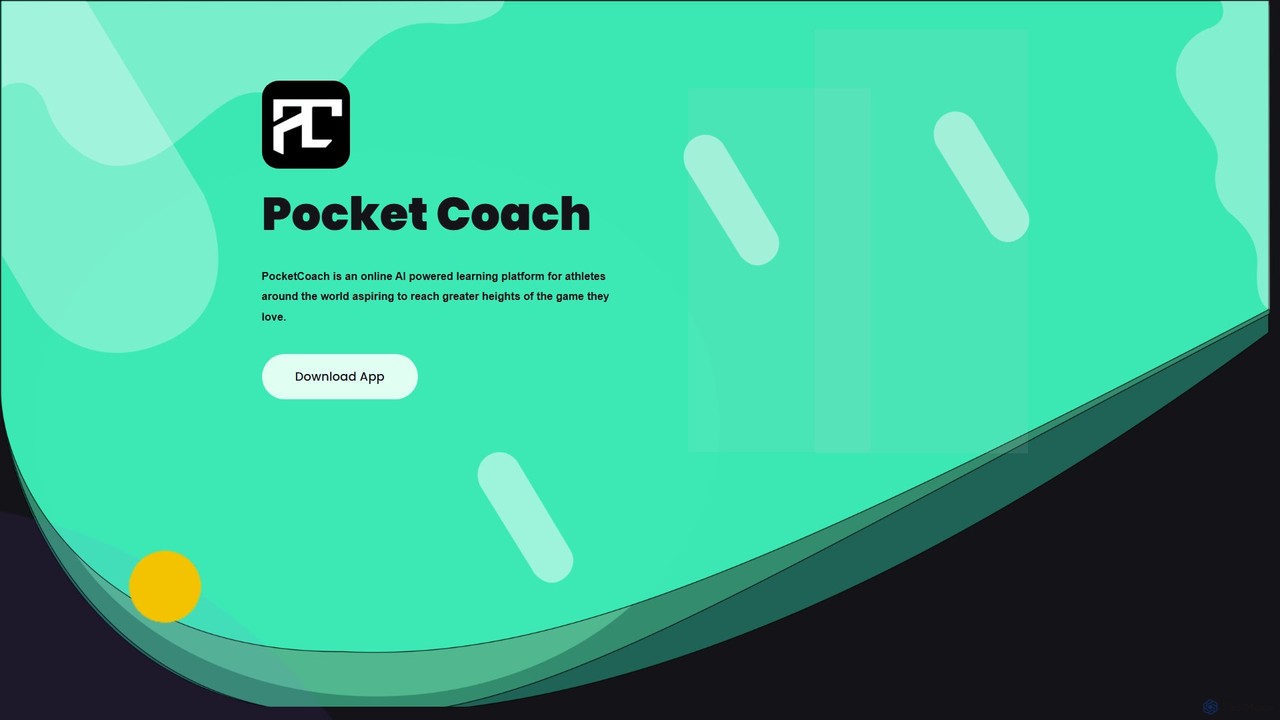
PCSports is an AI-powered sports coaching platform, also known as Pocket Coach. Its flagship app, Playi, uses computer vision to analyze an athlete's movements via their smartphone camera, providing real-time feedback, gamified drills, and detailed performance statistics to help users of all levels improve their technique and track progress.

Personalized Learning
Visits 9.1KFavorites 139Likes 135
Interview with AI
Paid

Interview with AI

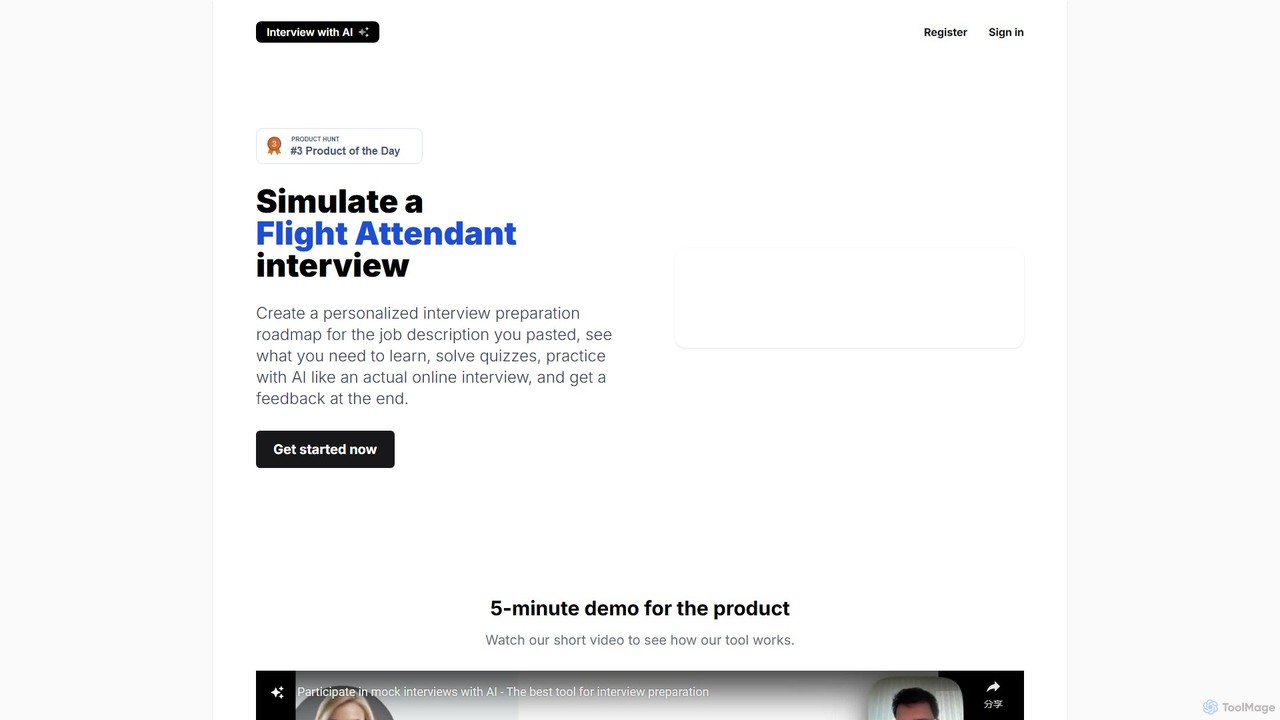
Interview with AI is an AI-powered career coach designed to help you land your dream job. By analyzing any job description, it generates a personalized preparation roadmap, complete with study materials, interactive quizzes, and realistic mock interviews. Practice with an AI interviewer, receive instant, detailed feedback, and build the confidence you need to ace your next interview.

Interview Preparation
Visits 6.2KFavorites 125Likes 132
EduPlay
Freemium

EduPlay

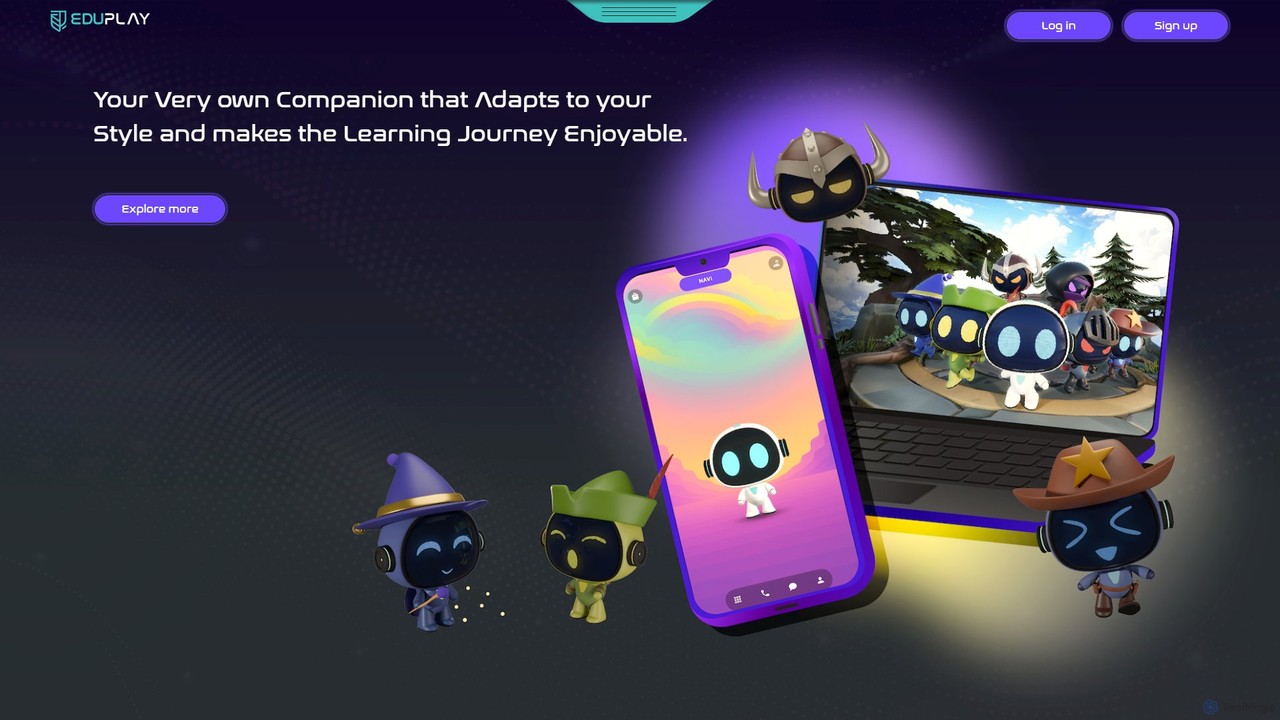
EduPlay is an AI-powered educational platform that revolutionizes learning through gamification and personalization. Featuring NAVI, an emotionally intelligent AI companion, it creates tailored learning paths that adapt to each student's pace and style. EduPlay makes learning enjoyable and effective by integrating rewards, levels, and interactive content, fostering both academic growth and essential life skills for a future-ready generation.

Gamified Learning
Visits 5.8KFavorites 153Likes 138
Pooks.ai
Free

Pooks.ai

Pooks.ai is a free AI-powered platform that revolutionizes reading by creating personalized non-fiction e-books and audiobooks. Simply provide your unique needs, goals, and preferences, and the AI will generate a custom book on topics like fitness, business, self-help, or travel, ensuring the content is 100% relevant to you.

Audiobook
Visits 7.4KFavorites 146Likes 141
mentis.gg
Freemium

mentis.gg

mentis.gg is an AI-powered gaming coach that analyzes your gameplay to provide personalized insights, strategies, and performance tracking. Elevate your skills in popular competitive games like League of Legends, Valorant, and CS:GO with data-driven feedback and automated VOD reviews.

Personalized Learning
Visits 5.8KFavorites 158Likes 141
flintk12
Freemium

flintk12

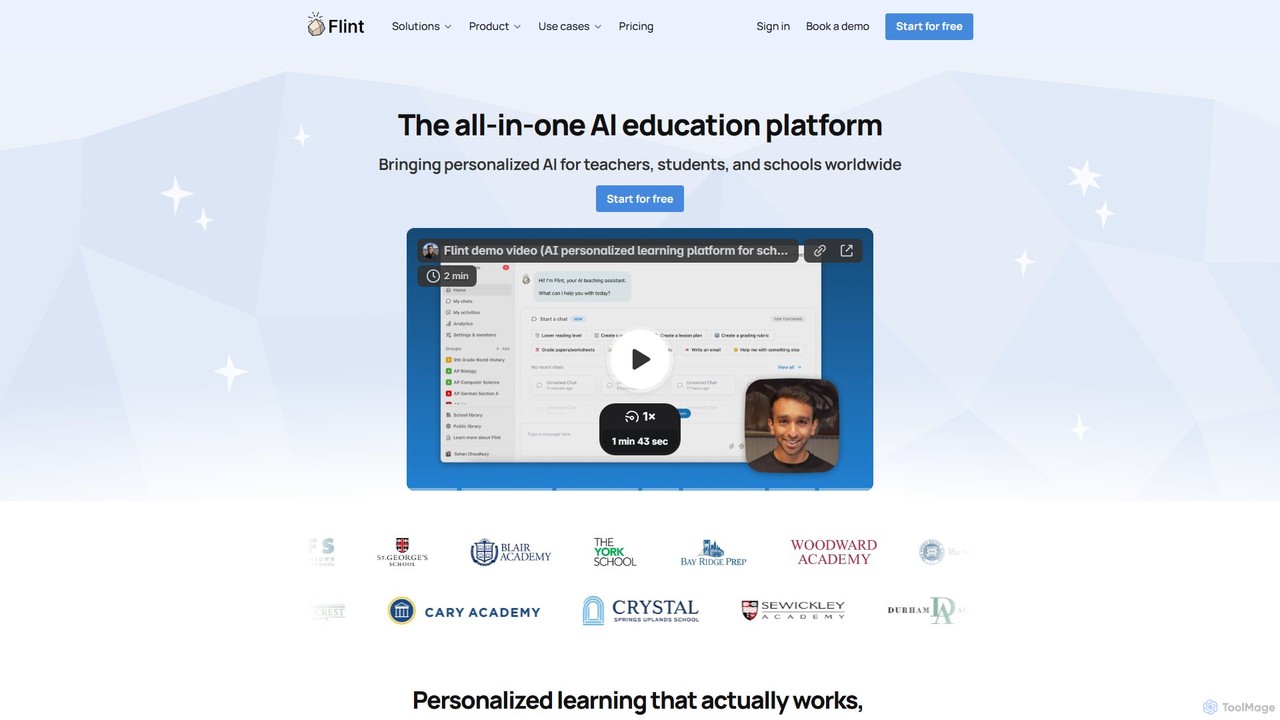
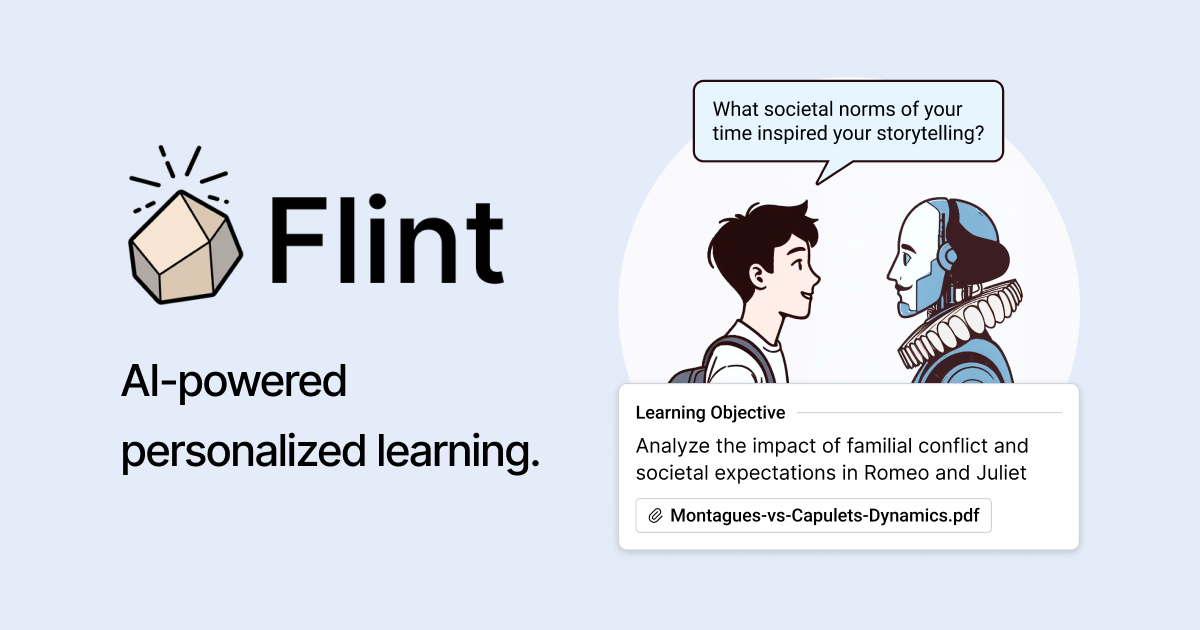
Flint is an all-in-one AI education platform designed for K-12 schools. It provides personalized AI tutors for students across all subjects, helping with everything from math problem-solving to language practice. For teachers, its AI assistant, Sparky, automates the creation of lesson plans, rubrics, and activities, while offering powerful tools for grading and real-time analytics. Flint prioritizes data privacy and seamless school-wide integration, making it a safe and effective partner for modern education.

Language Learning
Visits 831.3KFavorites 160Likes 147
Soopra
Freemium

Soopra

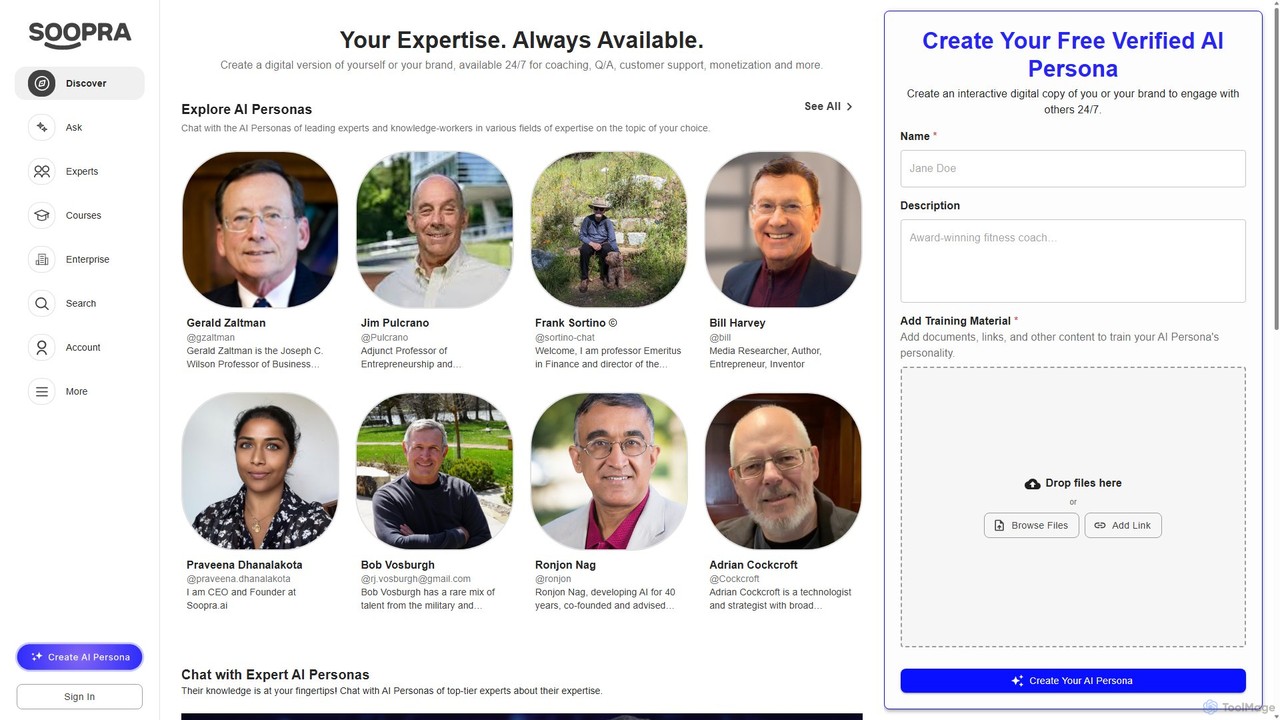
Soopra is an AI platform that enables experts, creators, and brands to build a verified AI Persona—a digital twin of their knowledge. This allows them to engage with their audience 24/7, scale their influence, and monetize their expertise through interactive chats and AI-assisted courses.

Custom Chatbots
Visits 22.5KFavorites 124Likes 115

About Personalized Learning

Personalized Learning tools are AI-driven platforms that tailor educational content and pacing to each individual's unique learning needs. By analyzing real-time data on performance, engagement, and knowledge gaps, these tools dynamically adjust the curriculum. This creates a highly efficient and engaging learning journey, moving beyond a one-size-fits-all model to provide targeted support and challenges. The core value lies in optimizing learning outcomes by ensuring each user receives the right content at the right time.

Core Features

  • Adaptive Learning Paths: Automatically adjusts the sequence and difficulty of topics based on a learner's real-time performance.
  • Real-time Feedback: Provides immediate, specific feedback on answers and activities to reinforce learning and correct misunderstandings.
  • Personalized Content Recommendation: Suggests relevant articles, videos, and exercises to address identified knowledge gaps or areas of interest.
  • Performance Analytics: Generates detailed reports on individual and group progress for educators and learners to track mastery.
  • Pacing Control: Allows learners to progress through material at their own speed, ensuring concepts are fully understood before moving on.

Use Cases

These tools are widely used across various educational contexts. In K-12 and higher education, they provide supplemental instruction and exam preparation. Corporate training departments use them for employee onboarding and upskilling, tailoring programs to diverse skill levels. Language learning apps and online course platforms also heavily rely on this technology to keep users engaged and accelerate proficiency.

How to Choose

When selecting a Personalized Learning tool, first evaluate the quality and breadth of its subject matter content. Assess the sophistication of its adaptation algorithm—how well it personalizes the experience. Consider its integration capabilities with existing Learning Management Systems (LMS). Finally, review the depth of its analytics and reporting features, as well as the overall user-friendliness of the learner interface.

Featured tool rankings

Personalized Learning use cases

1

Adaptive Math Tutoring for K-12 Students

A middle school student struggling with algebra uses a personalized learning platform assigned by their teacher. The AI first assesses the student's current knowledge, identifying specific weaknesses in topics like linear equations. Based on this, the platform generates a unique learning path with interactive lessons, video tutorials, and practice problems focused on these areas. As the student completes exercises, the system provides instant feedback and adjusts the difficulty of subsequent problems, ensuring they are always challenged but not overwhelmed. This allows the student to master concepts at their own pace, building confidence and improving their grades.

2

Customized Corporate Employee Onboarding

A large tech company uses a personalized learning tool to onboard new software engineers. Instead of a standard, one-week training program for everyone, new hires take a pre-assessment test on company-specific coding standards and internal tools. The AI analyzes the results and creates a custom onboarding plan for each engineer. An experienced hire might only need a two-hour module on a specific internal library, while a recent graduate might receive a more comprehensive two-day plan covering multiple systems. This approach respects the existing knowledge of new employees, saves significant training time, and ensures everyone reaches a consistent level of proficiency on essential tools faster.

3

Efficient Language Learning Path Optimization

A user on a language learning app aims to become conversational in Spanish within six months. The app's AI continuously tracks their performance in vocabulary quizzes, grammar exercises, and pronunciation tests. It notices the user excels at vocabulary but struggles with verb conjugations. In response, the app reduces the frequency of vocabulary drills and introduces more targeted mini-games and interactive scenarios focused on practicing different verb tenses. It also recommends specific short articles and podcast clips that heavily feature the verb forms the user finds difficult, creating an efficient and adaptive study plan that targets weaknesses directly.

4

University Exam Preparation Focused on Weak Areas

A university student preparing for a final exam in biology uses a personalized study platform. Instead of just rereading textbooks, the student takes a diagnostic quiz on the platform. The AI analyzes the results and highlights that the student is weak in 'cellular respiration' but strong in 'genetics'. The platform then generates a custom study guide with practice questions, flashcards, and video summaries focused almost exclusively on cellular respiration and related topics. This prevents the student from wasting time reviewing concepts they already know and allows them to dedicate their limited study hours to mastering the areas where they are most likely to lose points on the exam.

5

Professional Upskilling in Software Development

A software developer with a background in Python wants to learn the Go programming language for a new project. They use an AI-powered learning platform for professionals. The platform recognizes their existing programming knowledge and skips introductory concepts like 'what is a variable' or 'for loops'. Instead, it starts with modules that highlight the key differences between Python and Go, such as static typing and concurrency models. The coding exercises are designed to be challenging for an experienced developer, focusing on idiomatic Go practices rather than basic syntax. This targeted approach significantly accelerates the learning process compared to a generic course designed for absolute beginners.

6

Supporting Diverse Needs in Special Education

A special education teacher uses a personalized learning platform to manage a classroom with students who have a wide range of learning abilities. For a reading assignment, the teacher can assign the same core text to all students. However, the platform adapts the experience for each child. A student with dyslexia might receive the text with a special font and text-to-speech support. Another student who is an advanced reader might get supplementary articles and more complex comprehension questions. A third student might receive a version with embedded vocabulary definitions. This allows the teacher to deliver a unified lesson while ensuring each student receives the specific support and level of challenge they need to succeed.

Personalized Learning FAQ

What are AI-powered Personalized Learning tools?

AI-powered Personalized Learning tools are educational software platforms that use artificial intelligence to adapt the learning experience to each individual student. Unlike static courses, they analyze a user's performance, interactions, and learning pace in real-time. Based on this data, the AI dynamically adjusts the content, difficulty, and sequence of topics to create a unique educational path for every learner, maximizing engagement and knowledge retention.

How does Personalized Learning differ from a standard Learning Management System (LMS)?

A standard LMS is primarily a system for delivering and tracking static educational content, like videos and documents, to a group of learners. It's a one-to-many delivery model. In contrast, a Personalized Learning tool is a one-to-one model. It actively adapts the content for each user. While an LMS might tell you if a student completed a module, a personalized platform will identify why they struggled, recommend remedial content, and then re-test them on that specific concept.

What should I look for when choosing a Personalized Learning platform?

When selecting a platform, consider these key factors:

  • Content Quality: Is the educational material accurate, engaging, and comprehensive for your subject area?
  • Adaptation Engine: How sophisticated is the AI? Does it adapt based on simple right/wrong answers, or does it analyze deeper patterns of behavior?
  • Analytics and Reporting: Does it provide actionable insights for educators or managers to track progress and identify at-risk learners?
  • Integration: Can it easily integrate with your existing tools, such as a school's LMS or a company's HR system?
  • User Experience: Is the interface intuitive and motivating for the target learners (e.g., children vs. adult professionals)?
Who benefits most from Personalized Learning tools?

A wide range of users benefit. Students who are either struggling or advanced can learn at their ideal pace. Corporate trainers can efficiently upskill large, diverse teams without redundant training. Self-directed learners can master new skills faster by focusing only on what they don't know. Educators also benefit by gaining deep insights into student performance, allowing them to provide more targeted, one-on-one support where it's needed most.

What are the key features of Personalized Learning tools?

Most high-quality Personalized Learning tools include a combination of the following features:

  • Diagnostic Assessments: Initial tests to gauge a learner's existing knowledge and identify gaps.
  • Adaptive Content Delivery: The core engine that adjusts lessons, questions, and media based on user performance.
  • Real-time Feedback Loops: Instantaneous guidance on incorrect answers to prevent reinforcing mistakes.
  • Progress Tracking Dashboards: Visual reports for both learners and administrators to monitor progress towards learning goals.
  • Gamification Elements: Features like points, badges, and leaderboards to increase motivation and engagement.