ToolMage
Sign in

Best 6 Veterinary AI tools for Healthcare

Popular Veterinary AI tools in Healthcare include PetsApp, VetRec, Talkatoo, Vetdodo, ScribVet, and vetzi, helping you work more efficiently.

Vetdodo
Paid

Vetdodo

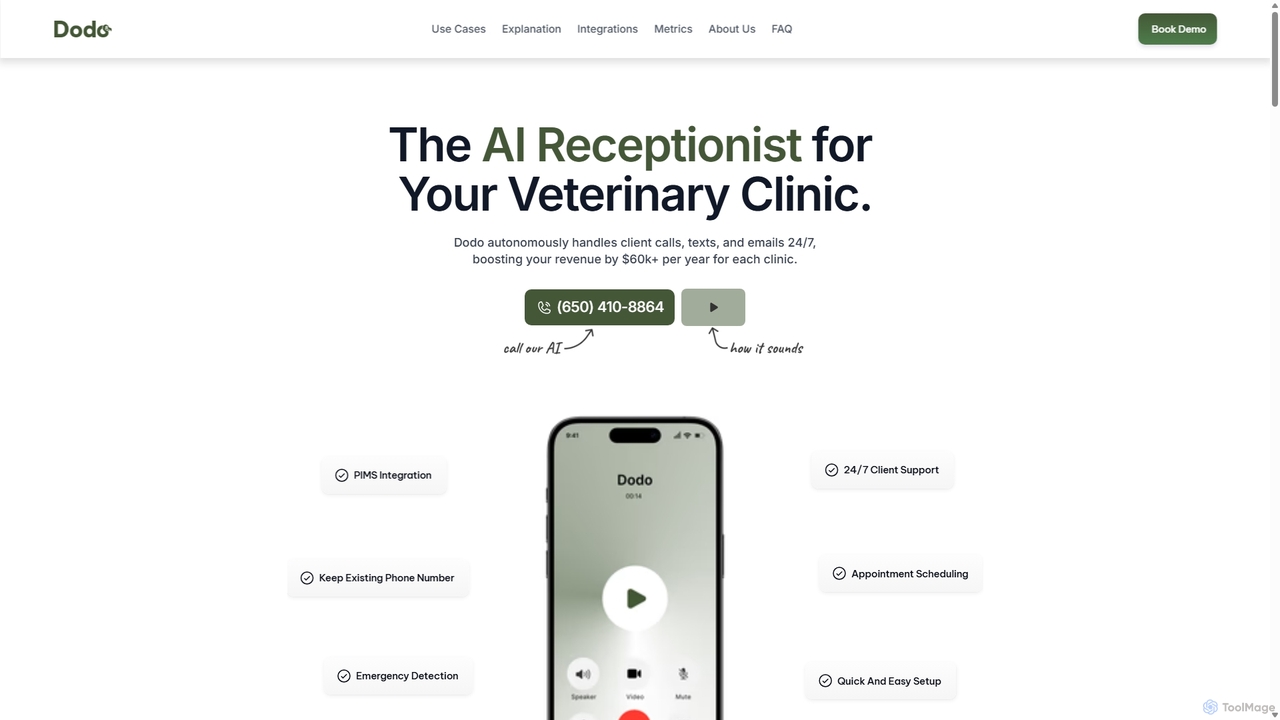
An AI-powered virtual receptionist designed specifically for veterinary clinics. Dodo autonomously handles client communications 24/7 via calls, texts, and emails. It manages appointment scheduling, answers FAQs, processes prescription refills, and intelligently routes emergencies. By integrating with existing phone systems and major PIMS, Dodo saves staff time, reduces missed calls, and increases clinic revenue.

Automation
Visits 8.3KFavorites 166Likes 160
VetRec
Freemium

VetRec

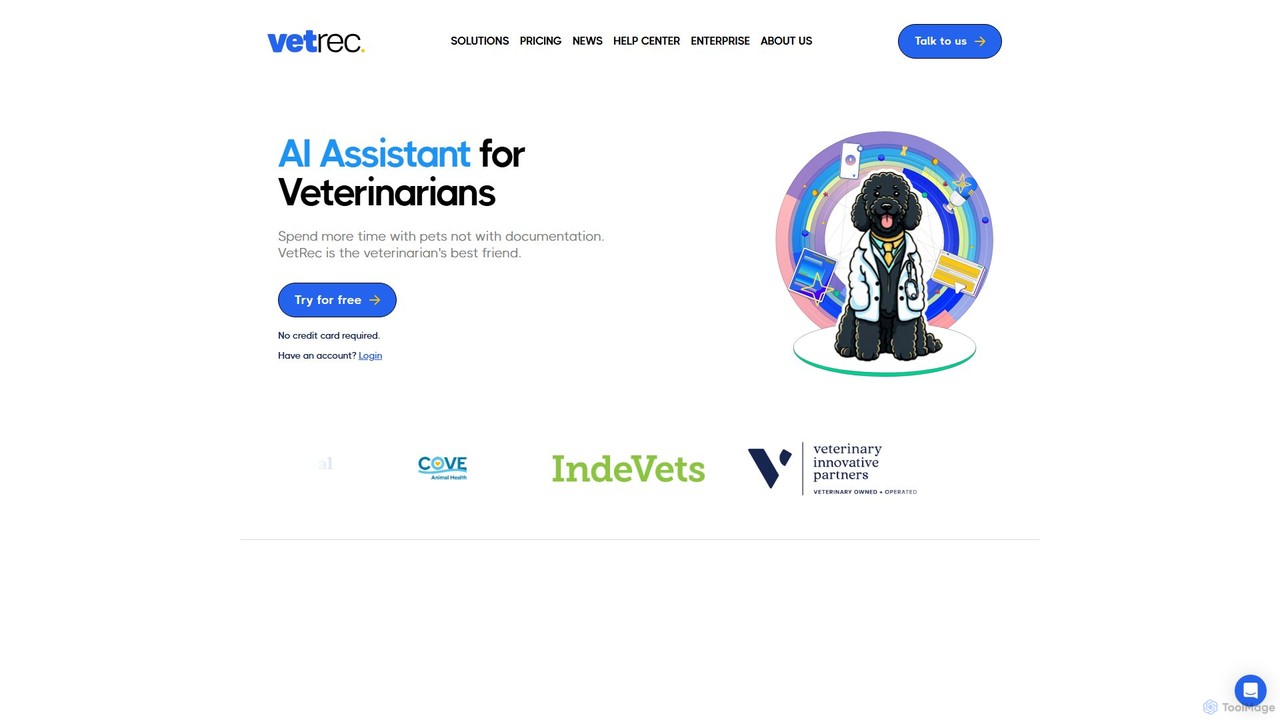
VetRec is an AI-powered scribe and assistant for veterinarians, designed to automate clinical documentation. It records consultations, generates SOAP notes, summarizes medical histories, and integrates with PiMS, saving vets over two hours daily and allowing more focus on patient care.

Documentation
Visits 30.9KFavorites 135Likes 149
vetzi
Freemium

vetzi

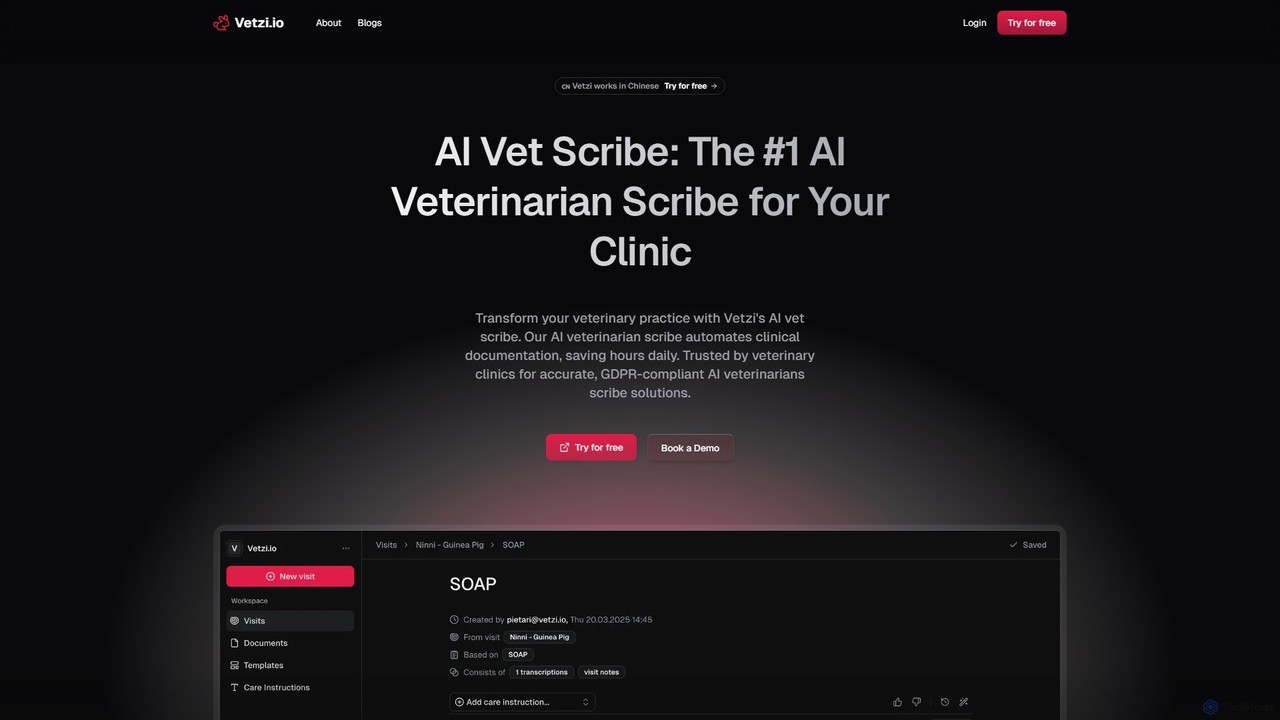
vetzi is an AI-powered veterinarian scribe designed to automate clinical documentation for veterinary practices. It transcribes and structures consultation audio into accurate clinical notes, emails, and other documents, saving veterinarians hours of administrative work daily. With customizable templates and GDPR compliance, vetzi helps streamline workflows and allows vets to focus more on patient care.

Speech To Text
Visits 6.3KFavorites 153Likes 121
PetsApp
Paid

PetsApp

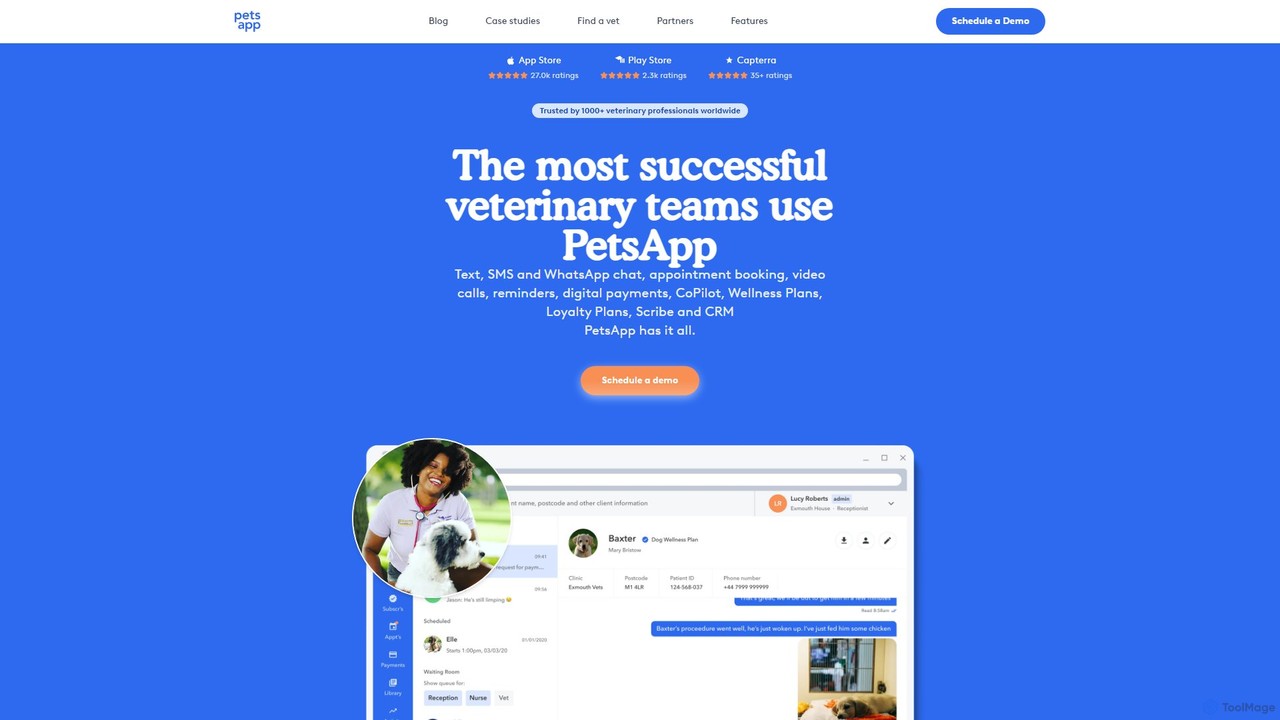
PetsApp is an all-in-one platform for veterinary practices, combining client communication, appointment booking, digital payments, and AI-powered assistants. It helps clinics save time, increase revenue, and enhance client relationships through tools like WhatsApp integration, wellness plans, and AI-driven note-taking.

Transcription
Visits 51.3KFavorites 133Likes 132
Talkatoo
Paid

Talkatoo

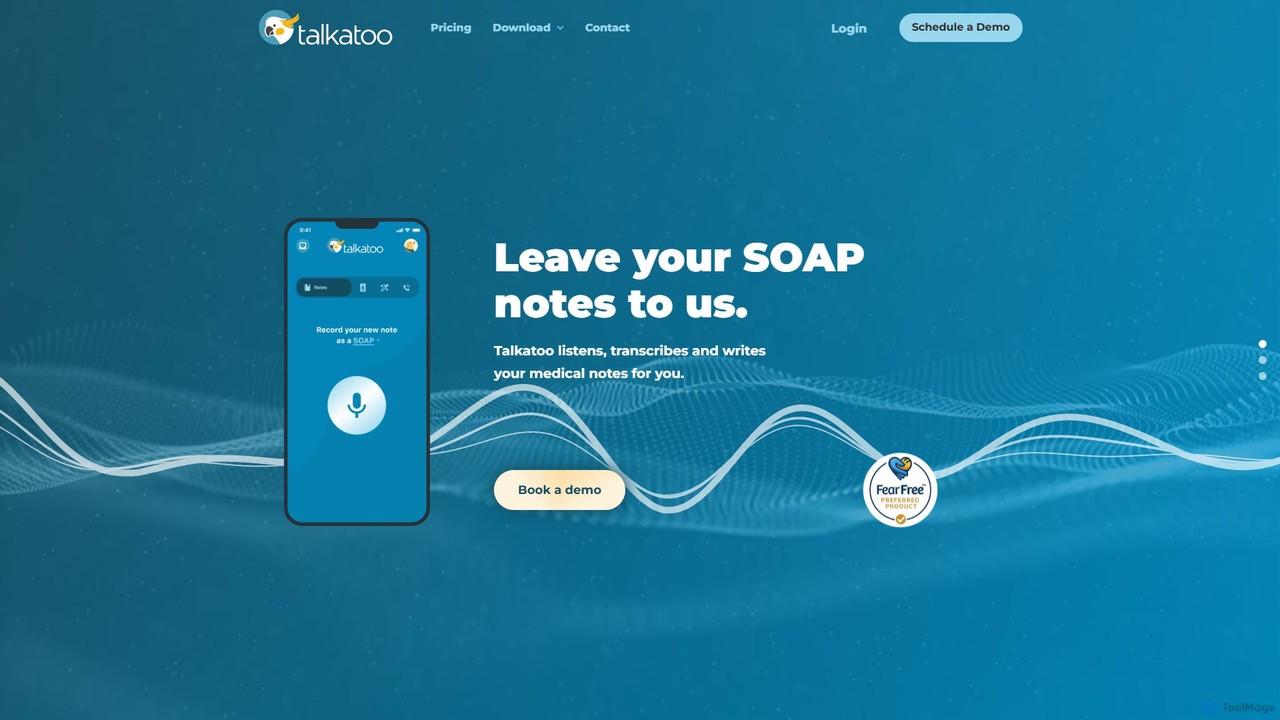
Talkatoo is an AI-powered dictation and scribe software specifically designed for veterinary professionals. It automates the creation of medical notes, such as SOAP notes, by transcribing and structuring conversations. It also offers features like call summaries and an AI assistant to streamline administrative tasks, saving veterinarians hours of paperwork.

Documentation
Visits 16.5KFavorites 117Likes 120
ScribVet
Freemium

ScribVet

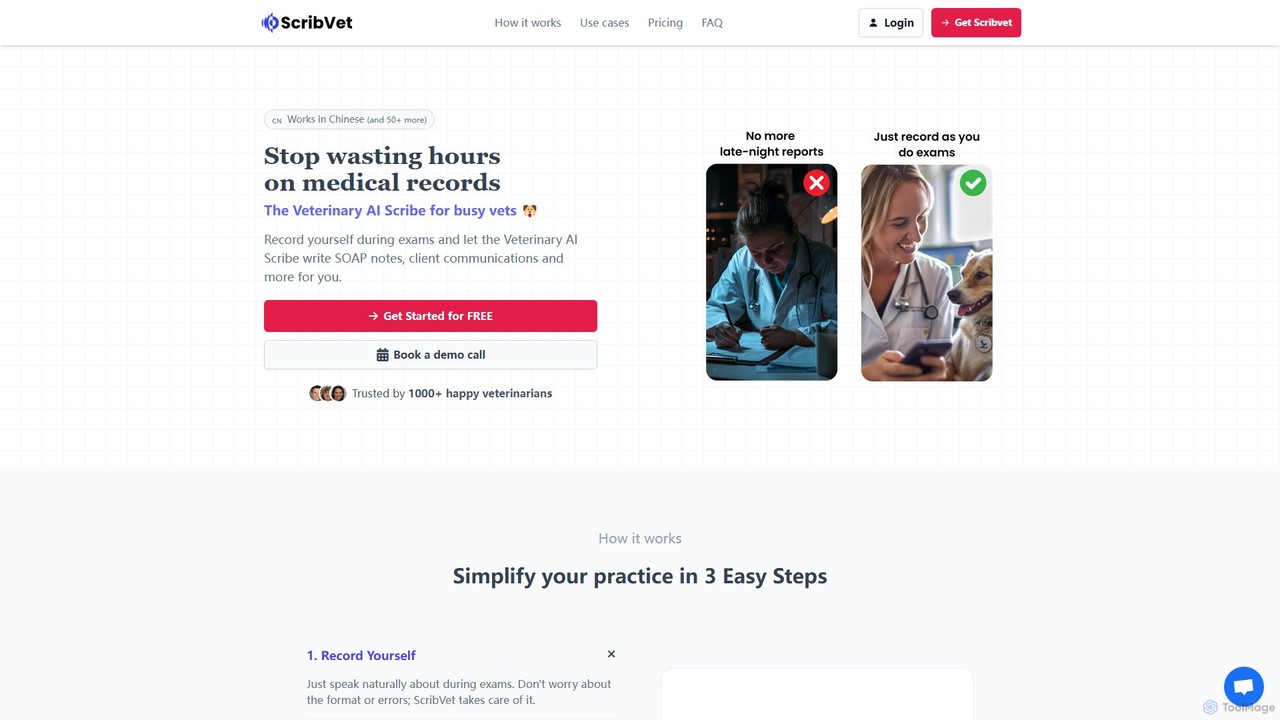
ScribVet is an AI-powered veterinary scribe designed for busy veterinarians. It records exam audio and automatically transcribes it into structured SOAP notes, client communications, and other essential documents. By automating paperwork, it helps vets save hours, reduce administrative burnout, and improve work-life balance. It supports over 50 languages and offers customizable templates to fit any practice's needs.

Documentation
Visits 7.8KFavorites 135Likes 149

About Veterinary

Veterinary AI tools are specialized artificial intelligence applications designed to enhance animal healthcare. These tools leverage machine learning, computer vision, and data analytics to assist veterinarians in diagnostics, treatment planning, and practice management. They provide valuable support for improving animal welfare, streamlining clinical workflows, and optimizing operational efficiency in veterinary practices.

Core Features

  • AI-Powered Diagnostics: Assists in analyzing medical images (X-rays, ultrasounds) and lab results for faster, more accurate disease detection in animals.
  • Predictive Health Analytics: Uses historical data to predict disease outbreaks, identify at-risk animals, and recommend preventative care strategies.
  • Automated Practice Management: Streamlines appointment scheduling, client communication, inventory management, and billing processes for veterinary clinics.
  • Personalized Treatment Planning: Recommends tailored treatment protocols and medication dosages based on individual animal data, species, and condition.
  • Telemedicine & Remote Monitoring: Enables virtual consultations and continuous monitoring of animal health parameters from a distance, improving accessibility to care.

Applicable Scenarios

Veterinary AI tools are invaluable for various professionals within animal healthcare. Veterinary clinics utilize them for enhancing diagnostic accuracy and automating administrative tasks, allowing staff to focus more on patient care. Researchers and pharmaceutical companies employ these tools for analyzing large datasets to identify patterns in animal diseases and accelerate drug discovery. Additionally, large animal farms and livestock managers use AI for early detection of health issues in herds, optimizing animal welfare and productivity.

How to Choose

When selecting Veterinary AI tools, consider the specific needs of your practice or organization. Evaluate the tool's diagnostic accuracy and data integration capabilities with existing clinic systems. Assess its ease of use and training requirements for your staff. Furthermore, consider the scope of animal species supported and the vendor's commitment to data privacy and security for sensitive patient information. Finally, review the scalability and cost-effectiveness to ensure it aligns with your budget and future growth.

Veterinary use cases

1

AI-Assisted X-ray Interpretation for Dogs

A veterinary radiologist uses an AI tool to analyze canine X-ray images for subtle signs of fractures, organ abnormalities, or tumors. The AI highlights suspicious areas and provides a preliminary report, significantly reducing interpretation time and improving the detection rate of complex conditions, ensuring faster diagnosis and treatment for pets.

2

Predictive Disease Outbreak Monitoring in Livestock

A large-scale livestock farm manager integrates AI tools with sensor data from animal enclosures and environmental conditions. The AI analyzes patterns to predict potential disease outbreaks (e.g., avian flu, swine fever) days or weeks in advance, enabling proactive isolation, vaccination, and preventative measures to minimize economic losses and ensure animal health.

3

Automated Appointment Scheduling and Client Reminders

A busy veterinary clinic deploys an AI-powered scheduling system that allows pet owners to book appointments online 24/7, automatically sends vaccination reminders, and manages follow-up communications. This reduces administrative workload for front-desk staff by up to 40%, improves client satisfaction, and decreases no-show rates.

4

Personalized Medication Dosage Calculation for Exotic Animals

A veterinarian specializing in exotic animals uses an AI tool that calculates precise medication dosages based on the animal's species, weight, age, and specific health condition. Given the unique physiologies of exotic pets, this ensures accurate and safe treatment, minimizing risks associated with incorrect dosing and improving therapeutic outcomes.

5

Real-time Health Monitoring of Equine Athletes

An equine sports team uses wearable sensors on their horses, integrated with an AI platform. The AI continuously monitors vital signs, gait analysis, and activity levels, alerting trainers and vets to early indicators of lameness, fatigue, or stress. This proactive monitoring helps prevent injuries, optimize training regimens, and extend the athletes' careers.

6

AI-Driven Research for New Veterinary Drug Discovery

A veterinary pharmaceutical company utilizes AI to analyze vast biological and chemical datasets to identify potential drug candidates for specific animal diseases. The AI can predict molecular interactions and efficacy, significantly accelerating the early stages of drug discovery and reducing the time and cost associated with bringing new treatments to market for animals.

Veterinary FAQ

What are Veterinary AI tools?

Veterinary AI tools are advanced software solutions that use artificial intelligence, such as machine learning and computer vision, to support various aspects of animal healthcare. They are designed to assist veterinarians, researchers, and animal care professionals in tasks ranging from accurate diagnostics and personalized treatment planning to efficient practice management and predictive health monitoring for a wide array of animal species.

How do Veterinary AI tools improve animal diagnostics?

Veterinary AI tools significantly enhance diagnostics by analyzing complex medical data, including X-rays, MRIs, ultrasounds, and laboratory results, with high precision and speed. AI algorithms can detect subtle anomalies that might be missed by the human eye, identify patterns indicative of specific diseases, and provide objective assessments. This leads to earlier and more accurate diagnoses, enabling timely intervention and better patient outcomes for animals.

What is the difference between general AI in healthcare and Veterinary AI?

While both leverage AI principles, general AI in healthcare focuses on human medicine, whereas Veterinary AI is specifically tailored for animal physiology, diseases, and care protocols. Veterinary AI models are trained on animal-specific datasets, accounting for species-specific variations, unique anatomical structures, and diverse disease presentations across different animals, from pets to livestock, ensuring relevance and accuracy for animal health applications.

Who benefits most from using Veterinary AI tools?

Veterinary AI tools primarily benefit veterinarians and their clinics by streamlining operations, improving diagnostic accuracy, and enhancing patient care. Animal researchers and pharmaceutical companies gain from accelerated data analysis and drug discovery. Additionally, large animal farm managers and livestock producers can use these tools for proactive health monitoring and disease prevention, ultimately improving animal welfare and operational efficiency across the entire animal healthcare ecosystem.

What should I consider when choosing a Veterinary AI solution for my practice?

When selecting a Veterinary AI solution, prioritize its integration capabilities with your existing practice management software and diagnostic equipment. Evaluate the accuracy and reliability of its AI models, especially for the animal species you treat. Consider the user-friendliness for your staff, the level of customer support, and the vendor's commitment to data security and privacy. Finally, assess the cost-effectiveness and scalability to ensure it meets both your current needs and future growth.