Best of the Year 9 results Iot AI Tools

Popular AI tools in the Iot field include Home Assistant、Liquid AI、Qualcomm AI Hub、Paladin Drones、Synnax、Neuton.AI、xyzt.ai、instacrops、Napi Bot, etc., helping you quickly improve efficiency.

xyzt.ai

xyzt.ai

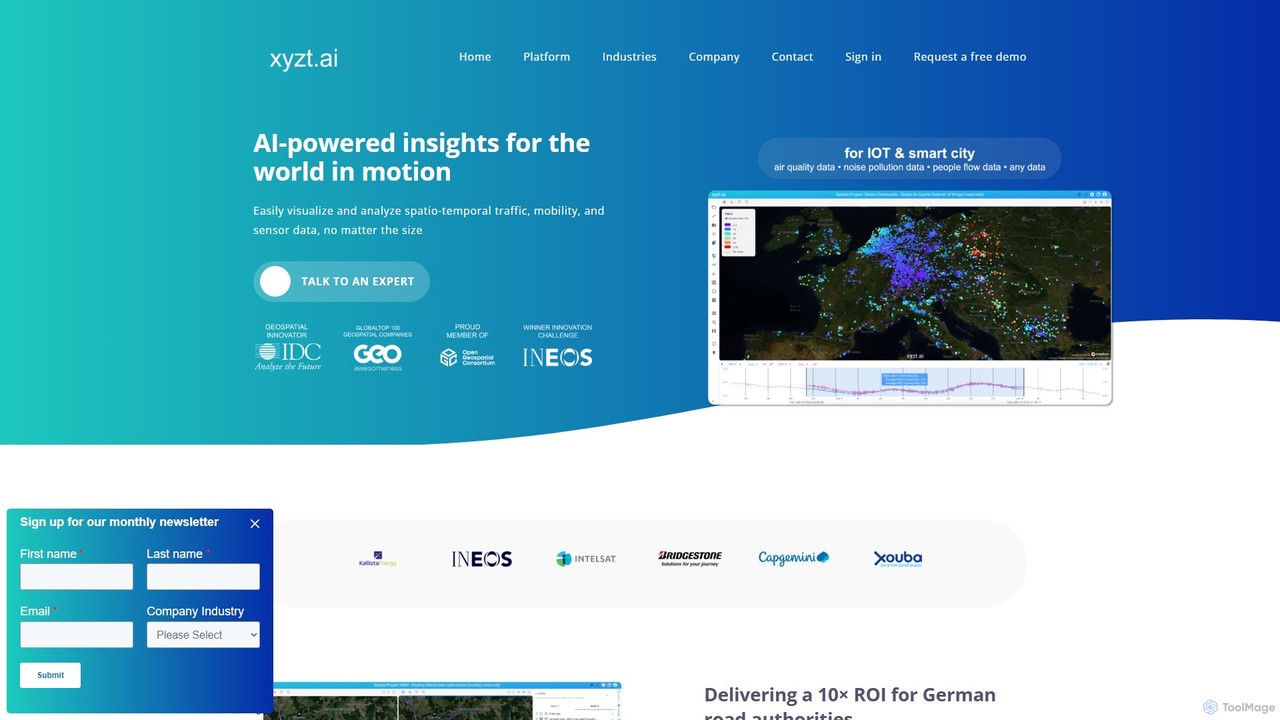
xyzt.ai is a powerful AI-driven platform for visualizing and analyzing large-scale spatio-temporal data. It specializes in mobility, traffic, …

4.2K
Napi Bot

Napi Bot

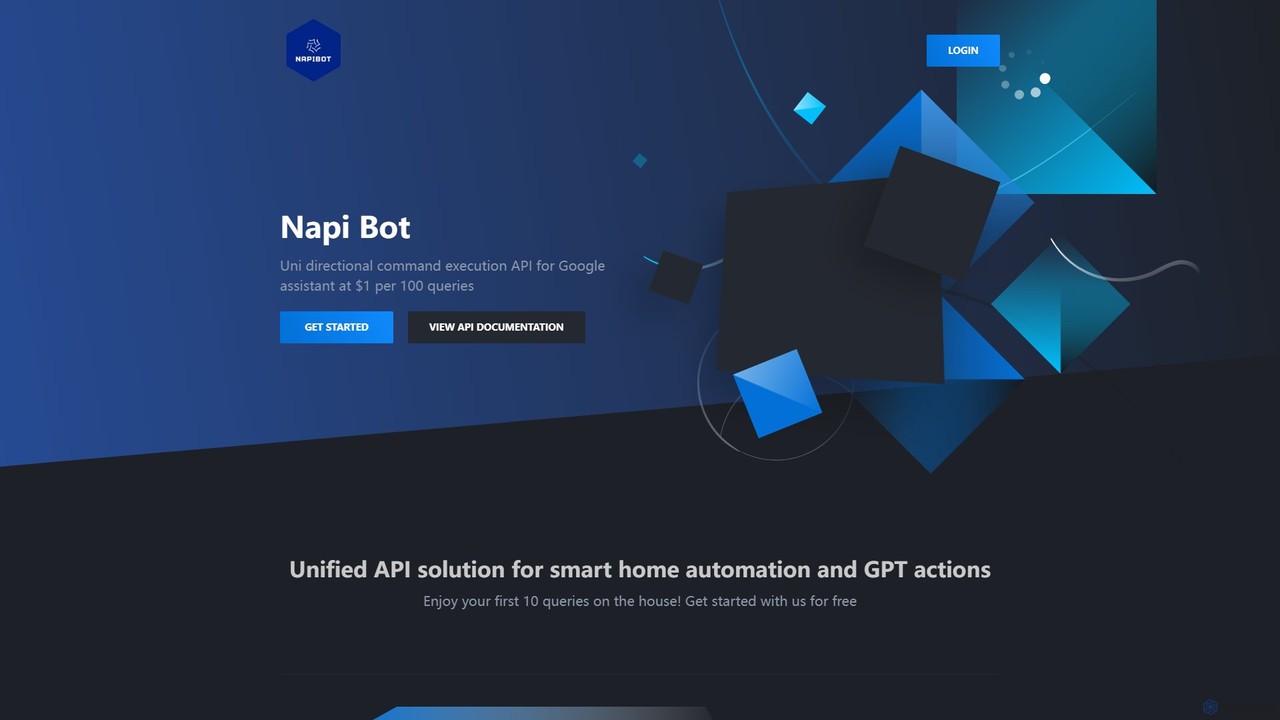
Napi Bot is a developer-focused API that enables unidirectional command execution for Google Assistant. It provides a unified, …

2.4K
Liquid AI

Liquid AI

Liquid AI provides an edge-native AI stack for building efficient, general-purpose AI that runs directly on devices. It …

157.2K
instacrops

instacrops

Instacrops is an AI-powered AgTech platform that acts as a virtual agricultural advisor. It combines IoT sensors, satellite …

3.6K
Synnax

Synnax

Synnax is a high-performance data and operations platform for hardware engineering teams. It provides a specialized time-series database …

4.8K
Home Assistant

Home Assistant

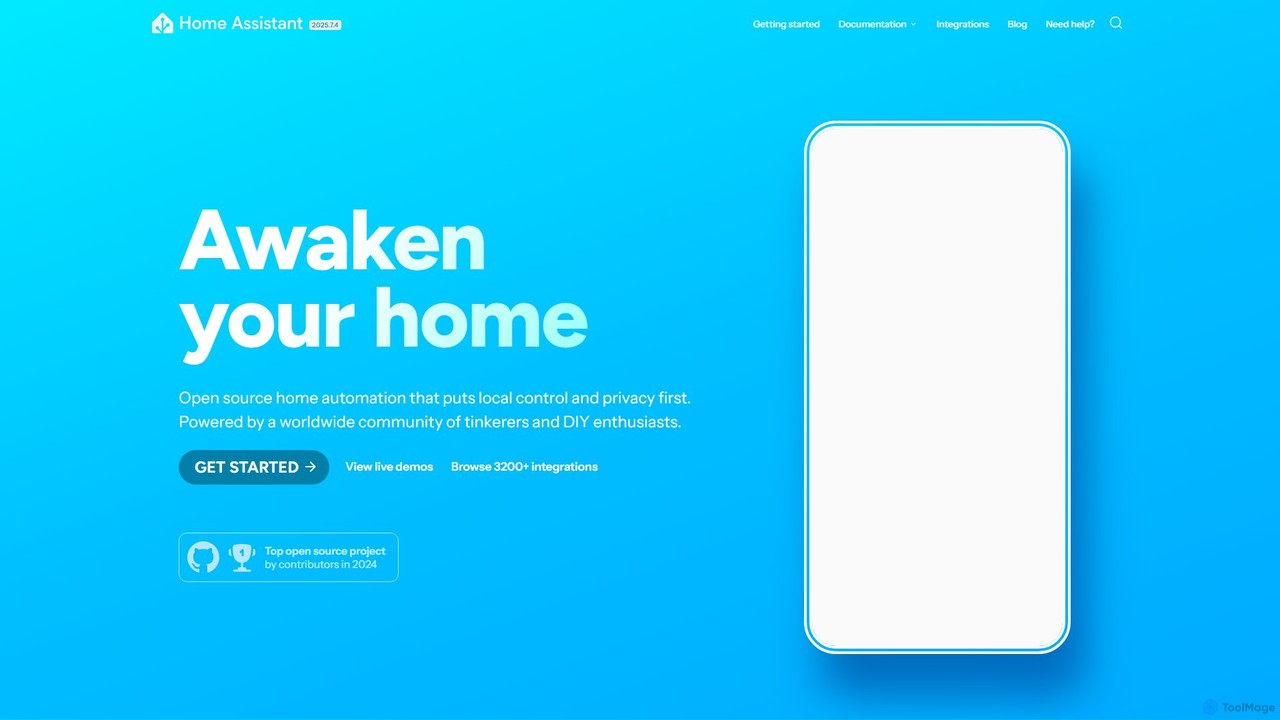
Home Assistant is a powerful, open-source home automation platform that prioritizes local control and user privacy. It integrates …

5.7M
Neuton.AI

Neuton.AI

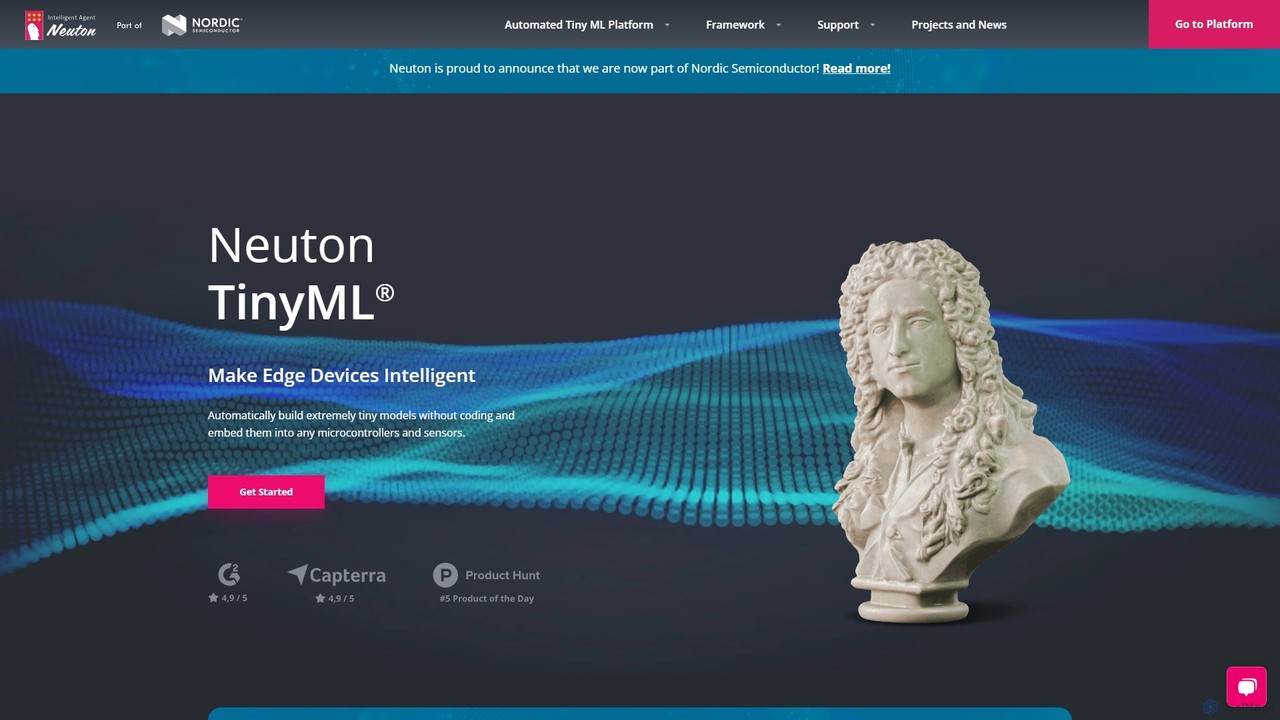
Neuton.AI is a no-code AutoML platform designed to create ultra-compact and efficient machine learning models (TinyML) for edge …

4.2K
Paladin Drones

Paladin Drones

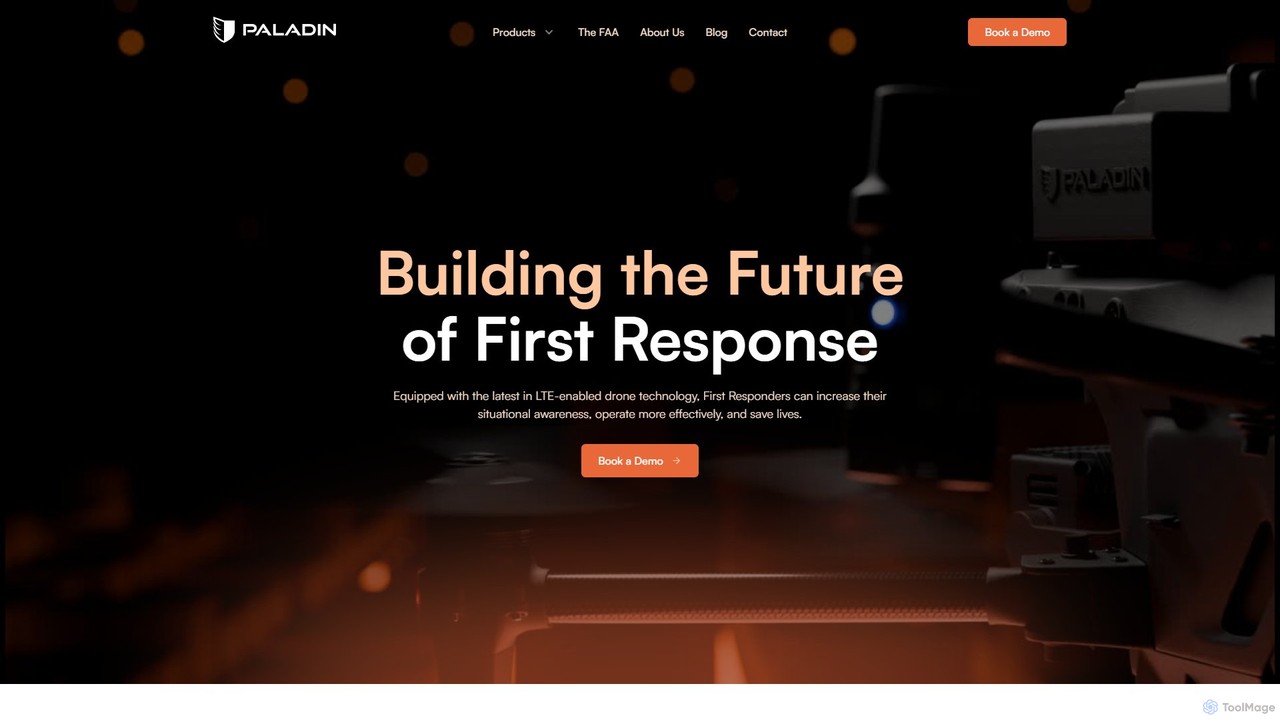
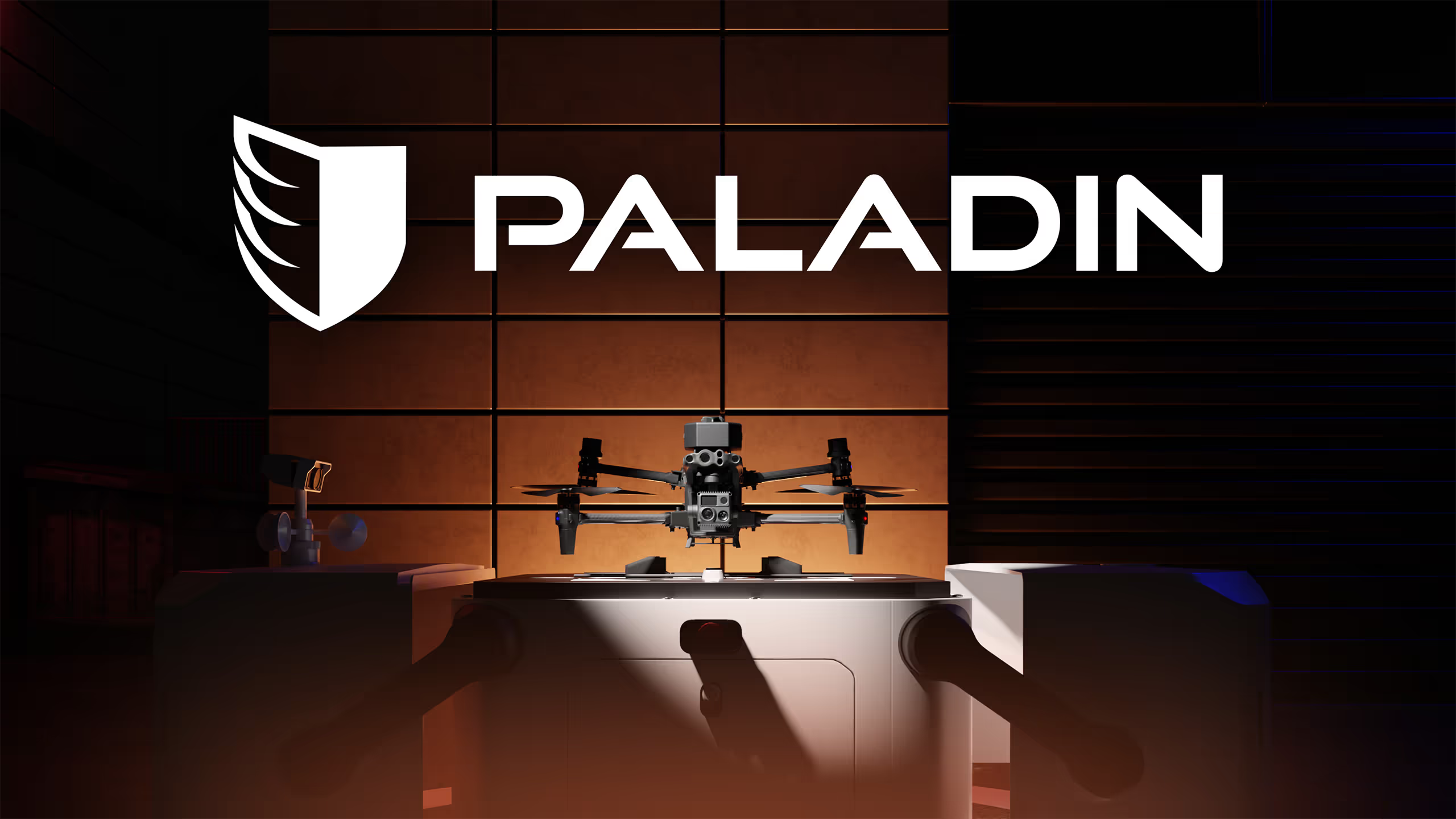
Paladin Drones offers an all-in-one Drone as First Responder (DFR) solution for public safety. It autonomously dispatches LTE-enabled …

13.6K
Qualcomm AI Hub

Qualcomm AI Hub

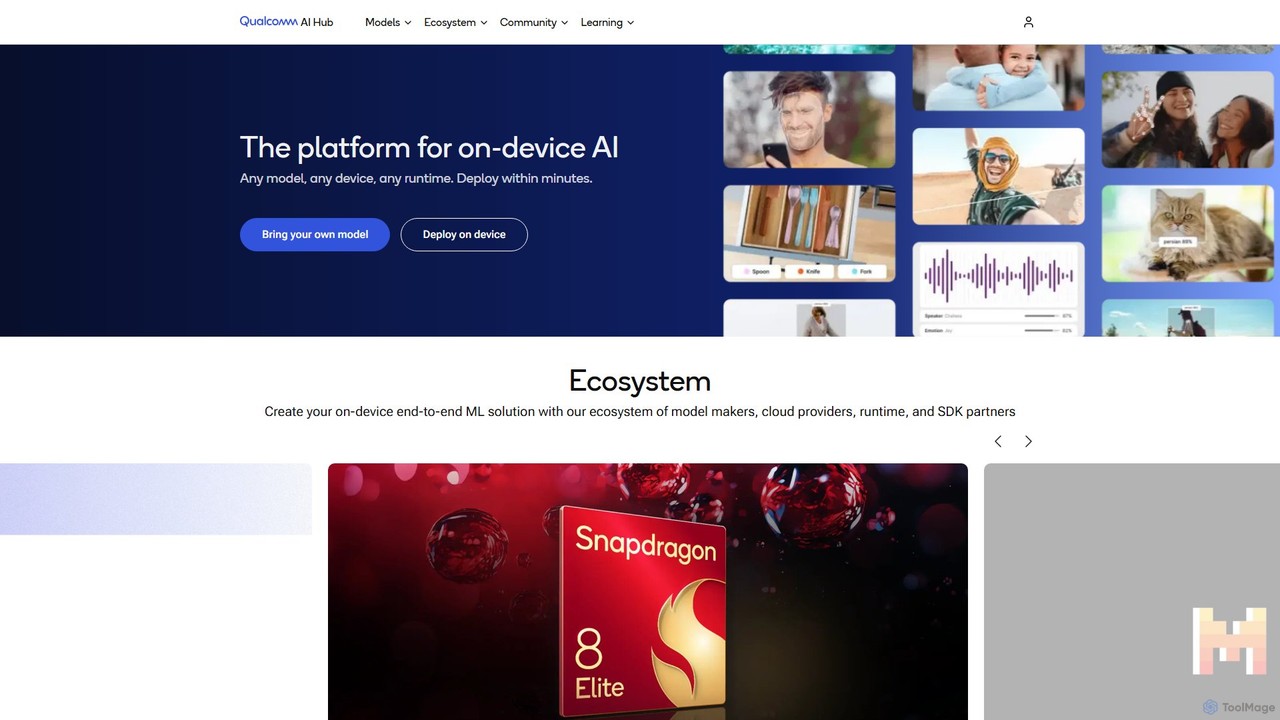
A developer platform for optimizing and deploying AI models on-device. Qualcomm AI Hub provides a library of 100+ …

156.1K

About Iot

AI IoT tools are platforms that integrate artificial intelligence with Internet of Things (IoT) devices to enable intelligent automation, predictive analysis, and autonomous decision-making. They leverage machine learning algorithms to process vast streams of sensor data in real-time, identifying patterns, detecting anomalies, and optimizing device performance. These tools are crucial for creating smart systems in manufacturing, logistics, and smart cities, transforming raw data into actionable insights and operational efficiency. By adding a layer of intelligence to connected devices, AI IoT solutions move beyond simple data collection to create responsive, self-learning environments.

Core Features

  • Real-Time Data Analysis: Process and analyze high-velocity data streams from multiple IoT sensors simultaneously.
  • Predictive Maintenance: Use historical data to forecast equipment failures and schedule maintenance proactively.
  • Anomaly Detection: Automatically identify unusual patterns or deviations from normal operational behavior to prevent issues.
  • Autonomous Operation: Enable devices and systems to make decisions and take actions without direct human command.
  • Resource Optimization: Analyze usage patterns to optimize energy consumption, supply chain logistics, or resource allocation.

Use Cases

AI IoT tools are primarily used in industrial settings (IIoT), smart city management, healthcare monitoring, and precision agriculture. For example, in manufacturing, these tools predict machine breakdowns on an assembly line. In smart cities, they optimize traffic flow based on real-time sensor data from cameras and road sensors.

How to Choose

When selecting an AI IoT tool, consider its scalability to handle your volume of devices and data. Evaluate its integration capabilities with your existing hardware and software systems. Assess the ability to customize AI models for your specific needs and prioritize platforms with robust, end-to-end security features to protect sensitive operational data.

IotUse Cases

1

Predictive Maintenance in Smart Factories

A manufacturing plant manager uses an AI IoT platform to connect sensors on production machinery. The AI analyzes real-time data on vibration, temperature, and output to predict potential equipment failures before they occur. This allows for scheduling maintenance during planned downtime, reducing unexpected stops by up to 50% and significantly extending the lifespan of critical assets.

2

Smart Traffic Management for Urban Planning

City planners and traffic engineers deploy AI-powered cameras and road sensors to collect real-time traffic data. An AI IoT system analyzes flow patterns, identifies congestion hotspots, and automatically adjusts traffic light timings. This dynamic optimization helps to reduce average commute times, decrease vehicle emissions, and improve overall traffic flow in urban centers.

3

Precision Agriculture for Crop Yield Optimization

Large-scale farm operators use soil sensors, drones, and weather stations to gather data on moisture, nutrient levels, and pest presence. An AI IoT platform processes this data to provide precise recommendations for irrigation, fertilization, and pest control for specific field zones. This targeted approach increases crop yield, reduces resource waste like water and fertilizer, and promotes sustainable farming practices.

4

Remote Patient Monitoring in Healthcare

Healthcare providers equip patients with chronic conditions with wearable IoT devices, such as heart rate monitors or glucose meters. These devices continuously stream vital signs to a central AI platform. The system is trained to detect anomalies or critical changes in a patient's data, immediately alerting medical staff. This enables timely intervention, improves chronic disease management, and reduces hospital readmissions.

5

Intelligent Inventory Management in Logistics

A warehouse manager uses an AI IoT system with RFID tags and smart shelves to track inventory levels in real-time. The AI analyzes historical sales data, current stock levels, and supply chain information to accurately predict demand. It can then automate reordering processes and suggest optimal warehouse layouts for faster picking, minimizing stockouts and reducing carrying costs.

6

Energy Consumption Optimization in Smart Buildings

A facility manager implements an AI IoT system with sensors that monitor occupancy, temperature, and lighting conditions in a commercial building. The AI learns the building's usage patterns and automatically adjusts HVAC and lighting systems to conserve energy. For instance, it can reduce heating in unoccupied areas or dim lights during peak daylight hours, leading to significant reductions in utility costs.

IotFrequently Asked Questions