
ToolMage
Sign in

Best 1 Managed Services AI tools for It

Popular Managed Services AI tools in It include Electric, helping you work more efficiently.

Freemium

Electric

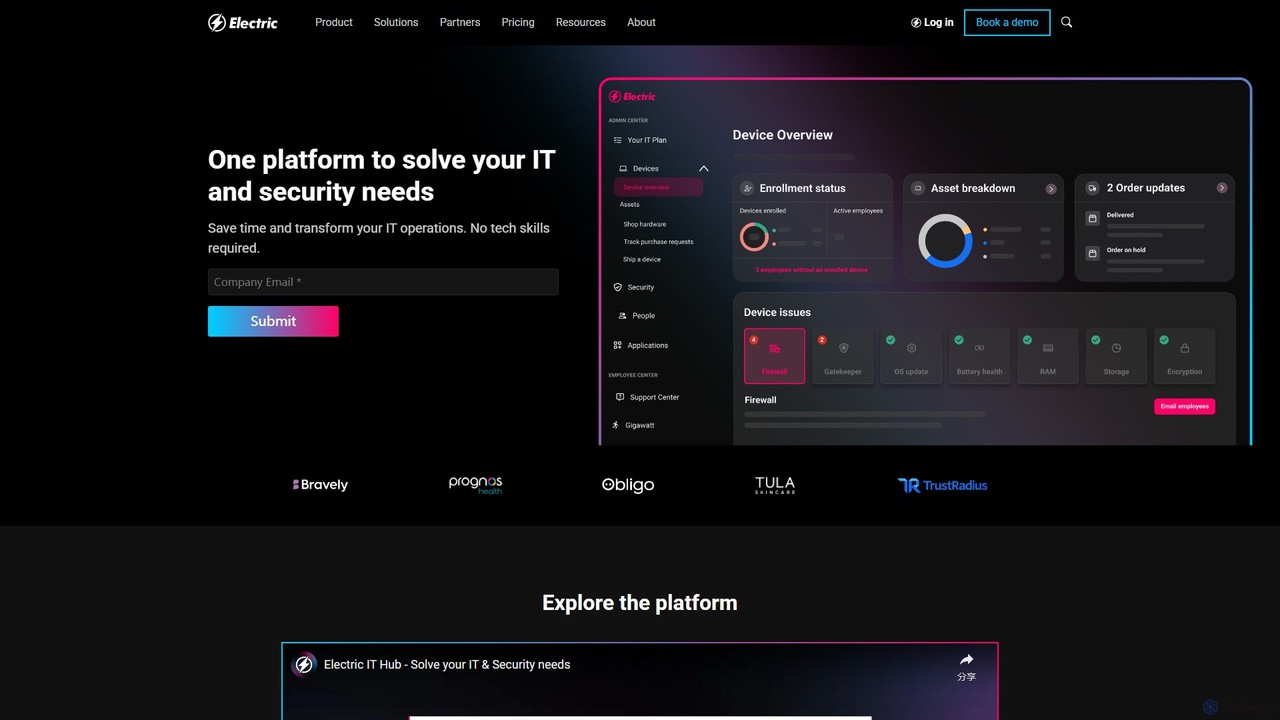
Electric is an all-in-one IT and security platform for SMBs, offering a centralized hub to manage devices, applications, and security. It automates employee onboarding/offboarding, provides proactive cybersecurity, and features an AI-powered assistant, Gigawatt, to streamline IT support. It's a modern, cost-effective alternative to traditional MSPs.

Managed Services
Visits 27.5KFavorites 121Likes 108

About Managed Services

AI Managed Services are specialized third-party solutions that proactively manage a company's entire AI ecosystem, from infrastructure to model lifecycle. These services utilize advanced automation and expert oversight to handle the operational complexities of deploying and maintaining AI systems. This allows businesses to leverage powerful AI capabilities without the need for a large in-house team of specialized data scientists and MLOps engineers. The primary value lies in ensuring AI applications are reliable, performant, secure, and cost-effective, freeing up internal resources to focus on core business innovation.

Core Features

  • AI Infrastructure Management: Manages and optimizes cloud or on-premise resources, including GPU clusters and data storage, specifically for AI workloads.
  • MLOps & Model Lifecycle Management: Oversees the entire lifecycle of AI models, including deployment, performance monitoring, drift detection, and automated retraining.
  • Proactive Monitoring & Alerting: Provides 24/7 surveillance of AI applications and data pipelines to identify and resolve issues before they impact business operations.
  • Security & Compliance: Implements robust security protocols and ensures AI systems adhere to industry regulations like GDPR, HIPAA, or SOC 2.
  • Cost Optimization: Continuously analyzes resource usage to optimize spending on cloud services and AI tools, preventing budget overruns.

Applicable Scenarios

These services are ideal for organizations that lack in-house AI expertise or wish to scale their AI initiatives rapidly. Common users include tech startups needing to manage cloud AI platforms efficiently, enterprises deploying predictive maintenance models in manufacturing, and financial institutions requiring secure management of fraud detection systems. They are particularly valuable in regulated industries where compliance and data security are paramount.

Selection Criteria

When choosing an AI Managed Services provider, evaluate their specific expertise in your required AI domain (e.g., NLP, computer vision). Scrutinize their Service Level Agreements (SLAs) for guaranteed uptime and response times. Verify their security certifications and compliance track record. Finally, assess their ability to scale services and integrate with your existing technology stack to support future growth.

Featured tool rankings

Managed Services use cases

1

AI Chatbot Operations for E-commerce

An online retail company outsources the management of its customer service AI chatbot. The managed service provider ensures 24/7 availability, especially during peak shopping seasons like Black Friday. Their team continuously monitors conversation quality, identifies areas for improvement, and retrains the model with new product data and customer queries. This proactive management leads to a 30% reduction in human agent escalations and improves customer satisfaction scores by ensuring fast, accurate responses at any time.

2

Predictive Maintenance Model Management in Manufacturing

A manufacturing plant uses an AI model to predict equipment failures. A managed service provider takes full responsibility for the MLOps pipeline. They manage the data ingestion from IoT sensors on the machinery, monitor the model for accuracy drift, and trigger automated retraining cycles when performance degrades. This ensures the predictions remain reliable, preventing costly unplanned downtime and extending the lifespan of critical machinery. The plant sees a 15% reduction in maintenance costs and a 20% increase in equipment uptime.

3

Cloud AI Platform Optimization for a Tech Startup

A fast-growing startup uses a major cloud AI platform (like AWS SageMaker) for product development. A managed service provider optimizes their cloud environment for cost and performance. They implement auto-scaling for GPU resources, set up budget alerts, and manage user permissions to prevent accidental overspending. Their expertise helps the startup reduce its monthly cloud bill by 25% while ensuring developers have the resources they need, allowing the startup to allocate more capital to growth and product innovation.

4

Financial Fraud Detection System Management

A fintech company relies on a real-time AI model to detect fraudulent transactions. A managed services provider guarantees the high availability and low latency required for this critical system. They manage the secure data pipeline, continuously monitor model performance against new fraud patterns, and can rapidly deploy updated models to counter emerging threats. This robust management ensures the platform remains secure, compliant with financial regulations, and protects both the company and its customers from financial loss.

5

Compliance and Security for AI in Healthcare

A hospital uses an AI application for analyzing medical images. To ensure patient data privacy, they partner with a managed service provider specializing in healthcare compliance. The provider manages the entire AI environment to be HIPAA compliant, implementing strict access controls, data encryption, and detailed audit trails. They handle security patches and system updates without disrupting clinical workflows. This allows the hospital to leverage cutting-edge AI diagnostics while maintaining the highest standards of data security and regulatory compliance.

6

Computer Vision System Monitoring for Smart Cities

A municipality deploys AI-powered cameras for traffic management and public safety. A managed service provider ensures the computer vision models are always running optimally. They monitor the health of edge devices (the cameras), manage the video data stream for analysis, and handle remote system updates. Their 24/7 monitoring ensures that any system failure, such as a camera going offline, is immediately detected and addressed, guaranteeing the reliability of the city's smart infrastructure.

Managed Services FAQ

What are AI Managed Services?

AI Managed Services are specialized third-party services that handle the complete operational management of a company's AI systems. This includes managing the underlying infrastructure, overseeing the AI model lifecycle (MLOps), ensuring security and compliance, and optimizing costs. Essentially, they act as an outsourced expert team to keep AI applications running efficiently and reliably, allowing the business to focus on leveraging AI insights rather than managing technical complexities.

How do AI Managed Services differ from traditional IT Managed Services?

Traditional IT Managed Services focus on general IT infrastructure like networks, servers, and standard business software. AI Managed Services are a specialized extension that adds several critical layers:

  • MLOps Expertise: They manage the unique lifecycle of AI models, including deployment, monitoring for performance drift, and retraining, which is not part of traditional IT.
  • Specialized Infrastructure: They have expertise in managing AI-specific hardware like GPUs and specialized data storage solutions.
  • Data Pipeline Management: They focus heavily on the data pipelines that feed AI models, ensuring data quality and availability.
  • Proactive Optimization: They go beyond simple maintenance to proactively optimize model performance and cloud costs associated with intensive AI workloads.
How do I choose the right AI Managed Services provider?

Choosing the right provider is crucial for success. Focus on these key areas:

  • Proven AI Expertise: Look for a provider with demonstrable experience in your specific AI domain (e.g., computer vision, NLP, predictive analytics) and on your preferred platforms (e.g., AWS, Google Cloud, Azure).
  • Robust SLAs: Ensure their Service Level Agreement (SLA) clearly defines uptime guarantees, response times for issues, and performance metrics for your AI models.
  • Security and Compliance: Verify they hold relevant certifications (like SOC 2, ISO 27001) and have experience in your industry, especially if it's regulated (like healthcare or finance).
  • Scalability and Flexibility: The provider should be able to scale their services as your needs grow and adapt to new technologies or models you may adopt in the future.
What are the main benefits of using AI Managed Services?

The primary benefits include:

  • Cost Savings: Reduces the need to hire, train, and retain a large, expensive in-house team of AI specialists and MLOps engineers.
  • Access to Expertise: Provides immediate access to a team of experts with deep knowledge of AI technologies, best practices, and platform management.
  • Faster Time-to-Value: Accelerates the deployment and operationalization of AI models, allowing businesses to realize the benefits of their AI investments sooner.
  • Improved Reliability & Performance: Ensures AI systems are proactively monitored and maintained for high availability and optimal performance, preventing costly downtime.
  • Focus on Core Business: Frees up internal teams to concentrate on strategic initiatives and innovation, rather than day-to-day AI infrastructure management.
Who should use AI Managed Services?

AI Managed Services are particularly beneficial for:

  • Small to Medium-sized Businesses (SMBs): Companies that want to leverage AI but lack the resources to build a dedicated in-house AI/MLOps team.
  • Large Enterprises: Organizations that need to scale their AI operations quickly and efficiently, or want to offload the management of non-core AI applications to focus on strategic projects.
  • Companies in Regulated Industries: Businesses in sectors like finance, healthcare, and government that require specialized expertise in security and compliance for their AI systems.
  • Startups: Tech startups that need to manage their cloud AI infrastructure cost-effectively while focusing on rapid product development and market entry.