ToolMage
Sign in

Best 5 Generation AI tools for Music

Popular Generation AI tools in Music include Aimusicmaker, Next Music, Aisong, Suno AI, and SongGuru, helping you work more efficiently.

Next Music
Free

Next Music

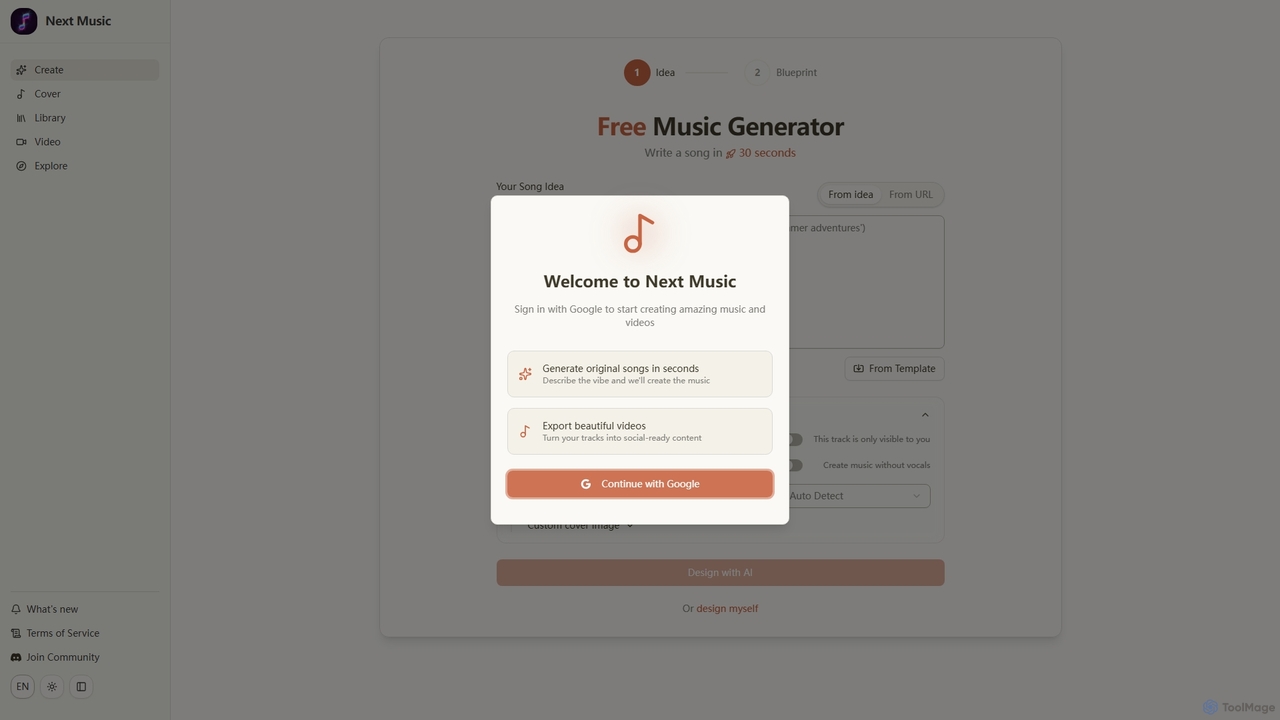
Next Music is a free AI-powered platform that allows users to generate original songs and videos in seconds. Describe your musical idea, choose options like instrumental tracks or custom covers, and transform your creations into social-ready video content. It's designed for quick, creative music production.

Music
Visits 4.5KFavorites 132Likes 126
Suno AI
Freemium

Suno AI

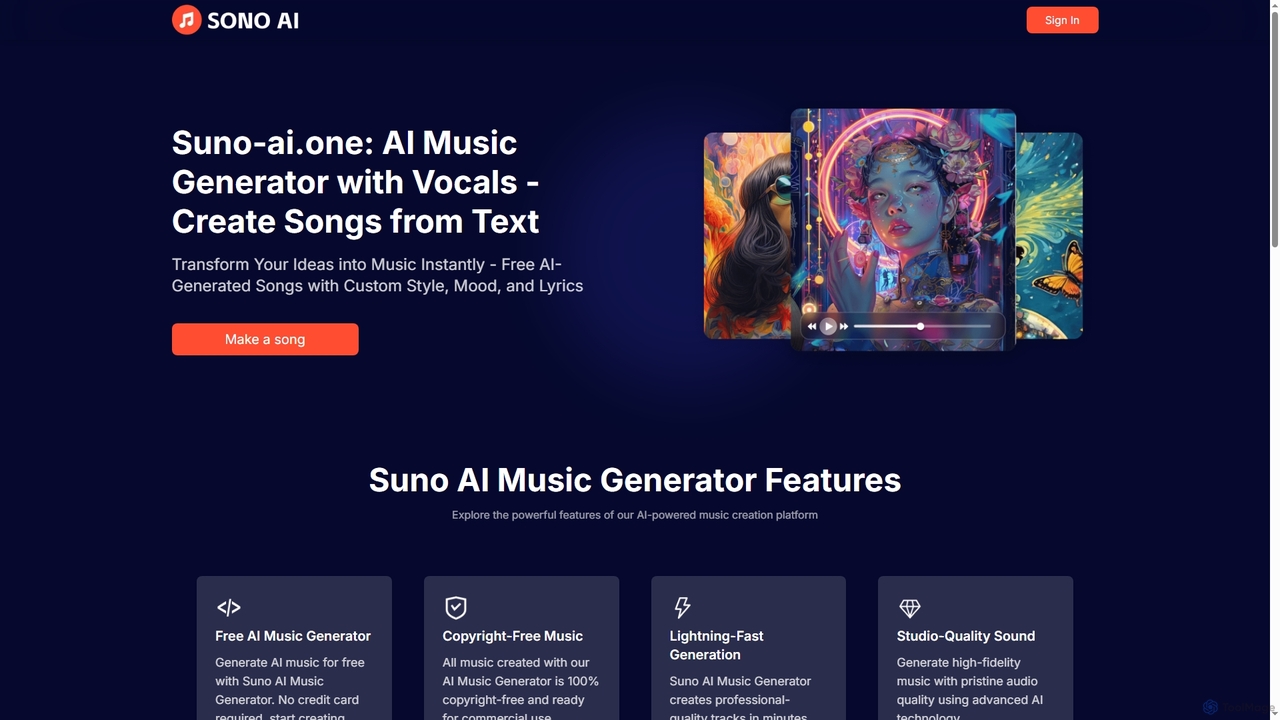
Suno AI is a powerful AI music generator that transforms text prompts into original, studio-quality songs with vocals. It offers instant, copyright-free music creation across various genres, suitable for commercial use, with both free and paid options.

Sound Design
Visits 4.5KFavorites 112Likes 124
Aimusicmaker
Freemium

Aimusicmaker

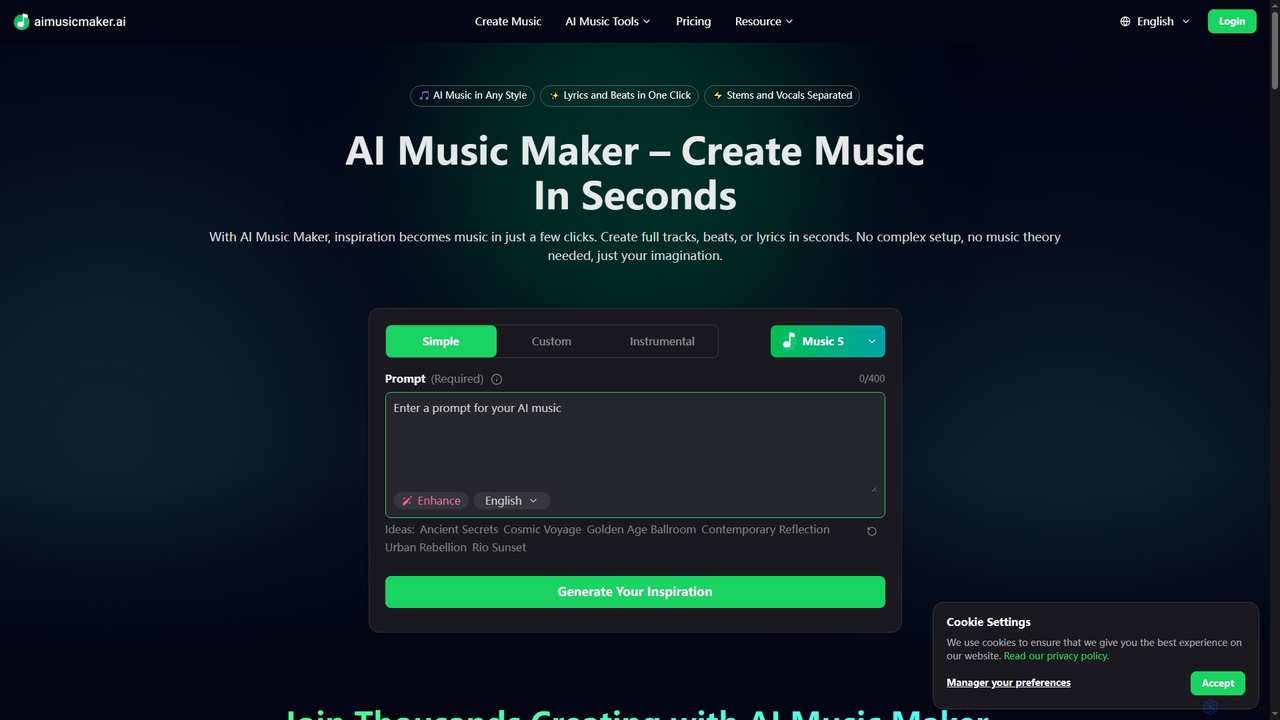
Aimusicmaker is an AI-powered platform designed to simplify music creation. It allows users to generate full tracks, beats, and lyrics in seconds, without requiring complex setups or music theory knowledge. The platform offers a comprehensive suite of AI tools for various audio production needs.

Soundtrack
Visits 4.7KFavorites 92Likes 89
Aisong
Freemium

Aisong

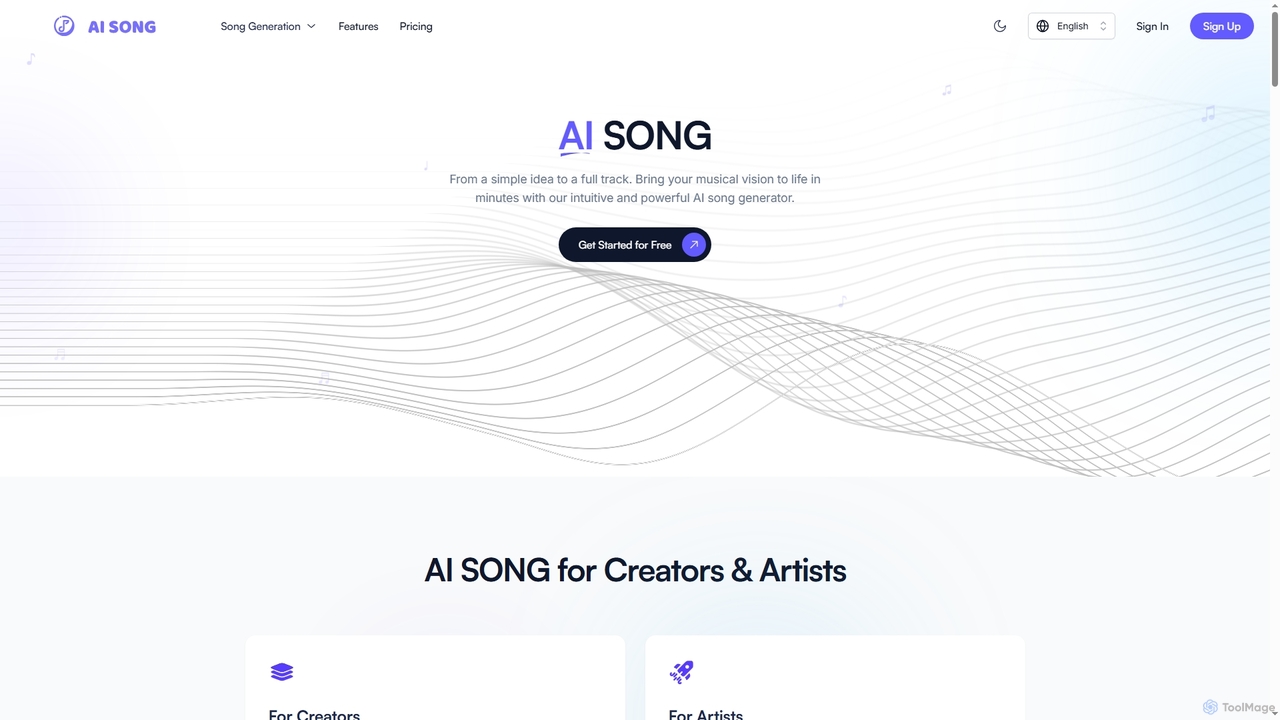
Aisong is an intuitive AI song generator and music production toolkit designed for creators and artists. It enables users to transform simple ideas into full tracks, generate lyrics, remove vocals, and even create music videos, all with the power of artificial intelligence.

Vocal Removal
Visits 4.5KFavorites 98Likes 91
SongGuru
Freemium

SongGuru

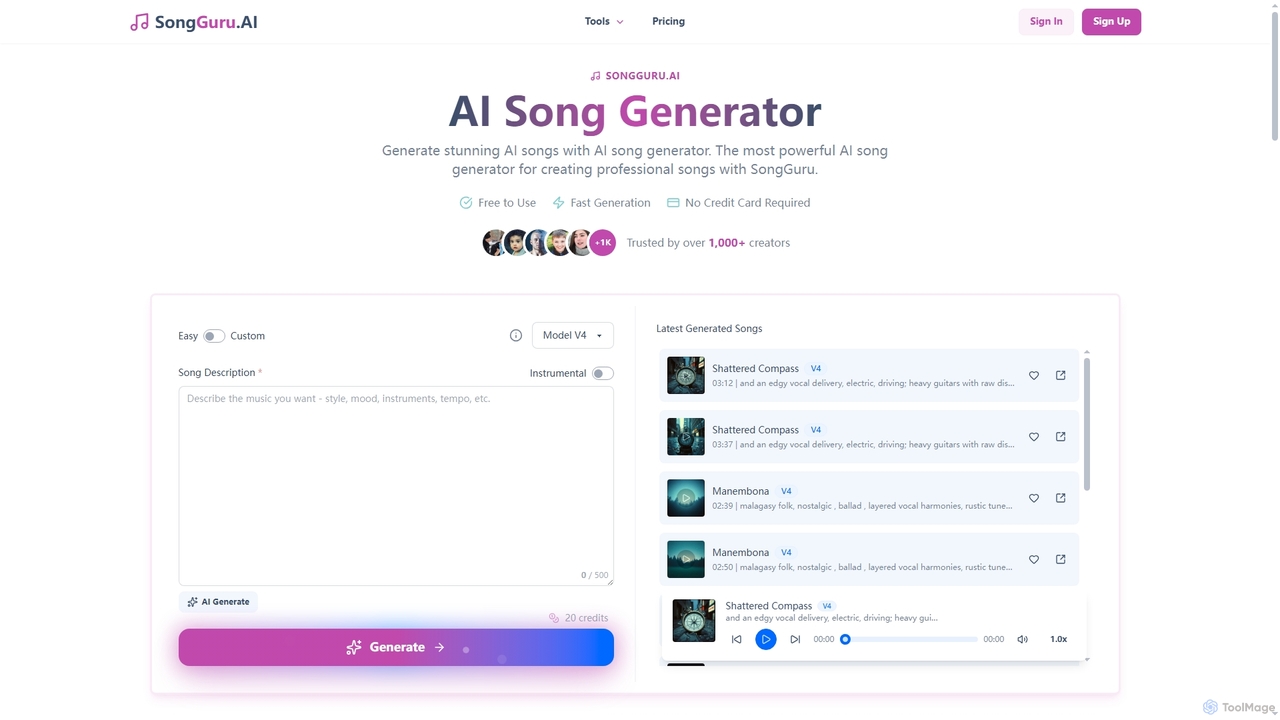
SongGuru is an AI-powered platform that enables users to generate complete songs, including music, vocals, and lyrics, from simple text descriptions or custom lyrics. It offers fast, high-quality output across various genres, making music creation accessible for everyone from hobbyists to professionals.

Composition
Visits 4.3KFavorites 118Likes 111

About Generation

AI Music Generation tools are a specialized category of software that create original musical compositions from user inputs. These tools leverage advanced generative models to synthesize melodies, harmonies, rhythms, and even full tracks based on text prompts, genre selections, or mood descriptions. They serve as powerful creative partners for musicians, producers, and content creators, enabling rapid idea prototyping and the production of royalty-free background music. Unlike music editing software, their primary function is to generate new musical content from scratch.

Core Features

  • Text-to-Music Generation: Creates music based on descriptive text prompts, such as 'upbeat electronic track for a product launch'.
  • Genre and Mood Synthesis: Generates compositions in specific styles (e.g., jazz, cinematic, lo-fi) or based on emotional cues (e.g., happy, dramatic, calm).
  • Instrument and Stem Control: Allows users to specify instruments or generate separate audio tracks (stems) for drums, bass, melody, and chords.
  • Melody and Chord Progression Creation: Produces foundational musical ideas, hooks, or complex chord sequences to inspire songwriters.
  • Compositional Variation: Generates multiple unique variations of a musical idea, providing diverse options for a project.

Use Cases

These tools are widely used by content creators for generating custom, royalty-free background music for videos and podcasts. Music producers and songwriters utilize them to overcome creative blocks by generating new melodies or chord progressions. Game developers also employ them to create dynamic, procedural soundtracks that adapt to gameplay.

How to Choose

When selecting an AI Music Generation tool, consider the audio output quality (e.g., WAV vs. MP3), the level of customization available (BPM, key, instruments), and the licensing terms for commercial use. Also, evaluate the available export formats, such as MIDI for further editing in a Digital Audio Workstation (DAW) or high-resolution audio files for final production.

Featured tool rankings

Generation use cases

1

Generate Royalty-Free Music for Videos

A content creator needs unique background music for their weekly YouTube videos to avoid copyright strikes. Using an AI Music Generation tool, they input a prompt like 'calm, atmospheric lo-fi beat for a study vlog'. Within minutes, the AI generates several high-quality tracks. The creator chooses the best fit, adjusts the length, and downloads a royalty-free version, ensuring their content is monetizable and engaging without spending hours searching for stock music.

2

Prototype Song Ideas and Overcome Writer's Block

A music producer is stuck on a new track and needs inspiration for a chord progression. They use an AI Music Generator, selecting '80s synth-pop' as the genre and 'energetic' as the mood. The tool generates several MIDI chord progressions. The producer imports their favorite progression into their Digital Audio Workstation (DAW), uses it as a starting point, and builds the rest of the song around it, effectively breaking their creative block and accelerating the production process.

3

Create Dynamic Soundtracks for Games

A solo game developer is creating an indie game and needs an adaptive soundtrack that changes based on gameplay. They use an AI Music Generation API to produce musical loops for different scenarios: 'tense exploration', 'fast-paced combat', and 'peaceful village'. By integrating the API, the game's engine can seamlessly transition between these loops, creating a dynamic and immersive audio experience for the player without the cost of hiring a composer.

4

Craft Custom Jingles for Marketing Campaigns

A marketing agency needs a short, catchy jingle for a client's new social media ad. Instead of commissioning a custom piece, which is time-consuming and expensive, the team uses an AI Music Generator. They input keywords related to the brand like 'innovative, tech, future, upbeat'. The AI produces several 15-second musical clips. The team selects the most brand-aligned option, adds a voiceover, and deploys the ad campaign in a fraction of the time and cost.

5

Generate Backing Tracks for Practice or Performance

A guitarist wants to practice soloing over different styles of music but lacks a backing band. They use an AI Music Generator to create backing tracks. They can specify the genre ('blues rock'), key ('A minor'), and tempo (120 BPM), and even ask the tool to omit the lead guitar track. This provides them with an endless supply of custom practice loops, helping them improve their improvisation skills across various musical contexts without needing other musicians.

6

Score Short Films with Custom Moods

A student filmmaker is working on a short film and needs a score that perfectly matches the emotional arc of each scene. On a limited budget, they turn to an AI Music Generator. For a tense scene, they generate a 'dark, suspenseful, orchestral' piece. For a happy resolution, they create an 'uplifting, hopeful, piano' track. This allows them to create a cohesive and emotionally resonant soundtrack that elevates their film, a task that would otherwise require significant musical skill or budget.

Generation FAQ

What are AI Music Generation tools?

AI Music Generation tools are applications that use artificial intelligence to create new, original music. Unlike traditional music software that edits existing audio, these tools synthesize compositions from scratch based on user inputs like text descriptions, genres, moods, or even sample melodies. They are commonly used to produce royalty-free background tracks, inspire new song ideas, and create adaptive soundtracks for media.

How to choose the right AI Music Generator?

To choose the right tool, consider these factors:

  • Audio Quality: Check if the output is high-fidelity (like WAV) or compressed (like MP3), which affects its suitability for professional use.
  • Customization Control: Evaluate how much control you have over the output, such as setting the BPM, key, instruments, and song structure.
  • Usage Rights: Carefully review the licensing terms. Determine if the generated music is royalty-free and can be used for commercial projects.
  • Export Options: Look for tools that can export in multiple formats, especially MIDI if you plan to edit the composition in a DAW, or stems for mixing.
What's the difference between AI Music Generation and AI Stem Separation?

The key difference is creation versus deconstruction. AI Music Generation tools create entirely new music from scratch based on prompts. The output is an original composition. In contrast, AI Stem Separation tools take an existing, mixed audio track and deconstruct it into its individual components, such as vocals, drums, bass, and instruments. Generation is for making new music, while separation is for remixing, sampling, or isolating parts of existing music.

Can I use AI-generated music commercially?

This depends entirely on the specific tool's terms of service. Many AI music generators offer subscription plans that grant you a royalty-free license, allowing for commercial use in projects like videos, podcasts, and advertisements. However, free or lower-tier plans may have restrictions. Always read the licensing agreement carefully before using generated music in a commercial context to ensure you have the necessary rights and avoid copyright issues.

What kind of inputs do AI Music Generators accept?

AI Music Generators accept a variety of inputs to guide the creation process. The most common types include:

  • Text Prompts: Detailed descriptions of the desired music (e.g., 'a cinematic, epic orchestral score for a battle scene').
  • Genre/Mood Tags: Selecting from predefined categories like 'Jazz', 'Rock', 'Happy', or 'Suspenseful'.
  • Reference Audio: Uploading a short audio clip to influence the style of the generated music.
  • MIDI Data: Providing a simple melody or chord progression as a starting point for the AI to build upon.