Zuvu
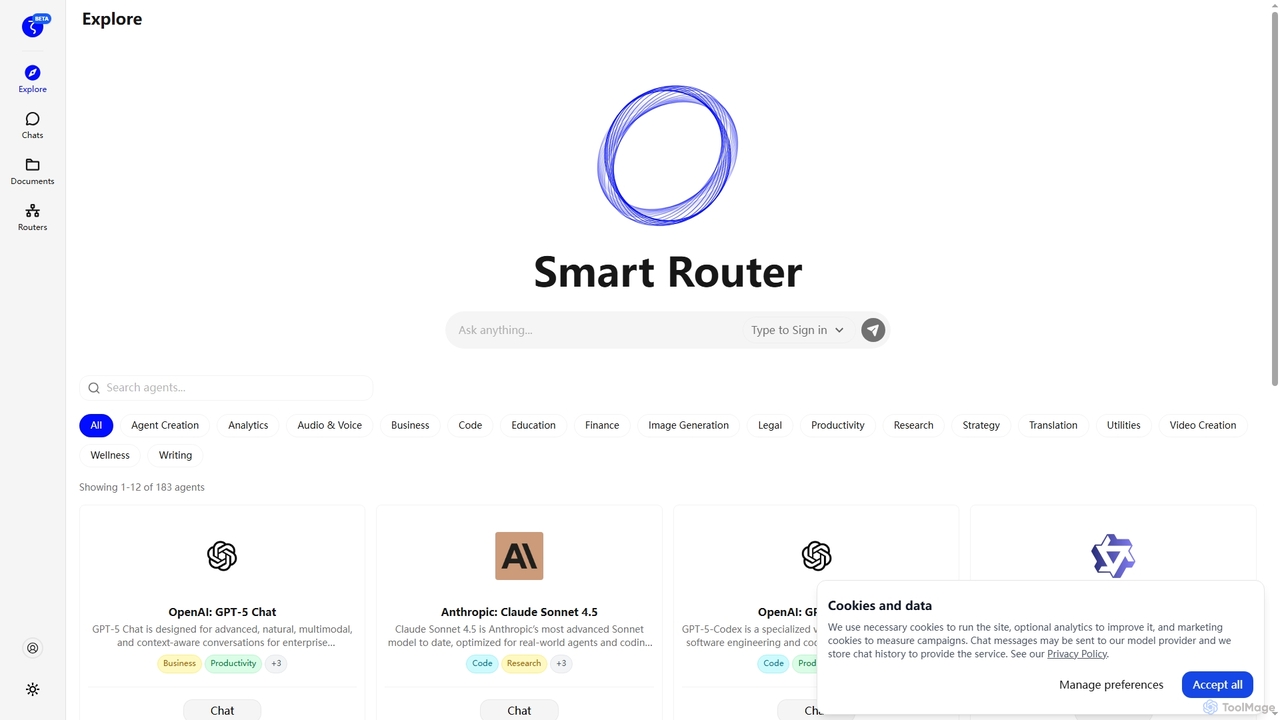
Zuvu is a next-generation AI agents platform that acts as a Smart Router, providing access to a diverse …
Zuvu is a next-generation AI agents platform that acts as a Smart Router, providing access to a diverse range of advanced AI models like OpenAI GPT-5, Anthropic Claude, and Google Gemini for complex, agentic workflows across various domains.
Suna
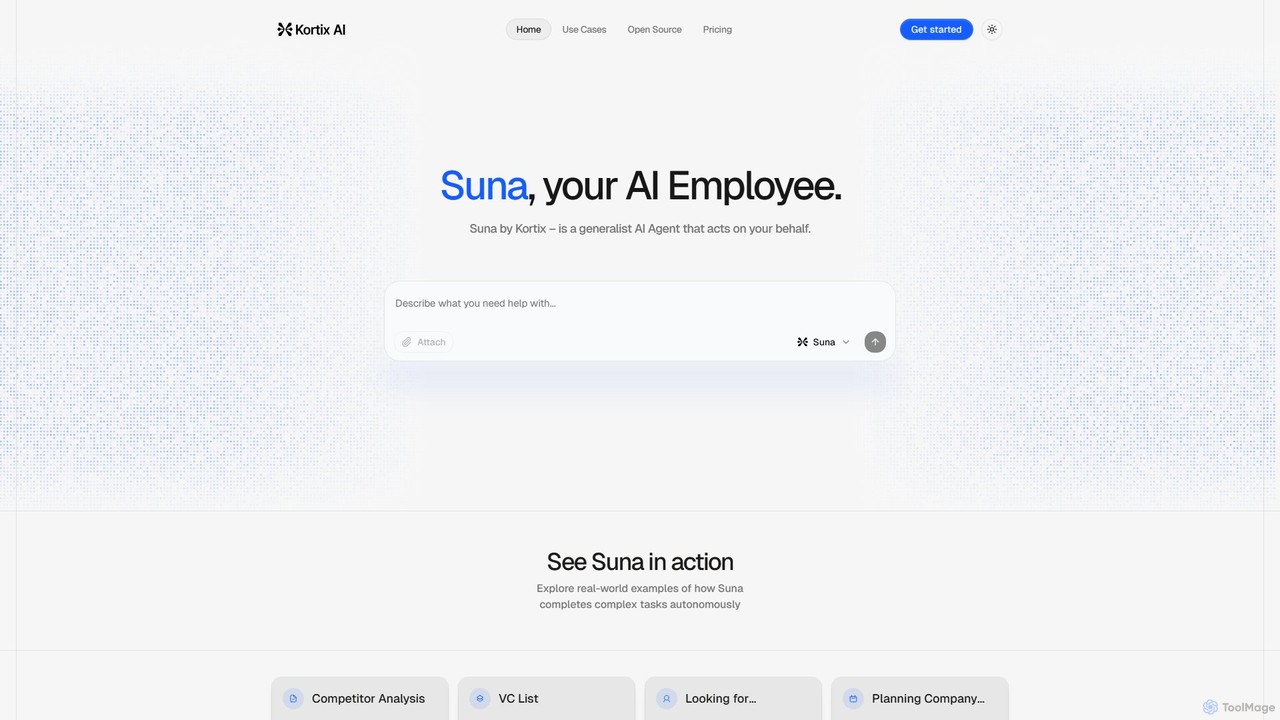
Suna is an open-source, generalist AI agent that acts as your AI employee. It autonomously executes complex tasks …
Suna is an open-source, generalist AI agent that acts as your AI employee. It autonomously executes complex tasks like market research, competitor analysis, lead generation, and data scraping by browsing the web and processing information.
About Ai Agents
AI Agents are a class of intelligent software designed to autonomously perform complex, multi-step tasks to achieve specific goals. They operate by perceiving their digital environment, making decisions, and executing actions using various tools and APIs. This goal-oriented approach allows them to handle dynamic workflows, from conducting market research to managing software development cycles, significantly enhancing productivity by offloading intricate processes from human users. Unlike simple automation, AI Agents can plan, reason, and adapt their strategies to complete objectives.
Core Features
- Autonomous Operation: Executes complex sequences of tasks without requiring step-by-step human guidance.
- Goal-Oriented Planning: Decomposes a high-level objective into a logical series of executable sub-tasks.
- Tool Integration: Natively uses other applications, APIs, and web services to gather information or perform actions.
- Decision Making: Analyzes information and context to make logical choices and adapt its plan as needed.
- Contextual Awareness: Maintains an understanding of the ongoing task and user intent across multiple interactions.
Use Cases
AI Agents are valuable for roles requiring extensive research, coordination, and process management. Professionals in market analysis, software development, sales, and operations use them to automate data gathering, bug triage, lead generation, and complex scheduling. They are particularly effective for tasks that involve interacting with multiple online systems to achieve a single, cohesive outcome.
How to Choose
When selecting an AI Agent, consider the complexity of the tasks you need to automate. Evaluate its integration capabilities with your existing software stack, such as project management tools or code repositories. Also, assess the level of autonomy required—whether you need a fully independent agent or one that allows for human oversight at critical steps. Finally, review the security protocols for handling sensitive data and API credentials.

Ai AgentsUse Cases
Automated Market Research and Reporting
A market analyst needs to compile a comprehensive report on a new competitor. Instead of spending days manually searching for news articles, financial statements, and social media sentiment, they task an AI Agent with the goal: 'Create a competitive analysis report on Company X'. The agent then autonomously browses the web, accesses financial databases via API, analyzes social media trends, and synthesizes all the information into a structured document. The final output is a detailed report with key findings, saving the analyst over 80% of their research time.
Automated Software Bug Triage and Assignment
A DevOps team is overwhelmed with new bug reports in their tracking system. They deploy an AI Agent to monitor the incoming tickets. For each new bug, the agent attempts to reproduce the issue in a staging environment, collects relevant server logs and stack traces, and analyzes the affected code modules. Based on this analysis and the team's code ownership records, the agent automatically assigns the ticket to the most relevant developer and adds a comment summarizing its findings. This process reduces the manual triage time for engineers by hours each week.
Personalized Sales Outreach at Scale
A sales development representative (SDR) needs to contact 100 new leads. Instead of manually researching each lead and writing a custom email, the SDR provides a list of leads to an AI Agent. The agent visits each lead's LinkedIn profile and company website to gather personalized information, such as recent projects or articles they've written. It then uses this information to draft a unique, relevant outreach email for each lead based on a template. The SDR reviews and approves the drafts before the agent sends them, increasing personalization and response rates while saving significant time.
Complex Travel Itinerary Planning
An executive assistant needs to plan a multi-city business trip for their manager, involving flights, hotels, and car rentals, while adhering to a strict budget and calendar constraints. They provide the AI Agent with the destinations, dates, budget, and preferences (e.g., 'aisle seat', 'hotel near conference center'). The agent then searches multiple travel sites, compares options, checks for conflicts with the manager's calendar, and proposes a complete, optimized itinerary. Once approved, the agent can proceed to book all a-components of the trip, consolidating confirmations into a single document.
Automated Social Media Content Curation
A social media manager is responsible for maintaining an active presence on multiple platforms for a tech brand. They instruct an AI Agent to 'find and schedule five relevant tech news articles per day'. The agent continuously monitors designated news sources and RSS feeds. When it finds a suitable article, it generates a summary, suggests relevant hashtags, and creates draft posts for Twitter, LinkedIn, and Facebook. The manager receives a daily digest of these drafts for review and one-click approval, ensuring a consistent stream of high-quality content with minimal manual effort.
Managing E-commerce Inventory and Pricing
An e-commerce store owner wants to maintain competitive pricing and optimal stock levels. They configure an AI Agent to monitor key competitors' product pages and their own sales data. The agent can automatically adjust prices within predefined limits to match competitor promotions or increase prices on high-demand items. It also tracks inventory levels and, upon reaching a reorder threshold, can automatically generate a purchase order and email it to the supplier for fulfillment. This proactive management helps maximize profit margins and prevent stockouts.