STRING
STRING is an AGI-powered data analytics platform that allows you to talk to your data. It unifies structured …
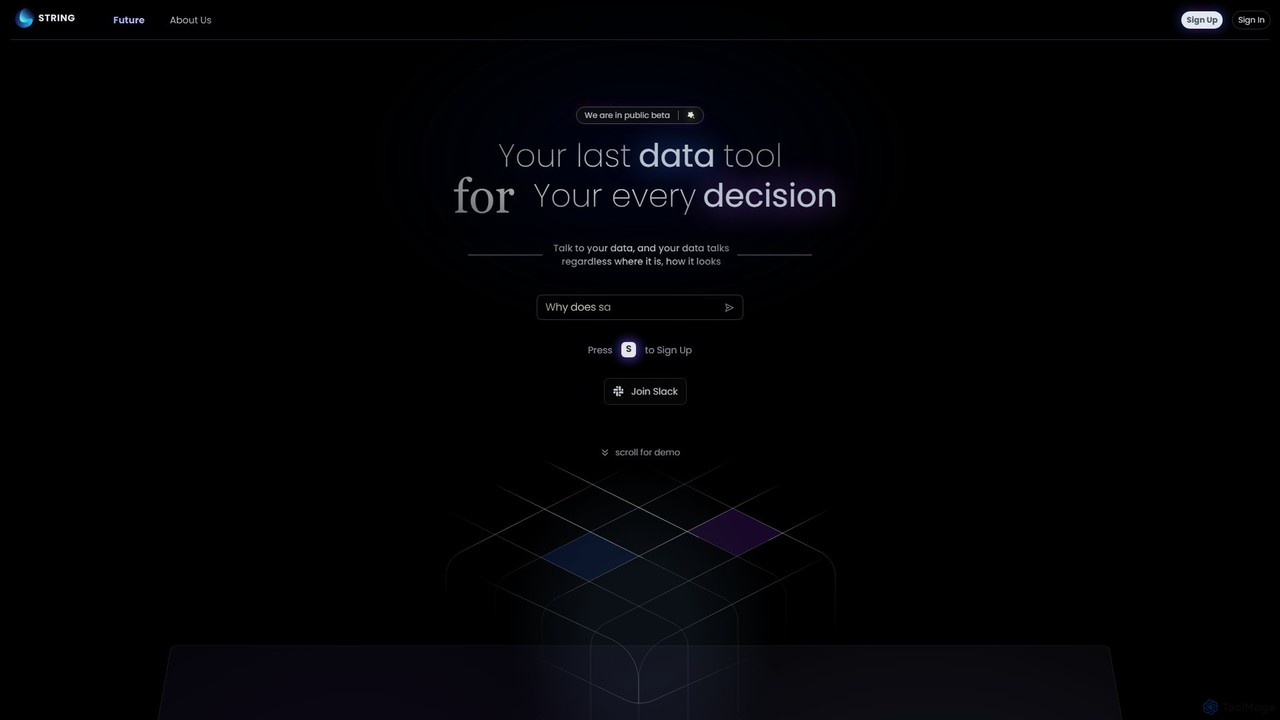
STRING is an AGI-powered data analytics platform that allows you to talk to your data. It unifies structured and unstructured data sources, enabling users to ask complex questions in natural language and receive instant, intelligent insights. It's designed to be the last data tool you'll ever need.
About Automated Analysis
Automated Analysis tools are AI-powered solutions within the broader Productivity category, designed to process vast datasets, identify patterns, and extract actionable insights with minimal human intervention. These tools leverage machine learning and advanced algorithms to automate complex analytical tasks, transforming raw data into structured information and predictive models. They significantly enhance decision-making speed and accuracy by uncovering hidden trends and anomalies that manual analysis might miss. This automation frees up human experts to focus on strategic interpretation rather than tedious data crunching.
Core Features
- Data Ingestion & Preprocessing: Automatically collects, cleans, and structures data from various sources, preparing it for analysis.
- Pattern Recognition & Anomaly Detection: Identifies recurring trends, correlations, and unusual data points that deviate from expected norms.
- Predictive Modeling: Builds models to forecast future outcomes, behaviors, or market trends based on historical data.
- Natural Language Processing (NLP): Analyzes unstructured text data from documents, emails, or social media to extract sentiment, topics, and entities.
- Automated Reporting & Visualization: Generates comprehensive reports and interactive dashboards, presenting insights in an easily digestible format.
Use Cases
Businesses utilize automated analysis for market trend prediction, identifying customer behavior patterns, and optimizing operational efficiency. Data scientists and business analysts employ these tools to accelerate research, validate hypotheses, and monitor system performance in real-time.
How to Choose
When selecting an Automated Analysis tool, consider its data source compatibility, the types of analysis it supports (e.g., descriptive, predictive, prescriptive), its scalability for growing data volumes, and the clarity of its output visualizations. Evaluate its integration capabilities with existing business intelligence platforms and the level of customization offered for specific analytical needs.

Automated AnalysisUse Cases
Automating Customer Feedback Sentiment Analysis
Marketing teams and customer service departments can use automated analysis tools to process thousands of customer reviews, social media comments, and support tickets. The AI identifies overall sentiment (positive, negative, neutral), extracts key topics, and highlights urgent issues, allowing businesses to quickly understand customer satisfaction, pinpoint product flaws, and respond proactively to critical feedback without manually reading every comment.
Real-time Financial Fraud Detection
Financial institutions deploy automated analysis to monitor transaction data in real-time. The AI learns normal spending patterns and flags suspicious activities, such as unusually large purchases, transactions from new locations, or rapid successive attempts, indicating potential fraud. This enables immediate alerts and intervention, significantly reducing financial losses and enhancing security for customers.
Optimizing Supply Chain Performance
Logistics and operations managers leverage automated analysis to scrutinize supply chain data, including inventory levels, shipping times, supplier performance, and demand forecasts. The tools identify bottlenecks, predict potential disruptions, and recommend optimal inventory reorder points or alternative routes, leading to reduced costs, improved delivery efficiency, and better resource allocation.
Predictive Maintenance for Industrial Equipment
Manufacturing and energy sectors use automated analysis to process sensor data from machinery. The AI detects subtle anomalies in temperature, vibration, or pressure that indicate impending equipment failure. By predicting maintenance needs before breakdowns occur, companies can schedule proactive repairs, minimize downtime, extend asset lifespan, and avoid costly emergency interventions.
Enhancing Cybersecurity Threat Detection
Cybersecurity analysts utilize automated analysis to continuously monitor network traffic, system logs, and user behavior for malicious patterns. The AI can quickly identify unusual login attempts, data exfiltration attempts, or malware signatures that bypass traditional defenses. This proactive threat detection helps organizations respond faster to security breaches and protect sensitive information.
Automating Market Research and Trend Spotting
Market researchers and product development teams employ automated analysis to sift through vast amounts of public data, including news articles, social media trends, competitor reports, and demographic information. The tools identify emerging market opportunities, shifting consumer preferences, and competitive landscapes, providing data-driven insights for strategic planning and new product innovation.