ToolMage
Sign in

Best 1 Behavioral Coaching AI tools for Productivity

Popular Behavioral Coaching AI tools in Productivity include Moodfol, helping you work more efficiently.

Moodfol
Freemium

Moodfol

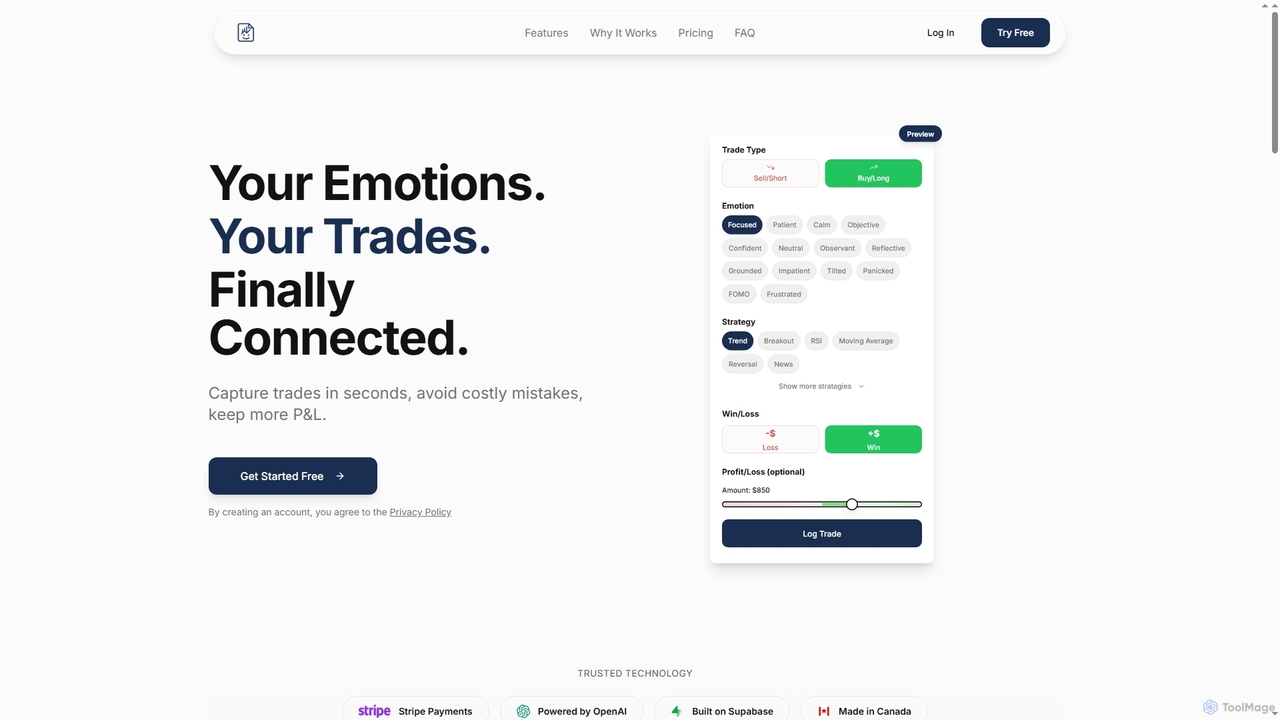
Moodfol is an AI-powered trading and emotional journal designed to help traders connect their emotions with their trades. It captures trades quickly, provides personalized insights, and helps identify profit-killing or profit-making patterns, fostering discipline and improving trading performance.

Performance Tracking
Visits 5.4KFavorites 135Likes 141

About Behavioral Coaching

Behavioral Coaching AI tools are a specialized category within productivity solutions that leverage artificial intelligence to provide personalized guidance and support for improving human behaviors. These tools utilize advanced algorithms, natural language processing, and machine learning to analyze user input, identify patterns, and offer actionable insights for habit formation, goal achievement, and emotional regulation. Their primary value lies in fostering self-awareness and driving sustainable personal and professional growth, making them an invaluable asset for anyone seeking to optimize their daily routines and achieve specific developmental milestones.

Core Features

  • Personalized Goal Setting: AI assists users in defining clear, achievable goals and breaking them down into manageable steps.
  • Habit Tracking & Analysis: Monitors user activities and provides data-driven feedback on habit adherence and progress.
  • Emotional Intelligence Development: Offers exercises and insights to enhance self-awareness, empathy, and emotional regulation.
  • Real-time Feedback & Nudges: Delivers timely prompts, reminders, and motivational messages based on user behavior and goals.
  • Progress Reporting & Insights: Generates detailed reports on behavioral patterns, achievements, and areas for improvement.

Applicable Scenarios

Behavioral Coaching AI tools are highly beneficial for individuals and professionals across various domains. They are used by executives seeking leadership development, students aiming for better study habits, fitness enthusiasts tracking wellness goals, and anyone committed to personal growth. These tools provide consistent, unbiased support, helping users overcome procrastination, build resilience, and maintain focus on long-term objectives.

How to Choose

When selecting a Behavioral Coaching AI tool, consider its specialization (e.g., career, wellness, habits), the depth of its analytical capabilities, and the personalization level of its guidance. Evaluate the user interface for ease of use, the integration options with other productivity apps, and the privacy policies regarding personal data. Look for tools that offer evidence-based methodologies and transparent reporting to ensure effectiveness and trustworthiness.

Behavioral Coaching use cases

1

Enhancing Leadership Skills for Managers

Managers can utilize Behavioral Coaching AI to identify and improve specific leadership traits like active listening, delegation, and conflict resolution. The AI analyzes communication patterns and decision-making processes, providing tailored feedback and exercises to foster more effective team management and strategic thinking, leading to improved team performance and employee engagement.

2

Developing Consistent Study Habits for Students

Students struggling with procrastination or time management can use these tools to set daily study goals, track their progress, and receive intelligent reminders. The AI helps in structuring study sessions, identifying optimal learning times, and providing motivational nudges, ultimately leading to better academic performance and reduced stress.

3

Building Sustainable Fitness & Wellness Routines

Individuals aiming for healthier lifestyles can leverage Behavioral Coaching AI to establish and maintain exercise routines, dietary habits, and mindfulness practices. The tool tracks adherence, offers personalized suggestions for overcoming plateaus, and provides encouragement, helping users achieve long-term health and wellness objectives.

4

Improving Public Speaking Confidence for Professionals

Professionals preparing for presentations or public addresses can use AI coaching to practice and refine their delivery. The AI analyzes speech patterns, body language (via webcam), and content structure, offering constructive feedback on areas like pacing, tone, and clarity, significantly boosting confidence and effectiveness in communication.

5

Overcoming Procrastination and Boosting Productivity

For anyone struggling with task initiation and follow-through, Behavioral Coaching AI can help identify triggers for procrastination and develop counter-strategies. It provides structured frameworks for task breakdown, time blocking, and accountability, offering gentle nudges and celebrating small wins to build momentum and sustain productivity.

6

Fostering Emotional Regulation and Stress Management

These tools can guide users through exercises and reflections designed to enhance emotional intelligence. By tracking mood patterns and responses to daily events, the AI offers personalized strategies for managing stress, reducing anxiety, and cultivating a more positive mindset, contributing to overall mental well-being.

Behavioral Coaching FAQ

What are Behavioral Coaching AI tools?

Behavioral Coaching AI tools are applications that use artificial intelligence to provide personalized guidance and support for individuals seeking to improve specific behaviors, habits, or skills. They analyze user data, offer feedback, set goals, and provide motivational nudges to help users achieve personal and professional development objectives, acting as a digital coach.

How do AI Behavioral Coaching tools differ from traditional human coaching?

AI Behavioral Coaching tools offer scalability, 24/7 availability, and data-driven, unbiased feedback at a lower cost. Unlike human coaches, they lack empathy, nuanced understanding of complex emotional contexts, and the ability for spontaneous, dynamic interaction. AI excels at tracking, pattern recognition, and consistent reinforcement, while human coaches provide deeper emotional support and complex problem-solving.

What types of behaviors can AI coaching help improve?

AI coaching can assist with a wide range of behaviors, including habit formation (e.g., exercise, meditation, healthy eating), productivity enhancement (e.g., time management, procrastination reduction), skill development (e.g., public speaking, leadership), and emotional regulation (e.g., stress management, mindfulness). It's particularly effective for behaviors that are measurable and benefit from consistent tracking and feedback.

Are Behavioral Coaching AI tools effective for long-term change?

Yes, when used consistently and integrated into a user's routine, Behavioral Coaching AI tools can be highly effective for long-term change. Their ability to provide continuous feedback, track progress, and adapt guidance over time helps reinforce positive behaviors and sustain motivation, making them valuable for building lasting habits and achieving enduring personal growth.

What should I consider regarding data privacy when using AI coaching tools?

Data privacy is crucial. When using AI coaching tools, you should carefully review their privacy policy to understand how your personal data, behavioral patterns, and progress information are collected, stored, and used. Prioritize tools that offer robust encryption, clear data anonymization practices, and compliance with relevant data protection regulations like GDPR or CCPA to ensure your information is secure.