ToolMage
Sign in

Best 1 Bots for Productivity

Popular Bots in Productivity include SocialBotify, helping you work more efficiently.

SocialBotify
Freemium

SocialBotify

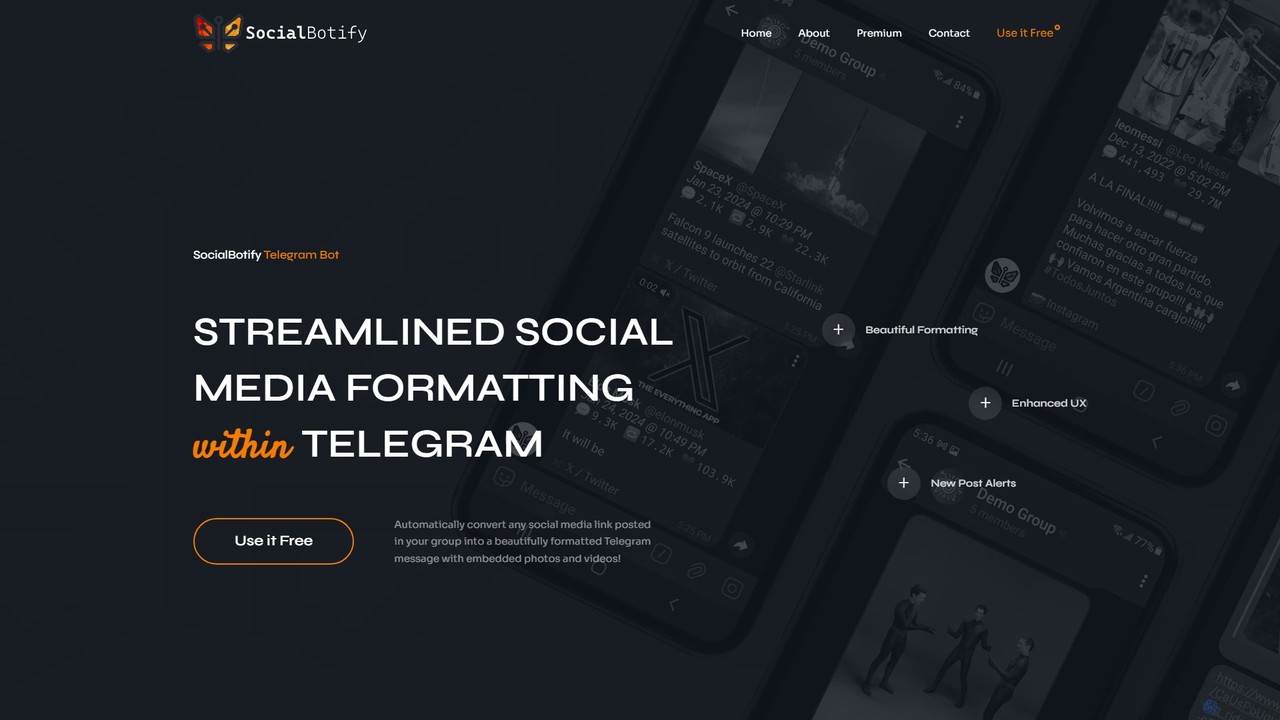
A Telegram bot that automatically converts social media links from platforms like X (Twitter) and YouTube into beautifully formatted, embedded messages within your Telegram group or channel, enhancing user engagement and streamlining content sharing.

Bots
Visits 7KFavorites 145Likes 133

About Bots

Bots are AI-powered tools designed to automate tasks, interact with users, and streamline workflows across various digital platforms. Leveraging natural language processing and machine learning, these intelligent agents can understand commands, respond to queries, and execute predefined actions. They significantly enhance productivity by taking over repetitive or time-consuming operations, freeing up human resources for more complex work.

Core Features

  • Conversational AI: Engages in natural language dialogues to answer questions, provide information, or guide users through processes.
  • Task Automation: Executes routine tasks such as data entry, scheduling, or report generation without human intervention.
  • Integration Capabilities: Connects seamlessly with existing business applications, CRM systems, and communication platforms.
  • Personalization: Adapts responses and actions based on user history, preferences, or specific contextual data.
  • Multi-channel Deployment: Operates across websites, messaging apps, social media, and internal communication tools.

Applicable Scenarios

Customer service teams deploy bots to handle frequently asked questions, provide instant support, and route complex queries to human agents, ensuring 24/7 availability and reducing response times. Marketing departments utilize bots for lead generation, qualifying prospects, and delivering personalized content to website visitors, enhancing engagement and conversion rates. HR departments use internal bots to answer employee queries about policies, benefits, or IT support, automating routine information dissemination and improving employee experience.

How to Choose

Evaluate the scope of automation required: Does it need to handle simple FAQs or complex multi-step processes? Consider integration needs: Ensure compatibility with your existing software ecosystem (CRM, ERP, messaging platforms). Assess natural language understanding (NLU) capabilities: Look for advanced NLU to accurately interpret user intent and handle diverse inputs. Review scalability and customization options: Choose a solution that can grow with your needs and be tailored to your specific brand voice and operational requirements.

Bots use cases

1

Automating Customer Support Inquiries

E-commerce businesses deploy AI chatbots on their websites to instantly answer common customer questions about order status, shipping, or product details. This reduces the workload on human support agents, provides immediate assistance to customers, and ensures 24/7 availability, leading to higher customer satisfaction and faster issue resolution.

2

Streamlining Internal HR & IT Support

Large enterprises implement internal bots to assist employees with HR-related queries (e.g., leave policies, benefits) or IT support issues (e.g., password resets, software troubleshooting). Employees get quick, self-service answers, reducing the need for direct human intervention and allowing HR/IT staff to focus on more critical tasks.

3

Enhancing Lead Generation and Qualification

Marketing teams integrate conversational bots into landing pages or social media channels to engage potential leads. These bots ask qualifying questions, gather contact information, and provide relevant product information, effectively pre-qualifying leads before handing them off to sales representatives, thus improving sales efficiency.

4

Automating Data Entry and Workflow Triggers

Operations teams use automation bots to extract data from emails or documents and automatically input it into CRM or ERP systems. These bots can also trigger subsequent actions, such as sending confirmation emails or updating project statuses, significantly reducing manual data entry errors and accelerating business processes.

5

Personalizing User Onboarding and Education

SaaS companies utilize bots to guide new users through product setup, explain features, and answer initial questions during the onboarding process. This personalized, interactive guidance helps users quickly understand the platform, reduces churn, and improves overall user adoption rates.

6

Facilitating Meeting Scheduling and Reminders

Professionals employ scheduling bots that integrate with calendars to find mutually convenient times for meetings, send invitations, and issue reminders to all participants. This eliminates the back-and-forth communication typically involved in scheduling, saving considerable time and ensuring punctuality.

Bots FAQ

What are AI Bots?

AI Bots are software applications powered by artificial intelligence, primarily designed to automate tasks and interact with humans or other systems. They leverage technologies like natural language processing (NLP) to understand and respond to user inputs, performing functions ranging from customer service and information retrieval to complex workflow automation.

How do AI Bots differ from traditional rule-based chatbots?

AI Bots, especially those with advanced conversational AI, use machine learning to understand context, intent, and natural language variations, allowing for more flexible and human-like interactions. Traditional rule-based chatbots, in contrast, rely on predefined scripts and keyword matching, limiting their ability to handle unexpected queries or complex dialogues.

What are the main benefits of implementing AI Bots in a business?

Implementing AI Bots can significantly enhance business operations by providing 24/7 availability for customer support, automating repetitive tasks to boost employee productivity, improving lead qualification, and personalizing user experiences. They lead to cost savings, faster response times, and more efficient resource allocation.

What types of tasks can AI Bots automate?

AI Bots can automate a wide array of tasks, including answering frequently asked questions, processing customer inquiries, scheduling appointments, collecting user feedback, generating reports, performing data entry, and triggering actions in other software systems. Their capabilities extend across customer service, marketing, HR, and operations.

How do I choose the right AI Bot for my specific needs?

To choose the right AI Bot, consider your primary use case (e.g., customer service, internal support, sales), the complexity of interactions required, and its integration capabilities with your existing software. Evaluate its natural language understanding (NLU) accuracy, scalability, customization options, and the level of support offered by the provider.