Gleap
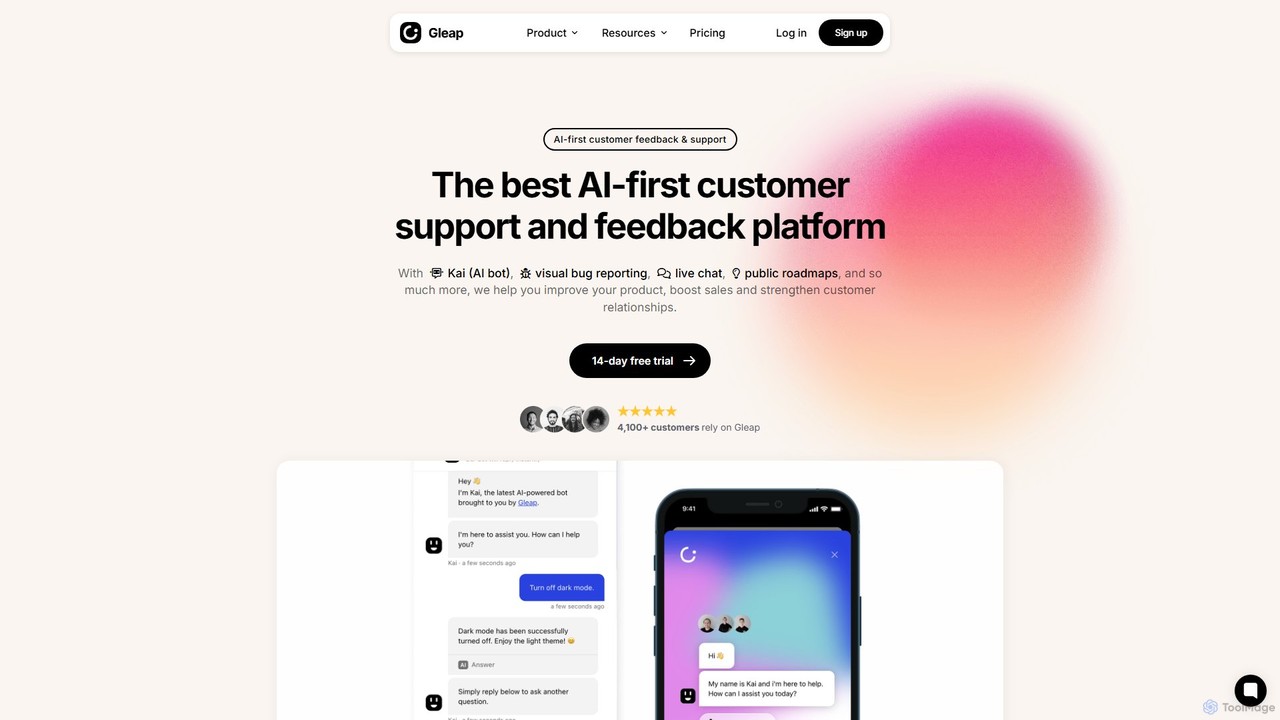
Gleap is an all-in-one, AI-powered customer feedback platform. It helps businesses collect bug reports and user feedback, provide …
Gleap is an all-in-one, AI-powered customer feedback platform. It helps businesses collect bug reports and user feedback, provide automated support with an AI chatbot, engage users with in-app messaging, and manage a public product roadmap.
About Bug Tracking
Bug Tracking tools are AI-powered solutions designed to automate and enhance the process of identifying, logging, tracking, and managing software defects. Leveraging machine learning and natural language processing, these tools streamline the entire bug lifecycle, from detection to resolution. They significantly improve software quality, accelerate development cycles, and foster more efficient collaboration within engineering teams by providing intelligent insights and automation.
Core Features
- Automated Bug Detection: AI algorithms scan code, test results, and user feedback to proactively identify anomalies and potential defects.
- Intelligent Prioritization: Tools use AI to analyze bug severity, impact, and frequency, automatically prioritizing critical issues for immediate attention.
- Root Cause Analysis: AI assists in pinpointing the underlying causes of defects by analyzing code changes, system logs, and historical data.
- Automated Reporting & Notifications: Real-time alerts and customizable reports keep teams informed about bug status, trends, and resolution progress.
- Seamless Integration: Connects with popular development tools like CI/CD pipelines, project management platforms, and version control systems for a unified workflow.
Use Cases
Bug Tracking tools are indispensable for software development teams, quality assurance engineers, and project managers. They are used to maintain high code quality in agile development, ensure stable product releases, and provide data-driven insights into software health. These tools are crucial for any organization aiming to deliver reliable and high-performing software products.
How to Choose
When selecting an AI Bug Tracking tool, consider its integration capabilities with your existing tech stack, the breadth and depth of its AI-driven features (e.g., predictive analytics, automated triage), customization options for workflows and reporting, and scalability to accommodate project growth. Evaluate the user interface for ease of use and ensure it provides actionable insights to improve your development process.
Bug TrackingUse Cases
Automated Defect Triage for Large Projects
For QA leads and project managers overseeing extensive software portfolios, AI bug tracking tools automate the initial classification and assignment of thousands of daily bug reports. The AI analyzes historical data and code context to accurately categorize severity, impact, and assign bugs to the most relevant development teams, drastically reducing manual effort and ensuring critical issues are addressed without delay.
Predictive Bug Identification in CI/CD Pipelines
DevOps engineers and software developers integrate AI bug tracking into their continuous integration/continuous deployment (CI/CD) workflows. The AI proactively monitors code changes and test results, identifying potential bug-prone areas or predicting future defects before they manifest in production. This foresight prevents critical issues from progressing, significantly enhancing release quality and stability.
Enhanced Customer Support with AI-driven Issue Resolution
Customer support managers and product owners leverage AI bug tracking to streamline issue resolution. The AI analyzes incoming support tickets from various channels, identifies recurring patterns, links them to existing bugs or creates new ones, and suggests immediate solutions to support agents. This accelerates resolution times and provides invaluable feedback for product improvement and development prioritization.
Optimizing Test Case Generation and Coverage
Test engineers and QA analysts utilize AI bug tracking to ensure comprehensive test coverage for complex software features. The AI analyzes code changes and existing bug data to suggest new, relevant test cases, identify gaps in current test suites, and prioritize areas requiring more rigorous testing. This approach improves test efficiency and reduces the likelihood of overlooked defects before release.
Cross-Project Bug Trend Analysis and Reporting
Engineering directors and CTOs use AI bug tracking to gain a holistic view of software quality across an organization's entire product portfolio. The AI aggregates bug data from all projects, identifying common failure points, recurring bug types, and performance trends. This generates actionable insights and comprehensive reports, enabling data-driven strategic decisions and continuous improvement of the overall development process.
Automated Regression Bug Detection
Release managers and QA engineers rely on AI-powered bug tracking systems to prevent regression errors. These tools continuously monitor code commits and automatically run checks against a database of known and fixed bugs. By immediately flagging any potential reintroduction of past defects or new issues in existing functionalities, AI significantly reduces the risk of regressions in new releases, ensuring product stability and accelerating release cycles.