LIFEDATA
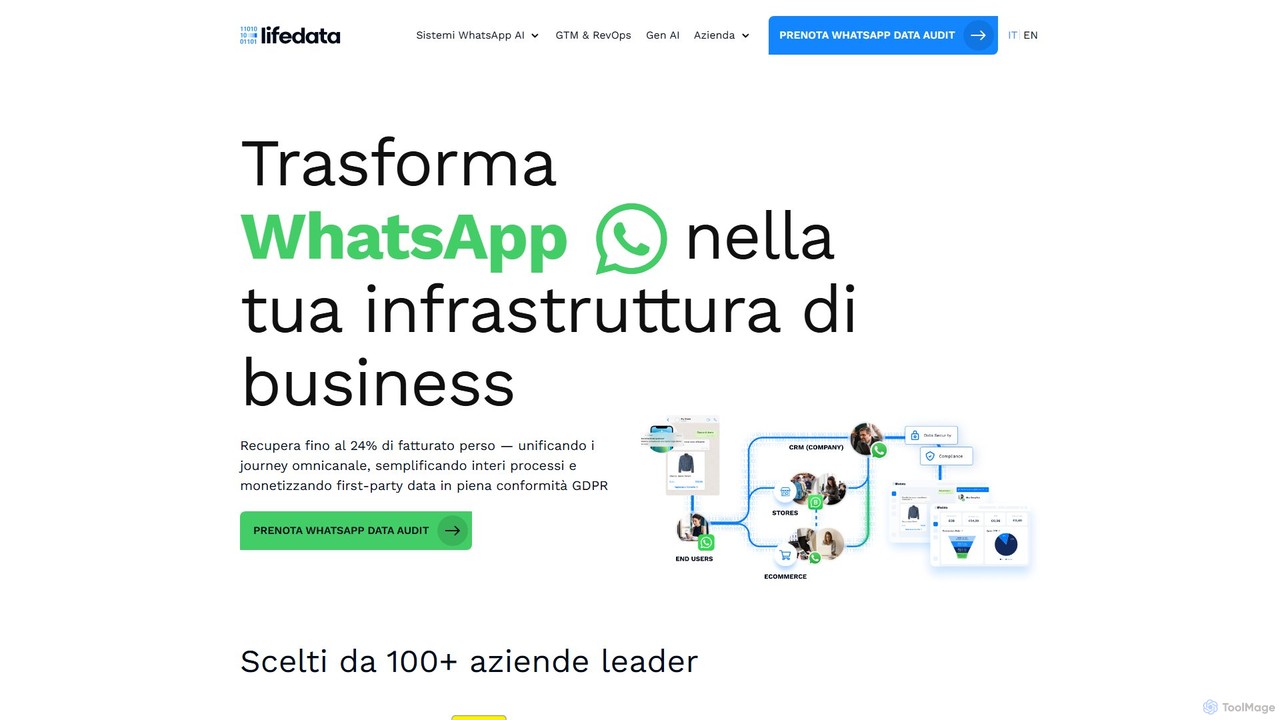
LIFEDATA is an enterprise-grade AI data platform designed to transform WhatsApp into a powerful business operations and revenue …
LIFEDATA is an enterprise-grade AI data platform designed to transform WhatsApp into a powerful business operations and revenue generation tool. It captures, normalizes, and analyzes WhatsApp conversations, enabling businesses to deploy generative AI agents, orchestrate omnichannel customer journeys, and manage sales, marketing, and customer service processes directly within WhatsApp. It focuses on data governance, GDPR compliance, and seamless integration with existing CRM and e-commerce systems to unlock the full potential of conversational commerce.
About Business Process Management
Business Process Management (BPM) tools are a specialized class of software for discovering, modeling, analyzing, and automating end-to-end business workflows. By integrating AI, these platforms can perform intelligent process mining to uncover hidden inefficiencies and use predictive analytics to forecast bottlenecks. The primary value of AI-powered BPM is to drive operational excellence, ensure regulatory compliance, and enable continuous process improvement at scale. As a core discipline within enterprise productivity, these tools provide a structured framework for optimizing complex, repeatable operations.
Core Features
- Process Mining & Discovery: Automatically analyzes system logs to visualize actual process flows, identify deviations, and pinpoint optimization opportunities.
- Intelligent Workflow Automation: Designs and executes complex workflows with AI-driven rules, dynamic task routing, and automated decision-making.
- Predictive Analytics: Forecasts process outcomes, predicts potential delays or compliance breaches, and provides real-time performance monitoring.
- Low-Code/No-Code Process Builder: Offers visual interfaces for business users to design, build, and modify workflows without extensive coding knowledge.
- Integration & API Management: Connects seamlessly with existing enterprise systems like ERP, CRM, and databases to orchestrate cross-functional processes.
Use Cases
AI-powered BPM is crucial for industries with complex, regulated processes such as finance (loan origination, claims processing), manufacturing (supply chain management), and healthcare (patient onboarding). Roles like business analysts, operations managers, and IT leaders use these tools to digitize and optimize core business functions, from HR onboarding to customer service resolution.
How to Choose
When selecting a BPM tool, evaluate its process mining capabilities to understand your current state. Assess the platform's scalability to handle both simple departmental tasks and complex enterprise-wide workflows. Consider its integration options with your core business systems and whether its low-code/no-code interface suits your team's technical skills. Finally, analyze its analytics features for monitoring performance and driving continuous improvement.

Business Process ManagementUse Cases
Automating Invoice Processing and Approval
A finance department uses an AI BPM platform to automate its accounts payable process. The system uses AI-powered OCR to extract data from incoming invoices, validates it against purchase orders in the ERP system, and automatically routes it for approval based on predefined rules (e.g., amount, department). For non-standard invoices, AI flags anomalies for human review. This end-to-end automation reduces manual data entry by over 90%, shortens payment cycles, and ensures a clear audit trail for compliance.
Streamlining New Customer Onboarding
A B2B software company uses a BPM tool to orchestrate a complex customer onboarding process. Once a deal is closed in the CRM, the BPM system automatically triggers a series of tasks: creating a customer account, assigning a dedicated success manager, scheduling a kickoff call, and sending a welcome kit. The process monitors key activation milestones and uses predictive analytics to flag at-risk accounts that show low engagement, allowing the success team to intervene proactively. This ensures a consistent, high-quality onboarding experience for every new client.
Managing Employee Onboarding and Offboarding
An HR department implements a BPM solution to standardize the entire employee lifecycle. For onboarding, accepting an offer letter triggers a workflow that coordinates IT for equipment setup, Finance for payroll enrollment, and Facilities for workspace allocation. For offboarding, a manager's request initiates a process to revoke system access, collect company assets, and conduct an exit interview. This ensures all steps are completed consistently, securely, and in compliance with company policies, while providing a seamless experience for employees.
Optimizing Supply Chain and Order Fulfillment
A manufacturing company uses a BPM platform to manage its entire order-to-cash cycle. The process begins when a customer order is received, automatically checking inventory levels, generating production orders if needed, and coordinating with logistics partners for shipping. The system provides real-time visibility into every order's status, from production to delivery. Process mining is used to analyze the entire supply chain, identifying bottlenecks (e.g., delays in customs clearance) and optimizing routes to reduce costs and improve delivery times.
Ensuring Regulatory Compliance in Finance
A bank uses a BPM system to manage its Know Your Customer (KYC) and Anti-Money Laundering (AML) compliance processes. When a new account is opened, the BPM tool orchestrates data collection, identity verification through third-party services, and risk assessment using an AI model. It creates a complete, unalterable audit trail of every action taken. The system automatically flags suspicious activities for review by a compliance officer, ensuring the bank adheres to strict financial regulations and can easily produce reports for auditors.
Accelerating Clinical Trial Management
A pharmaceutical research organization uses a BPM platform to manage the complex workflow of clinical trials. The system automates patient recruitment and screening, schedules appointments, manages data collection from multiple sites, and tracks regulatory submissions. It ensures that all procedures adhere strictly to the trial protocol and regulatory standards (like GCP). AI-powered analytics monitor trial data in real-time to identify trends or adverse events early, improving patient safety and accelerating the path to drug approval.