ToolMage
Sign in

Best 1 Chatbot Assistant for Productivity

Popular Chatbot Assistant in Productivity include HeyFitt, helping you work more efficiently.

HeyFitt
Freemium

HeyFitt

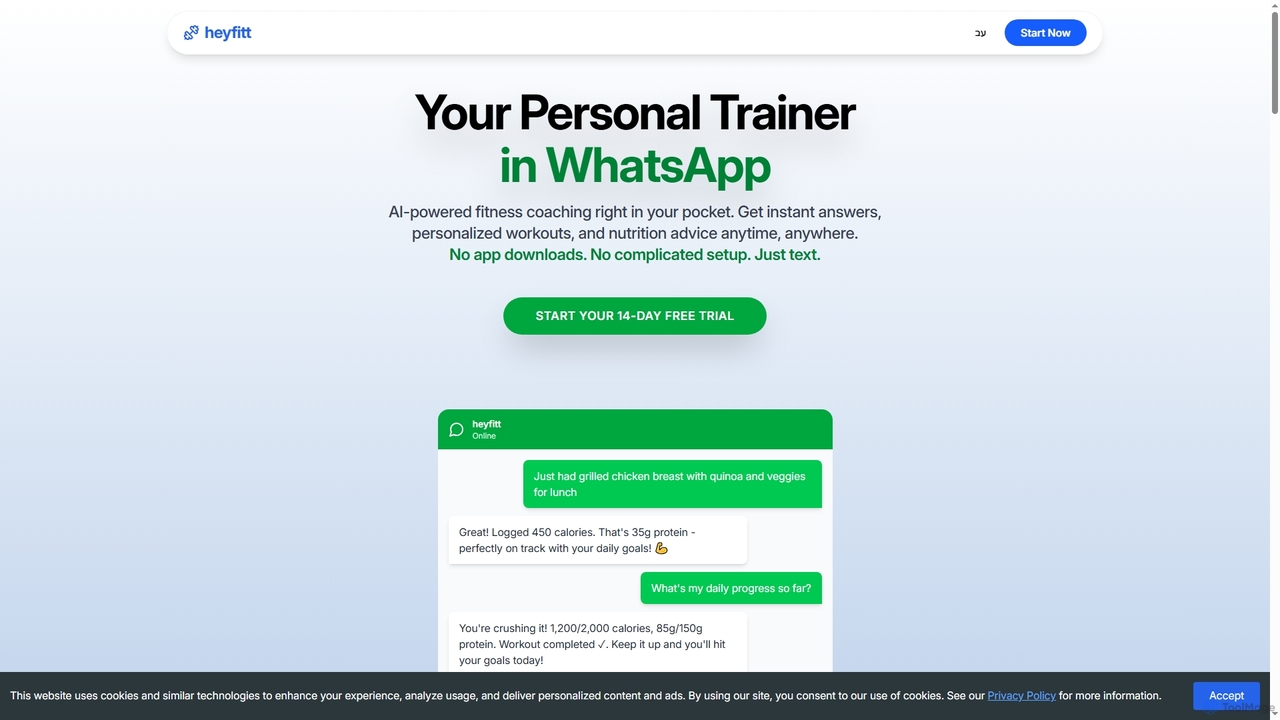
HeyFitt is an AI-powered fitness coach delivered directly through WhatsApp, offering personalized workout plans, nutrition advice, and instant answers 24/7. It eliminates the need for app downloads and complex setups, providing a convenient and accessible personal training experience.

Personal Training
Visits 4.9KFavorites 131Likes 151

About Chatbot Assistant

Chatbot Assistants are AI-powered tools designed to simulate human conversation, primarily through text or voice interfaces. They leverage advanced natural language processing (NLP) and machine learning to understand user queries, interpret intent, and provide relevant, automated responses. These tools significantly enhance customer service, automate routine tasks, and offer instant support across various digital platforms, streamlining communication and improving operational efficiency within the broader productivity ecosystem.

Core Features

  • Natural Language Understanding (NLU): Accurately interprets user intent and extracts key information from conversational input.
  • Automated Response Generation: Provides instant, contextually appropriate replies to common questions and requests.
  • Multi-channel Deployment: Operates seamlessly across websites, messaging apps, social media, and internal communication platforms.
  • Integration Capabilities: Connects with CRM, ERP, and other business systems for data retrieval and task execution.
  • Personalization & Context Retention: Adapts interactions based on user history and maintains conversation context for a tailored experience.

Applicable Scenarios

Chatbot Assistants are widely adopted in customer service, HR, sales, and marketing. They can automate initial customer inquiries, provide instant employee support for IT or HR questions, qualify sales leads on websites, and offer personalized product recommendations in e-commerce. These tools are crucial for businesses aiming to scale support and improve user engagement without increasing human agent workload.

How to Choose

When selecting a Chatbot Assistant, evaluate its NLU accuracy and ability to handle complex queries. Consider its ease of integration with your existing platforms (CRM, helpdesk) and scalability to meet future demands. Assess customization options for brand voice and specific workflows, along with supported languages and deployment flexibility (cloud vs. on-premise) to ensure it aligns with your business needs.

Chatbot Assistant use cases

1

Automate Customer Service Inquiries 24/7

For e-commerce businesses or service providers, a Chatbot Assistant can handle common customer questions about product availability, order status, or FAQs around the clock. By instantly providing accurate information, it reduces the workload on human agents by up to 70%, allowing them to focus on complex issues and significantly improving response times and customer satisfaction, ensuring continuous support.

2

Automating Customer Service Inquiries

Customer support teams can deploy Chatbot Assistants to handle a high volume of routine questions such as "What's my order status?" or "How do I reset my password?". The bot provides instant, accurate answers 24/7, reducing wait times and allowing human agents to focus on complex issues, significantly improving customer satisfaction and operational efficiency.

3

Provide Instant Internal HR and IT Support

Large organizations can deploy Chatbot Assistants to answer employee queries regarding HR policies, benefits, or IT troubleshooting steps. Employees get immediate access to information without waiting for human support, reducing resolution times for routine issues by 50% and freeing up HR and IT staff for more strategic, complex tasks, thereby boosting overall internal productivity.

4

Lead Qualification and Nurturing

Sales and marketing professionals utilize Chatbot Assistants on websites to engage visitors, ask qualifying questions about their needs and budget, and collect contact information. Based on responses, the bot can then provide relevant product information, schedule demos, or pass warm leads directly to sales representatives, accelerating the sales funnel.

5

Internal HR Support for Employees

HR departments can implement Chatbot Assistants to answer common employee questions regarding company policies, benefits, leave requests, or IT support. Employees get immediate access to information without needing to contact HR staff directly, streamlining internal communications and improving employee experience by providing quick, self-service solutions.

6

Qualify Sales Leads and Capture Information

Marketing and sales teams use Chatbot Assistants on websites to engage visitors, ask qualifying questions (e.g., budget, needs), and collect contact information. This automates the initial lead nurturing process, ensuring that sales representatives receive pre-qualified leads, potentially increasing conversion rates by 15-20% by focusing efforts on high-potential prospects and saving valuable time.

7

Personalized Product Recommendations

E-commerce platforms use Chatbot Assistants to guide shoppers through product catalogs. By asking about preferences, style, or specific needs, the bot can offer tailored product suggestions, compare items, and even assist with the checkout process. This personalized shopping experience helps increase conversion rates and average order value.

8

Offer Personalized Product Recommendations

Retailers can integrate Chatbot Assistants into their online stores to guide shoppers through product catalogs. Based on user preferences, browsing history, and direct questions, the chatbot suggests relevant products, enhancing the shopping experience and potentially increasing average order value by cross-selling and up-selling relevant items, leading to higher customer engagement and sales.

9

Automate Booking and Appointment Scheduling

Service-based businesses like clinics, salons, or consultants can use Chatbot Assistants to manage appointment bookings. The chatbot guides users through available slots, confirms details, and sends reminders, significantly reducing administrative overhead and missed appointments. This automation can save staff hours spent on phone calls and manual scheduling, improving efficiency and client satisfaction.

10

Educational Content Delivery and FAQs

Educational institutions or online course providers can use Chatbot Assistants to answer student queries about course schedules, assignments, or administrative procedures. The bot acts as an accessible knowledge base, providing instant information and freeing up faculty or administrative staff from repetitive questions, enhancing learning support.

11

Enhance User Onboarding and Training

Software companies or educational platforms can deploy Chatbot Assistants to guide new users through product features or course content. The chatbot provides interactive tutorials, answers common setup questions, and offers personalized tips, making the onboarding process smoother and more engaging. This reduces the need for extensive human support during initial setup, improving user retention and accelerating time-to-value.

12

Booking and Appointment Scheduling

Businesses in service industries, such as healthcare clinics, salons, or consulting firms, can integrate Chatbot Assistants to manage appointment bookings. Users can interact with the bot to check availability, select preferred times, and confirm appointments, reducing administrative overhead and providing a convenient, automated scheduling experience.

Chatbot Assistant FAQ

What are Chatbot Assistants and how do they work?

Chatbot Assistants are AI-powered software programs designed to simulate human conversation through text or voice interfaces. They work by leveraging Natural Language Processing (NLP) to understand user input, identify intent, and extract key information. Based on this understanding, they retrieve relevant answers from a knowledge base or execute predefined actions, providing instant, automated responses to user queries.

What are Chatbot Assistants?

Chatbot Assistants are AI-powered software programs designed to simulate human conversation through text or voice interfaces. They leverage natural language processing (NLP) to understand user input, interpret intent, and provide automated, relevant responses. These tools are primarily used to enhance customer service, automate routine inquiries, and provide instant information across various digital channels, significantly improving efficiency and user experience in a productivity context.

How do Chatbot Assistants differ from traditional rule-based chatbots?

Chatbot Assistants, powered by AI, use machine learning and NLP to understand context, sentiment, and complex queries, allowing for more natural and flexible conversations. Traditional rule-based chatbots, in contrast, operate on predefined scripts and keywords, only responding to exact matches. AI Chatbot Assistants can learn and adapt, handling a wider range of user inputs and providing a more human-like interaction, whereas rule-based bots are limited to specific, pre-programmed paths.

How do Chatbot Assistants understand and respond to users?

Chatbot Assistants primarily work by combining Natural Language Processing (NLP) and Machine Learning (ML). When a user inputs text or voice, NLP algorithms analyze the language to understand the intent and extract key entities. ML models, trained on vast datasets, then predict the most appropriate response from a knowledge base or generate a new one. Some advanced chatbots also use contextual memory to maintain conversation flow and provide more personalized interactions, ensuring relevance and accuracy.

What are the main benefits of implementing a Chatbot Assistant for a business?

Implementing a Chatbot Assistant offers several key benefits: it provides 24/7 customer support, significantly reducing response times and improving customer satisfaction. It automates routine tasks, freeing human agents to focus on complex issues, thereby increasing operational efficiency and reducing labor costs. Additionally, chatbots can personalize user experiences, gather valuable data for insights, and scale easily to handle fluctuating demand without additional staffing.

What are the main benefits of using Chatbot Assistants for businesses?

Businesses benefit from Chatbot Assistants in several ways. They provide 24/7 availability, ensuring continuous support and engagement. They significantly reduce operational costs by automating routine tasks and decreasing the need for human intervention. Chatbots improve customer satisfaction through instant responses and consistent information. Furthermore, they can collect valuable user data, offer personalized experiences, and scale easily to handle high volumes of interactions without compromising quality, boosting overall productivity.

What's the difference between a Chatbot Assistant and a Virtual Assistant like Siri or Alexa?

While both are AI-driven conversational agents, Chatbot Assistants are typically designed for specific business or task-oriented interactions, often deployed on websites, apps, or messaging platforms to handle customer service, sales, or internal support. Virtual Assistants like Siri or Alexa are broader, general-purpose personal assistants integrated into devices, designed to perform a wider range of tasks, answer general knowledge questions, and control smart home devices, primarily for individual users and personal productivity.

What features should I look for when choosing a Chatbot Assistant platform?

When selecting a Chatbot Assistant platform, prioritize strong Natural Language Understanding (NLU) for accurate intent recognition and multi-language support. Look for robust integration capabilities with your existing CRM, helpdesk, and other business systems. Essential features also include a user-friendly interface for bot training and management, scalability, customization options for branding, and analytics to monitor performance. Consider the vendor's support and the platform's security measures.

Can Chatbot Assistants truly replace human customer service agents?

While Chatbot Assistants excel at handling routine inquiries, providing instant answers, and automating repetitive tasks, they are generally not designed to fully replace human customer service agents. Instead, they serve as powerful complements, handling the bulk of common questions and escalating complex or sensitive issues to human agents. This hybrid approach optimizes efficiency, improves response times, and allows human agents to focus on high-value interactions that require empathy, critical thinking, and nuanced problem-solving.

What should I consider when choosing a Chatbot Assistant for my business?

When selecting a Chatbot Assistant, consider its Natural Language Understanding (NLU) accuracy and ability to handle complex queries. Evaluate its integration capabilities with your existing CRM, ERP, or communication platforms. Look for customization options to align with your brand voice and specific business workflows. Scalability, supported languages, deployment options (cloud/on-premise), and the vendor's support and analytics features are also crucial factors to ensure it meets your current and future needs for enhanced productivity.