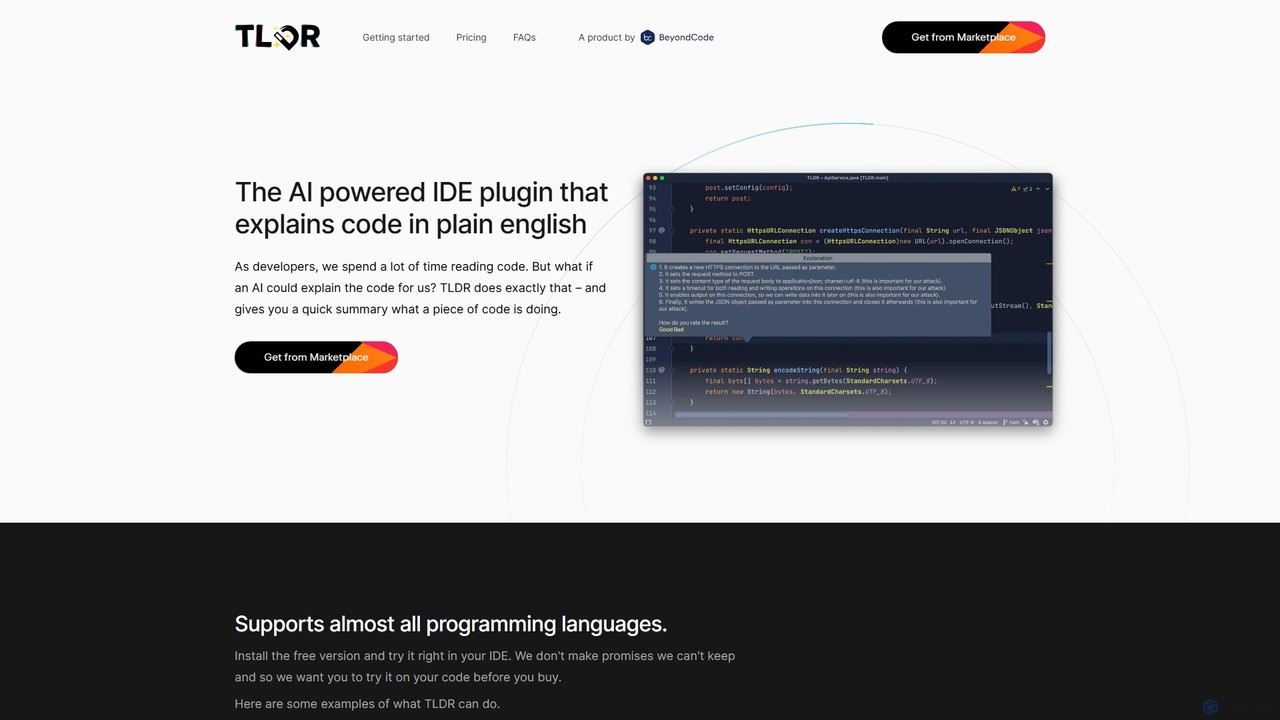
Code Analysis tools are AI-powered solutions designed to automatically examine source code for quality, security vulnerabilities, performance issues, and adherence to coding standards. Leveraging advanced machine learning and static analysis techniques, these tools provide deep insights into codebases, identifying potential problems before they reach production. They significantly enhance developer productivity and software reliability by automating critical aspects of code review and quality assurance.
Core Features
- Automated Bug Detection: Identifies logical errors, runtime exceptions, and common programming mistakes.
- Security Vulnerability Scanning: Detects potential security flaws like SQL injection, cross-site scripting (XSS), and insecure configurations.
- Code Quality & Style Enforcement: Ensures adherence to coding standards, identifies code smells, and suggests improvements for maintainability.
- Performance Optimization Suggestions: Pinpoints inefficient code patterns and offers recommendations for faster execution.
- Dependency Analysis: Maps out external library usage and flags outdated or vulnerable dependencies.
Applicable Scenarios
These tools are indispensable for software development teams, security engineers, and quality assurance professionals. They are used in continuous integration/continuous deployment (CI/CD) pipelines to provide instant feedback, during code reviews to augment human analysis, and for auditing large legacy codebases to identify technical debt and security risks. They help maintain high code quality across projects of all sizes.
How to Choose
When selecting a Code Analysis tool, consider its support for your programming languages, integration capabilities with your existing IDEs and CI/CD systems, the accuracy and relevance of its findings, and its ability to provide actionable recommendations. Evaluate the reporting features, customization options for rulesets, and the pricing model. Scalability for growing projects and community support are also important factors.