Code Mentor
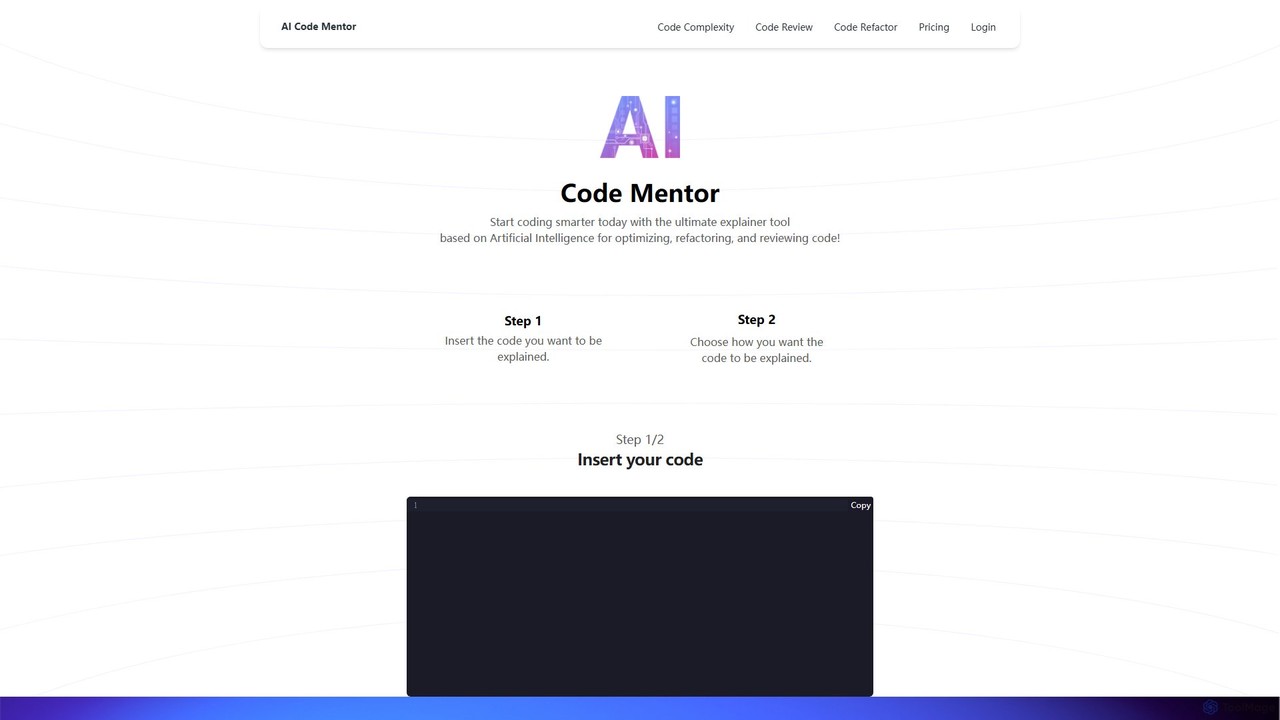
Code Mentor is an AI-powered tool that helps developers understand, optimize, refactor, and review code. It provides clear …
Code Mentor is an AI-powered tool that helps developers understand, optimize, refactor, and review code. It provides clear explanations in various styles through unique AI personas, making it perfect for both beginners and experts to improve code quality and accelerate learning.
About Code Optimization
AI Code Optimization tools are specialized utilities that automatically analyze, refactor, and enhance source code to improve performance and efficiency. They employ machine learning models trained on vast codebases to identify complex inefficiencies, such as algorithmic bottlenecks, memory leaks, and redundant computations. By providing intelligent suggestions and automated refactoring, these tools help developers create faster, more resource-efficient, and maintainable software. This goes beyond simple syntax checks, offering deep, context-aware improvements that boost application speed and reduce operational costs.
Core Features
- Performance Bottleneck Detection: Automatically identifies slow functions, inefficient database queries, and CPU-intensive operations through static or dynamic analysis.
- Automated Code Refactoring: Intelligently rewrites code segments to improve readability, maintainability, and performance without altering functionality.
- Resource Usage Optimization: Analyzes memory allocation and CPU cycles, suggesting changes to reduce consumption and prevent issues like memory leaks.
- Efficient Algorithm Suggestions: Recommends alternative, more performant algorithms or data structures for specific computational tasks.
- Integration with Dev Workflows: Seamlessly connects with IDEs and CI/CD pipelines to provide real-time feedback and automated checks.
Use Cases
These tools are invaluable for software developers, DevOps engineers, and performance testers working on performance-critical applications. They are commonly used to optimize backend services, data processing pipelines, mobile applications, and gaming engines. They are also essential for modernizing legacy systems and reducing cloud infrastructure costs by making applications more efficient.
How to Choose
When selecting an AI Code Optimization tool, evaluate its support for your specific programming languages and frameworks. Consider the depth of its analysis—whether it performs static, dynamic, or a hybrid analysis. Assess its integration capabilities with your existing development environment and CI/CD pipeline. Finally, compare the quality and actionability of its recommendations and its ability to automate refactoring safely.
Code OptimizationUse Cases
Accelerating Legacy System Performance
A software maintenance team is tasked with improving the responsiveness of a decade-old enterprise Java application without a complete rewrite. They use an AI Code Optimization tool to scan the entire codebase. The tool's dynamic analysis profiles the application under load, pinpointing several inefficient SQL queries and a bottleneck in a core processing module. It then suggests and automatically applies refactoring changes, such as adding indexes and optimizing loops, resulting in a 40% reduction in average API response time and extending the system's lifespan.
Reducing Cloud Infrastructure Costs
A DevOps team at a fast-growing startup wants to control their rising AWS cloud expenses. They integrate an AI Code Optimization tool into their CI/CD pipeline for their Python and Go microservices. Before each deployment, the tool automatically analyzes the code for memory inefficiencies and excessive CPU usage. It identifies areas where memory allocation can be reduced and suggests more efficient data handling patterns. By implementing these automated suggestions, the team successfully downsizes their EC2 instances, leading to a consistent 20% monthly saving on their cloud bill.
Optimizing Mobile App Battery Consumption
An Android developer is receiving user feedback that their app drains the battery too quickly. Using an AI Code Optimization tool, they analyze their Kotlin codebase. The tool identifies several long-running tasks on the main UI thread and inefficient background data synchronization processes. It recommends shifting tasks to background threads using coroutines and implementing more efficient data caching strategies. These changes significantly reduce the app's energy impact, improving user satisfaction and App Store ratings.
Enhancing Real-Time Data Processing Speed
A data engineering team builds a real-time analytics platform in Scala that processes thousands of events per second. Performance is critical. They use an AI Code Optimization tool to analyze their Apache Spark jobs. The tool identifies bottlenecks in data shuffling operations and suggests optimizing data partitioning and serialization formats. It also refactors complex data transformation logic into more performant functions. This fine-tuning shaves crucial milliseconds off the processing latency, ensuring the platform meets its strict service-level agreements (SLAs).
Improving Game Engine Frame Rates
A game developer working with the Unity engine in Cstruggles to maintain a stable 60 FPS on mid-range devices. They employ an AI Code Optimization tool to profile the game's scripts. The tool highlights performance hotspots within the physics simulation and rendering loops. It suggests specific optimizations, such as object pooling to reduce garbage collection, caching component lookups, and replacing inefficient algorithms in the AI behavior scripts. Implementing these fixes helps stabilize the frame rate and deliver a smoother player experience.
Automating Code Quality and Maintainability
A team lead wants to improve the long-term health of a large TypeScript codebase. They configure an AI Code Optimization tool to run continuously on their repository. The tool goes beyond a simple linter by understanding the code's logic. It automatically refactors overly complex functions into smaller, more manageable units, removes dead or unreachable code, and standardizes error handling patterns. This continuous, automated improvement makes the code easier to debug, test, and onboard new developers, increasing overall team productivity.