Productivity Best in category 1 results Construction Management AI Tool

Popular AI tools in the Construction Management field of Productivity include ContextFort, etc., helping you quickly improve efficiency.

ContextFort

ContextFort

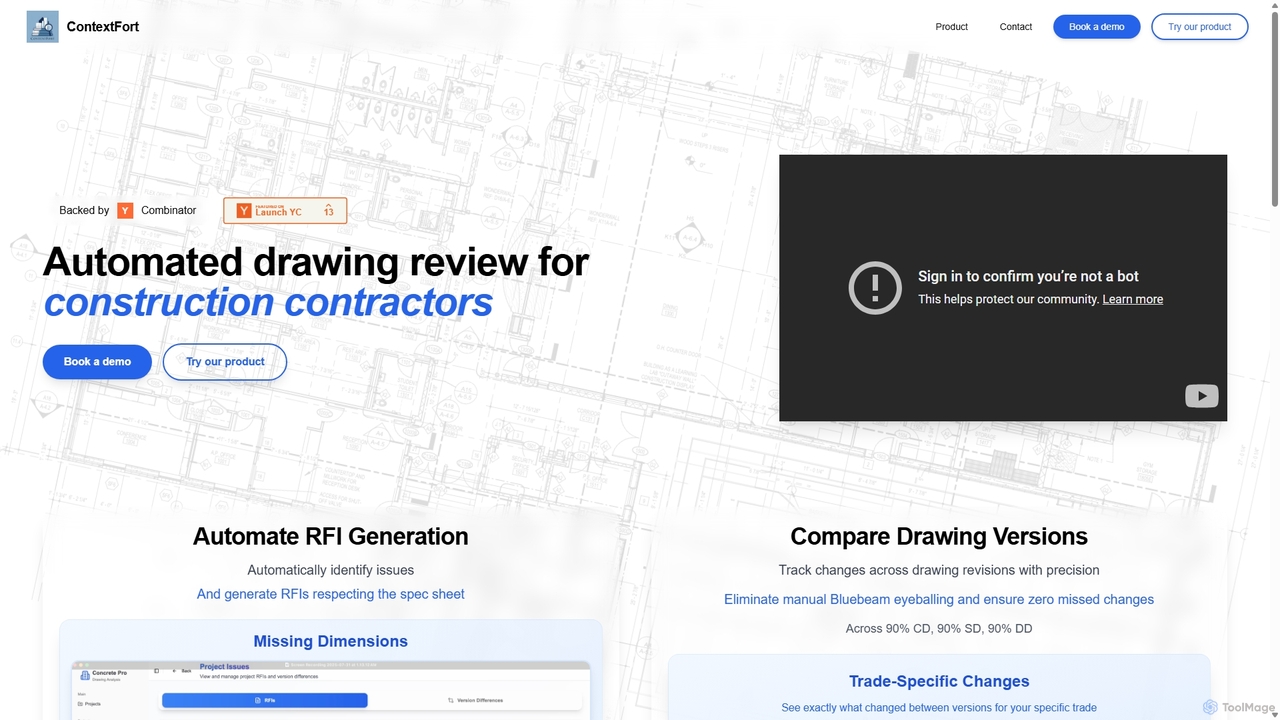
ContextFort is an AI-powered platform for construction contractors that automates the review of architectural and structural drawings. It …

3.4K

About Construction Management

Construction Management AI tools are specialized platforms that leverage artificial intelligence to optimize and streamline various stages of construction projects. These tools utilize data analysis, machine learning, and predictive modeling to enhance planning, execution, and monitoring. They aim to improve project efficiency, reduce costs, mitigate risks, and ensure timely delivery within the broader scope of productivity solutions.

Core Features

  • Project Scheduling Optimization: AI algorithms analyze project data to create optimized schedules, predict delays, and suggest adjustments.
  • Risk Assessment & Mitigation: Identify potential project risks, analyze their impact, and recommend proactive mitigation strategies.
  • Progress Monitoring & Reporting: Automate tracking of site progress, compare it against plans, and generate real-time reports.
  • Resource Allocation & Management: Optimize the deployment of labor, equipment, and materials across multiple projects.
  • Predictive Maintenance: Forecast equipment failures and maintenance needs to minimize downtime and extend asset lifespan.

Applicable Scenarios

Construction Management AI tools are invaluable for project managers, site supervisors, contractors, and developers seeking to enhance operational efficiency. They are applied in scenarios ranging from large-scale infrastructure projects to commercial building developments, helping teams manage complex logistics, budgets, and timelines more effectively.

How to Choose

When selecting Construction Management AI tools, consider the breadth of features, integration capabilities with existing BIM or ERP systems, data security protocols, and the scalability to handle projects of varying sizes. User-friendliness, vendor support, and the accuracy of predictive models are also crucial for effective implementation.

Construction ManagementUse Cases

1

Optimizing Project Schedules and Resource Allocation

Project managers use AI to analyze historical data, weather patterns, and resource availability to generate optimized construction schedules, predict potential delays, and efficiently allocate labor and equipment, reducing project overruns by up to 15%.

2

Real-time Site Progress Monitoring

Site supervisors deploy AI-powered drones and cameras to capture real-time site imagery. AI algorithms then analyze this data to compare actual progress against the planned schedule, identifying deviations early and enabling proactive adjustments, improving project adherence by 20%.

3

Predictive Maintenance for Heavy Equipment

Construction companies utilize AI to monitor the performance and health of heavy machinery. Sensors collect data on usage, temperature, and vibrations, allowing AI to predict potential equipment failures before they occur, minimizing unexpected downtime and maintenance costs by 25%.

4

Automated Risk Assessment and Mitigation

Project planners leverage AI to analyze project plans, environmental factors, and historical incident data to identify high-risk areas. The AI then suggests specific mitigation strategies for safety, budget, and timeline risks, enhancing project safety compliance and reducing unforeseen costs.

5

Streamlining Document Management and Compliance

Contractors use AI tools to automatically categorize, index, and retrieve vast amounts of project documentation, including blueprints, permits, and contracts. This ensures compliance with regulatory standards and significantly reduces the time spent on administrative tasks and audits.

6

Enhancing Safety Protocol Enforcement

Safety officers employ AI-powered vision systems on construction sites to detect non-compliance with safety protocols, such as workers not wearing hard hats or entering restricted zones. The system provides immediate alerts, improving overall site safety and reducing accident rates.

Construction ManagementFrequently Asked Questions