
Paid
Spira
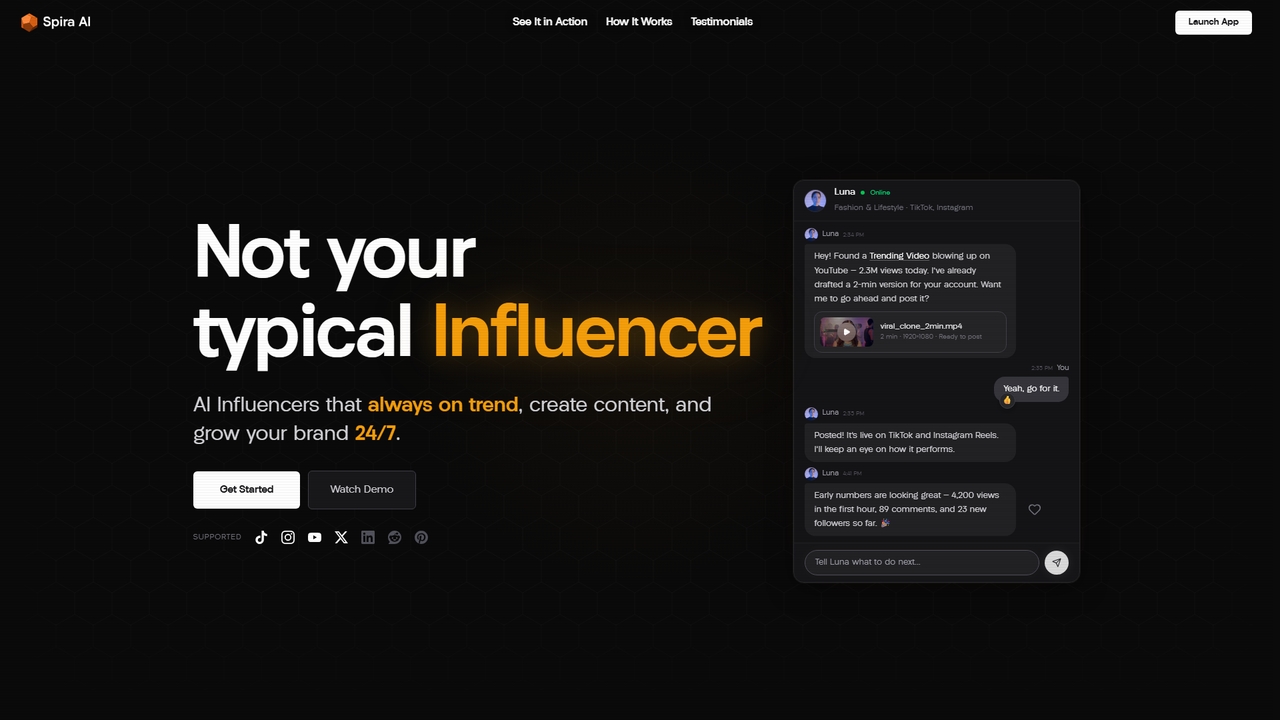
Spira is an AI Influencer Agent that autonomously creates, publishes, and optimizes social media content across TikTok, Instagram, YouTube, and X to grow your brand 24/7.
Social Media ManagementVisits 19.4KFavorites 26Likes 22
Popular Content Automation AI tools in Productivity include Vidfly, Spira, and UdanAI, helping you work more efficiently.
Spira is an AI Influencer Agent that autonomously creates, publishes, and optimizes social media content across TikTok, Instagram, YouTube, and X to grow your brand 24/7.
Social Media Management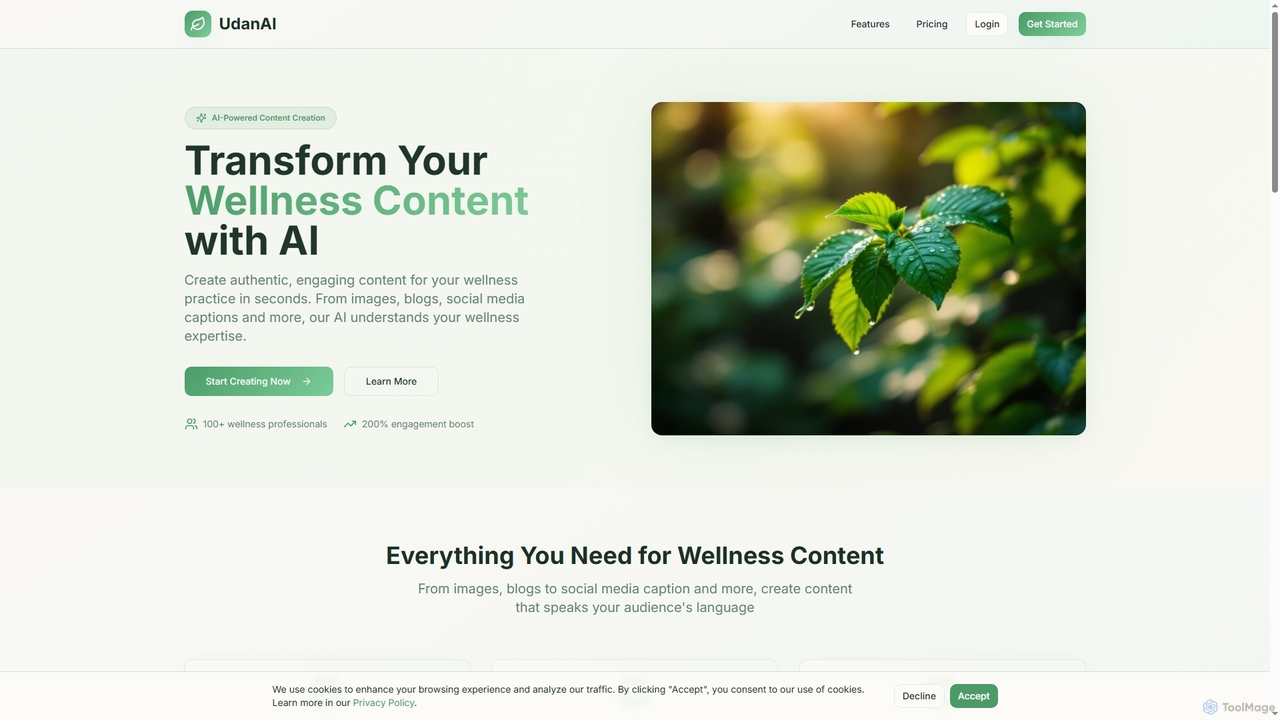
UdanAI is an AI-powered content creation platform designed specifically for wellness professionals. It helps practitioners generate authentic and engaging content, including images, blogs, social media posts, class sequences, and more, to connect with their audience and grow their practice efficiently.
Image Generation
Vidfly is an AI-powered video generator that enables users to create captivating videos from scripts, text, or images in minutes, without prior editing experience. It leverages over 50 AI models to reduce production costs, save time, and boost engagement for various content needs.
Video EditingContent Automation refers to AI-powered tools designed to streamline and automate various stages of the content lifecycle, from creation and curation to distribution and optimization. These tools leverage artificial intelligence, machine learning, and natural language processing to handle repetitive and time-consuming content tasks. By automating these processes, Content Automation significantly enhances efficiency and scalability for individuals and businesses, allowing them to produce high-quality content consistently across multiple platforms. It's a specialized area within the broader field of productivity, focusing specifically on content-related workflows.
Content Automation tools are invaluable for marketing teams, content creators, e-commerce businesses, and digital agencies. They are used to maintain a consistent online presence, scale content production without increasing headcount, and ensure brand messaging is uniform across all touchpoints. From generating product descriptions to scheduling social media posts, these tools empower users to focus on strategic initiatives rather than manual execution.
When selecting a Content Automation tool, consider its specific generation capabilities (text, image, video), the range of platforms it integrates with for distribution, and its ability to learn and adapt to your brand voice. Evaluate the level of customization offered, the ease of use for your team, and the scalability of its features to match your growing content needs. Also, assess its analytics and optimization features to ensure it provides actionable insights for continuous improvement.
A digital marketing manager needs to maintain an active presence across multiple social media platforms daily. Using content automation tools, they can input a topic or a brief, and the AI generates various post ideas, captions, and even relevant images or videos. The tool then automatically schedules these posts according to a pre-defined calendar, ensuring consistent engagement and saving hours of manual planning and posting each week. This allows the manager to focus on campaign strategy and audience interaction.
An e-commerce business with thousands of products struggles to create unique and engaging descriptions for each item. Content automation tools can ingest product specifications (e.g., material, color, features) and target audience data, then generate multiple variations of SEO-optimized product descriptions. This not only saves immense time compared to manual writing but also ensures consistency in tone and style, while improving search engine visibility and conversion rates by tailoring content to specific customer segments.
A content marketing team needs to produce a high volume of blog posts weekly to drive organic traffic. Instead of starting from scratch, they use content automation to generate outlines, research key points, and even draft initial sections of articles based on target keywords and topics. This accelerates the research and writing process, allowing human writers to focus on refining, adding unique insights, and ensuring brand voice, effectively increasing content output by 30-50%.
A marketing department aims to send highly personalized email campaigns to thousands of subscribers. Content automation tools integrate with CRM data to segment audiences and dynamically generate email subject lines, body copy, and calls-to-action tailored to each segment's preferences and past interactions. This level of personalization, impossible to achieve manually at scale, significantly boosts open rates, click-through rates, and ultimately, conversion rates for various marketing initiatives.
A content creator has produced a comprehensive webinar or a lengthy whitepaper. Instead of manually extracting key points, content automation tools can analyze the long-form content and automatically generate short social media snippets, infographic texts, email teasers, or video scripts. This efficient repurposing maximizes the reach and value of existing assets, ensuring that valuable information is disseminated across various channels in formats optimized for each platform, without significant additional effort.
A marketing analyst spends significant time manually compiling data from various sources to understand content performance. Content automation tools can integrate with analytics platforms (e.g., Google Analytics, social media insights) to automatically generate comprehensive reports on content engagement, traffic, and conversions. These tools can also highlight trends, identify top-performing content, and suggest actionable insights for future content strategy, reducing manual reporting time by up to 70% and enabling data-driven decisions.
Content Automation refers to AI-powered tools that automate the creation, management, distribution, and optimization of digital content. They leverage technologies like AI, machine learning, and natural language processing to streamline repetitive content tasks. This helps businesses and individuals produce high-quality content consistently across various platforms, significantly boosting efficiency and scalability in content workflows.
Content Automation tools significantly enhance productivity by taking over repetitive, time-consuming tasks such as drafting initial content, scheduling posts, and analyzing performance data. This frees up human creators and marketers to focus on strategic planning, creative ideation, and high-level decision-making. By automating the mundane, these tools allow teams to scale content production, maintain consistency, and achieve better results with fewer manual hours, directly contributing to overall productivity goals.
While both deal with content, Content Automation focuses on the *creation, optimization, and distribution* of content using AI to perform tasks. It actively generates, repurposes, and schedules content. A Content Management System (CMS), on the other hand, is primarily a *repository and organizational tool* for content. It helps store, organize, and publish content, but typically doesn't automate the generation or intelligent optimization of the content itself. Content automation tools often integrate with CMS platforms to enhance their capabilities.
Content automation tools can handle a wide variety of content types. This includes text-based content like blog posts, articles, product descriptions, social media captions, email newsletters, and ad copy. Many tools also extend to visual content, generating images, simple videos, or even repurposing existing visual assets. Some advanced platforms can assist with audio content, such as generating podcast scripts or voiceovers, making them versatile for multimedia content strategies.
Content Automation tools primarily benefit marketing teams, content creators, digital agencies, and e-commerce businesses. Anyone involved in producing and distributing a high volume of content across multiple channels will find these tools invaluable. They are particularly useful for scaling operations, maintaining brand consistency, improving SEO, and freeing up creative talent from repetitive tasks. Small businesses can also leverage them to compete with larger enterprises by efficiently managing their content output.