ToolMage
Sign in

Best 5 Content Moderation AI tools for Productivity

Popular Content Moderation AI tools in Productivity include Perspective API, Reality Defender, Choice AI, Heysheriff, and Is This Image NSFW?, helping you work more efficiently.

Heysheriff
Freemium

Heysheriff

Heysheriff is an AI-powered content moderation and brand safety platform. It automatically detects and filters harmful content, spam, and abuse across online communities, social media, and user-generated content platforms, ensuring a safe and positive user experience.

Api
Visits 4.5KFavorites 140Likes 151
Choice AI
Paid

Choice AI

Choice AI is an enterprise-grade platform offering AI-powered solutions for audio, video, and text content. It specializes in automated content moderation, multilingual transcription, translation, voice cloning, and dubbing, enabling media platforms and creators to manage, sanitize, and personalize content at scale while ensuring compliance.

Transcription
Visits 5.3KFavorites 96Likes 102
Is This Image NSFW?
Free

Is This Image NSFW?

A free, AI-powered web tool that instantly checks if an image is Not Safe For Work (NSFW). Based on the Stable Diffusion safety checker, it allows users to upload any PNG or JPG image via a simple drag-and-drop interface to ensure content appropriateness for professional or public settings.

Image Analysis
Visits 4.3KFavorites 120Likes 100
Reality Defender
Paid

Reality Defender

Reality Defender is an enterprise-grade platform for detecting AI-generated content and deepfakes. It provides multi-modal analysis of video, audio, images, and text to help businesses, governments, and platforms combat fraud, misinformation, and security threats. With its robust API and real-time scanning capabilities, it protects against sophisticated digital forgeries.

Audio Editing
Visits 29.4KFavorites 132Likes 117
Perspective API
Freemium

Perspective API

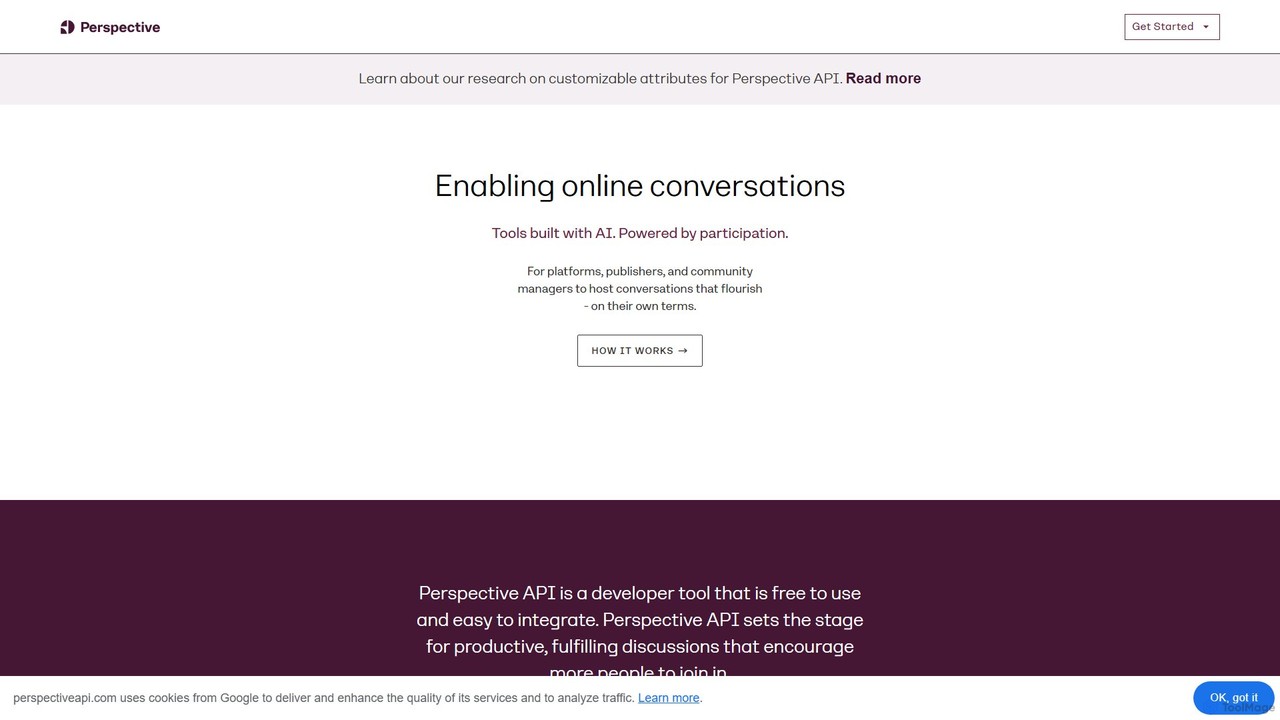
Perspective API is a free developer tool from Google's Jigsaw that uses machine learning to analyze online conversations. It scores text for attributes like toxicity, insult, and threat, helping platforms, publishers, and community managers foster healthier online discussions. By providing real-time feedback and moderation tools, it empowers developers to build systems that encourage constructive engagement and reduce online harassment at scale.

Api
Visits 32KFavorites 123Likes 94

About Content Moderation

AI Content Moderation tools are a specialized category of productivity software designed to automatically detect, flag, and filter inappropriate or harmful user-generated content. These tools leverage advanced machine learning models, including Natural Language Processing (NLP) for text and Computer Vision for images and videos, to analyze content in real-time. Their primary value lies in maintaining brand safety, ensuring legal compliance, and fostering healthy online communities by efficiently scaling moderation efforts. This automation significantly reduces the workload on human moderators and enables platforms to enforce their policies consistently across vast volumes of content.

Core Features

  • Text and NLP Analysis: Detects profanity, hate speech, spam, personal information (PII), and toxic language in comments, posts, and messages.
  • Image and Video Moderation: Identifies explicit content such as nudity, violence, weapons, and other visually sensitive material using computer vision.
  • Policy Automation: Allows administrators to define and automatically enforce custom community guidelines and content policies.
  • Real-time Filtering: Scans and makes decisions on content as it is being uploaded, preventing harmful material from going public.
  • Reporting and Analytics: Provides dashboards with insights into moderation trends, accuracy rates, and the types of content being flagged.

Use Cases

These tools are essential for social media platforms, online forums, e-commerce sites with customer reviews, live streaming services, and online gaming communities. For example, a social network uses them to instantly remove graphic content, while an e-commerce platform filters out spam and fake reviews to maintain trust.

How to Choose

When selecting an AI Content Moderation tool, consider its accuracy and recall rates for different types of content. Evaluate its support for various media types (text, image, video, audio) and languages. Assess the ease of API integration with your existing platform, the flexibility to customize moderation rules, and its ability to scale with your user growth.

Featured tool rankings

Content Moderation use cases

1

Securing Social Media Platforms

A community manager for a large social media platform is tasked with protecting users from harmful content. They use an AI Content Moderation tool to automatically scan millions of daily posts, comments, and images in real-time. The tool is configured to instantly flag and quarantine content containing hate speech, graphic violence, and spam based on predefined policies. This reduces the manual review queue by over 90%, allowing the human team to focus on nuanced cases and appeals, thereby creating a safer user environment and maintaining platform integrity.

2

Maintaining Authenticity in E-commerce Reviews

An e-commerce marketplace manager needs to ensure customer reviews are genuine and helpful. They implement an AI moderation tool to analyze all incoming product reviews. The AI detects patterns indicative of fake reviews, such as repetitive phrasing across different products, spam links, and irrelevant content. It also filters out reviews containing profanity or personal information. This automated process helps maintain the credibility of the review system, builds customer trust, and provides more reliable feedback for both buyers and sellers.

3

Fostering a Positive Online Gaming Community

The operations team for a popular multiplayer online game wants to combat toxicity in its in-game chat. They integrate an AI Content Moderation API that specializes in gaming-related slang and behavior. The system monitors chat in real-time, detecting and flagging harassment, cheating accusations, and extreme profanity. Based on severity, the tool can issue automated warnings, mute players temporarily, or escalate the case to a human moderator for a potential ban. This proactive approach significantly improves the player experience and helps retain users by creating a less toxic and more welcoming environment.

4

Monitoring Live Streaming for Policy Violations

A live streaming platform needs to enforce its terms of service during live broadcasts to prevent the spread of harmful content. They employ an AI moderation tool that analyzes video and audio streams in real-time. The AI is trained to detect visual policy violations like nudity or violence, as well as prohibited keywords in the audio or chat. When a violation is detected, the system automatically alerts a human moderation team, who can then review the context and take immediate action, such as terminating the stream. This ensures a rapid response to policy breaches, protecting both the audience and the platform's reputation.

5

Protecting Brand Image in Digital Advertising

An ad network needs to ensure its clients' advertisements do not appear alongside inappropriate or unsafe content on publisher websites. They use an AI content moderation tool to crawl and analyze the text and images of web pages where ads could be placed. The tool classifies pages based on topics like hate speech, adult content, or fake news. This allows the ad network to automatically block ad placements on non-compliant pages, protecting the brand safety of their advertisers and ensuring ads are displayed in a suitable context, which also improves campaign performance.

6

Ensuring Child Safety in Educational Apps

A developer of an online learning platform for children must create a completely safe environment. They integrate a highly sensitive AI content moderation tool into all communication features, such as forums and direct messaging. The AI is specifically trained to detect and immediately block any form of cyberbullying, grooming behavior, sharing of personal information, and exposure to adult themes. Any attempt to send such content results in an instant block and an alert to a dedicated safety team. This robust, automated moderation is critical for complying with child protection regulations and earning the trust of parents and educators.

Content Moderation FAQ

What are AI Content Moderation tools?

AI Content Moderation tools are software solutions that use artificial intelligence, primarily machine learning, natural language processing (NLP), and computer vision, to automatically analyze and manage user-generated content. Their main purpose is to identify and filter content that violates a platform's policies, such as hate speech, spam, nudity, or violence. Unlike purely manual moderation, these tools can process immense volumes of data in real-time, providing a scalable first line of defense for online communities, social media, and marketplaces to ensure safety and compliance.

How to choose the right AI Content Moderation tool?

Choosing the right tool depends on your specific needs. Consider the following factors:

  • Content Types: Ensure the tool supports all the media you need to moderate, such as text, images, videos, and even audio.
  • Accuracy and Recall: Evaluate the tool's performance metrics. High accuracy minimizes false positives (flagging safe content), while high recall minimizes false negatives (missing harmful content).
  • Customization: Look for the ability to create custom policies and thresholds that align with your community guidelines, rather than relying on a one-size-fits-all model.
  • Integration and Scalability: The tool should offer a robust API for easy integration into your existing platform and be able to handle your current and future content volume.
  • Language Support: If you have a global user base, verify that the tool effectively moderates content in all relevant languages.
What is the difference between AI moderation and manual moderation?

The primary difference lies in scale, speed, and consistency. AI moderation excels at processing millions of items per minute with consistent application of rules, making it ideal for handling high volumes of content in real-time. Manual moderation, performed by humans, provides nuanced understanding, cultural context, and the ability to interpret complex situations that AI might misjudge. AI is best for a first-pass filter to catch obvious violations, while humans are essential for reviewing flagged content, handling appeals, and making final judgments on gray-area cases. Most effective strategies use a hybrid approach, combining the strengths of both.

What types of content can AI moderation tools detect?

AI moderation tools can detect a wide range of policy-violating content across different media. Common categories include:

  • Explicit Content: Nudity, pornography, and graphic violence in images and videos.
  • Hate Speech and Harassment: Racist, sexist, homophobic, and other derogatory language targeting individuals or groups.
  • Spam and Scams: Unsolicited advertising, phishing links, and fraudulent content.
  • Illegal Activities: Content depicting or promoting illegal acts, such as drug use or the sale of regulated goods.
  • Self-Harm: Language or imagery that promotes or glorifies self-injury or suicide.
  • Personally Identifiable Information (PII): Detection of sensitive data like phone numbers, addresses, and financial information to protect user privacy.
Why is AI Content Moderation important for online platforms?

AI Content Moderation is crucial for several reasons. First, it protects users from exposure to harmful, illegal, or inappropriate content, creating a safer and more positive user experience. Second, it helps platforms maintain brand safety and reputation by ensuring their environment is not overrun with toxic behavior or spam. Third, it is essential for legal and regulatory compliance, helping companies adhere to laws like the GDPR or COPPA. Finally, by automating the bulk of moderation tasks, it significantly improves operational efficiency, allowing human moderators to focus their expertise on complex cases that require nuanced judgment, which increases overall productivity.