Productivity Best in category 1 results Data Pipeline AI Tool

Popular AI tools in the Data Pipeline field of Productivity include DAGForge, etc., helping you quickly improve efficiency.

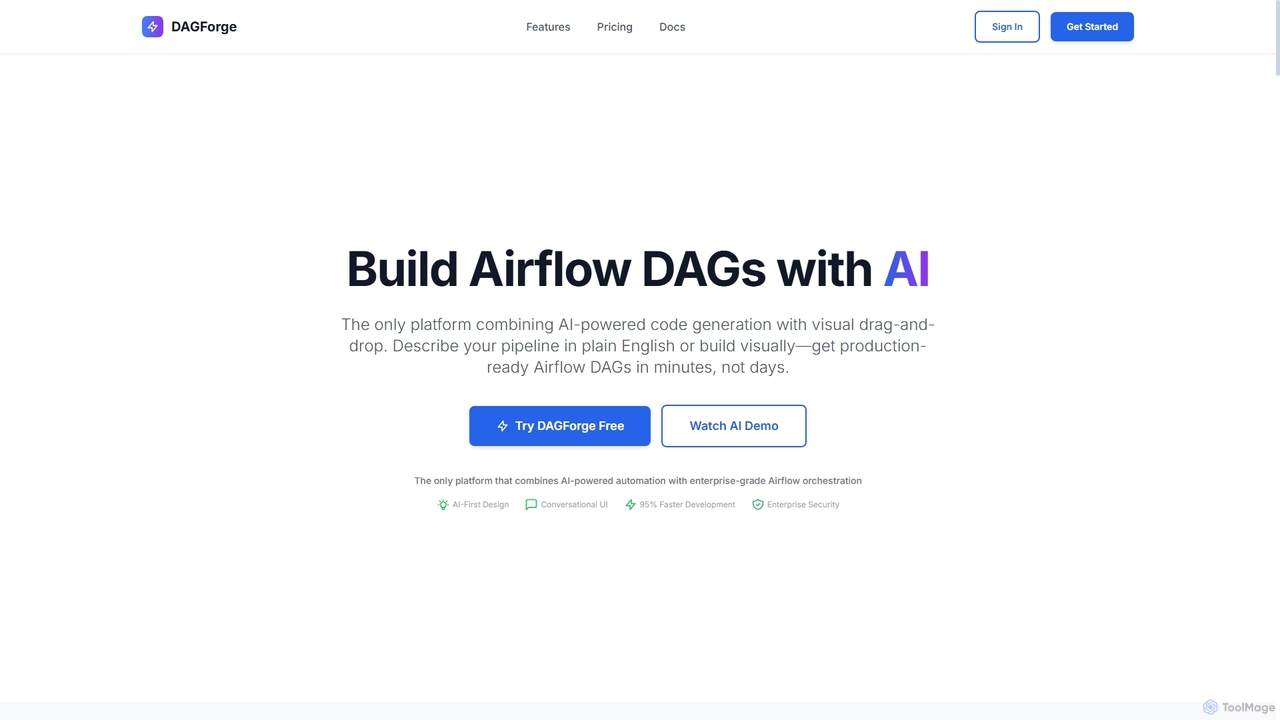
DAGForge

DAGForge

DAGForge is an AI-powered platform that combines conversational AI with a visual drag-and-drop interface to build production-ready Airflow …

4.3K

About Data Pipeline

Data Pipeline tools are essential for automating the movement, transformation, and loading of data from diverse sources to target systems. These solutions streamline complex data workflows, often leveraging AI and machine learning for enhanced data quality, anomaly detection, and optimization. They are crucial for building robust data infrastructure, significantly boosting productivity by ensuring timely and accurate data availability for analytics, reporting, and operational insights.

Core Features

  • Automated Data Ingestion: Connects to various data sources (databases, APIs, files) and automatically extracts data.
  • Data Transformation & Cleansing: Processes raw data, applies transformations, cleanses inconsistencies, and enriches information.
  • Workflow Orchestration: Manages and schedules complex data flows, ensuring dependencies are met and tasks execute in order.
  • Real-time & Batch Processing: Supports both immediate data processing for live analytics and scheduled batch processing for large datasets.
  • Monitoring & Alerting: Provides visibility into pipeline health, performance, and data quality issues with automated alerts.

Applicable Scenarios

Data Pipeline tools are indispensable for organizations dealing with large volumes of data. Data engineers use them to build scalable ETL/ELT processes for data warehouses, while data scientists rely on them to prepare and feed clean data into machine learning models. Business intelligence teams leverage pipelines to consolidate data from various operational systems for comprehensive reporting and dashboarding, enabling data-driven decision-making.

How to Choose

When selecting a Data Pipeline tool, consider its integration capabilities with your existing data ecosystem (databases, cloud platforms, APIs). Evaluate its scalability to handle growing data volumes and velocity, and assess its transformation features for complex data manipulation. Look for robust monitoring, error handling, and security features, alongside a pricing model that aligns with your usage and budget.

Data PipelineUse Cases

1

Automating ETL for Data Warehousing

Data engineers in e-commerce companies utilize data pipeline tools to automatically extract sales, customer, and inventory data from various operational databases, transform it into a unified schema, and load it into a central data warehouse. This automation ensures that business analysts always have access to up-to-date, clean data for generating sales reports, trend analysis, and inventory optimization, significantly reducing manual data preparation time.

2

Real-time Data Ingestion for Fraud Detection

Financial institutions deploy data pipelines to ingest transaction data in real-time from payment gateways and banking systems. These pipelines quickly process and enrich the data, feeding it into AI-powered fraud detection models. This immediate data availability allows for the rapid identification and flagging of suspicious activities, minimizing financial losses and enhancing security for customers.

3

Preparing Data for Machine Learning Models

Data scientists in tech companies use data pipelines to clean, preprocess, and feature-engineer large datasets for training and deploying machine learning models. For instance, customer behavior data from web logs and CRM systems can be transformed, normalized, and aggregated into features required by recommendation engines or predictive analytics models, ensuring high-quality input for accurate predictions.

4

Consolidating Marketing Data for Analytics

Marketing teams leverage data pipelines to collect campaign performance data from diverse sources like Google Ads, Facebook Ads, CRM, and website analytics platforms. The pipeline unifies this disparate data, allowing marketers to create comprehensive dashboards and reports. This provides a holistic view of campaign effectiveness, enabling data-driven optimization of marketing spend and strategies.

5

Streamlining IoT Sensor Data Processing

Manufacturing companies implement data pipelines to ingest high-volume, real-time data from IoT sensors on production lines. These pipelines filter, aggregate, and transform raw sensor readings, sending critical operational metrics to monitoring systems and predictive maintenance algorithms. This enables proactive identification of equipment failures, optimizes maintenance schedules, and improves overall operational efficiency.

6

Migrating Data Between Cloud Platforms

Enterprises undergoing cloud migration or operating in multi-cloud environments use data pipeline tools to securely and efficiently transfer large volumes of data between different cloud storage services or databases. These pipelines handle schema conversions, data validation, and ensure data integrity during the migration process, minimizing downtime and reducing the complexity of moving critical business data.

Data PipelineFrequently Asked Questions