
Parho
Parho is an AI-powered PDF reader that transforms static documents into an interactive knowledge base. It allows users …
Parho is an AI-powered PDF reader that transforms static documents into an interactive knowledge base. It allows users to highlight text, ask questions, and chat with entire documents to gain instant understanding and enhance comprehension, making reading more active and efficient.
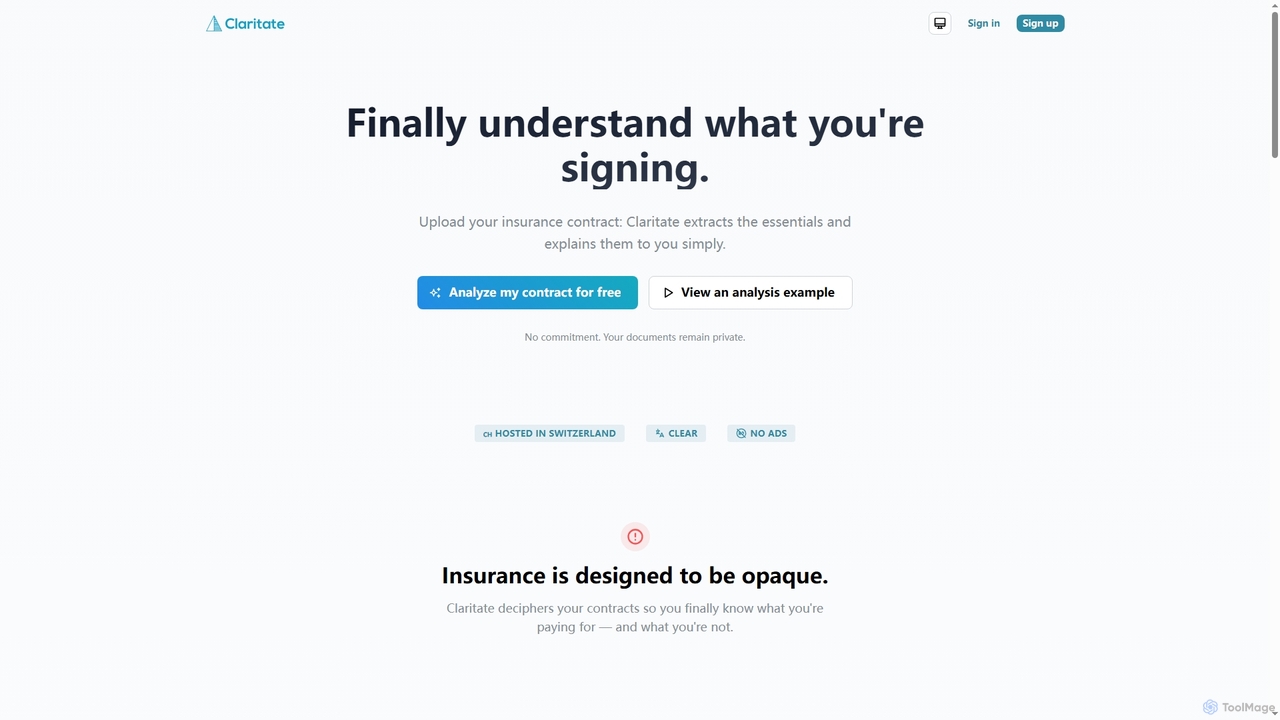
Claritate
Claritate is an AI-powered tool designed to simplify complex insurance contracts. Users upload their PDF documents to receive …
Claritate is an AI-powered tool designed to simplify complex insurance contracts. Users upload their PDF documents to receive clear, human-language summaries, understand coverage details, costs, and exclusions, and get direct answers to specific questions, empowering them to make informed decisions about their insurance policies.
About Document Understanding
Document Understanding tools are AI-powered solutions designed to automatically extract, interpret, and organize information from various document types. Leveraging advanced Natural Language Processing (NLP), computer vision, and machine learning, these tools transform unstructured and semi-structured data into structured, actionable insights. They significantly enhance data processing efficiency, accuracy, and compliance across diverse industries by automating tasks traditionally performed manually.
Core Features
- Intelligent Data Extraction: Automatically identifies and extracts specific data points (e.g., names, dates, amounts) from complex documents like invoices, contracts, and forms.
- Semantic Understanding: Interprets the meaning and context of text, allowing for deeper analysis beyond simple keyword matching.
- Document Classification: Categorizes documents based on their content and type, streamlining organization and retrieval processes.
- Anomaly Detection: Flags inconsistencies or unusual patterns in extracted data, enhancing data quality and reducing errors.
- Layout Analysis: Understands the visual structure of documents to accurately locate and process information, even from varying templates.
Use Cases
These tools are invaluable for organizations dealing with high volumes of documents, such as financial institutions processing loan applications, legal firms analyzing contracts, or healthcare providers managing patient records. They automate repetitive data entry, accelerate decision-making, and ensure regulatory compliance by providing quick access to critical information.
How to Choose
When selecting a Document Understanding solution, consider its accuracy in extracting data from your specific document types, its integration capabilities with existing systems (e.g., ERP, CRM), scalability to handle growing data volumes, and robust security features to protect sensitive information. Evaluate the ease of customization for unique business rules and the level of human-in-the-loop validation required.
Document UnderstandingUse Cases
Automated Invoice and Receipt Processing
Finance departments and small businesses can use Document Understanding tools to automatically extract key information like vendor names, invoice numbers, line items, and total amounts from incoming invoices and receipts. This eliminates manual data entry, reduces errors, and accelerates accounts payable processes, allowing for quicker reconciliation and payment processing. The extracted data can then be seamlessly integrated into ERP or accounting systems.
Contract Analysis and Compliance Checking
Legal professionals and compliance officers can leverage Document Understanding to rapidly analyze large volumes of contracts, agreements, and legal documents. The tools can identify specific clauses, terms, conditions, and obligations, flagging potential risks or non-compliance issues. This significantly reduces the time spent on manual review, ensures adherence to regulatory standards, and facilitates faster due diligence processes in mergers and acquisitions.
Customer Feedback and Survey Analysis
Marketing and customer service teams can use Document Understanding to process vast amounts of unstructured customer feedback from emails, reviews, and survey responses. The tools can extract sentiment, identify common themes, categorize complaints or suggestions, and pinpoint emerging trends. This provides valuable insights into customer satisfaction, product improvements, and service quality, enabling data-driven decision-making.
Patient Record Digitization and Information Retrieval
Healthcare providers can utilize Document Understanding to digitize and extract critical information from handwritten or scanned patient records, medical reports, and lab results. This enables quick retrieval of patient history, diagnoses, medications, and allergies, improving diagnostic accuracy and treatment planning. It also supports regulatory compliance for data privacy and facilitates medical research by making vast datasets searchable.
Loan Application Processing and Risk Assessment
Financial institutions can streamline the processing of loan applications by using Document Understanding to extract relevant data from identity documents, bank statements, income proofs, and credit reports. The extracted information can then be used to automate credit scoring, verify applicant details, and assess risk more efficiently. This accelerates loan approval times, reduces operational costs, and minimizes the potential for fraud.
Research Paper and Patent Analysis
Researchers and intellectual property professionals can employ Document Understanding to quickly sift through vast libraries of research papers, scientific articles, and patent documents. The tools can identify key findings, methodologies, claims, and prior art, accelerating literature reviews and patent searches. This enhances the efficiency of R&D, helps avoid patent infringements, and supports strategic decision-making in innovation.