ToolMage
Sign in

Best 2 Email Marketing AI tools for Productivity

Popular Email Marketing AI tools in Productivity include MailX and Campkicker, helping you work more efficiently.

MailX
Free

MailX

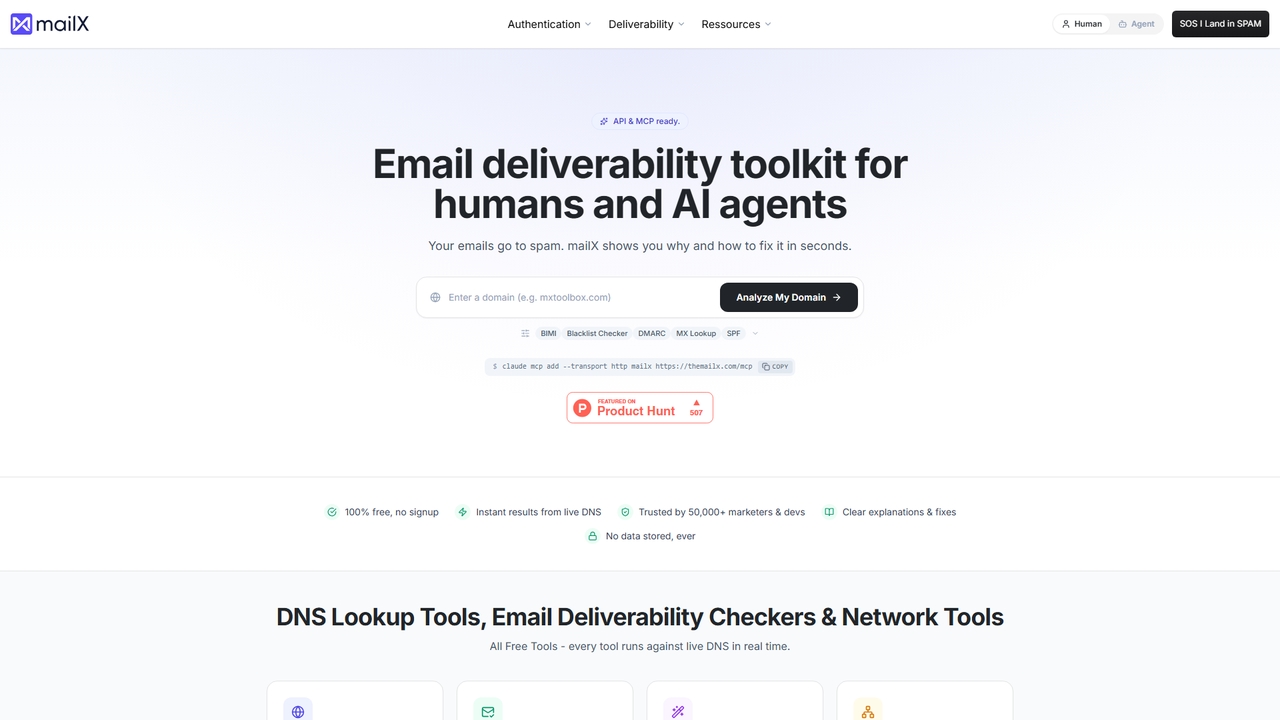
MailX is a free, comprehensive email deliverability toolkit that helps diagnose why emails go to spam and provides actionable fixes. It analyzes DNS records, email authentication (SPF, DKIM, DMARC), blacklist status, and SMTP/IMAP configuration in seconds.

Infrastructure
Visits 7.2KFavorites 30Likes 16
Campkicker
Paid

Campkicker

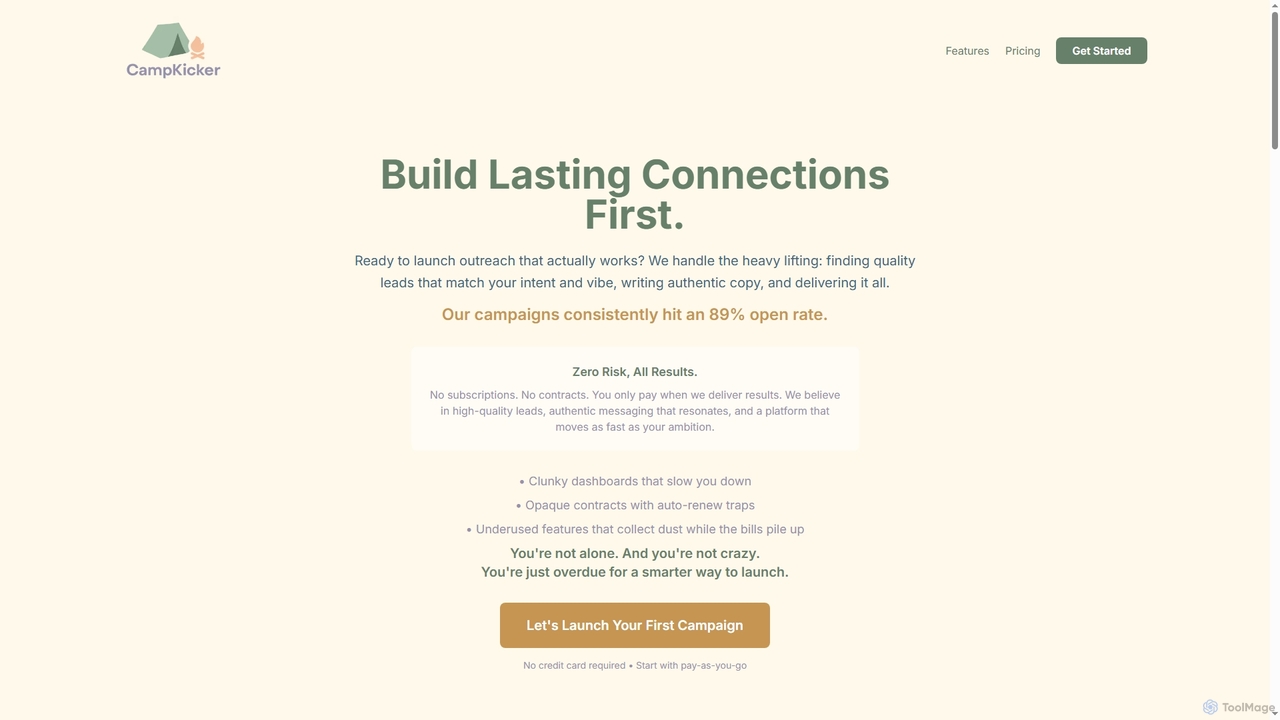
Campkicker is an AI-powered platform designed to launch outreach campaigns in minutes. It specializes in finding high-quality, AI-verified leads through a unique "vibe matching" system and generates authentic, narrative-driven copy to achieve high engagement. With a transparent pay-per-result model, it eliminates subscriptions and contracts, offering a fast and cost-effective solution for founders and sales teams.

Lead Generation
Visits 5.5KFavorites 120Likes 126

About Email Marketing

AI Email Marketing tools are platforms that leverage artificial intelligence to automate, personalize, and optimize email campaigns. These tools use machine learning algorithms to analyze user data, predict behavior, and generate compelling content. The primary value lies in delivering highly relevant messages to each subscriber at the optimal time, significantly boosting engagement, conversion rates, and overall campaign ROI. As a key component of the modern productivity suite, they empower marketers to execute sophisticated strategies with greater efficiency and precision.

Core Features

  • AI-Powered Content Generation: Automatically creates engaging subject lines, email body copy, and calls-to-action tailored to specific audiences.
  • Predictive Personalization: Analyzes individual user behavior to dynamically insert relevant product recommendations or content.
  • Send-Time Optimization: Determines the ideal time to send an email for each contact to maximize open rates.
  • Automated Segmentation: Intelligently groups subscribers based on engagement patterns, purchase history, and predicted interests.
  • Smart A/B Testing: Automates the process of testing different email elements and allocates traffic to the winning version.

Use Cases

These tools are widely used by e-commerce businesses to drive sales, SaaS companies for lead nurturing, and content creators to grow their audience. For instance, an online retailer can use AI to send personalized cart abandonment emails, while a B2B marketer can automate a drip campaign that adapts based on a lead's interaction with the content.

How to Choose

When selecting an AI Email Marketing tool, consider the depth of its AI capabilities, such as the quality of content generation and the accuracy of predictions. Evaluate its integration options with your existing CRM, e-commerce platform, or other marketing tools. Also, assess the platform's analytics and reporting features, user-friendliness, and pricing model to ensure it aligns with your team's needs and budget.

Email Marketing use cases

1

Automate E-commerce Welcome Series

For an e-commerce marketing manager, creating a personalized welcome journey for every new subscriber is crucial but time-consuming. Using an AI Email Marketing tool, they can set up an automated welcome series. The AI analyzes a new subscriber's initial browsing behavior or sign-up source to dynamically tailor the email sequence. For example, a user who first viewed sneakers will receive emails featuring new shoe arrivals and styling tips, while another who looked at running gear gets content about marathon training. This hyper-personalization significantly increases engagement and drives first-purchase conversion rates without manual intervention.

2

Generate High-Converting Newsletter Copy

A content creator or a small business owner often struggles with writing fresh and engaging newsletter content consistently. An AI Email Marketing tool with a built-in content generator can solve this. The user provides a few bullet points, a link to a blog post, or a general topic. The AI then drafts a full newsletter, including a catchy subject line, an introduction, body paragraphs, and a call-to-action. This process reduces writing time from hours to minutes, helps overcome writer's block, and often improves open and click-through rates by suggesting proven copy structures and tones.

3

Optimize Send Times for a Global Audience

A SaaS company with a global user base needs to send product update announcements. Sending at a single time means it will be suboptimal for most recipients. An AI Email Marketing platform's Send-Time Optimization feature solves this. It analyzes each contact's past engagement data (email opens, clicks) to determine their individual activity patterns. When the campaign is launched, the system automatically delivers the email to each person at their predicted optimal time over a 24-hour period. This ensures the message lands at the top of the inbox when the user is most likely to be active, dramatically increasing open rates across different time zones.

4

Recover Abandoned Carts with Personalized Offers

For an online store, cart abandonment is a major source of lost revenue. A marketing specialist can use an AI email tool to create a smart recovery workflow. The system automatically identifies when a user abandons a cart. Instead of sending a generic reminder, the AI analyzes the items in the cart and the user's past purchase history to generate a personalized offer. This could be a small discount on a high-margin item, a free shipping offer, or a bundle suggestion with a related product. By tailoring the incentive, the AI significantly increases the probability of converting the abandoned cart into a completed sale.

5

Automate B2B Lead Nurturing Sequences

A B2B marketing team needs to nurture leads from different industries and with varying levels of interest. Manually creating and managing separate email tracks is inefficient. With an AI email platform, they can build a dynamic lead nurturing workflow. The AI segments leads based on firmographics (industry, company size) and behavior (e.g., downloaded a whitepaper vs. visited the pricing page). It then delivers a tailored sequence of case studies, blog posts, and webinar invitations relevant to each segment. The workflow can even adapt in real-time; if a lead shows sudden interest in a specific feature, the AI can automatically switch them to a more product-focused email track, accelerating their journey through the sales funnel.

6

Intelligently Re-engage Inactive Subscribers

Every email list has subscribers who become inactive over time, hurting overall deliverability and engagement metrics. A CRM manager can use an AI tool to run a smart re-engagement campaign. The AI first identifies subscribers who haven't opened or clicked an email in a set period (e.g., 90 days). Then, instead of a generic 'We miss you' email, it analyzes their past engagement history to create a personalized offer. For a customer who previously bought books, it might send an email with a '20% off your next book' coupon. For another who only read blog posts, it might highlight the top 3 most popular articles they missed. This targeted approach is far more effective at winning back subscribers than a one-size-fits-all campaign.

Email Marketing FAQ

What are AI Email Marketing tools?

AI Email Marketing tools are advanced platforms that use artificial intelligence to enhance traditional email marketing. They go beyond simple automation by using machine learning to analyze data, predict customer behavior, and personalize content at scale. Key features often include AI-powered subject line and copy generation, send-time optimization for individual recipients, and predictive segmentation to group users based on their likely future actions. The goal is to deliver more relevant, timely, and effective email communications, leading to higher engagement and conversions.

How do I choose the right AI Email Marketing tool?

Choosing the right tool depends on your specific needs. Consider these factors:

  • AI Feature Depth: Evaluate the quality of the AI. Does it generate high-quality copy? Are its predictions for personalization and send times accurate?
  • Integrations: Ensure the tool connects seamlessly with your existing tech stack, such as your CRM, e-commerce platform (e.g., Shopify, Magento), and analytics tools.
  • Ease of Use: The platform should have an intuitive interface that allows your team to build campaigns and analyze results without a steep learning curve.
  • Analytics and Reporting: Look for a tool that provides clear, actionable insights into campaign performance and the impact of its AI features.
  • Scalability and Pricing: Choose a platform that can grow with your business and offers a pricing model that aligns with your budget and usage patterns.
How does AI improve email marketing over traditional methods?

AI enhances traditional email marketing in three key ways. First, it enables hyper-personalization at scale, moving beyond simple name-merging to tailoring content, products, and offers for each individual based on their unique data. Second, it introduces predictive capabilities, allowing marketers to forecast which customers are likely to churn, which products a user might buy next, or the optimal time to send a message. Third, it provides intelligent automation and optimization, automatically A/B testing subject lines, optimizing workflows, and segmenting audiences, tasks that would require significant manual effort and data analysis with traditional tools.

What are the key features of AI Email Marketing platforms?

While features vary between platforms, most leading AI Email Marketing tools include a core set of capabilities:

  • Content Generation: AI algorithms that write or suggest subject lines, headlines, and email body copy.
  • Predictive Recommendations: Systems that analyze user data to suggest which products, articles, or content to feature for each subscriber.
  • Send-Time Optimization (STO): Automatically sends emails at the time each individual recipient is most likely to engage.
  • Predictive Segmentation: Creates audience segments based on predicted behavior, such as 'likely to buy' or 'at risk of churn'.
  • Automated A/B Testing: Intelligently tests variations of an email and automatically shifts traffic to the best-performing version.
Who can benefit from using AI Email Marketing tools?

A wide range of users can benefit from AI Email Marketing tools. E-commerce businesses use them to increase sales through personalized product recommendations and cart abandonment campaigns. SaaS companies leverage them for sophisticated lead nurturing and user onboarding sequences. Digital marketers and agencies use them to improve campaign efficiency and deliver better results for clients. Finally, content creators and bloggers can save time on content creation and grow their audience by sending more relevant and timely newsletters. Essentially, anyone looking to improve the personalization, efficiency, and effectiveness of their email communications can benefit.