Painboard
Painboard is an AI-powered tool designed to help businesses uncover customer pain points by automatically analyzing feedback. It …
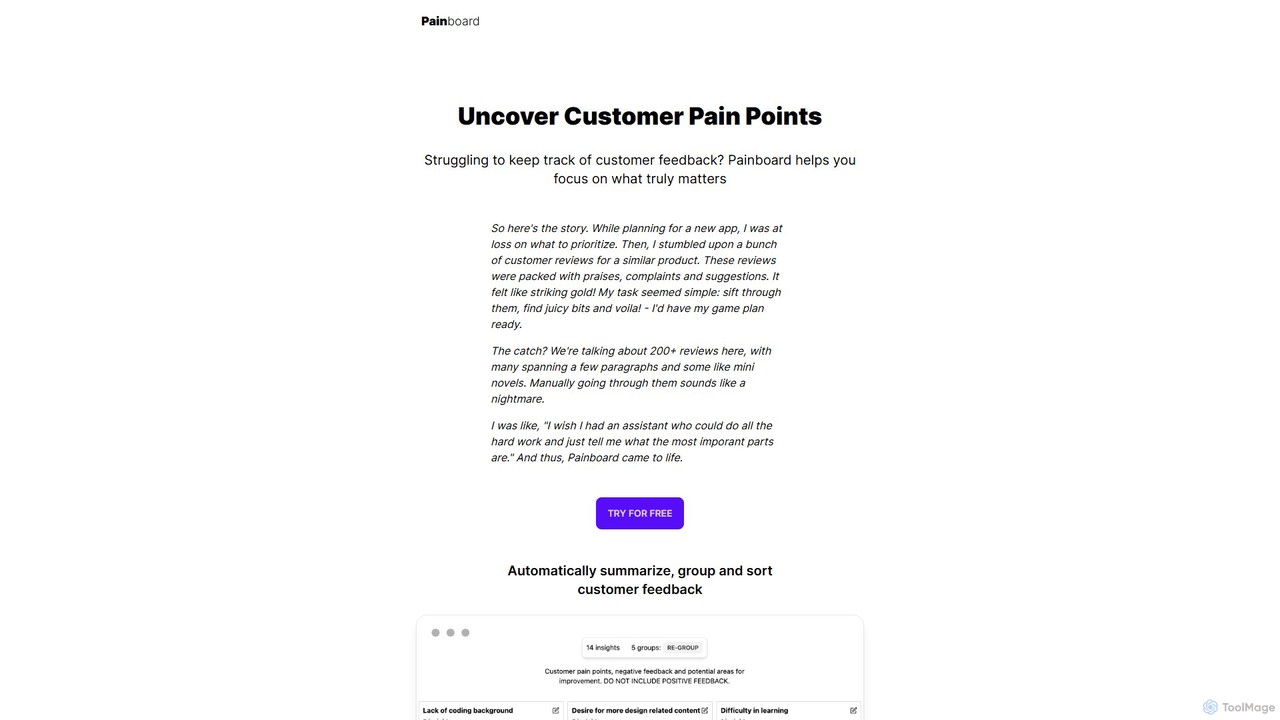
Painboard is an AI-powered tool designed to help businesses uncover customer pain points by automatically analyzing feedback. It summarizes, groups, and sorts reviews, support tickets, and surveys to provide actionable insights. This helps product managers, marketers, and founders prioritize features, refine messaging, and build a user-centric roadmap without manually sifting through mountains of data.
Feedback Sync
Feedback Sync is an AI-driven app for Slack that centralizes customer feedback from various sources like Zendesk and …
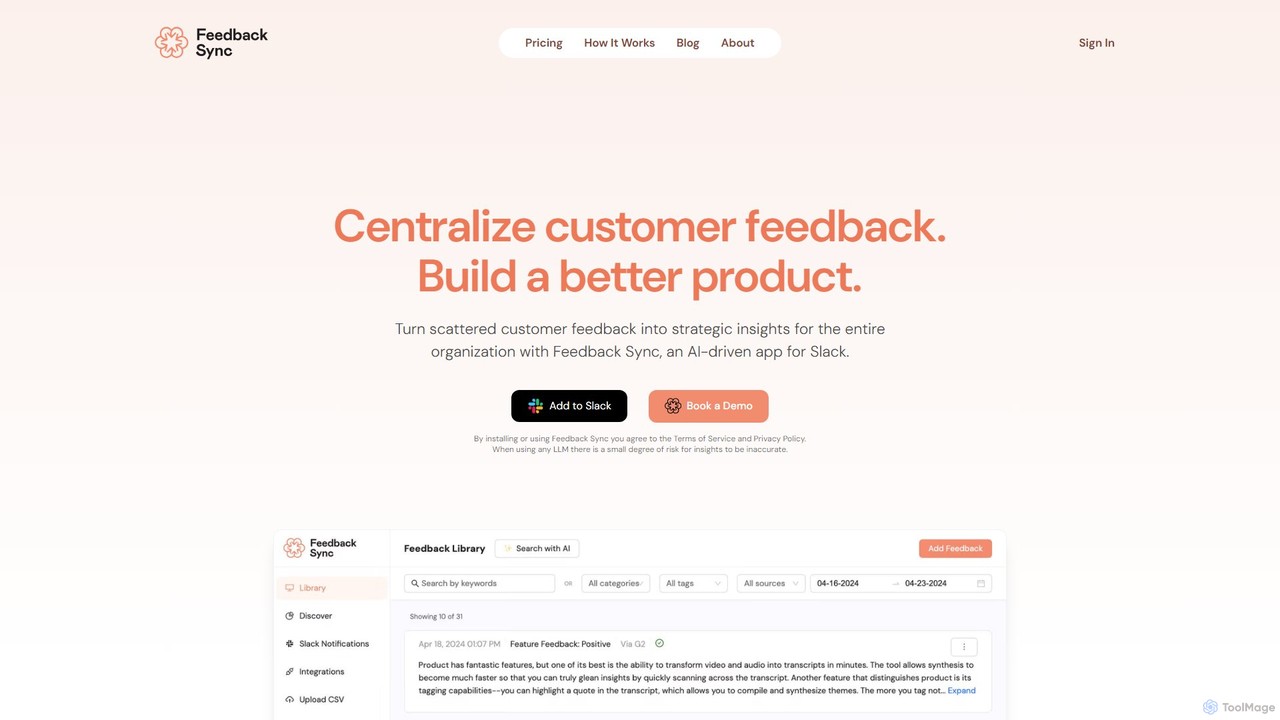
Feedback Sync is an AI-driven app for Slack that centralizes customer feedback from various sources like Zendesk and G2. It automatically organizes, summarizes, and prioritizes feedback, turning scattered data into strategic insights to help teams build better products faster.
About Feedback Analysis
Feedback Analysis tools are AI-powered solutions designed to automatically collect, process, and interpret qualitative and quantitative user feedback. These tools leverage natural language processing (NLP) and machine learning to extract sentiment, identify key themes, and uncover actionable insights from vast amounts of data. They enable businesses to understand customer perceptions, prioritize product improvements, and enhance overall user experience efficiently. By automating the analysis of surveys, reviews, and support interactions, these tools significantly boost productivity in understanding market needs.
Core Features
- Sentiment Analysis: Automatically detects and categorizes the emotional tone (positive, negative, neutral) within text feedback.
- Topic Modeling: Identifies recurring themes and subjects discussed in customer comments and reviews.
- Text Summarization: Generates concise summaries of long feedback entries or multiple related comments.
- Keyword Extraction: Pinpoints important keywords and phrases frequently used by customers.
- Data Visualization: Presents feedback insights through interactive dashboards and charts for easy comprehension.
Use Cases
Businesses across various sectors, from e-commerce to SaaS, utilize Feedback Analysis tools to gain a deeper understanding of their customer base. Product managers can quickly identify pain points and feature requests from user reviews, while marketing teams can monitor brand perception across social media. Customer support departments leverage these tools to categorize common issues and improve service quality.
How to Choose
When selecting a Feedback Analysis tool, consider its integration capabilities with existing data sources (e.g., CRM, survey platforms), the accuracy of its NLP models for your specific industry language, and its ability to handle diverse feedback formats. Evaluate the depth of insights provided, the customizability of dashboards, and the scalability to process growing volumes of feedback. Pricing models and ease of use for non-technical users are also crucial factors.

Feedback AnalysisUse Cases
Enhance Product Development with User Insights
Product managers use Feedback Analysis tools to process thousands of app store reviews and support tickets. By automatically identifying recurring bugs, popular feature requests, and user satisfaction trends, they can prioritize development sprints, validate new features, and make data-driven decisions to improve product roadmaps, leading to higher user adoption and satisfaction.
Improve Customer Service Efficiency
Customer support teams leverage these tools to analyze incoming support tickets, chat logs, and call transcripts. The AI identifies common issues, urgent complaints, and sentiment, allowing agents to quickly categorize and route tickets, or even automate responses for frequently asked questions, significantly reducing resolution times and improving customer satisfaction scores.
Monitor Brand Reputation Across Social Media
Marketing and PR teams employ Feedback Analysis to track mentions, comments, and sentiment related to their brand, products, or campaigns across various social media platforms. This enables them to quickly detect negative trends, respond to crises, identify brand advocates, and understand public perception in real-time, protecting brand image and informing future communication strategies.
Optimize Marketing Campaigns with Customer Sentiment
Marketing analysts use Feedback Analysis to gauge audience reactions to ad campaigns, product launches, and content marketing efforts. By analyzing comments and feedback on campaign performance, they can identify what resonates with their target audience, refine messaging, and optimize future campaigns for better engagement and conversion rates.
Personalize User Experience on Digital Platforms
UX/UI designers and platform owners utilize Feedback Analysis to understand user navigation patterns, pain points, and preferences from website feedback forms, A/B test comments, and usability study transcripts. This helps them iterate on design, personalize content recommendations, and optimize user flows, leading to a more intuitive and engaging digital experience.
Conduct Market Research and Competitor Analysis
Business intelligence teams use Feedback Analysis to analyze public reviews, forum discussions, and social media conversations about competitors' products and services. This provides insights into market gaps, competitor strengths and weaknesses, and emerging customer needs, informing strategic planning and competitive positioning.