
ToolMage
Sign in

Best 1 Focus Management AI tools for Productivity

Popular Focus Management AI tools in Productivity include Flow, helping you work more efficiently.

Flow
Freemium

Flow

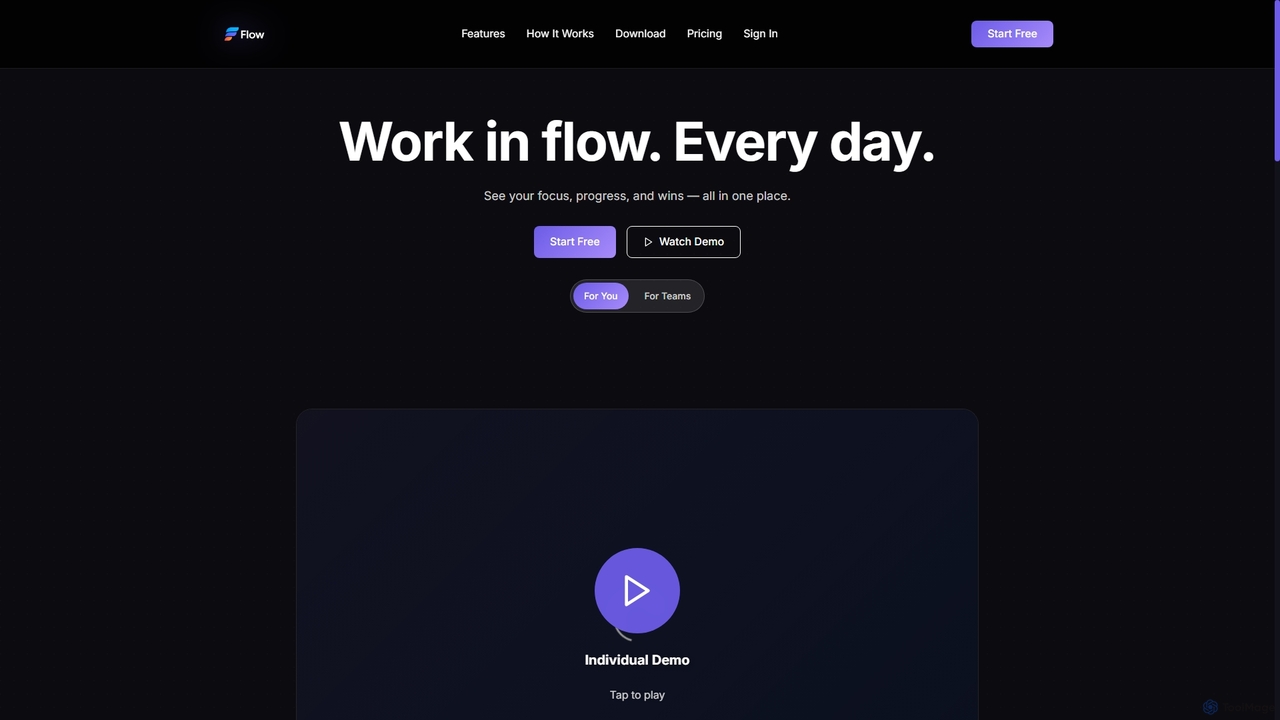
Flow is an AI-powered productivity companion designed to help individuals and teams achieve deep focus, track progress, and celebrate daily accomplishments. It minimizes distractions and provides insights to maximize work efficiency.

Workflow Optimization
Visits 5.5KFavorites 153Likes 173

About Focus Management

Focus Management AI tools are designed to help individuals and teams enhance their concentration and minimize distractions. Leveraging artificial intelligence, these tools analyze user patterns and environmental factors to create personalized focus environments, block interruptions, and optimize work sessions. As a specialized segment within the broader productivity category, they aim to foster deep work and sustained attention, ultimately boosting efficiency and output.

Core Features

  • Distraction Blocking: Automatically identifies and blocks distracting websites, applications, or notifications based on user preferences and AI analysis.
  • Personalized Soundscapes: Generates adaptive ambient sounds, white noise, or binaural beats tailored to enhance focus and mask environmental noise.
  • Time Management Integration: Incorporates AI-driven Pomodoro timers, smart break suggestions, and task scheduling to optimize work-rest cycles.
  • Cognitive Load Monitoring: Uses AI to assess user fatigue or attention drift, suggesting timely breaks or adjustments to the work environment.
  • Smart Notification Management: Intelligently filters and prioritizes notifications, delivering only critical alerts during focus periods to minimize interruptions.

Use Cases

These tools are invaluable for professionals requiring sustained concentration, such as software developers, writers, researchers, and students. They are also highly beneficial for remote workers managing home distractions and individuals seeking to improve their attention span for complex tasks or learning.

How to Choose

When selecting a Focus Management AI tool, consider its customization options for distraction blocking and sound environments, integration capabilities with existing productivity suites, and the accuracy of its AI in detecting and responding to your focus needs. Evaluate its privacy policy regarding data usage and ensure it offers a balance between automation and user control to fit your workflow.

Focus Management use cases

1

Optimizing Deep Work Sessions for Developers

A software developer uses an AI focus management tool to enter a 'deep work' mode. The tool automatically mutes non-essential notifications, blocks access to social media sites, and plays a personalized ambient soundscape. This allows the developer to concentrate fully on complex coding tasks for extended periods, significantly reducing context-switching costs and improving code quality.

2

Enhancing Student Concentration for Study

A university student preparing for exams utilizes an AI focus management app to create an optimal study environment. The app blocks distracting social media notifications, sets a Pomodoro timer for focused study blocks, and provides calming background music. This helps the student maintain concentration, absorb information more effectively, and reduce study-related stress, leading to better academic performance.

3

Maintaining Focus During Remote Work

A remote marketing specialist struggles with distractions at home. They use an AI focus management tool that learns their work patterns and automatically activates 'focus mode' during critical tasks. This mode silences non-work-related apps, provides gentle reminders for posture breaks, and generates a virtual office soundscape, helping the specialist maintain professional focus and productivity despite the home environment.

4

Enhancing Creative Flow for Artists and Writers

A graphic designer or writer often enters a 'flow state' for optimal creativity. An AI focus management tool helps by creating a personalized, distraction-free digital workspace. It blocks social media, filters emails, and plays adaptive music that matches their creative rhythm, allowing them to sustain intense creative output without interruption and bring their artistic visions to life more efficiently.

5

Managing Digital Overload for Knowledge Workers

A knowledge worker constantly faces an onslaught of emails, messages, and notifications. An AI focus management tool acts as a smart assistant, learning their priorities and scheduling. It intelligently bundles non-urgent notifications, suggests optimal times for checking communications, and provides a 'digital detox' mode, allowing the worker to reclaim control over their attention and reduce cognitive overload, leading to clearer thinking and better decision-making.

6

Supporting Individuals with ADHD in Task Completion

An individual with ADHD often struggles with task initiation and maintaining focus. An AI focus management tool provides structured support by breaking down large tasks into manageable chunks, offering gentle, non-intrusive reminders for transitions, and creating a personalized auditory environment that minimizes sensory overload. This tailored approach helps improve executive function, reduces procrastination, and enables more consistent task completion, fostering a greater sense of accomplishment.

Focus Management FAQ

What are Focus Management AI tools?

Focus Management AI tools are applications that leverage artificial intelligence to help users improve concentration and reduce distractions. They achieve this by analyzing user behavior, environment, and tasks to provide personalized interventions like smart notification management, distraction blocking, and tailored focus environments. Their core purpose is to optimize mental clarity and productivity for various activities.

How to choose the right AI Focus Management tool?

When selecting an AI Focus Management tool, consider several key factors. First, evaluate its customization options for distraction blocking and sound environments to match your specific needs. Second, check its integration capabilities with your existing productivity apps (e.g., calendars, task managers). Third, assess the accuracy and adaptability of its AI in learning your patterns and providing relevant interventions. Finally, review its privacy policy regarding data usage and ensure it offers a balance between automation and user control.

What specific problems do Focus Management AI tools solve?

Focus Management AI tools primarily solve the problems of distraction, procrastination, and cognitive overload. They help users by:

  • Blocking digital and environmental interruptions.
  • Creating personalized environments conducive to concentration.
  • Optimizing work-rest cycles to prevent burnout.
  • Providing insights into attention patterns to improve self-awareness.
  • Reducing the mental effort required to stay on task, allowing for deeper engagement.

How do AI Focus Management tools differ from traditional productivity apps?

While traditional productivity apps (a broader category) often provide static features like to-do lists or basic timers, AI Focus Management tools offer dynamic, personalized, and adaptive solutions. They use AI to learn user habits, predict potential distractions, and proactively create optimal focus environments. This goes beyond simple task management, actively shaping the user's cognitive state and environment for sustained concentration, rather than just organizing tasks.

Can AI Focus Management tools truly improve concentration, and how?

Yes, AI Focus Management tools can significantly improve concentration by addressing common barriers to focus. They do this through:

  • Personalized Interventions: AI learns your unique distraction triggers and optimal focus conditions.
  • Proactive Distraction Blocking: Automatically silences or blocks interruptions before they break your flow.
  • Cognitive Support: Offers smart breaks, ambient sounds, or visual cues to guide your attention.
  • Data-driven Insights: Provides analytics on your focus patterns, helping you understand and improve your habits.
By creating a tailored, supportive environment, these tools empower users to achieve deeper and more sustained periods of concentration.