ToolMage
Sign in

Best 2 Generative Content AI tools for Productivity

Popular Generative Content AI tools in Productivity include CoCoClip.AI and History Timelines, helping you work more efficiently.

CoCoClip.AI
Freemium

CoCoClip.AI

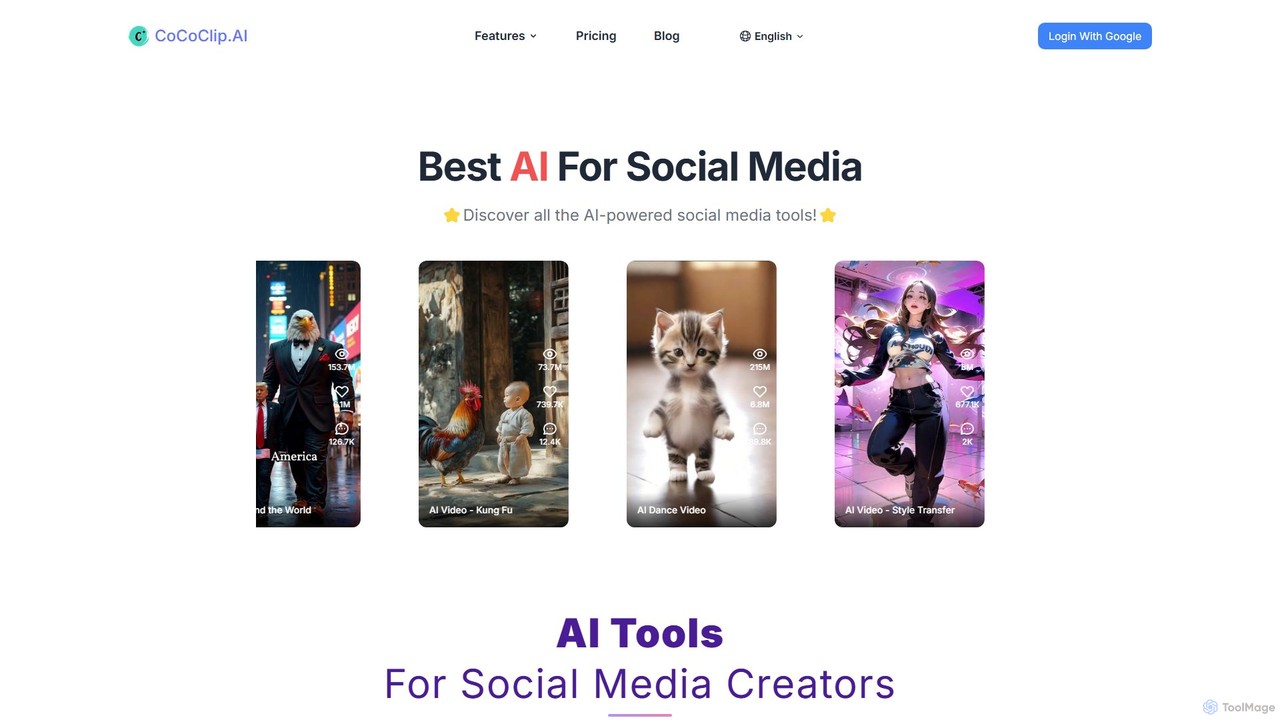
CoCoClip.AI is an all-in-one AI video editor designed for social media creators. It transforms text, prompts, or images into engaging, viral videos for platforms like TikTok and YouTube Shorts. Key features include an AI script generator, automatic editing, AI voiceovers, and a watermark remover, streamlining the entire content creation workflow.

Voice Synthesis
Visits 19.2KFavorites 147Likes 142
History Timelines
Free

History Timelines

History Timelines is an AI-powered tool that automatically generates detailed, visual timelines on a vast range of historical topics. Simply enter a subject, and the AI will research and compile key events, creating an interactive and easy-to-understand timeline for students, educators, and history enthusiasts.

History
Visits 14.2KFavorites 161Likes 165

About Generative Content

Generative Content tools are AI-powered platforms designed to automatically create diverse forms of original content, including text, images, audio, and video. Leveraging advanced machine learning models like large language models (LLMs) and diffusion models, these tools transform simple prompts into rich, complex outputs. They empower individuals and businesses to rapidly scale content production, innovate creative workflows, and overcome creative blocks, significantly enhancing productivity across various domains.

Core Features

  • Text Generation: Produces articles, marketing copy, code, emails, and summaries from textual prompts.
  • Image & Art Creation: Generates unique visuals, illustrations, and photorealistic images based on descriptions or reference inputs.
  • Audio & Music Synthesis: Creates original music, sound effects, or realistic voiceovers from text or musical parameters.
  • Video Production: Automates the creation of short video clips, animations, or presentations from scripts and assets.
  • Content Variation & Iteration: Quickly generates multiple versions or styles of content for A/B testing or diverse applications.

Use Cases

Content creators use these tools to draft blog posts and social media updates. Marketers leverage them for generating ad copy and product descriptions. Developers can use them for code snippets and documentation.

How to Choose

Consider the specific content type you need to generate (text, image, audio, video). Evaluate the quality and style of the output, the ease of use and prompt engineering capabilities, and the integration options with your existing workflows. Also, assess the pricing model and the availability of customization features.

Generative Content use cases

1

Rapid Marketing Campaign Asset Creation

Marketing teams can input campaign themes and target audience details to instantly generate multiple versions of ad copy, social media posts, and visual concepts. This drastically reduces design and copywriting lead times, enabling quicker launch cycles and more agile campaign adjustments, ultimately boosting overall marketing productivity.

2

Personalized E-commerce Product Descriptions

E-commerce businesses can feed product specifications and keywords into a generative AI to automatically produce unique, SEO-optimized descriptions for hundreds of products. This ensures consistency across listings, saves immense manual writing effort, and helps improve search engine visibility for a vast product catalog.

3

Game Development Concept Art Generation

Game designers and artists can use text prompts to generate diverse concept art for characters, environments, and objects. This accelerates the visual development phase, allowing for rapid exploration of numerous creative directions and styles, significantly streamlining the pre-production process and fostering innovation.

4

Automated Educational Content Summarization

Educators and students can input long research papers or lecture transcripts into generative tools to automatically generate concise summaries, key takeaways, and even quiz questions. This streamlines learning and content digestion, saving significant time in preparing study materials or reviewing complex information.

5

Scalable Blog Post and Article Drafting

Content agencies and bloggers can provide topics and outlines to generative AI tools to draft initial blog posts, articles, or news summaries. These drafts can then be refined by human editors, significantly boosting content output volume and maintaining a consistent publishing schedule without compromising on quality.

6

Customized Voiceover and Podcast Production

Podcasters and video creators can convert scripts into natural-sounding voiceovers in various languages and tones, or even generate background music. This significantly reduces production costs and time for audio content, allowing for rapid localization and diverse stylistic choices without needing professional voice actors or composers.

Generative Content FAQ

What are Generative Content tools?

Generative Content tools are AI applications that create new, original content across various modalities like text, images, audio, and video, based on user prompts or input data. Unlike traditional content creation software, they don't just edit or enhance existing material but synthesize entirely new outputs. They are powered by advanced machine learning models, enabling automation and scalability in creative processes.

How do Generative Content tools differ from traditional content creation software?

Traditional content creation software (e.g., Photoshop, Word) provides tools for humans to manipulate and produce content manually. Generative Content tools, however, use AI to *automatically* create content from scratch based on high-level instructions or data. The key difference lies in automation and the ability to generate novel outputs without direct human manipulation of every element, shifting the role from creator to director.

What types of content can Generative AI create?

Generative AI can create a wide array of content types. This includes written content like articles, emails, code, and marketing copy; visual content such as images, illustrations, logos, and concept art; audio content like music, sound effects, and realistic voiceovers; and even short video clips or animations. The capabilities are constantly expanding across different creative domains.

Who benefits most from using Generative Content tools?

Content creators, marketers, designers, developers, and educators are among the primary beneficiaries. Individuals and teams needing to produce large volumes of content, explore diverse creative ideas rapidly, or automate repetitive content tasks find these tools invaluable. They are particularly useful for scaling content efforts, personalizing communications, and accelerating creative workflows.

What should I consider when evaluating Generative Content tools?

When evaluating Generative Content tools, consider the quality and originality of the generated output, ensuring it meets your standards. Look at the range of content types supported and the flexibility of customization options. Assess the ease of use, the learning curve for prompt engineering, and how well it integrates with your existing creative or business workflows. Also, review the pricing structure and the tool's ethical guidelines regarding data usage and content ownership.