Homeway
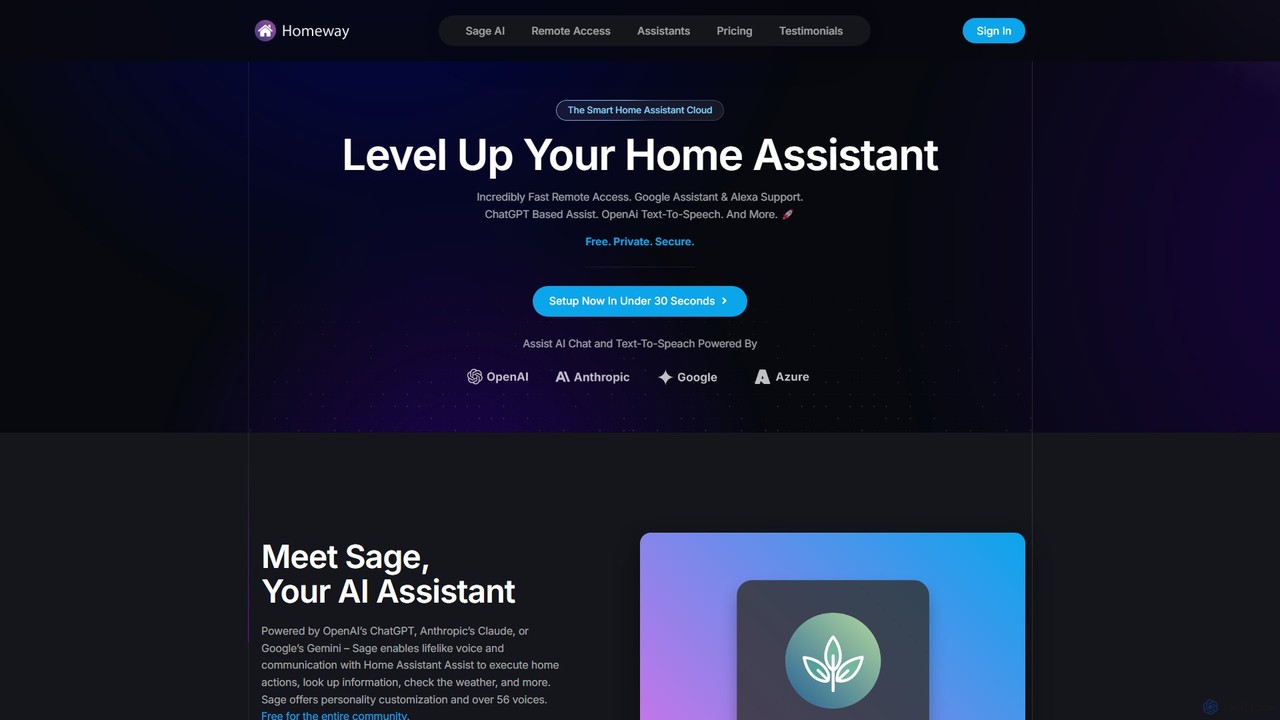
Homeway enhances your Home Assistant experience with free, secure, and incredibly fast remote access. It features Sage, a …
Homeway enhances your Home Assistant experience with free, secure, and incredibly fast remote access. It features Sage, a powerful AI assistant powered by models like ChatGPT, Claude, and Gemini, enabling natural voice commands for home control, information retrieval, and more. With easy 30-second setup, Google Assistant/Alexa integration, and customizable text-to-speech voices, Homeway is the ultimate cloud upgrade for your smart home.
Posha
Posha is an AI-powered kitchen robot that acts as your family's private chef. It fully automates the cooking …
Posha is an AI-powered kitchen robot that acts as your family's private chef. It fully automates the cooking process, from adding ingredients to adjusting heat, using advanced camera vision and sensors. Simply prep the ingredients, select a recipe from its vast library via the app, and let Posha cook dinner for you. It offers extensive customization for dietary needs and preferences, making fresh, home-cooked meals effortless for busy individuals and families.
1X
1X is an AI and robotics company developing general-purpose humanoid robots to assist with everyday tasks. Their flagship …
1X is an AI and robotics company developing general-purpose humanoid robots to assist with everyday tasks. Their flagship product, NEO, is a bipedal humanoid designed to seamlessly integrate into daily life, handling chores and learning alongside humans. Backed by OpenAI and collaborating with NVIDIA, 1X aims to create a future of abundance through safe and intelligent robotic companions.
About Home Automation
AI Home Automation tools are systems that use artificial intelligence to learn user behaviors and proactively manage a home environment. These tools leverage machine learning algorithms to anticipate needs, automating everything from lighting and climate to security and entertainment. This creates a responsive, efficient, and personalized living space that minimizes manual adjustments and enhances daily productivity. Unlike basic smart devices, AI-driven systems can make complex decisions based on context, time of day, and learned preferences.
Core Features
- Predictive Control: Learns daily routines and automatically adjusts settings like thermostats, lights, and blinds without user input.
- Advanced Voice Recognition: Understands natural, conversational language and context for complex commands beyond simple on/off instructions.
- Intelligent Energy Management: Optimizes energy consumption by analyzing usage patterns, weather forecasts, and utility rates to reduce costs.
- AI-Powered Security Analysis: Differentiates between familiar faces, strangers, pets, and vehicles in security footage to provide smarter alerts and reduce false alarms.
- Ecosystem Integration: Seamlessly connects and orchestrates various smart devices from different brands to create unified automation scenes.
Use Cases
These tools are ideal for homeowners seeking to enhance convenience, security, and energy efficiency. They are particularly valuable for busy professionals who want to reduce time spent on routine home management, families looking for simplified control over their environment, and individuals with mobility challenges who benefit from voice-activated and automated assistance.
How to Choose
When selecting an AI Home Automation tool, consider its ecosystem compatibility (e.g., Google Home, Amazon Alexa, Apple HomeKit) to ensure it works with your existing devices. Evaluate the level of customization and the complexity of routines it can handle. Also, review the platform's data privacy policy to understand how your information is used, and check its support for third-party device integrations.
Home AutomationUse Cases
Create Adaptive Morning and Evening Routines
For a busy professional, mornings can be hectic. An AI home automation system learns their typical wake-up time and sleep schedule. Without any command, it can initiate a 'Wake Up' scene 15 minutes before the alarm, slowly brightening the bedroom lights, opening the blinds, and adjusting the thermostat to a comfortable temperature. In the evening, it can detect when activity ceases and automatically trigger a 'Good Night' scene, turning off all lights, locking the doors, and setting the security system, ensuring a seamless transition to rest and saving mental energy.
Enhance Home Security with Smart Alerts
Homeowners can use AI-powered security cameras that do more than just record video. The AI analyzes the footage in real-time to differentiate between a package delivery, a neighbor's pet, and an unidentified person lingering near the property. Instead of receiving dozens of generic motion alerts, the user gets specific notifications like 'Person detected at front door'. The system can also be programmed to take automated actions, such as turning on porch lights and playing an audible warning if a person is detected in the backyard after 10 PM, significantly improving security responsiveness.
Optimize Home Energy Consumption Automatically
For an environmentally conscious family, reducing energy waste is a priority. An AI home automation system connects to the smart thermostat, smart plugs, and major appliances. It learns the family's occupancy patterns and analyzes local weather forecasts and time-of-use electricity rates. Based on this data, it automatically adjusts the HVAC system for maximum efficiency, pre-cooling the house before peak rate hours. It can also schedule high-energy tasks like running the dishwasher or charging an electric vehicle for off-peak times, leading to significant savings on utility bills without manual intervention.
Create Personalized Ambiance with Voice Commands
A user hosting a movie night can simply say, 'Hey Google, it's movie time.' The AI assistant understands this contextual command and initiates a complex scene. It dims the smart lights to 20% brightness, changes their color to a warm white, closes the smart blinds, turns on the TV and soundbar, and sets the input to the streaming device. This replaces the need to manually adjust multiple devices and settings, creating the perfect atmosphere instantly and allowing the host to focus on their guests. The same principle applies to scenes like 'Dinner Time' or 'Focus Mode'.
Automate Home Maintenance Reminders
For property managers or forgetful homeowners, keeping track of maintenance is a chore. An AI home system can monitor the usage and performance of connected smart appliances. For instance, it can track the airflow of an HVAC system and, based on operational data, predict when the air filter needs to be replaced, sending a notification to the user's phone. Similarly, it can monitor a smart refrigerator's water filter or a smart dishwasher's cleaning cycle count, providing timely reminders that help maintain appliance efficiency and longevity, automating a key aspect of home productivity.
Provide Assistance for Individuals with Mobility Needs
For an elderly person or someone with physical disabilities, AI home automation is a powerful accessibility tool. Using only their voice, they can control lights, adjust the thermostat, lock doors, and operate entertainment systems without needing to move around. They can ask the AI assistant to read the news, call a family member, or remind them to take medication. This level of automation provides a greater degree of independence, safety, and comfort, turning the home into a more supportive and manageable environment, which directly contributes to their well-being and productivity in daily life.