Productivity Best in category 1 results Internal Communication AI Tool

Popular AI tools in the Internal Communication field of Productivity include Jochem, etc., helping you quickly improve efficiency.

Jochem

Jochem

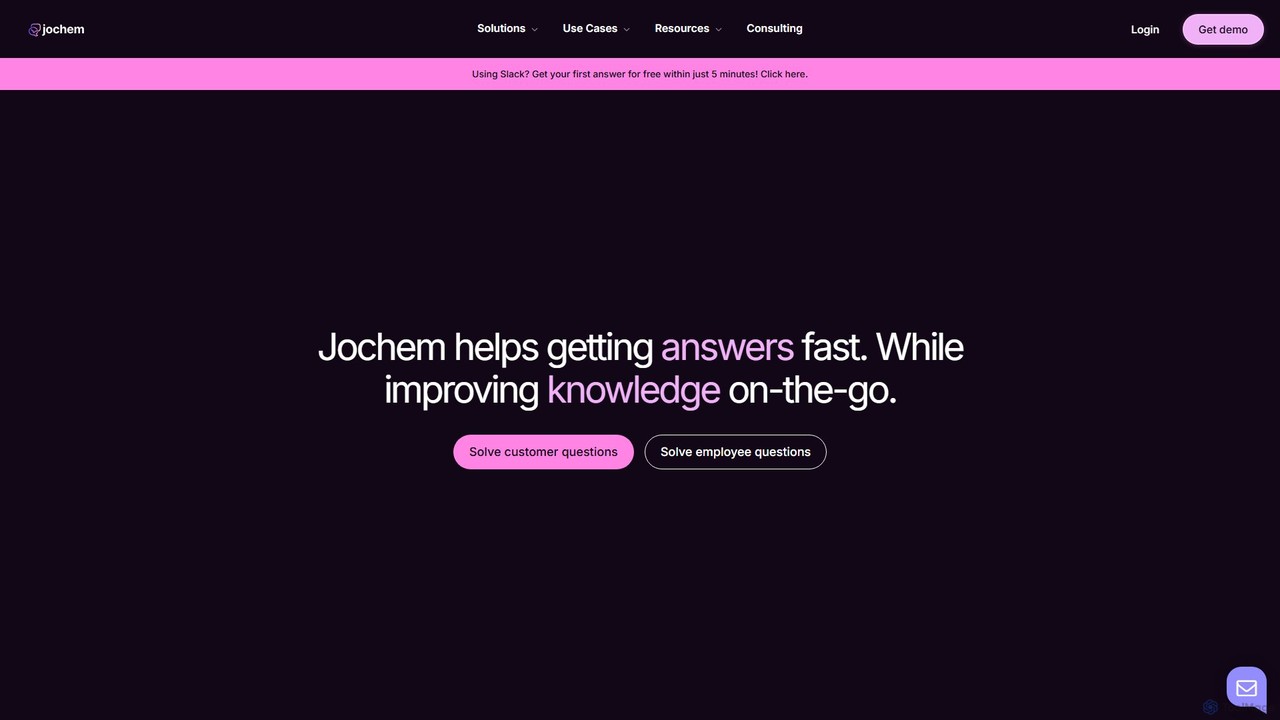
Jochem is an AI-powered internal knowledge assistant for businesses. It connects to your company's knowledge base, providing instant, …

2.7K

About Internal Communication

AI Internal Communication tools are a specialized category of productivity software designed to optimize information flow and collaboration within an organization. These platforms leverage artificial intelligence to analyze conversations, documents, and internal data, providing intelligent search, automated summaries, and proactive insights. By connecting employees to relevant knowledge and experts, these tools break down information silos and enhance overall corporate efficiency. They effectively transform standard communication channels into dynamic, searchable knowledge hubs.

Core Features

  • Intelligent Knowledge Search: Instantly find answers, documents, and experts across all company platforms like Slack, Confluence, and Google Drive.
  • Automated Summarization: Generate concise summaries of long chat threads, meetings, and internal documents to save time and reduce information overload.
  • Employee Q&A Automation: Automatically answer frequently asked employee questions or route complex queries to the correct department or subject matter expert.
  • Sentiment Analysis: Monitor the tone and morale of internal discussions to identify trends, gauge employee engagement, and address potential issues early.
  • Personalized Information Delivery: Push relevant news, updates, and alerts to employees based on their role, department, and project involvement.

Use Cases

These tools are particularly valuable for fast-growing companies, large enterprises, and remote-first organizations where information can become fragmented. They are used by HR teams to streamline onboarding, by project managers for cross-functional alignment, and by IT/support teams to automate responses, creating a more efficient and connected workplace.

How to Choose

When selecting a tool, evaluate its integration capabilities with your existing software stack (e.g., Slack, Microsoft Teams). Consider the sophistication of its AI search and summarization features, its data security and privacy policies, and the scalability of its pricing model. Also, assess the user interface for ease of use to ensure high adoption rates among employees.

Internal CommunicationUse Cases

1

Streamlining New Employee Onboarding

HR managers and team leads use AI internal communication tools to create a seamless onboarding experience. Instead of manually answering repetitive questions, a new hire can ask an AI assistant questions like 'Where is the expense policy?' or 'Who is the contact for IT support?'. The tool instantly pulls answers from the company's knowledge base, Confluence pages, and HR documents. This empowers new employees to find information independently, accelerates their integration, and frees up significant time for the HR team to focus on more strategic tasks.

2

Enhancing Cross-Departmental Project Collaboration

For complex projects involving multiple teams, an AI tool can act as a central intelligence hub. It automatically summarizes key decisions, action items, and updates from different team channels (e.g., marketing, engineering, sales). A project manager can simply ask, 'What was the final decision on the Q3 launch date?' and get a concise answer with a link to the original conversation. This prevents miscommunication, eliminates the need for manual status update meetings, and ensures everyone across departments is aligned with the latest project information.

3

Automating Internal IT and HR Support

Internal support teams are often overwhelmed with repetitive queries. An AI communication tool can integrate with ticketing systems and knowledge bases to provide instant, automated support. An employee can ask a chatbot 'How do I set up my VPN?' or 'What is our parental leave policy?'. The AI provides an immediate answer or creates a support ticket with all necessary context if human intervention is needed. This reduces response times, improves employee satisfaction, and allows support staff to focus on resolving more complex issues.

4

Gauging Employee Sentiment and Feedback

Leadership and HR teams can use AI tools to understand the overall mood and key concerns within the company without intrusive surveys. The AI analyzes public channels to identify recurring themes, sentiment trends (e.g., positive, negative, neutral), and topics of high engagement. For instance, it might detect rising concerns about a new policy or positive feedback on a recent company event. This provides leadership with real-time, data-driven insights to make more informed decisions and proactively address employee feedback.

5

Preserving and Accessing Institutional Knowledge

When experienced employees leave, their knowledge often leaves with them. An AI internal communication tool acts as a collective memory for the organization. It indexes all conversations, documents, and decisions, making them easily searchable. A new team member can search for 'research on the Alpha project from last year' and instantly find all relevant discussions and files, even if the original project members are no longer with the company. This preserves valuable institutional knowledge and reduces the time spent relearning or recreating past work.

6

Disseminating Critical Company-Wide Announcements

For important announcements like policy changes or strategic shifts, ensuring every employee sees and understands the information is crucial. An AI tool can personalize and target the delivery of these announcements based on role, location, or department. It can then track engagement to see who has viewed the message. Furthermore, it can set up an automated Q&A to handle immediate follow-up questions, providing consistent answers and flagging unique or complex queries for the communications team to address personally.

Internal CommunicationFrequently Asked Questions