TacoTranslate
TacoTranslate is an AI-powered internationalization (i18n) tool designed for React and Next.js developers. It automates the entire localization …
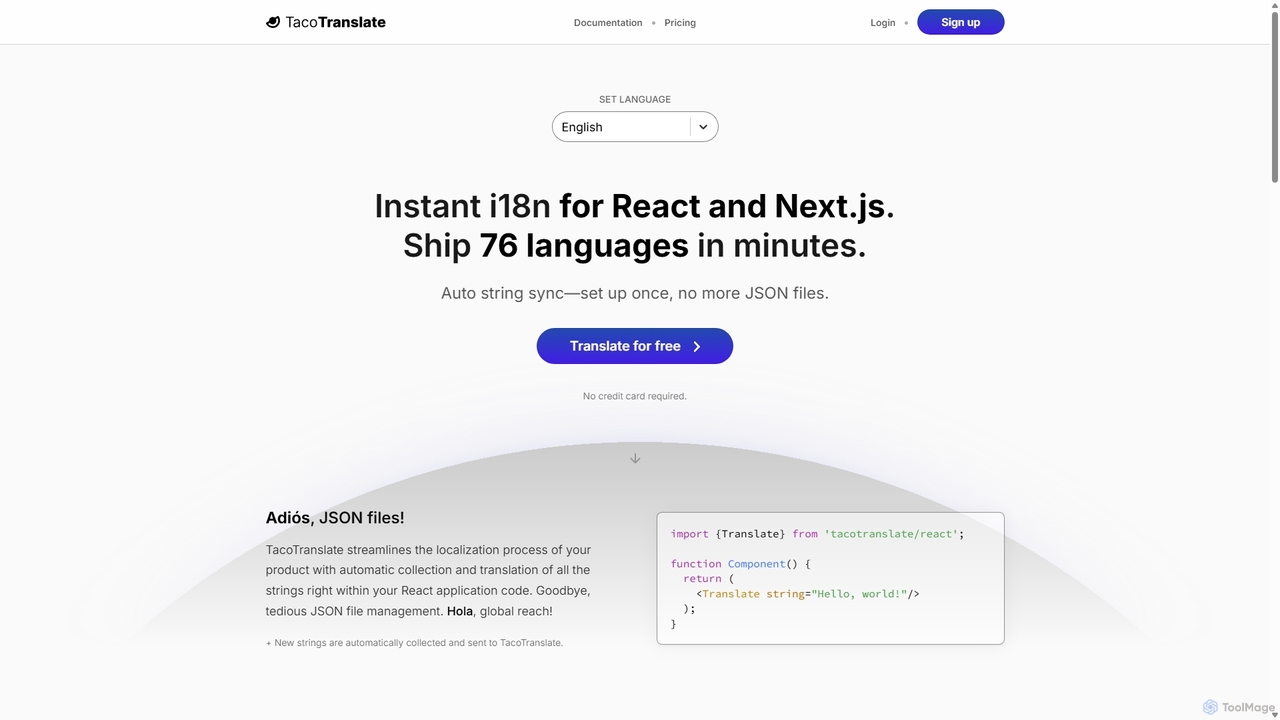
TacoTranslate is an AI-powered internationalization (i18n) tool designed for React and Next.js developers. It automates the entire localization process, from string collection to translation, eliminating the need for manual JSON file management. Ship your application in over 76 languages within minutes, enabling rapid global expansion with a developer-friendly workflow.
About Internationalization
AI Internationalization tools are a category of software that automates and streamlines the process of adapting products for global audiences. They leverage machine learning for tasks like translation, localization management, and cultural adaptation. These tools significantly reduce the manual effort required for software, websites, and content to function seamlessly across different languages and regions, thus boosting productivity in global expansion efforts.
Core Features
- Automated Translation: Utilizes Neural Machine Translation (NMT) for rapid and scalable initial text conversion.
- Localization Workflow Management: Provides a centralized platform to manage text strings, translators, and review processes.
- Contextual Analysis: AI analyzes code or design files to provide translators with visual context, improving translation accuracy.
- Terminology Management: Creates and enforces a consistent glossary of terms across all languages to maintain brand voice.
- Pseudo-localization: Simulates translated text in the UI to proactively identify and fix layout issues before translation begins.
Use Cases
These tools are primarily used by software development teams, product managers, and localization specialists. They are essential for companies expanding into new international markets, including SaaS platforms, mobile apps, e-commerce websites, and digital marketing campaigns that require continuous localization.
How to Choose
When selecting a tool, consider its integration capabilities with your development environment (e.g., GitHub, Figma), the quality and language support of its machine translation engine, the robustness of its workflow automation features, and its pricing model (e.g., per word, per user, or subscription-based).

InternationalizationUse Cases
Automating Software UI Localization
A software development team launching a new app globally integrates an AI internationalization tool with their GitHub repository. The tool automatically extracts new text strings from code commits, sends them for machine or human translation via a centralized dashboard, and then pushes the completed localized files back to the repository. This continuous localization process eliminates manual copy-pasting and significantly reduces the time-to-market for new language versions.
Centralizing Website Content Translation
A marketing team for an e-commerce site needs to keep product descriptions and blog posts updated in multiple languages. They use an AI internationalization platform that connects to their CMS. New content is automatically synced, assigned to translators, and reviewed within the platform. This ensures brand voice consistency and allows the team to manage all multilingual content from a single source of truth, improving efficiency and accuracy.
Streamlining Mobile App Updates with OTA
A mobile app developer needs to release weekly updates with new features and text. An AI internationalization tool with an Over-The-Air (OTA) delivery feature allows them to push updated translations directly to users' devices without requiring a new app store submission. This is ideal for rapidly correcting typos or awkward phrasing based on user feedback from different regions, ensuring a high-quality user experience.
Managing Game Localization Assets
A game development studio localizing a narrative-heavy game uses an AI tool to manage thousands of dialogue lines, item descriptions, and UI elements. The tool's AI provides context from screenshots or design files, helping translators understand nuance. It also manages voice-over scripts and ensures terminology, like character and place names, remains consistent across all languages, which is critical for immersive storytelling.
Ensuring Consistent Brand Terminology
A global enterprise needs to ensure its brand and product names are used consistently across all marketing materials and technical documentation. An AI internationalization tool's glossary and terminology management feature automatically flags inconsistencies and suggests the correct, approved term during the translation process. This maintains brand integrity worldwide and reduces errors and rework for localization teams.
Pre-release UI/UX Testing with Pseudo-localization
Before sending any text to translators, a UX design team uses an AI tool's pseudo-localization feature. It automatically replaces UI text with expanded, accented, or right-to-left characters to simulate other languages. This helps them identify and fix layout issues like text overflow or broken components early in the design phase, saving significant rework and costs later in the development cycle.