ToolMage
Sign in

Best 26 Market Research AI tools for Productivity

Popular Market Research AI tools in Productivity include Kalodata, Outset, Epoch AI, Ballpark, EchoTik, Synthetic Users, Ora, VenturusAI, Metaforms, and DimeADozen.ai, helping you work more efficiently.

Kalodata
Freemium

Kalodata

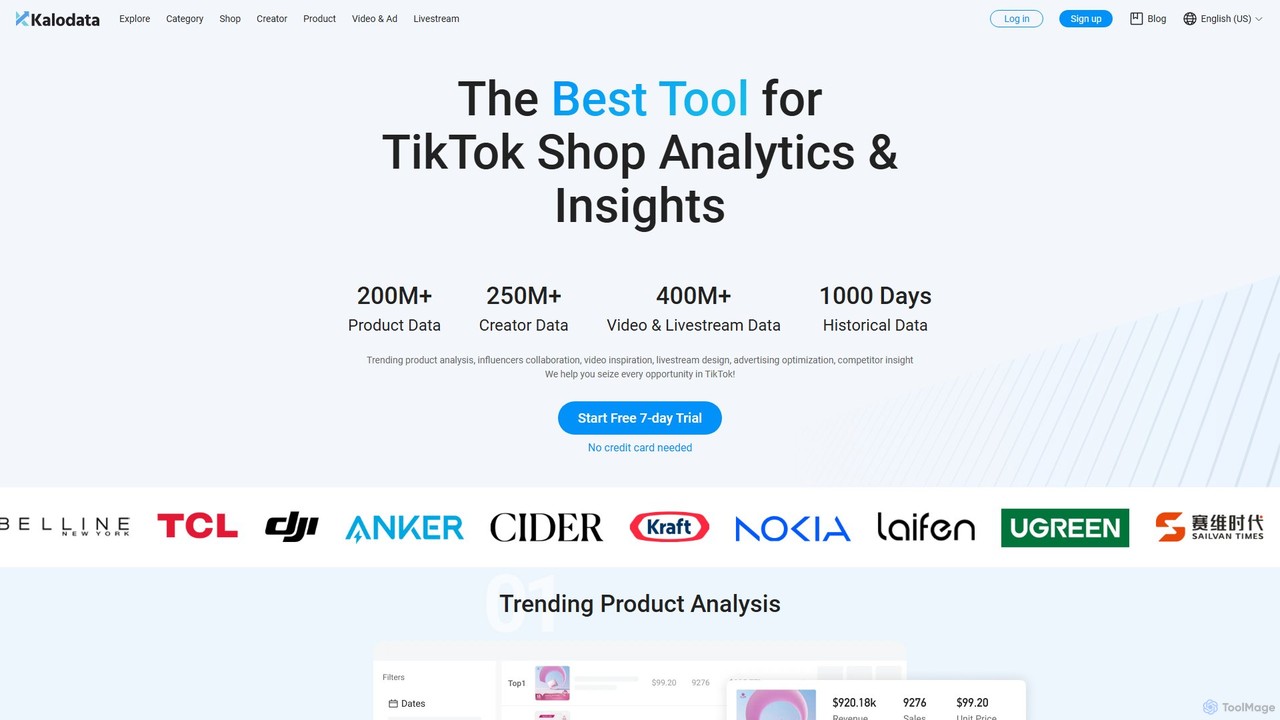
Kalodata is an AI-powered analytics and insights platform for TikTok Shop. It provides comprehensive data on trending products, creators, videos, and competitors, helping sellers, brands, and affiliates make data-driven decisions to boost sales and efficiency on TikTok.

Business Intelligence
Visits 1.7MFavorites 129Likes 152

FutureFounderAI
Paid

FutureFounderAI

FutureFounderAI is an AI-powered platform designed for aspiring entrepreneurs to validate their business ideas. It analyzes your concept against market trends, provides a strength assessment, and offers personalized guidance and market insights to refine your plan and increase your chances of success.

Startup Tools
Visits 5.9KFavorites 101Likes 115

About Market Research

AI Market Research tools are specialized platforms that leverage artificial intelligence to automate and enhance the entire market research process. These tools utilize advanced algorithms like natural language processing (NLP) and machine learning to collect, analyze, and interpret vast datasets from diverse sources. They provide businesses with deeper consumer insights, competitive intelligence, and market trends, enabling data-driven strategic decisions. Their ability to process unstructured data at scale offers a significant advantage over traditional methods.

Core Features

  • Automated Data Collection: Gathers information from social media, reviews, news, and web pages without manual effort.
  • Sentiment Analysis: Analyzes text data to understand public opinion and emotional tone towards brands, products, or topics.
  • Trend Prediction: Identifies emerging market trends and consumer behaviors based on historical and real-time data analysis.
  • Audience Segmentation: Divides target markets into distinct groups based on demographics, psychographics, and behavioral patterns.
  • Competitive Intelligence: Monitors competitor strategies, product launches, and market positioning to identify opportunities and threats.

Applicable Scenarios

Marketing teams use these tools to understand campaign effectiveness and audience reception. Product development teams leverage insights to identify unmet customer needs and refine product features. Business strategists employ them for market entry analysis, identifying growth opportunities, and mitigating risks in new territories.

How to Choose

When selecting an AI market research tool, consider its data source coverage (social, web, proprietary), the depth of its analytical capabilities (sentiment, predictive, segmentation), ease of integration with existing systems, and the clarity of its reporting and visualization features. Evaluate the accuracy of its AI models and the level of customization offered for specific research needs.

Featured tool rankings

Market Research use cases

1

Analyzing Social Media Sentiment for Product Launch

A marketing manager uses an AI market research tool to monitor real-time social media conversations and sentiment around a new product launch. The tool identifies key themes, positive/negative feedback, and influencer mentions, allowing the team to quickly address concerns and amplify positive buzz, optimizing early adoption and brand perception.

2

Identifying Emerging Consumer Trends for Product Development

A product innovation team employs AI to scan vast amounts of online data, including forums, news, and e-commerce reviews, to detect nascent consumer needs and lifestyle trends. This helps them proactively develop new products or features that align with future market demands, reducing development risk and increasing market relevance.

3

Competitive Landscape Mapping and Strategy

A business intelligence analyst utilizes AI to track competitor activities, including pricing changes, marketing campaigns, and customer reviews across multiple platforms. The tool provides a comprehensive overview of the competitive landscape, highlighting strengths, weaknesses, and potential market gaps for strategic planning.

4

Automating Survey Data Analysis and Insight Generation

A traditional market researcher uses an AI tool to process open-ended responses from thousands of surveys. The AI automatically categorizes themes, extracts key opinions, and identifies correlations that would be time-consuming to find manually, accelerating insight generation and report creation.

5

Predicting Market Demand for Inventory Optimization

A retail planner integrates an AI market research tool with sales data to forecast future product demand based on market trends, seasonal patterns, and external factors. This enables more accurate inventory management, reducing overstocking or stockouts and optimizing supply chain efficiency.

6

Understanding Customer Journey and Pain Points

A customer experience team uses AI to analyze customer interactions across various touchpoints (support tickets, chat logs, reviews). The tool identifies common pain points, friction points in the customer journey, and areas for service improvement, leading to enhanced customer satisfaction and loyalty.

Market Research FAQ

What are AI Market Research tools?

AI Market Research tools are software applications that leverage artificial intelligence, such as machine learning and natural language processing, to automate and enhance the process of gathering, analyzing, and interpreting market data. They help businesses uncover consumer insights, track market trends, and understand competitive landscapes more efficiently and accurately than traditional methods.

How do AI Market Research tools differ from traditional market research?

AI tools differ by offering unparalleled speed and scale in data processing, particularly for unstructured data like text and images. While traditional methods often rely on manual surveys and focus groups, AI tools can analyze vast online datasets, identify subtle patterns, and provide predictive insights, reducing human bias and accelerating the research cycle significantly.

What types of data can AI Market Research tools analyze?

These tools can analyze a wide array of data types, including social media posts, customer reviews, news articles, forum discussions, survey responses (both quantitative and qualitative), search engine queries, website traffic data, and even audio/video transcripts. Their strength lies in processing both structured and unstructured data to extract comprehensive insights.

Who can benefit most from using AI Market Research tools?

Businesses of all sizes, especially marketing departments, product development teams, business strategists, and customer experience professionals, can benefit. They are particularly valuable for organizations needing to quickly understand dynamic market shifts, gain deep consumer insights, monitor competitive activities, or validate new product ideas with data-driven evidence.

What are the key benefits of using AI for market research?

The primary benefits include significantly increased speed and efficiency in data collection and analysis, the ability to process massive and diverse datasets, reduced human bias in interpretation, enhanced accuracy in trend prediction, and the generation of deeper, more actionable insights. This leads to better-informed strategic decisions and a stronger competitive advantage.