
Productivity Best in category 1 results Medical Scribe AI Tool

Popular AI tools in the Medical Scribe field of Productivity include Athelas, etc., helping you quickly improve efficiency.

Athelas

Athelas

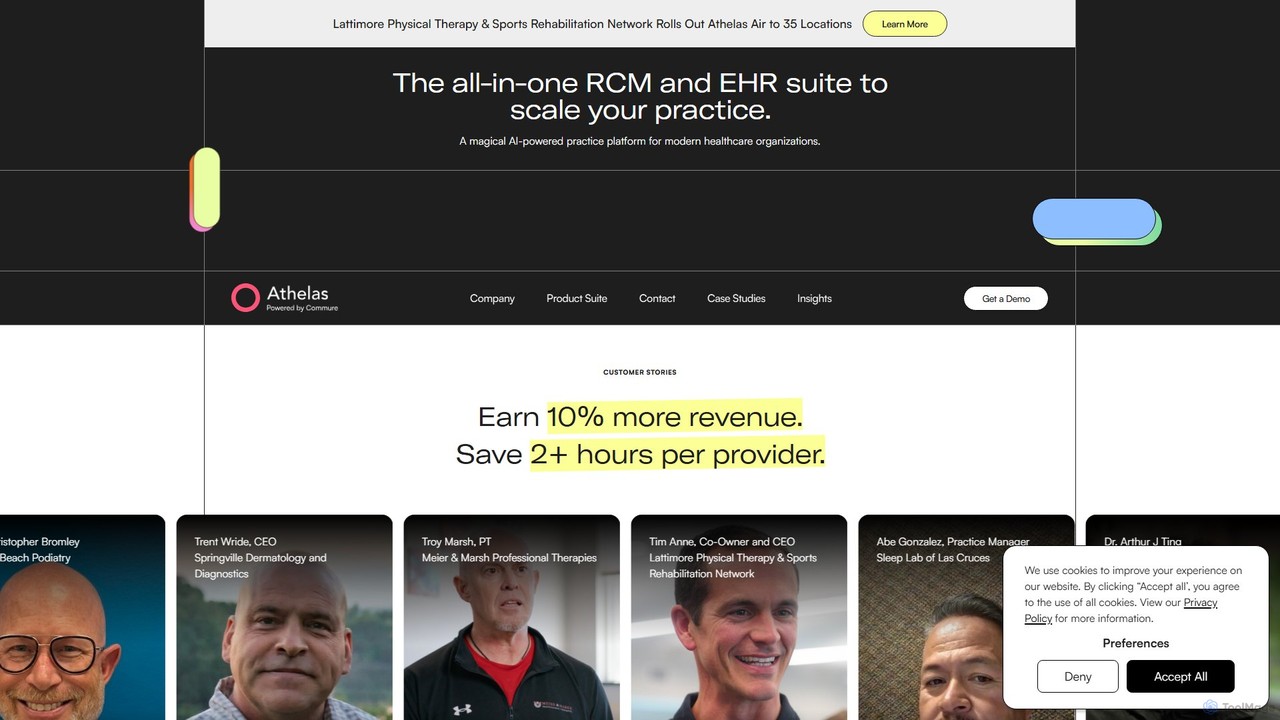
Athelas is an AI-powered platform designed to streamline healthcare operations. It combines an all-in-one Revenue Cycle Management (RCM) …

215.4K

About Medical Scribe

AI Medical Scribe tools are a specialized category of productivity software that automates clinical documentation. They use advanced speech recognition and Natural Language Processing (NLP) to listen to patient-clinician conversations and transform them into structured, accurate medical notes in real-time. This technology significantly reduces the administrative burden on healthcare professionals, allowing them to focus more on patient care rather than data entry. The primary value lies in improving documentation efficiency, reducing physician burnout, and enhancing the accuracy of medical records.

Core Features

  • Ambient Listening & Real-time Transcription: Captures natural conversations between clinicians and patients in the background and converts them to text instantly.
  • Structured Note Generation: Automatically organizes transcribed text into standard clinical formats, such as SOAP (Subjective, Objective, Assessment, Plan) notes.
  • Medical Terminology Recognition: Accurately identifies and spells complex medical terms, medications, and diagnoses from the dialogue.
  • EHR/EMR Integration: Seamlessly syncs generated notes and structured data with major Electronic Health Record (EHR) and Electronic Medical Record (EMR) systems.
  • Speaker Diarization: Distinguishes between different speakers (e.g., clinician, patient, family member) in the conversation for clearer documentation.

Use Cases

These tools are primarily used in clinical settings to streamline documentation workflows. They are invaluable for physicians in primary care, specialists in fields like cardiology or oncology, and practitioners in fast-paced environments such as emergency rooms. Telehealth providers also leverage AI scribes to manage documentation during virtual consultations, ensuring complete records without distracting from the patient interaction.

How to Choose

When selecting an AI Medical Scribe, prioritize accuracy in transcription and medical term recognition for your specific specialty. Ensure robust integration capabilities with your existing EHR/EMR system to avoid manual data transfer. Verify that the tool is fully compliant with healthcare regulations like HIPAA for data privacy and security. Lastly, consider the tool's ability to adapt to your specific templates and workflow preferences for a smoother implementation.

Medical ScribeUse Cases

1

Automating Primary Care SOAP Notes

A general practitioner uses an AI Medical Scribe during a routine patient check-up. The tool runs ambiently on a tablet or computer, capturing the entire conversation. Immediately after the visit, the AI processes the dialogue and generates a structured SOAP note, correctly categorizing patient-reported symptoms under 'Subjective' and the physician's observations under 'Objective'. This saves the doctor 10-15 minutes of manual note-taking per patient, allowing them to see more patients or finish their workday on time, significantly reducing administrative burnout.

2

Streamlining Specialist Consultation Reports

A cardiologist consults with a patient about their complex history of heart disease. The AI scribe accurately captures intricate details, including specific medication names, dosages, and past surgical procedures mentioned in the conversation. It then populates a pre-configured consultation template, highlighting key findings and recommendations. This ensures a highly detailed and accurate report is ready for review and sharing with the referring physician almost instantly, improving care coordination and reducing the risk of documentation errors for complex cases.

3

Enhancing Telehealth Documentation Efficiency

A mental health therapist conducts a virtual session with a client via a telehealth platform. The AI Medical Scribe integrates with the video call, transcribing the session discreetly. This allows the therapist to maintain eye contact and focus entirely on the client's verbal and non-verbal cues, fostering a stronger therapeutic alliance. The tool can automatically generate a progress note summarizing the session's key themes, interventions used, and the client's state, which can be reviewed and signed off in minutes, rather than hours of post-session administrative work.

4

Improving Accuracy in Emergency Departments

In a fast-paced emergency department, an ER physician uses a mobile-based AI scribe to document patient encounters. While examining a patient, the physician can verbally note findings, order tests, and state their initial diagnosis. The AI captures this information accurately, even in a noisy environment, and structures it for the EMR. This reduces the cognitive load on the physician and minimizes the risk of critical errors that can occur from hurried manual typing or misremembering details later, leading to safer and more efficient patient care.

5

Assisting in Medical Education and Training

A medical resident uses an AI scribe during their clinical rotations. After seeing a patient with their attending physician, the resident can compare their own manually written note with the AI-generated one. This provides immediate feedback on their documentation skills, helping them learn how to structure clinical notes properly and capture all relevant information. The attending physician can also use the AI scribe's transcript to review the resident's interaction with the patient and provide targeted coaching on communication and diagnostic reasoning.

6

Simplifying Surgical and Procedural Dictation

Immediately following a surgical procedure, a surgeon uses an AI scribe app on their phone to dictate the operative report. Instead of waiting to get to a computer or using a cumbersome dictation service, they can simply speak the details while they are fresh in their mind. The AI tool transcribes the report, correctly identifies procedural codes and terminology, and formats it according to the hospital's standard. This accelerates the entire post-operative workflow, from billing and coding to communicating results to the patient's care team.

Medical ScribeFrequently Asked Questions