Architechtures
Architechtures is a generative AI-powered building design platform that enables architects and real estate developers to create optimal …
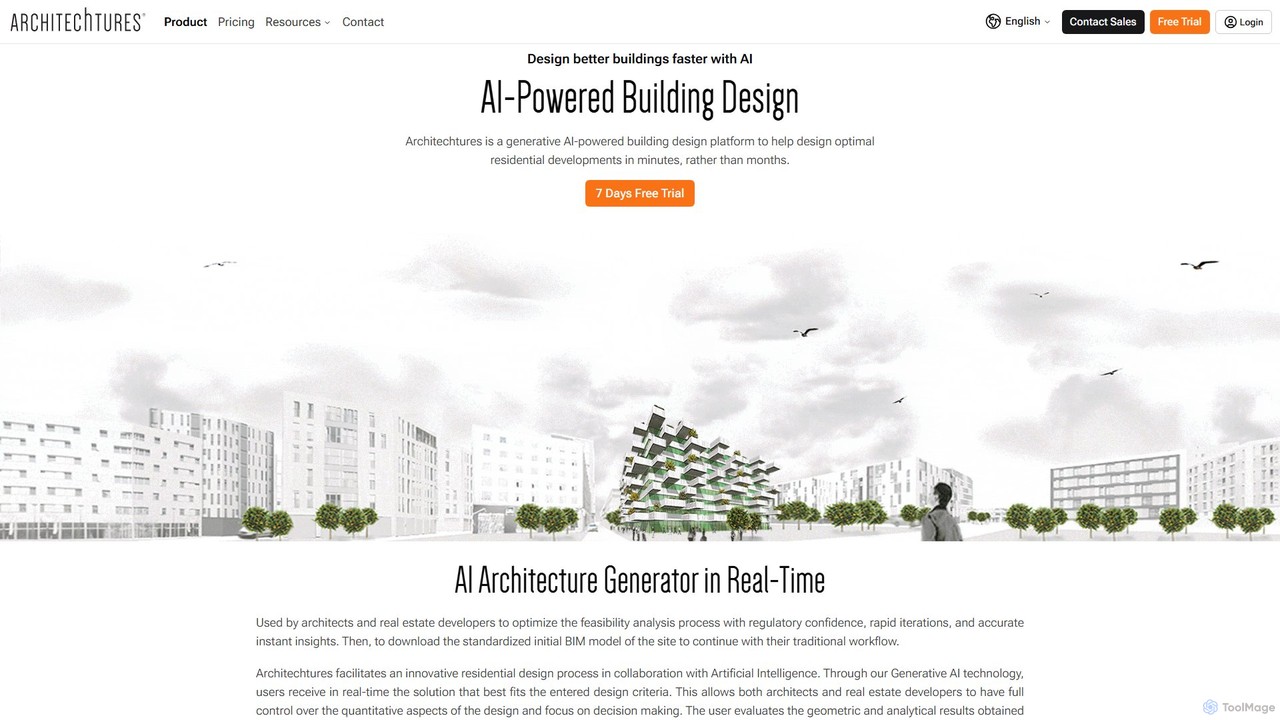
Architechtures is a generative AI-powered building design platform that enables architects and real estate developers to create optimal residential building designs in minutes. It automates the early-stage design process, providing real-time BIM models, data analytics, and cost estimations to accelerate decision-making and improve project feasibility.
About Modeling
AI Modeling tools are a category of AI-powered software designed to automate and enhance the creation, analysis, and optimization of various models. These tools leverage advanced algorithms like generative AI and machine learning to transform simple inputs into complex 3D assets, predictive data structures, or simulation environments. They significantly boost productivity by accelerating design cycles, enabling rapid prototyping, and providing data-driven insights for informed decision-making across industries.
Core Features
- Generative Design: Automatically creates multiple design variations or complex structures from basic parameters or text prompts.
- Intelligent Optimization: Analyzes model performance and suggests improvements for efficiency, cost, or structural integrity.
- Data-driven Prediction: Builds and refines statistical or machine learning models for forecasting, classification, and anomaly detection.
- Simulation Acceleration: Speeds up complex simulations by intelligently sampling parameters or predicting outcomes.
- Automated Texturing & Rigging: Applies realistic textures and prepares 3D models for animation with minimal manual effort.
Applicable Scenarios
These tools are indispensable for professionals in fields requiring rapid iteration and complex model generation. Architects can quickly visualize building designs, product designers can generate multiple prototype concepts, and data scientists can efficiently build and validate predictive models for market analysis or risk assessment. They also empower game developers to create detailed assets and animators to streamline character rigging.
How to Choose
When selecting an AI Modeling tool, consider its specific modeling capabilities (e.g., 3D, data, simulation), the ease of integration with existing workflows, and the level of automation offered. Evaluate the accuracy and quality of AI-generated outputs, the learning curve for your team, and the pricing model, including any subscription tiers or usage-based costs. Ensure it supports the file formats and platforms essential for your projects.
ModelingUse Cases
Rapid 3D Product Prototyping
Product designers can utilize AI modeling tools to quickly generate diverse 3D prototypes from simple sketches or text descriptions. By inputting core specifications and desired aesthetics, the AI can produce multiple design iterations, allowing for faster visualization, material testing, and feedback collection, significantly reducing the time and cost associated with traditional prototyping methods.
Automated Game Asset Creation
Game developers leverage AI modeling to accelerate the creation of detailed 3D assets like characters, environments, and props. Artists can provide concept art or basic models, and the AI can automatically generate high-fidelity meshes, apply realistic textures, and even rig characters for animation, freeing up valuable time for creative refinement and gameplay development.
Predictive Business Model Development
Data analysts and business strategists use AI modeling tools to build sophisticated predictive models for market trends, customer behavior, or financial forecasting. By feeding historical data, the AI identifies patterns, constructs robust statistical models, and provides actionable insights, enabling businesses to make more informed decisions and anticipate future outcomes with greater accuracy.
Architectural Visualization & Design Iteration
Architects and urban planners employ AI modeling to rapidly generate and visualize complex building designs and urban layouts. From conceptual inputs, the AI can create detailed 3D models, render photorealistic images, and even suggest optimal structural configurations or material choices, streamlining the design process and facilitating client presentations.
Scientific Simulation & Experimentation
Researchers in fields like material science, biology, or engineering utilize AI modeling for complex simulations and virtual experimentation. These tools can model molecular structures, fluid dynamics, or material properties, allowing scientists to test hypotheses, predict outcomes, and optimize designs without the need for extensive physical lab work, accelerating discovery.
Personalized Marketing Content Generation
Marketing teams can use AI modeling to create personalized 3D visuals or interactive models for advertising campaigns. Based on audience demographics and campaign goals, the AI can generate unique product showcases or virtual experiences, enhancing engagement and tailoring content to individual consumer preferences more efficiently than manual production.